Background

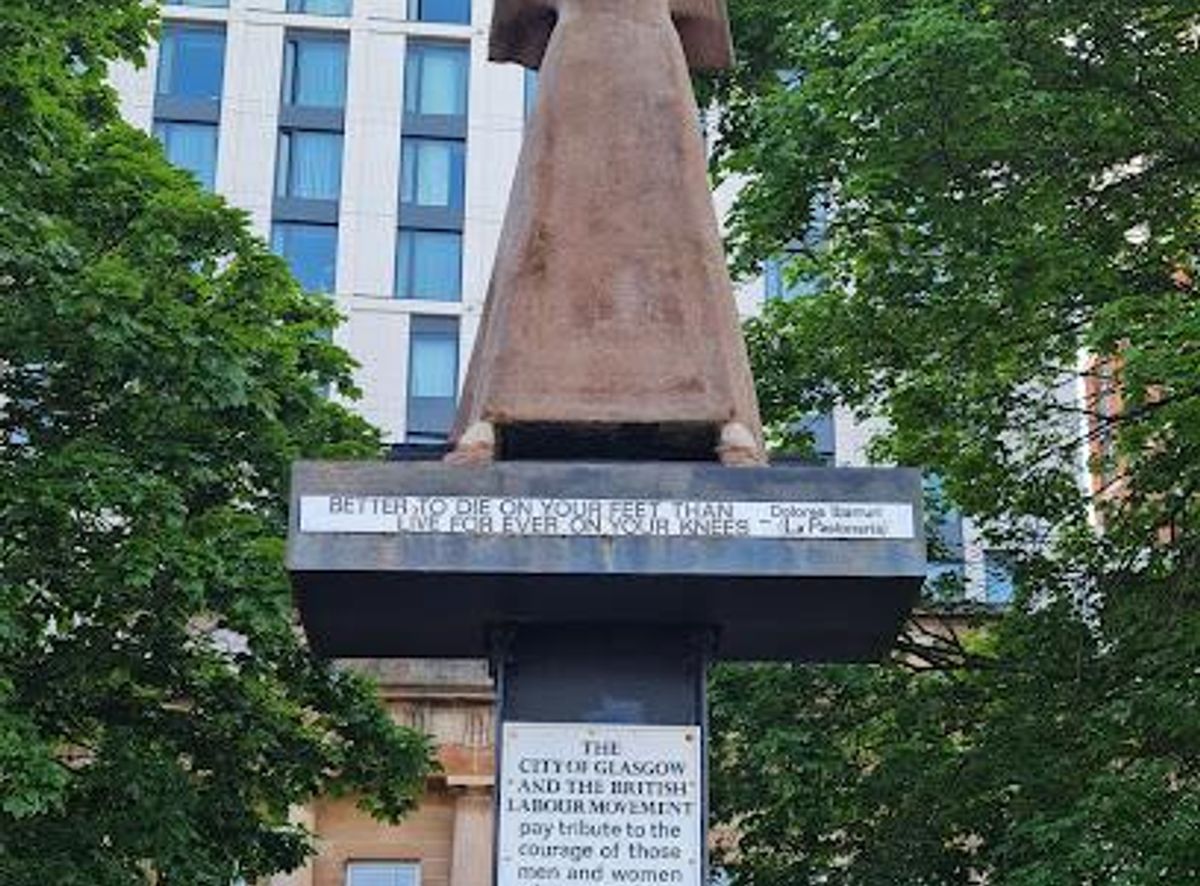
La Pasionaria Statue on Clyde Street, Glasgow

A bold tribute on Glasgow’s Clyde to Dolores Ibárruri, symbolizing the fight against fascism and honoring local heroes of the Spanish Civil War.

4.5

La Pasionaria is a striking statue in Glasgow commemorating Dolores Ibárruri, a Spanish Civil War heroine and symbol of anti-fascist resistance. Sculpted by Arthur Dooley and unveiled in 1980, the statue honors British volunteers, especially Glaswegians, who fought fascism in Spain. Its powerful pose and famous inscription inspire visitors along the River Clyde.

A brief summary to La Pasionaria

  • 286 Clyde St, Glasgow, G1 4AL, GB
  • Visit website
  • Duration: 0.25 to 1 hours
  • Free
  • Environment icon Outdoor
  • Mobile reception: 4 out of 5
  • Monday 12 am-12 am
  • Tuesday 12 am-12 am
  • Wednesday 12 am-12 am
  • Thursday 12 am-12 am
  • Friday 12 am-12 am
  • Saturday 12 am-12 am
  • Sunday 12 am-12 am

Local tips

  • Visit during daylight to fully appreciate the statue’s details and the surrounding riverside views.
  • Read about the Spanish Civil War and the International Brigades beforehand to enrich your understanding.
  • Combine your visit with a walk along the Clyde Walkway to explore other historical and cultural sites nearby.
  • Look for the inscriptions on the statue’s plinth to connect with Dolores Ibárruri’s famous words and the tribute to volunteers.
widget icon

Getting There

  • Public Transport

    Take the Glasgow Subway to St Enoch Station, then walk approximately 10 minutes along the Clyde Walkway to reach the statue. Subway tickets cost around £1.50–£2.50, and services run every 5–10 minutes.

  • Bus

    Several bus routes serve the city centre near Clyde Street, including routes 2, 3, and 4. From Buchanan Bus Station, the journey takes about 15–20 minutes. Single fares are approximately £2–£3.

  • Taxi

    Taxis from Glasgow Central Station to the statue take around 5–10 minutes depending on traffic. Expect fares between £6 and £10.

La Pasionaria location weather suitability

  • Weather icon Any Weather
  • Weather icon Rain / Wet Weather
  • Weather icon Clear Skies
  • Weather icon Mild Temperatures
  • Weather icon Windy Conditions

Unlock the Best of La Pasionaria

Buy tickets

    No tickets available

Book tours with entry

    No tours available

Book tours without entry

    No tours available

Discover more about La Pasionaria

Commemorating a Revolutionary Icon

La Pasionaria, the pen name of Dolores Ibárruri, was a passionate communist and anti-fascist orator during the Spanish Civil War (1936–1939). The statue in Glasgow immortalizes her defiant spirit, standing with arms raised towards the sky in a gesture of hope and resistance. It bears her famous rallying cry, “Better to die on your feet than live forever on your knees,” encapsulating her lifelong commitment to fighting oppression. This memorial honors not only Ibárruri but also the courage of the British volunteers, including many from Glasgow, who joined the International Brigades to fight fascism in Spain.

Artistic Vision and Political Controversy

Commissioned in 1974 by the International Brigades Association of Glasgow and sculpted by Arthur Dooley, the statue was created from scrap iron and fiberglass due to funding limitations. Its bold, industrial aesthetic reflects both the raw struggle of the era and Glasgow’s working-class identity. The statue’s installation on Clyde Street in 1979 sparked political controversy, with opposition from Conservative councillors who viewed the overtly communist symbolism as provocative. Despite heated council debates and demonstrations, the monument was unveiled in February 1980 and has remained a steadfast symbol of anti-fascist solidarity.

Historical Context and Local Significance

The Spanish Civil War was a pivotal ideological battle between fascism and socialism. Over 2,000 British volunteers joined the International Brigades, with around 500 Scots among them and 65 Glaswegians losing their lives. Glasgow’s connection to this conflict is deeply commemorated by the statue’s location on the banks of the River Clyde, a fitting site given the city’s history of political activism and solidarity. The memorial also reflects Glasgow’s role in broader 20th-century struggles for democracy and workers’ rights.

Symbolism and Legacy

La Pasionaria’s statue serves as a powerful reminder of international solidarity against oppression. The figure’s upward gaze and outstretched arms symbolize hope, defiance, and the enduring fight for justice. The inscription beneath the statue continues to inspire visitors to reflect on the sacrifices made by those who resisted fascism. The monument stands not only as a tribute to historical events but also as a beacon of Glasgow’s enduring spirit of resistance and activism.

Visitor Experience and Surroundings

Situated on Clyde Street near Custom House Quay, the statue is accessible and visible along the riverside walkway. Its industrial materials and striking posture create a compelling visual contrast against the urban backdrop. Visitors can appreciate the statue’s historical importance while enjoying views of the River Clyde and the dynamic cityscape. The site invites contemplation on political history and the global impact of local actions.

Continuing Relevance in Modern Glasgow

More than four decades after its unveiling, La Pasionaria remains a potent symbol amid ongoing debates about public memorials and political memory. It reflects Glasgow’s complex political heritage and the city’s recognition of international anti-fascist efforts. The statue encourages reflection on past struggles and their resonance in contemporary issues of justice, equality, and resistance to authoritarianism.

Busiest months of the year

Busiest hours of the day

Popular Experiences near La Pasionaria

Popular Hotels near La Pasionaria

Select Currency