

Lombard St Travel Guide
Free Guide: Nine centuries of banking heritage on London's most prestigious financial street, where Italian merchants shaped the future of English commerce.


A brief summary of Lombard St
Nine centuries of banking heritage on London's most prestigious financial street, where Italian merchants shaped the future of English commerce.
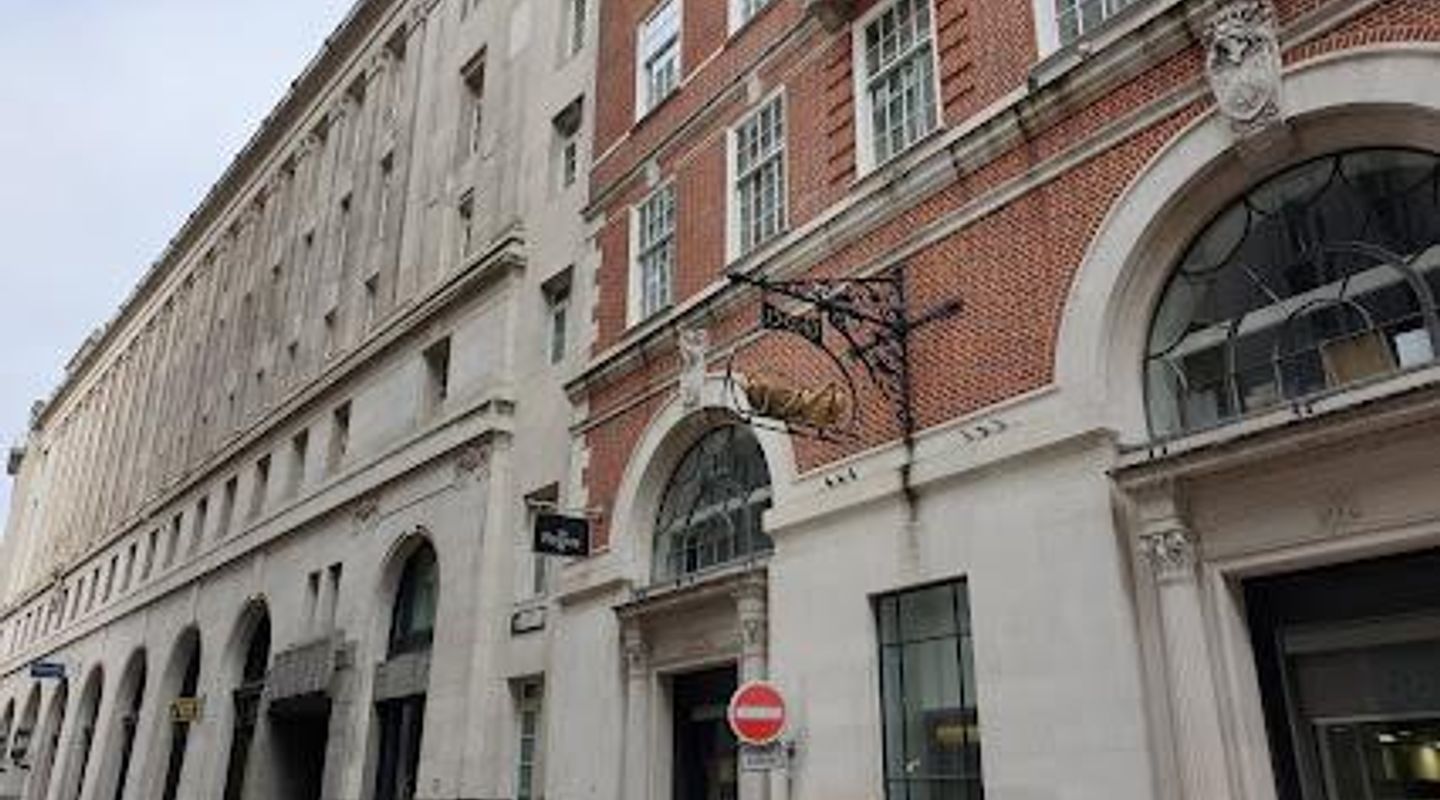
Lombard Street stands as the historic heart of London's financial district, a narrow thoroughfare in the City of London that has dominated British banking for nearly nine centuries. Named after Italian Lombard merchants who introduced European banking practices in the 12th century, this prestigious street evolved from a medieval marketplace of goldsmiths and money-lenders into the 'Wall Street' of its era. Today, it remains lined with grand Victorian and Edwardian banking halls, insurance offices, and financial institutions, while its cobbled surface and ornate architectural details preserve the character of centuries past. The street's legendary signs—including the famous Gresham Grasshopper—once served as identifiers before street addresses existed, and literary history echoes here through connections to Charles Dickens and Alexander Pope's father.
On-site amenities
 Restrooms
 Drink options
 Food options
 Information boards
- Address
- London
Getting there
London Underground
Bus
Walking from Monument Station
Taxi or Rideshare
Discover more about Lombard St
The Birthplace of English Banking
Lombard Street's story begins in the 12th century when merchants from Lombardy in northern Italy settled in this corner of London, bringing with them sophisticated banking practices that would transform English commerce. These Lombard traders established themselves as goldsmiths, money-lenders, and financiers, gradually making the street synonymous with banking itself. The name 'Lombard' became so intertwined with financial services that the term was eventually applied to all bankers, regardless of origin. By the 13th century, the street had become the epicenter of European-style banking in England, attracting merchants, insurers, and traders who marked their premises with distinctive hanging signs rather than numbered addresses—a necessity in an era before systematic street numbering.
Medieval Prosperity and the Great Fire
Throughout the medieval and early modern periods, Lombard Street flourished as one of London's most prestigious commercial addresses. The street attracted the city's wealthiest merchants and most respected financial houses, and by the 17th century it had earned comparison to Wall Street as the undisputed powerhouse of British finance. The Great Fire of London in 1666 devastated the street, destroying buildings and institutions that had stood for centuries. However, the financial community's commitment to the location ensured rapid reconstruction. By 1720, contemporary accounts describe Lombard Street as 'throughout graced with good and lofty buildings, amongst which are many that surpass those in other streets,' a testament to the ambitious rebuilding that restored its grandeur and reinforced its status as the nation's financial nerve center.
Architectural Splendor and Banking Heritage
The Lombard Street visible today represents layers of architectural ambition spanning from the 18th century onwards. Victorian and Edwardian banking halls showcase ornate facades, grand entrances, and imposing stonework designed to project stability and trustworthiness. Notable structures include Barclay's Bank at number 54, erected in 1864 from designs by architect P.C. Hardwick, and the elegant Pelican Life Insurance building at number 70, designed around 1756 by Sir Robert Taylor for Sir Charles Asgill. Lloyd's Bank at number 72, rebuilt in 1888, exemplifies the confident architectural language of late Victorian finance. These buildings, many now housing restaurants, offices, and cultural venues, preserve the visual identity of a street that once defined British economic power through its very architecture.
Literary Connections and Cultural Significance
Lombard Street's prominence in London's social and cultural life extends beyond finance into literature and history. Alexander Pope, one of England's greatest poets, was born here in 1688, the son of a linen-draper whose shop occupied a corner of Cornhill and Lombard Street. The street also features prominently in Charles Dickens's literary world—in 1831, a dinner party at Smith, Payne & Smiths Bank at number 1 Lombard Street, hosted by manager George Beadnell, became the inspiration for Dickens's romantic interests and literary imagination. The street's narrow lanes and historic courtyards once sheltered a Quakers' meeting-house where William Penn and George Fox preached, adding layers of spiritual and intellectual history to this commercial thoroughfare.
The Iconic Gresham Grasshopper
Among Lombard Street's most enduring symbols is the Gresham Grasshopper, a heraldic sign that once hung outside number 68. This distinctive emblem belonged to Sir Thomas Gresham, the financial agent and adviser to Kings Edward VI, Mary I, and Queen Elizabeth I, whose family coat of arms featured a grasshopper. In an era before standardized addresses, such ornate signs served as crucial identifiers for businesses and premises, allowing clients to locate their bankers and merchants through visual recognition rather than numerical designation. The grasshopper became so famous that it remains one of London's most recognizable historical symbols, representing the ingenuity and pride of medieval and Renaissance banking families.
Modern Vitality and Preservation
Today, Lombard Street balances its role as a working financial district with its status as a heritage site of international importance. The street continues to house major financial institutions, while its historic buildings have been thoughtfully adapted to accommodate modern restaurants, bars, and cultural spaces. The proximity to the Bank of England Museum, St Edmund the King Church (rebuilt by Sir Christopher Wren after the Great Fire), and the Royal Exchange ensures that visitors experience Lombard Street within a rich context of London's financial and architectural heritage. Walking this narrow street, one encounters centuries of history compressed into a few hundred meters—from medieval merchant signs to Victorian banking halls to contemporary financial services, all layered upon the same ancient stones.
Evendo Review Centre
 Google
Guest reviews
Best time to go
Quietest: Jan, Feb & Nov · before 6am or at 10pm
Busy times are Evendo estimates for a typical year, to help you plan. Actual crowds vary with events, school holidays and the weather.
Explore Lombard St on the map
A handpicked selection of must-see spots near Lombard St, mapped for you.
Get your free copy of our complete guide to Lombard St, delivered straight to you.
Everything on this page, from opening hours and how to get there to Eve’s tips and the best time to go, in one PDF you can read offline, print or share.
Already have an account? Sign in
Your Lombard St guide is ready.
We'll send it to · Not you? Sign out

Getting your guide ready…
We are putting together a fresh copy of the Lombard St guide. This can take up to a minute.
This can take a few moments. If your browser asks, choose Allow so the download can start. You'll find the guide in your Downloads folder.
Nothing happened? Download it again
Sorry, the guide is taking longer than usual. Please try again in a minute, or get it by email instead.
Other nearby places you may find interesting
The closest places of the same kind, if this one is not quite what you had in mind.
-
Magna Carta Historic riverside meadow where Magna Carta was sealed in 1215, shaping the foundation of liberty and constitutional law.
-
St Anne's Well Discover the tranquil historic spring of St Anne's Well, a sacred site famed for its healing waters and medieval spiritual heritage.
-
Staines War Memorial A dignified Portland stone monument in Staines Market Square honoring local heroes of both World Wars with annual Remembrance ceremonies.
-
King John's Palace Step into medieval England at King John's Palace, a royal residence and charity school with centuries of history in Colnbrook.
-
Runnymede Air Forces Memorial A solemn and architecturally distinguished memorial honouring over 20,000 WWII airmen lost without graves, overlooking historic Runnymede.
Swipe for more places
More to explore near Lombard St

 Best experiences near Lombard St
 Best hotels near Lombard St
 Best landmarks near Lombard St
 Best attractions near Lombard St
 Best shops near Lombard St
 Best restaurants near Lombard St
 Best bars near Lombard St
Do you manage this location?
Take control to get all the benefits, like improved information, better appearance, and stronger visibility across AI-powered discovery.
Explore more
Explore more of Surrey
Explore the picturesque landscapes, historic landmarks, and charming villages of Surrey, a quintessential English countryside retreat just a stone's throw from London.
Explore Surrey
Explore more of United Kingdom
Discover the United Kingdom: A blend of rich history, stunning landscapes, and vibrant cities, offering a unique travel experience for every visitor.
Explore United Kingdom
