

The Tower House Travel Guide
Free Guide: A stunning Victorian Gothic Revival townhouse in London, blending medieval artistry with rock legend heritage.


A brief summary of The Tower House
A stunning Victorian Gothic Revival townhouse in London, blending medieval artistry with rock legend heritage.
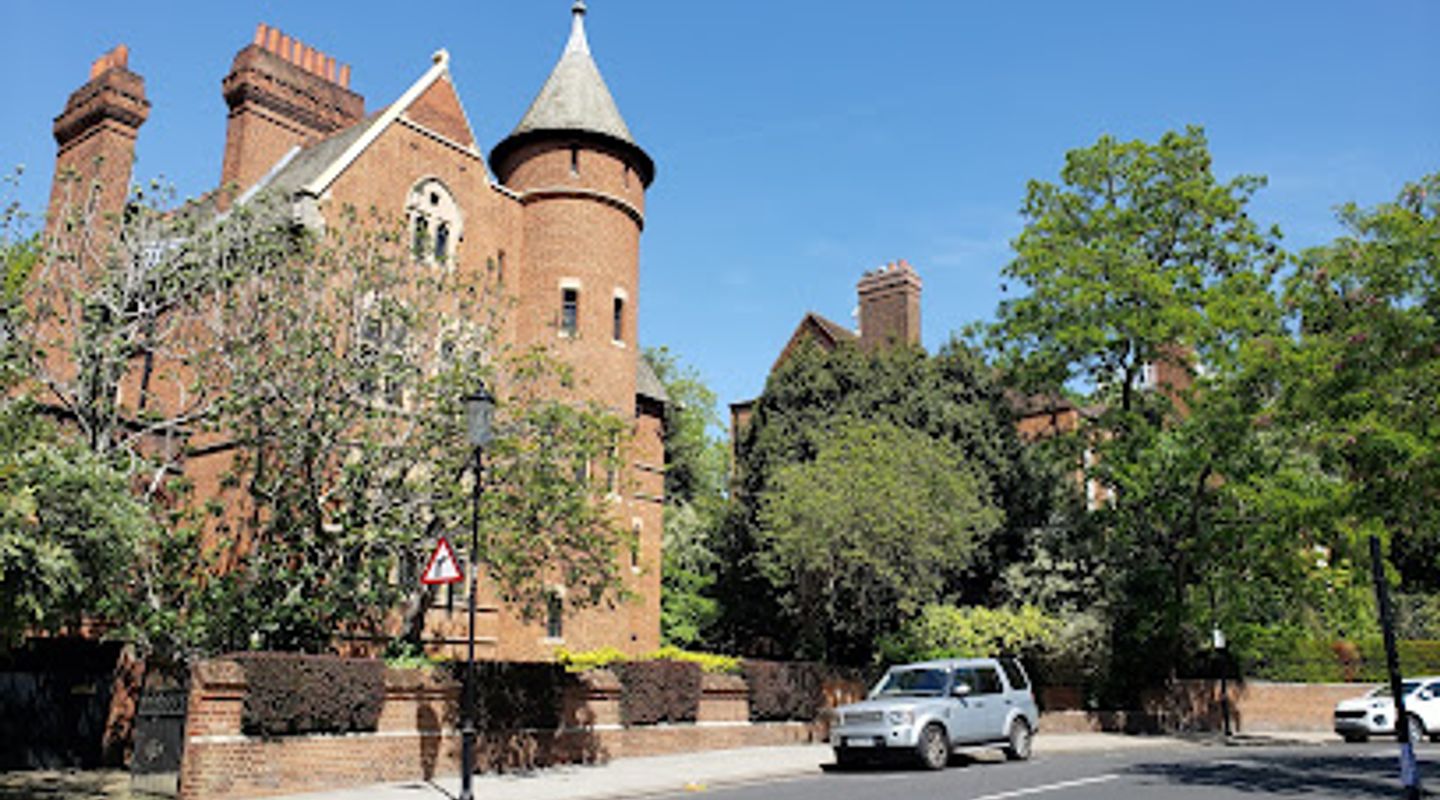
The Tower House, located at 29 Melbury Road in London’s Holland Park, is a late-Victorian townhouse designed and built between 1875 and 1881 by architect William Burges as his personal residence. Celebrated for its French Gothic Revival style, the house features red brick walls with Bath stone dressings, a distinctive cylindrical tower with a conical roof, and richly decorated interiors reflecting medieval themes. Once home to rock legend Jimmy Page, it remains a private historic landmark showcasing Burges’s artistic vision.
On-site amenities
 Information boards
 Seating areas
Opening hours
- Every dayOpen 24 hours
Opening hours as listed on the venue’s Google Business Profile. Hours can change for services and special events, so check with the venue before you go.
- Address
- 29 Melbury Rd, London W14 8AB
- Website
Getting there
London Underground
Bus
Taxi or Rideshare
Discover more about The Tower House
A Vision of Medieval Romance in Victorian London
The Tower House stands as a unique testament to the creative genius of William Burges, a leading figure of the Gothic Revival movement. Designed as his own home, the house was constructed between 1875 and 1881 in the Holland Park district, an area known for its artistic community. Burges’s architectural approach drew heavily on medieval influences, creating a residence that resembles a fairy-tale castle with its red brick façade, Bath stone detailing, and a signature cylindrical tower capped by a conical roof. The building’s asymmetrical composition and geometric forms—triangles, cubes, and cones—give it a striking presence on Melbury Road, distinguishing it from neighboring Victorian homes.
Intricate Craftsmanship and Symbolism Within
Inside, The Tower House reveals a lavishly decorated interior that Burges personally designed with the help of skilled craftsmen such as Thomas Nicholls and Henry Stacy Marks. The ground floor hosts a drawing room, dining room, and library, each richly adorned with stained glass, intricate wood carvings, and furniture inspired by medieval motifs. The first floor contains two bedrooms and an armoury, all echoing Burges’s passion for medieval symbolism and craftsmanship. Themes of time, love, and literature permeate the rooms, creating an immersive atmosphere that blends artistry with functionality. Although much of the original furniture is now housed in museums like the Victoria and Albert Museum, the house remains a remarkable example of a medieval secular interior preserved through the Gothic Revival lens.
From Architectural Gem to Rock Legend’s Sanctuary
After Burges’s death in 1881, The Tower House passed through several owners, including poet John Betjeman and actor Richard Harris, each contributing to its preservation and restoration. In 1972, the house was purchased by Jimmy Page, the legendary guitarist of Led Zeppelin, who used it as a private sanctuary and creative space. During Page’s residency, The Tower House became a musical playground where iconic tracks were conceived, adding a layer of cultural significance to the architectural heritage. The house’s aura is thus enriched by its dual identity as both a masterpiece of Victorian design and a cradle of rock history.
Architectural Details and Artistic Flourishes
The exterior features include Bath stone dressings contrasting with the red brick, green roof slates from Cumbria, and lead gargoyles reminiscent of Burges’s earlier works such as Castell Coch in Wales. The circular staircase turret serves as a visual and structural focal point, while decorative elements like carved capitals and lintels reflect Burges’s fascination with medieval art and mythology. Two lead weather vanes—a mermaid and a menaced heart—symbolize Burges’s personal emblems. A convex mirror in the garden gable cleverly captures the setting sun’s rays, demonstrating the architect’s attention to detail and love for symbolism.
Preservation and Legacy
Designated a Grade I listed building in 1949, The Tower House has undergone restorations to combat deterioration caused by neglect and vandalism during periods of vacancy. Preservation efforts in the 1960s and 1970s, supported by heritage organizations and subsequent owners, have maintained the house’s structural integrity and artistic character. Today, it remains a private residence but stands as an architectural landmark embodying the spirit of the Gothic Revival and the enduring legacy of William Burges’s visionary work.
A Living Piece of History in London’s Artistic Heart
Situated in the culturally rich Holland Park area, The Tower House not only reflects the artistic ambitions of its creator but also the vibrant community that surrounded it. The house’s presence alongside other artistically significant homes contributes to the district’s reputation as a historic hub for creativity and craftsmanship. While access is limited due to its private ownership, the house continues to inspire architects, historians, and music enthusiasts alike, symbolizing a rare fusion of medieval romanticism and modern cultural heritage.
Evendo Review Centre
 Google
Guest reviews
Best time to go
Quietest: Jan, Feb & Dec · before 6am or from 11pm
Busy times are Evendo estimates for a typical year, to help you plan. Actual crowds vary with events, school holidays and the weather.
Explore The Tower House on the map
A handpicked selection of must-see spots near The Tower House, mapped for you.
Get your free copy of our complete guide to The Tower House, delivered straight to you.
Everything on this page, from opening hours and how to get there to Eve’s tips and the best time to go, in one PDF you can read offline, print or share.
Already have an account? Sign in
Your The Tower House guide is ready.
We'll send it to · Not you? Sign out

Getting your guide ready…
We are putting together a fresh copy of the The Tower House guide. This can take up to a minute.
This can take a few moments. If your browser asks, choose Allow so the download can start. You'll find the guide in your Downloads folder.
Nothing happened? Download it again
Sorry, the guide is taking longer than usual. Please try again in a minute, or get it by email instead.
Unlock the best of The Tower House
Skip-the-line tickets, guided tours with entry, and walking tours of the area, booked in a few clicks.


Other nearby places you may find interesting
The closest places of the same kind, if this one is not quite what you had in mind.
-
-
-
-
-


Swipe for more places
More to explore near The Tower House

 Best experiences near The Tower House
 Best hotels near The Tower House
 Best landmarks near The Tower House
 Best attractions near The Tower House
 Best shops near The Tower House
 Best restaurants near The Tower House
 Best bars near The Tower House
Do you manage this location?
Take control to get all the benefits, like improved information, better appearance, and stronger visibility across AI-powered discovery.
Explore more
Explore more of Surrey
Explore the picturesque landscapes, historic landmarks, and charming villages of Surrey, a quintessential English countryside retreat just a stone's throw from London.
Explore Surrey
Explore more of United Kingdom
Discover the United Kingdom: A blend of rich history, stunning landscapes, and vibrant cities, offering a unique travel experience for every visitor.
Explore United Kingdom
