

Whitby Abbey Travel Guide
Free Guide: Gothic ruins on a Yorkshire cliff where history, legend, and literary inspiration converge.


A brief summary of Whitby Abbey
Gothic ruins on a Yorkshire cliff where history, legend, and literary inspiration converge.
Whitby Abbey stands as a haunting clifftop ruin overlooking the Yorkshire seaside town of Whitby, its dramatic Gothic silhouette rising 199 steps above the harbour. Founded in 657 by St Hilda, this English Heritage site has inspired centuries of visitors and famously influenced Bram Stoker's Dracula. The interactive visitor centre reveals over 2,000 years of history through immersive displays, while the expansive grounds offer breathtaking views across the North Sea and the charming town below.
On-site amenities
 Restrooms
 Drink options
 Food options
 Seating areas
 Trash bins
 Information boards
 Visitor centre
Opening hours
- Every day10 am–5 pm
Opening hours as listed on the venue’s Google Business Profile. Hours can change for services and special events, so check with the venue before you go.
- Address
- Abbey Ln, Whitby YO22 4JT
- Phone
- Website
Getting there
Train from York
Bus from Scarborough
Car from Leeds
Open-top tour bus from Whitby town centre
Discover more about Whitby Abbey
A Monument to Fourteen Centuries of Faith and Legend
Whitby Abbey's story begins in 657 when St Hilda founded this double monastery on the windswept Yorkshire cliffs. For over a thousand years, the abbey served as a centre of religious learning, pilgrimage, and spiritual devotion. The site witnessed the historic Synod of Whitby in 664, where Celtic and Roman Christian traditions were reconciled—a pivotal moment in English ecclesiastical history. Within these walls lived saints and scholars, including the poet Caedmon, whose verses were among the earliest recorded in the English language. The abbey bells, according to local legend, still echo beneath the waves after a shipwreck, their haunting sound a reminder of the site's mystical past.
Dissolution and the Rise of Gothic Romance
The abbey's grandeur came to an abrupt end during King Henry VIII's dissolution of the monasteries in the 1530s. The buildings were systematically dismantled, their stones repurposed for local construction, leaving only the skeletal remains that visitors see today. Yet this destruction paradoxically transformed Whitby Abbey into something far more evocative. The soaring Gothic arches, the crumbling walls silhouetted against stormy skies, and the isolation of the clifftop setting captured the imagination of Romantic-era artists and writers. Most famously, Bram Stoker visited Whitby in 1890 and drew inspiration from the abbey's haunting appearance for his novel Dracula, cementing the site's place in literary history and establishing Whitby as the 'Goth capital' of England.
The Modern Visitor Experience
In 2019, a major £1.6 million restoration project transformed Whitby Abbey into a world-class heritage destination. The new visitor centre houses the Ammonite Quest exhibition, an interactive journey through 3,000 years of history featuring dramatic displays and unique artefacts. Visitors can explore the extensive ruins at their own pace, guided by an informative audio guide that brings the abbey's stories to life. The site includes a well-stocked gift shop, a cafe serving refreshments, and accessible facilities including wheelchair-friendly routes and viewing platforms. Information boards scattered throughout the grounds provide context for the major architectural features and historical events that unfolded here.
Commanding Views and Clifftop Drama
Perched 199 steps above Whitby's harbour, the abbey commands some of the most spectacular views on the Yorkshire coast. From the clifftop, visitors gaze across the North Sea, over the red-roofed town below, and along the dramatic coastline that stretches toward Robin Hood's Bay. The changing light throughout the day transforms the ruins—golden in morning sunshine, moody beneath grey skies, and particularly atmospheric at sunset when the Gothic arches glow warmly against darkening clouds. The surrounding landscape, with its windswept grass and wild coastal vegetation, enhances the sense of timelessness and isolation that has captivated visitors for centuries.
A Living Connection to England's Past
Whitby Abbey represents far more than a collection of old stones. It embodies the spiritual aspirations of Anglo-Saxon England, the intellectual achievements of medieval monasticism, the turbulent religious upheavals of the Tudor era, and the Romantic imagination of later centuries. The site continues to inspire artists, writers, historians, and pilgrims who come to walk in the footsteps of St Hilda and Caedmon, to contemplate the mysteries of faith and time, and to experience the profound sense of place that has made Whitby Abbey one of England's most important archaeological and cultural sites.
Evendo Review Centre
 Google
Guest reviews
Best time to go
Quietest: Jan, Feb & Dec · before 8am or from 5pm
Busy times are Evendo estimates for a typical year, to help you plan. Actual crowds vary with events, school holidays and the weather.
Explore Whitby Abbey on the map
A handpicked selection of must-see spots near Whitby Abbey, mapped for you.
Get your free copy of our complete guide to Whitby Abbey, delivered straight to you.
Everything on this page, from opening hours and how to get there to Eve’s tips and the best time to go, in one PDF you can read offline, print or share.
Already have an account? Sign in
Your Whitby Abbey guide is ready.
We'll send it to · Not you? Sign out

Getting your guide ready…
We are putting together a fresh copy of the Whitby Abbey guide. This can take up to a minute.
This can take a few moments. If your browser asks, choose Allow so the download can start. You'll find the guide in your Downloads folder.
Nothing happened? Download it again
Sorry, the guide is taking longer than usual. Please try again in a minute, or get it by email instead.
Unlock the best of Whitby Abbey
Skip-the-line tickets, guided tours with entry, and walking tours of the area, booked in a few clicks.

 Tour
TourWriting Dracula: A Self-Guided Walk of Stoker's Whitby
from $8.54 Tour
TourEssential Whitby: Discover the town’s legends on a self-guided audio tour
from $9.11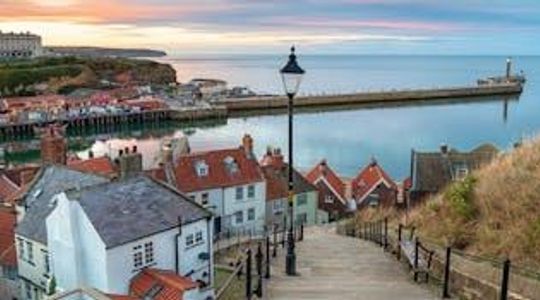 Tour
TourExplore Whitby's legends and treasures on a self-guided audio tour
from $11.39 Tour
TourCastles Coasts & Gothic Legends : Whitby, the Abbey & many more
from $607.32
Other nearby places you may find interesting
The closest places of the same kind, if this one is not quite what you had in mind.
-
-
-
-
-


Swipe for more places
More to explore near Whitby Abbey

 Best experiences near Whitby Abbey
 Best hotels near Whitby Abbey
 Best landmarks near Whitby Abbey
 Best attractions near Whitby Abbey
 Best shops near Whitby Abbey
 Best restaurants near Whitby Abbey
 Best bars near Whitby Abbey
Do you manage this location?
Take control to get all the benefits, like improved information, better appearance, and stronger visibility across AI-powered discovery.
Explore more

Explore more of Whitby
Discover Whitby: A picturesque coastal town where history meets the sea, offering breathtaking views, charming streets, and a touch of Gothic allure.
Explore Whitby
Explore more of United Kingdom
Discover the United Kingdom: A blend of rich history, stunning landscapes, and vibrant cities, offering a unique travel experience for every visitor.
Explore United Kingdom
