
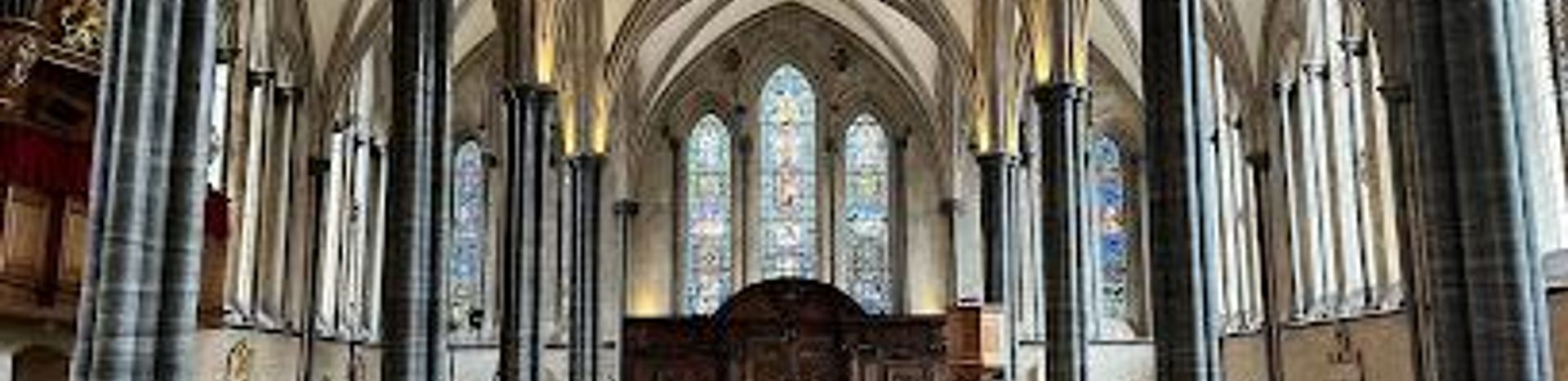
Temple Church
Medieval fortress of faith where crusading knights shaped English law and history.
The Crusaders' Sacred Stronghold
Temple Church was built by the Knights Templar, a military order of crusading monks founded in 1118 to protect pilgrims traveling to the Holy Land. In 1162, these warrior-monks established their English headquarters at this site just west of the medieval City of London, and the surrounding area became known as Temple. The iconic round nave was consecrated in 1185 by Heraclius, the Patriarch of Jerusalem himself, and was deliberately designed to mirror the Church of the Holy Sepulchre in Jerusalem—the holiest site in Christendom. This circular design makes Temple Church one of only four round churches in England, a distinctive architectural statement of the Templars' spiritual devotion and their connection to the Holy Land. The chancel, with its soaring Gothic features, was added later in 1240, creating the two-part structure visitors see today.Power, Wealth, and Royal Intrigue
Over the centuries following their establishment, the Knights Templar grew extraordinarily powerful and wealthy, functioning not merely as warriors but as international bankers, diplomatic brokers, and trusted advisors to successive English monarchs. The Temple Church and its surrounding compound became a center of England's religious, political, and economic life. This prominence reached its zenith during the baronial crisis of 1213–1215, when King John faced rebellion from barons demanding limitations on royal power. The king used Temple Church as one of his two principal bases in London (the other being the Tower of London) and relied on the Templars' protection and vast treasury. In January 1215, the knight William Marshall, later called "the greatest knight that ever lived," mediated a dramatic meeting at Temple Church between the king and the armed barons. The agreements reached here set the stage for the signing of the Magna Carta at Runnymede just months later. Nine medieval effigies of knights, including those of William Marshall and his son, remain in the nave as silent witnesses to these momentous events.Transformation and Survival Through the Centuries
The Templars' power waned in the early 14th century amid accusations of heresy and financial disputes with the papacy. By 1312, the order was disbanded and their properties seized by the Crown or transferred to other religious orders. From the late 14th century onward, much of the Temple area was leased to lawyers, and two legal institutions—the Inner Temple and Middle Temple—were established here, transforming the sacred enclave into the heart of England's legal profession. This transition preserved the church and its surroundings, though the building underwent extensive restoration work over subsequent centuries. Sir Christopher Wren refurbished the church after the Great Fire of 1666 (which the church miraculously escaped), and major 19th-century restoration work using Bath stone refreshed much of the exterior and interior. The church's status as a Royal Peculiar—a church belonging directly to the monarch rather than to a diocese—ensured its continued prominence and protection.War, Destruction, and Restoration
Temple Church's greatest trial came on the night of 10–11 May 1941, during the most devastating German air raid of the Blitz. Incendiary bombs set the church ablaze, destroying much of the interior, including the roof of the round nave. Nearly everything inside was consumed or severely damaged. However, the church's medieval layout and distinctive round tower survived, and the building was meticulously restored after the war, preserving as much of the original structure as possible. Today, visitors can still see the magnificent western doorway to the round tower, where the original medieval columns stand alongside Victorian replacements, a visible testament to centuries of care and reconstruction.Architecture and Sacred Space
The church's architecture is a remarkable fusion of Romanesque and Gothic styles. The round nave, with its soaring columns and acoustically perfect interior, creates a numinous and contemplative atmosphere. The chancel features distinctive Gothic elements, and the altar contains wood carvings of the Ten Commandments, the Lord's Prayer, and Templar symbols. The interior houses not only the nine medieval effigies but also two statues in glass display cases depicting the Surety Barons commissioned to ensure compliance with the Magna Carta. The courtyard surrounding the church, part of the historic Temple enclave, offers a serene retreat with winding stone streets, gardens, and nearby historic buildings that transport visitors back to medieval London.A Living Monument to History and Faith
Temple Church remains a fully functioning place of worship, with regular services, choral performances, and organ recitals that echo through its ancient spaces. It is also home to a Magna Carta exhibition and serves as a tangible link between the crusading age, the birth of English constitutional law, and the development of the common law tradition that influenced the United States Constitution. Hidden behind gates just off Fleet Street, this remarkable building offers a rare opportunity to stand in a space where medieval knights took their oaths, where kings sought counsel, and where the foundations of modern democracy were negotiated.Local tips
- The church entrance is tucked behind gates and can be difficult to find; look for the gates near the Royal Courts of Justice on the Strand, or follow other visitors entering or exiting.
- Visit on a weekday morning (10:00–11:00 AM) to avoid any scheduled services and enjoy a more peaceful experience with the medieval effigies and round nave.
- Dress respectfully and remain quiet during your visit, as this is an active place of worship where baptisms, confirmations, and other services regularly take place.
- Combine your visit with a walk through the surrounding Temple enclave to explore historic gardens, courtyards, and nearby sites such as Oliver Goldsmith's burial spot and the Inns of Court.
- If you visit during a choral performance or organ recital, you may hear some of the finest church music in London broadcast to the public.

A brief summary to Temple Church
- Temple, London, Temple, EC4Y 7BB, GB
- +442073538559
Getting There
-
Underground Train
Temple Station on the District and Circle lines is approximately 5 minutes' walk from Temple Church. Exit the station and follow signs toward Fleet Street; the church entrance is located near the Royal Courts of Justice. Alternative nearby stations include Blackfriars (8 minutes' walk) on the District, Circle, and Hammersmith & City lines.
-
Bus
Multiple bus routes serve the area, including routes 4, 15, 23, 26, 76, and 341, which travel along Fleet Street. Journey times from central London vary between 10–25 minutes depending on traffic and starting point. Buses stop near the Royal Courts of Justice, from which Temple Church is a short walk.
-
National Rail Train
City Thameslink Station is approximately 8 minutes' walk from Temple Church. This station serves trains from across London and the southeast. Exit and head toward Fleet Street; the church is located just off this main thoroughfare near the Royal Courts of Justice.
-
Private Vehicle
Access to the Temple enclave by car is restricted and controlled. Vehicles may enter via Tudor Street Gate and exit via the Embankment between 6:00 AM and 9:00 PM Monday to Friday only. At all other times, vehicles must enter and exit via Tudor Street Gate. Parking within the Temple is limited and subject to restrictions; public car parks are available nearby on Fleet Street and in surrounding areas, typically costing £2–4 per hour.


