Holgate Windmill, Yorkshire And The Humber Travel Guide
Britain's oldest working brick windmill, still grinding flour after 255 years on a suburban roundabout.
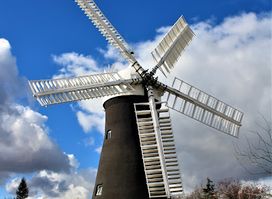
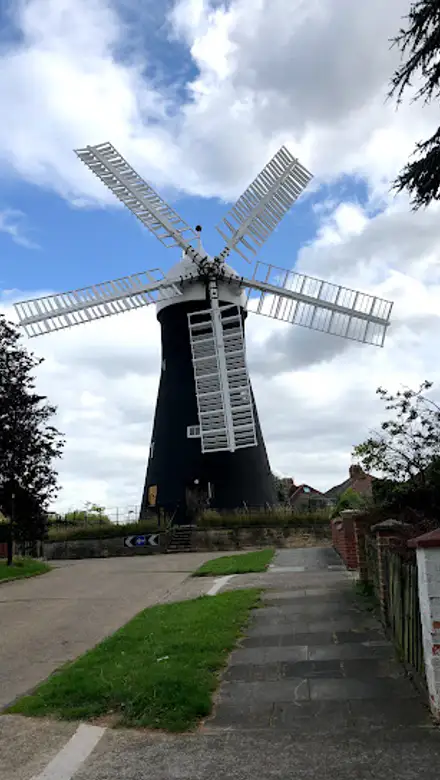
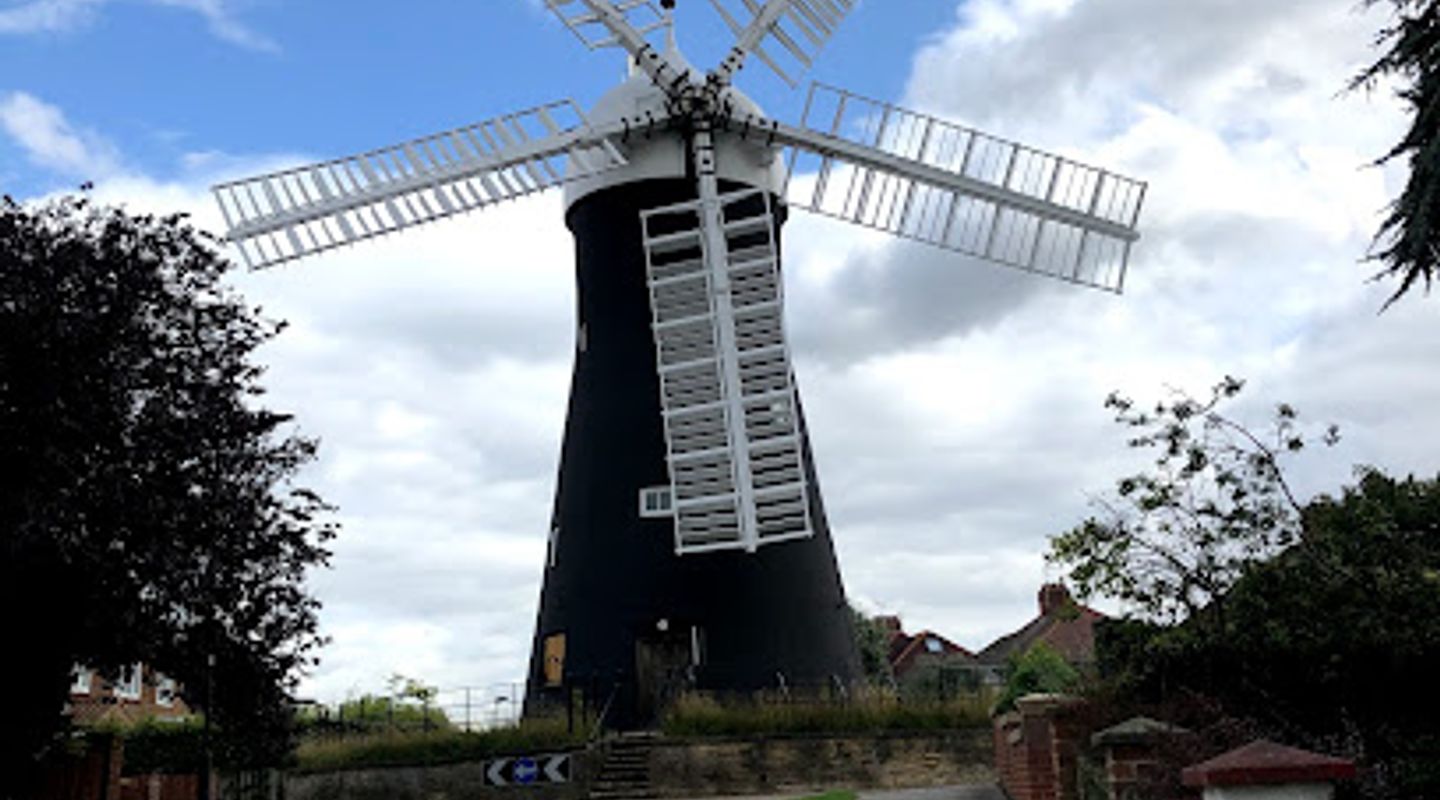
Britain's oldest working brick tower windmill, Holgate Windmill stands as a remarkable survivor of Yorkshire's milling heritage. Built in 1770 by George Waud, this five-sailed mill operated continuously for over 160 years before falling into disrepair. Restored to full working order in 2012 by dedicated volunteers, it now grinds traditional stone-ground flour and welcomes visitors to explore its five storeys of authentic machinery. Perched on a roundabout in a suburban housing estate, the 90-foot tower offers unexpected views of York Minster and provides a fascinating glimpse into 18th-century industrial engineering.
A brief summary to Holgate Windmill
- Windmill Rise, York, Holgate, YO26 4TX, GB
- Click to display
- Duration: 0.5 to 1.5 hours
- Budget
-
 Outdoor
- Mobile reception: 4 out of 5
- Wednesday 10 am-12 pm
- Friday 10 am-12 pm
- Saturday 10 am-4 pm

Know before you go
Hi, I'm Eve. Here are a few practical things to know before exploring Holgate Windmill.
- Wear sturdy, closed-toe shoes and avoid loose clothing or scarves, as steep ladders connect all five floors and moving machinery requires careful navigation.
- Visit on Wednesday or Friday mornings to observe active milling sessions and see the machinery in operation, which provides deeper insight into the mill's working processes.
- Check opening hours in advance, as the mill operates limited days and hours; Saturday afternoons offer extended access compared to weekday morning sessions.
- Bring a camera to capture views of York Minster from the upper floors, particularly on clear days when the cathedral is visible across the suburban landscape.
- Purchase stone-ground flour from the on-site shop to support the mill's restoration and maintenance, or inquire about local retailers stocking Holgate flour.
Do you manage this location?
Take control to get all the benefits, like improved information, better appearance, and stronger visibility across AI-powered discovery. Learn more about listing your business on Evendo
Activate your presenceOther nearby places you may find interesting
The closest places of the same kind, if this one is not quite what you had in mind.




Explore Holgate Windmill on the Map
A handpicked selection of must-see spots near Holgate Windmill, mapped for you.
Getting There
-
Walking from York City Centre
A pleasant 30-minute walk from York's medieval city centre through residential streets leads directly to Holgate Windmill. Head northwest from the Minster, passing through the Holgate suburb. The route is flat, well-lit, and follows established pavements. No booking required; arrive during published opening hours.
-
Bus from York City Centre
Local buses serve the Holgate area from York city centre, with journey times of 10–15 minutes depending on route and traffic. Services run regularly throughout the day. Check Transdev York or local transport websites for current routes serving Windmill Rise. Fares typically range from £1.50–£2.50 per journey.
-
Taxi or Ride-Share from York City Centre
Taxis and ride-share services from York city centre to Holgate Windmill take approximately 10–15 minutes depending on traffic. Estimated fares range from £8–£15. Street parking is available near the windmill on Windmill Rise, though spaces are limited due to the suburban roundabout location.
-
Cycling from York City Centre
Cycling to Holgate Windmill from York city centre takes approximately 15–20 minutes via established cycle routes through residential areas. The terrain is relatively flat with gentle gradients. Secure bike parking is available on-site. This option provides flexibility and avoids parking constraints.
For the on-the-go comforts that matter to you
-
 Restrooms
-
 Food Options
-
 Seating Areas
-
 Information Boards
Discover more about Holgate Windmill
A Quarter-Millennium of Milling Heritage
Holgate Windmill was built in 1770 by George Waud, a miller from Barlow near Selby who purchased the land on 27 December 1768. By October 1770, the mill was fully operational, and George established his residence in the adjoining mill house with his family. The original structure was one storey lower than the mill visitors see today, constructed primarily of wood with minimal metal components. The mill's location in open countryside provided direct access to grain supplies from local farms, and the high-quality flour produced here was transported into York via the original horse and cart track, which survives today as a narrow snicket from Acomb Road.George Waud, followed by his son and grandson, operated the mill for over 80 years until 1851. The mill then passed through several owners and millers, including John Musham and Joseph Peart, whose tenure marked a transformative period. In the late 1850s and early 1860s, Peart undertook substantial improvements, raising the tower by 8 feet 9 inches, installing a steam engine and chimney, and adding an extra floor to achieve the mill's present height. These upgrades reflected the competitive pressures facing smaller mills as industrial milling technology advanced. The mill continued grinding grain using wind power until 1930, when storm damage forced a transition to electric motors. Production ceased entirely in 1933, marking the end of over 160 years of continuous operation.Decades of Decline and Remarkable Restoration
Following its closure, Holgate Windmill stood abandoned and deteriorating for nearly seven decades. The York City Council acquired the building in 1939, but it received little attention as the surrounding landscape transformed into a post-war housing estate. The mill's distinctive silhouette became an incongruous landmark, rising from a suburban roundabout rather than the open countryside where it was originally built. This period of neglect threatened to erase a unique piece of Yorkshire's industrial past.In 2001, the Holgate Windmill Preservation Society was established by passionate volunteers determined to restore the structure to working condition. The restoration project proved ambitious and costly, ultimately exceeding £500,000 in direct expenses, with additional work undertaken by York City Council to strengthen the tower and countless voluntary hours contributed by society members. The restoration was completed in 2012, culminating in the official opening on 23 June that year. A new white cap with ball finial was installed in 2009, five new sails were fitted in 2011, and shutters were added in 2012. For the first time since 1930, the mill's sails turned in the wind, powered by natural forces rather than mechanical assistance.Engineering Excellence and Five-Sailed Innovation
Holgate Windmill represents a pinnacle of 18th-century milling engineering. The five-sailed design reflects research conducted by engineer John Smeaton, whose studies suggested that five sails provided optimal efficiency for wind-powered mills. This configuration became popular throughout East Yorkshire and Lincolnshire, though only four five-sailed mills remain in the entire country today, making Holgate exceptionally rare. The mill's five Double Patent sails are mounted on a cast-iron windshaft in the distinctive Lincolnshire cross style, a configuration that distributes forces evenly across the structure.The mill's internal machinery comprises four pairs of millstones—three pairs of French Burrs and one pair of Peaks—capable of grinding grain into flour with remarkable consistency. The power transmission system channels wind energy from the rotating sails through the cap's brake wheel and wallower gear, down the drive shaft to the stones floor, where the central spur wheel engages the stone nuts to turn the runner stones. Visitors ascending the five storeys encounter the meal floor, stones floor, bin floor, dust floor, and cap, each revealing different aspects of the milling process. The mill's original black ogee cap was replaced with a white cap in 1939, which has become its distinctive visual signature.Contemporary Operations and Visitor Experience
Today, Holgate Windmill operates as both a working mill and heritage attraction. The volunteer-run operation grinds traditional stone-ground flour using wind power when conditions permit, and the flour is sold on-site and in select York retailers. Milling sessions typically occur on Wednesday and Friday mornings, allowing visitors to witness the machinery in action and understand the rhythms of historical grain processing. The ground floor contains a shop stocked with flour and mill-themed merchandise, providing direct support for the mill's ongoing maintenance.Visitors should prepare for a physically engaging experience. Access between floors requires climbing steep ladders, necessitating sensible footwear and appropriate clothing. The mill's five storeys offer progressively expansive views, with upper floors providing unexpected vistas of York Minster framed against the suburban landscape. This juxtaposition—a working 18th-century mill rising from a modern housing estate—creates a distinctive and memorable visual experience. The mill's location on a roundabout, while seemingly incongruous, has preserved the structure through decades when surrounding land was developed, inadvertently protecting this irreplaceable heritage asset.












Your all‑in‑one travel companion app
Explore expert travel guides, compare and book tours, experiences, hotels, and more—all from the palm of your hand. Download now for seamless trip planning wherever your wanderlust takes you.


Explore More of Yorkshire And The Humber
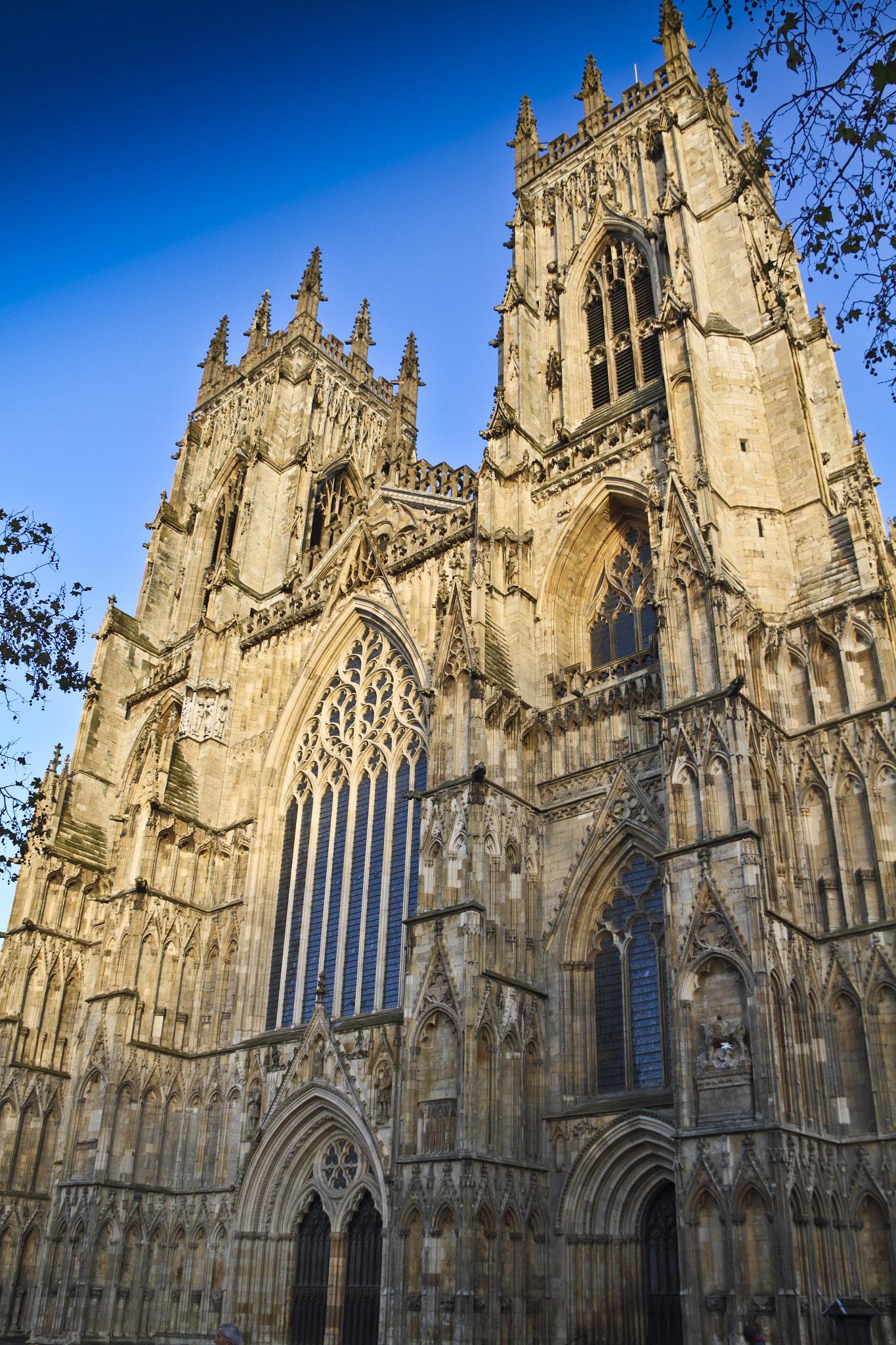
Looking beyond Holgate Windmill? Discover Yorkshire And The Humber for broader travel guides, local hot-spots, and regional highlights.
Explore Yorkshire And The Humber