

Free Yorkshire and the Humber Travel Guide & Mobile App
Explore Yorkshire and the Humber with free travel guides. Discover regional history, expert tips, proposed trips, and audio guides on web or mobile app.


Explore Yorkshire and the Humber for medieval York, industrial heritage, moorland walks, coastal cliffs, market towns and distinctive northern food.
Read more about Yorkshire and the Humber
When is the best time to visit Yorkshire and the Humber?
Best: June–August · 18–19°C| Month | High (°C) | Rainfall (mm) |
|---|---|---|
| January | 6 | 60 |
| February | 6 | 50 |
| March | 9 | 55 |
| April | 12 | 50 |
| May | 15 | 55 |
| June (best) | 18 | 60 |
| July (best) | 19 | 60 |
| August (best) | 19 | 60 |
| September | 17 | 55 |
| October | 13 | 60 |
| November | 8 | 65 |
| December | 6 | 70 |
Getting to and around Yorkshire and the Humber
How to get there
Transportation
Top city travel guides in Yorkshire and the Humber
The cities of Yorkshire and the Humber, and the easiest places to base yourself.
-
-

-
-

-

-


Swipe for more cities
Destinations in Yorkshire and the Humber
Resorts, valleys and scenic spots worth a trip of their own.
-

-

-

-

-

-


Swipe for more destinations
Best attractions in Yorkshire and the Humber
The region’s attractions range from the historic core of York and its Roman, Viking and medieval collections to the industrial museums, canals and converted mills of West Yorkshire and Sheffield. Major heritage properties include Fountains Abbey and Studley Royal, Castle Howard, Harewood House, Wentworth Woodhouse and the surviving industrial settlement at Saltaire. The Yorkshire Dales offer walking, caving, waterfalls and limestone scenery, while the North York Moors combine open uplands with abbeys, villages and heritage railway journeys. Along the coast, Whitby, Scarborough, Filey, Bridlington and the Flamborough Head area provide beaches, harbours, cliff walks and maritime history. The East Riding’s Wolds suit walking and cycling, and the Humber’s estuarine landscapes are valuable for birdwatching. City museums, theatres, galleries, markets and music venues add a strong cultural dimension in Leeds, Sheffield, Bradford, Hull and York. The attractions are not concentrated in one resort: they reflect the region’s combination of protected countryside, working landscapes, historic cities, seafaring communities and industrial innovation.
-
National park
North York Moors National Park
Explore 44,000 hectares of heather moorland, historic villages, and dramatic coastline in one of England’s most tranquil and scenic national parks.
-
Shopping Centre
Victoria Leeds
Discover luxury shopping, historic arcades, and vibrant dining at Victoria Leeds, the heart of Leeds city centre’s premier retail experience.
-
 Country house
Castle Howard
Explore Castle Howard’s stunning Baroque architecture, vast gardens, and rich history in a majestic North Yorkshire estate near York.
-
Museum
Yorkshire Air Museum and Allied Air Forces Memorial
Explore 60+ historic aircraft on a WWII RAF base where history takes flight and stories of courage endure.



Best landmarks in Yorkshire and the Humber
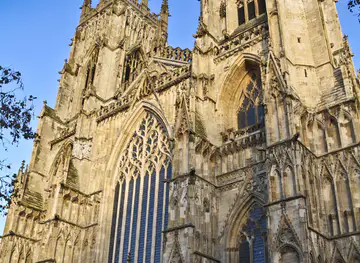
York Minster is the region’s most prominent ecclesiastical landmark, dominating the historic city with its Gothic architecture and stained glass, while York’s medieval walls and the narrow Shambles express the city’s long urban continuity. The ruined arches and cloisters of Fountains Abbey, set within the Studley Royal landscape, are among northern England’s most important monastic remains. Saltaire’s valley settlement, mills and civic buildings form an unusually complete industrial landmark, and Wentworth Woodhouse and Castle Howard represent contrasting traditions of aristocratic country-house architecture. In Sheffield, the Cutlers’ Hall and surviving industrial landscapes recall the city’s metalworking history; in Halifax, the Piece Hall records the commercial importance of the wool trade. On the coast, Whitby Abbey occupies a headland above the harbour, while Flamborough Head is defined by white chalk cliffs, sea stacks and lighthouse scenery. The Humber Bridge, linking East Yorkshire with northern Lincolnshire, is a major modern engineering landmark and a visible symbol of the estuary’s transport and industrial significance.
-
Market
Shambles Market
Discover York’s bustling Shambles Market—historic charm meets vibrant stalls and global street food daily from 9am to 5pm.
-
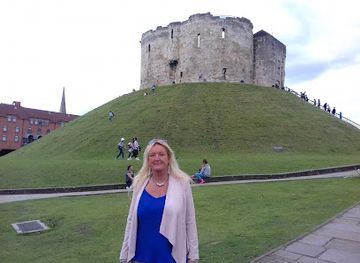
Historical landmark
Clifford's Tower, York
Explore Clifford's Tower, York’s iconic Norman keep with a dramatic past, offering panoramic views and centuries of history in England’s ancient city.
-
Castle
Middleham Castle
Medieval fortress and childhood home of King Richard III, where history's greatest power struggles unfolded.
-
Pub
Roman Bath
Discover ancient Roman baths beneath a lively York pub, blending history and hospitality in the heart of the city.
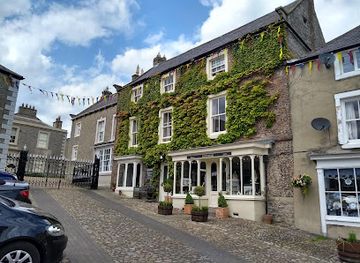

Explore Yorkshire and the Humber on the map
Plan your trip on one map. See where the top cities, national parks and sights are, and book hotels and experiences in a few clicks.
Best hotels in Yorkshire and the Humber
Best restaurants in Yorkshire and the Humber
Dining in Yorkshire and the Humber ranges from traditional pubs and tearooms to contemporary restaurants in Leeds, Sheffield, York, Hull and other larger towns. Yorkshire pudding is commonly served with a roast rather than as a separate regional meal, while Wensleydale cheese, Yorkshire rhubarb, game, farm produce and locally made baking appear widely across the region. The east coast and Humber area provide fish and seafood, particularly in harbour towns and seaside resorts, although menus naturally vary by season and location. Farmers’ markets, delis and farm shops are useful for sampling cheeses, preserves, breads, meats and confectionery from smaller producers. In the Dales and North York Moors, rural inns often provide substantial traditional meals, whereas city dining scenes include South Asian, Middle Eastern, European and modern British cooking shaped by diverse urban communities. Visitors should distinguish local specialities from dishes associated with northern England more broadly, as the region’s food culture is both specifically Yorkshire and part of a wider national tradition.
-
French
Rustique Restaurant
Experience authentic French cuisine in a vibrant York bistro with classic dishes, warm ambiance, and charming historic surroundings.
-
Hotel
Guy Fawkes Inn
Historic inn with cozy period rooms, lively pub, and unbeatable central location near York Minster.
-
Modern European
Ate O'Clock
Enchanting modern British dining in York’s fairy-lit alley, blending classic flavors with stylish charm and warm hospitality.
-
Modern European
The Star Inn The City
Elegant riverside dining in York offering seasonal British cuisine with a rustic countryside charm and stunning views of the River Ouse.


Best bars in Yorkshire and the Humber
Evening life is most varied in Leeds, Sheffield, York, Hull and Bradford, where visitors will find pubs, cocktail bars, live music, theatres, comedy venues and a limited but established club scene. York’s historic inns and city-centre bars sit alongside modern venues, while Leeds and Sheffield have larger concentrations of nightlife, reflecting their student populations and broad cultural programmes. Hull offers pubs, music and arts venues connected with its maritime city identity, and Bradford has a strong restaurant and evening economy. In smaller towns and coastal resorts, nightlife is more likely to centre on traditional pubs, hotel bars, breweries, restaurants and seasonal entertainment than on large clubs. Rural evenings in the Dales, Wolds and North York Moors are generally quiet, with village pubs and occasional live music providing the main options; check return transport before travelling out of town and do not assume late services exist.
-
Bar
House Of The Trembling Madness // Stonegate (No table bookings)
York’s iconic medieval-inspired bar with an unmatched craft beer selection and a quirky, labyrinthine atmosphere on historic Stonegate.
-
Pub
Ye Olde Starre Inne
Historic and welcoming pub on York’s Stonegate, serving hearty British classics in a charming medieval setting.
-
Pub
Valhalla York
Experience York’s vibrant Viking-themed pub with generous sharing platters, extensive rums, and a lively, welcoming atmosphere.
-
Pub
Golden Fleece York
York’s oldest haunted pub offering historic charm, classic ales, cozy rooms, and a lively social atmosphere in the heart of the city.


Best nightclubs in Yorkshire and the Humber
Evening life is most varied in Leeds, Sheffield, York, Hull and Bradford, where visitors will find pubs, cocktail bars, live music, theatres, comedy venues and a limited but established club scene. York’s historic inns and city-centre bars sit alongside modern venues, while Leeds and Sheffield have larger concentrations of nightlife, reflecting their student populations and broad cultural programmes. Hull offers pubs, music and arts venues connected with its maritime city identity, and Bradford has a strong restaurant and evening economy. In smaller towns and coastal resorts, nightlife is more likely to centre on traditional pubs, hotel bars, breweries, restaurants and seasonal entertainment than on large clubs. Rural evenings in the Dales, Wolds and North York Moors are generally quiet, with village pubs and occasional live music providing the main options; check return transport before travelling out of town and do not assume late services exist.
-
Nightclub
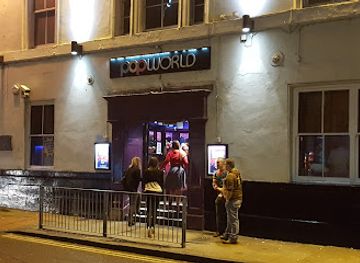
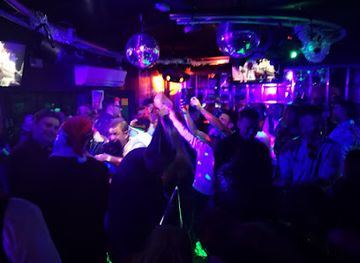
Popworld York
York’s ultimate pop and dance nightclub with a unique revolving dancefloor and five decades of party anthems.
-
Nightclub
Flares - York
Experience York’s vibrant retro nightclub with disco vibes, classic hits, and an inclusive party atmosphere at Flares on Tanner Row.
-
Nightclub
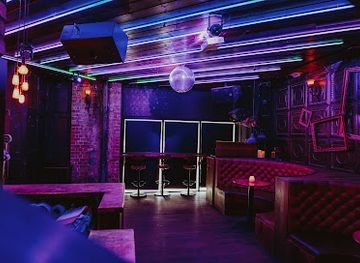
The Backroom
A sleek, speakeasy-style nightclub in Leeds city centre offering eclectic music, craft cocktails, and vibrant weekend nightlife under a historic railway bridge.
-
Night Club
Vudu Lounge
York’s stylish late-night hotspot blending luxury cocktails and lively club vibes until the early hours.

Best shops in Yorkshire and the Humber
Shopping varies markedly between regional cities, historic towns, coastal resorts and rural communities. Leeds has the broadest concentration of department stores, independent retailers, arcades and contemporary fashion, while Sheffield, York, Hull and Bradford combine central shopping with markets, specialist food shops and cultural retail. York is particularly suited to independent boutiques, books, crafts and heritage-themed goods, although visitors should look beyond the busiest medieval streets for everyday stores. Market towns such as Beverley, Harrogate, Skipton, Richmond, Settle and Helmsley offer antiques, galleries, outdoor equipment, local produce and smaller independent businesses rather than large-scale retail. Farm shops and delicatessens are good places to buy Wensleydale and other regional cheeses, preserves, baking, Yorkshire rhubarb products and locally produced drinks. Coastal towns add traditional seaside goods and specialist food shops, while former mill districts sometimes contain makers’ studios, galleries and craft businesses. Opening days and seasonal availability are especially variable in rural areas.
-
Shopping outlet
Designer Outlet York
Discover over 100 designer brands with up to 60% off, family-friendly amenities, and a vibrant Food Quarter just minutes from York city centre.
-
Shopping Centre
Victoria Leeds
Premier shopping fusion of Victorian heritage and contemporary luxury in Leeds city centre
-
Shopping outlet
Junction 32 Shopping Outlet
A spacious, family‑friendly outlet park near Castleford with over 80 brands, free parking, and relaxed shopping in a modern, open layout.
-
Shopping Centre
Leeds Corn Exchange
Victorian landmark housing 80+ independent shops, artisan vendors, and creative community spaces in Leeds city centre.


Get your free copy of our complete guide to Yorkshire and the Humber, delivered straight to you.
Everything on this page, from attractions and restaurants to essentials and local phrases, in one PDF you can read offline, print or share.
Already have an account? Sign in
Your Yorkshire and the Humber guide is ready.
We'll send it to · Not you? Sign out

Getting your guide ready…
We are putting together a fresh copy of the Yorkshire and the Humber guide. This can take up to a minute.
This can take a few moments. If your browser asks, choose Allow so the download can start. You'll find the guide in your Downloads folder.
Nothing happened? Download it again
Sorry, the guide is taking longer than usual. Please try again in a minute, or get it by email instead.
Yorkshire and the Humber essentials
Currency and Payment
Safety
Emergency Situations
Do's and Don'ts
Local Tips
From Eve
Local phrases worth knowing
You don't need to get them perfect. A few words go a long way, and locals appreciate the effort.
Basics
| English | Local | Say it |
|---|---|---|
| Hello | Ey up | [ay up] |
| Goodbye | Ta-ra | [ta-ra] |
| Yes | Aye | [ai] |
| No | Naa | [nah] |
| Please/You're welcome | Please/No problem | [pleez/no prob] |
| Thank you | Cheers | [cheerz] |
| Excuse me/Sorry | S'cuse me/Sorry | [skews mee/sorri] |
| How are you? | How's tha? | [how's tha] |
| Fine. And you? | Reet, and thee? | [reet, and thee] |
| Do you speak English? | D'ya speak English? | [duh ya speek ing-lish] |
| I don't understand | I don't get it | [I dont get it] |
Eating & Drinking
| English | Local | Say it |
|---|---|---|
| I'd like to see the menu, please | Can I see t'menu, please? | [can I see t'men-yoo, pleez] |
| I don't eat meat | I don't eat meat | [I dont eet meet] |
| Cheers! | Cheers! | [cheerz] |
| I would like to pay, please | Can I pay, please? | [can I pay, pleez] |
Emergencies
| English | Local | Say it |
|---|---|---|
| Help! | Help! | [help] |
| Go away! | Clear off! | [clear off] |
| Call the Police! | Ring t'police! | [ring t'police] |
| Call a doctor! | Get a doctor! | [get a doktor] |
| I'm lost | I’m lost | [I'm lost] |
| I'm ill | I feel poorly | [I feel poor-lee] |
Shopping
| English | Local | Say it |
|---|---|---|
| I'd like to buy... | I want to buy... | [I want to buy] |
| I'm just looking | Just browsing | [just browsin] |
| How much is it? | How much's this? | [how much's this] |
| That's too expensive | That's a bit steep | [that's a bit steep] |
| Can you lower the price? | Can you knock it down? | [can you nok it down] |
Time & Numbers
| English | Local | Say it |
|---|---|---|
| What time is it? | What time's it? | [what time's it] |
| It's one o'clock | It's one o'clock | [it's one o'clock] |
| Half past (10) | Half past ten | [half past ten] |
| Morning | Mornin' | [mornin] |
| Afternoon | Arvo | [arvo] |
| Evening | Evenin' | [evenin] |
| Yesterday | Yesterday | [yesterday] |
| Today | Today | [today] |
| Tomorrow | Tomorrow | [tomorrow] |
| 1 | One | [one] |
| 2 | Two | [two] |
| 3 | Three | [three] |
| 4 | Four | [four] |
| 5 | Five | [five] |
| 6 | Six | [six] |
| 7 | Seven | [seven] |
| 8 | Eight | [eight] |
| 9 | Nine | [nine] |
| 10 | Ten | [ten] |
Transport & Directions
| English | Local | Say it |
|---|---|---|
| Where's a/the...? | Where's t'...? | [where's t'...?] |
| What's the address? | What's t'address? | [what's t'address] |
| Can you show me (on the map)? | Can you show me on t'map? | [can you show me on t'map] |
| When's the next (bus)? | When's t'next bus? | [when's t'next bus] |
| A ticket (to ....) | A ticket to ... | [a tiket to ...] |
History of Yorkshire and the Humber
Prehistoric landscapes and Roman settlement
Yorkshire and the Humber preserves evidence of prehistoric activity ranging from burial monuments and ceremonial landscapes to ancient routeways across the uplands. The Romans established Eboracum at York, a major military and administrative centre on the River Ouse, while roads and forts connected the settlement with northern Britain. Roman influence extended through the Humber region and across the Pennine approaches, although later towns did not always grow directly from Roman sites. Archaeological remains, museum collections and the enduring importance of York’s location reflect the region’s early role as a meeting point between northern routes and the sea.
Anglian kingdoms and the Viking legacy
After Roman rule ended, much of the region became part of the Anglian kingdom of Deira and subsequently the larger kingdom of Northumbria. York remained an important centre of power and religion. Scandinavian settlers captured the city in the ninth century, creating the Viking kingdom of Jórvík, whose influence extended across parts of northern and eastern England. Excavations beneath modern York have revealed streets, workshops and domestic objects from this period. Viking place-names and archaeological evidence remain especially important to the region’s cultural history, although later Norman rule reshaped its political and architectural landscape.
The Norman north and medieval Yorkshire
Following the Norman Conquest, the north experienced severe military repression during the Harrying of the North in the winter of 1069–70. Norman lordship was then consolidated through castles, religious foundations and strategically placed boroughs. York Castle, Richmond Castle and numerous monastic houses formed part of this new political order, while abbeys such as Rievaulx, Fountains and Whitby became major landowners and centres of learning. Medieval wool production and trade supported towns including York, Beverley, Leeds and Bradford. The region’s surviving churches, monasteries, market places and defensive sites show how closely religion, commerce and territorial power were connected.
The Pilgrimage of Grace and Tudor change
The dissolution of the monasteries under Henry VIII transformed Yorkshire and the wider Humber area. Religious houses lost their communities and estates, while some buildings were dismantled, adapted into residences or left as ruins. In 1536, opposition to the Reformation and other grievances produced the Pilgrimage of Grace, the largest armed rising of the Tudor period. It drew substantial support in Yorkshire and neighbouring northern counties before collapsing after negotiations and subsequent repression. The episode illustrates the region’s complex relationship with central government and helps explain the dramatic change from powerful monastic landscapes to privately held estates.
The wool economy and industrial revolution
Yorkshire’s prosperity was long connected with wool, but from the eighteenth century textile production became increasingly mechanised and concentrated in mill towns. Leeds, Bradford, Halifax, Huddersfield, Keighley and surrounding valleys developed spinning, weaving, dyeing and engineering industries. Waterpower, coal, canals and railways allowed factories to expand, while workers migrated into dense urban communities. Saltaire, founded by Titus Salt near Bradford, is a particularly coherent surviving example of an industrial settlement. The region’s mills, warehouses, canals and workers’ housing remain visible reminders of the wealth and social inequalities generated by industrialisation.
Railways, coal, steel and the Humber ports
Nineteenth-century railways connected Yorkshire’s manufacturing towns with London, the Midlands, the east coast and the Humber ports. Coal extraction became central in parts of South and West Yorkshire, while Sheffield developed an international reputation for steel, cutlery and specialist metals. Hull expanded as a major port serving fishing, shipping and trade, and Grimsby became one of Britain’s best-known fishing ports. Engineering and chemical industries also grew around the Humber. Although many mines, mills and traditional fishing operations later declined, their legacy survives in museums, transformed industrial sites, civic architecture and the region’s transport geography.
Modern urban and rural transformation
The twentieth and early twenty-first centuries brought deindustrialisation, changes in agriculture, new forms of conservation and the expansion of service economies in Leeds, Sheffield, York, Hull and other centres. Former mills and warehouses have gained new cultural, educational and commercial uses, while the Yorkshire Dales, North York Moors and coastal areas have become important destinations for recreation and heritage tourism. Hull’s year as UK City of Culture in 2017 drew attention to the Humber’s maritime and contemporary cultural identity. Today the region continues to balance urban regeneration, working ports, protected landscapes, farming and the preservation of industrial and historic places.
Yorkshire and the Humber in Photos
Browse through our photo collection highlighting the charm and character of the destination.
Neighbouring regions of Yorkshire and the Humber
The closest regions to Yorkshire and the Humber, if you have time for more than one.
-
-

-

-
-


Swipe for more regions
Explore more

Explore more of United Kingdom
Discover the United Kingdom: A blend of rich history, stunning landscapes, and vibrant cities, offering a unique travel experience for every visitor.
Explore United Kingdom