

Itchan Kala (Khiva) Travel Guide - Free
Explore Itchan Kala in Khiva with Evendo's free guide. Find the best shops, historic streets, restaurants, and gems on web or mobile.


Itchan Kala in Khiva, Uzbekistan, brings walled Silk Road history to life through madrasas, minarets, courtyards, craft workshops and evening walks.
Behind the Mud-Brick Walls
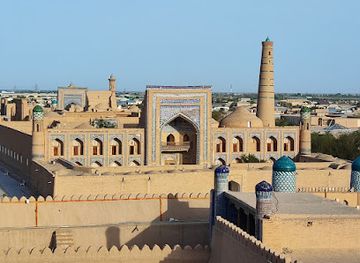
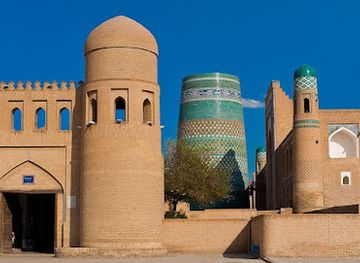
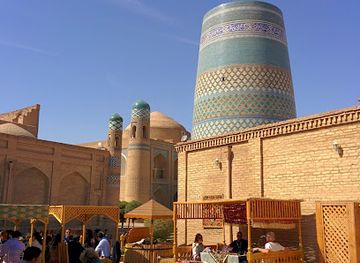
Itchan Kala, also written Ichan Kala, is the fortified inner city of Khiva, enclosed within substantial mud-brick walls on the edge of Uzbekistan’s Kyzylkum desert. Accessed through historic gates, it feels less like a conventional urban district than a compact architectural ensemble: narrow lanes lead between turquoise-tiled minarets, brick domes, shaded courtyards, former khanate residences and religious schools. Although it is a principal focus for visitors to Khiva, Itchan Kala remains a living quarter rather than an open-air museum, with homes, workshops, small cafés and guesthouses occupying spaces among its monuments.Read more about Itchan Kala
Monuments in Close Proximity
Craft, Light and Everyday Life
Best attractions in Itchan Kala
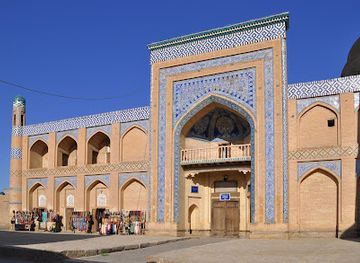
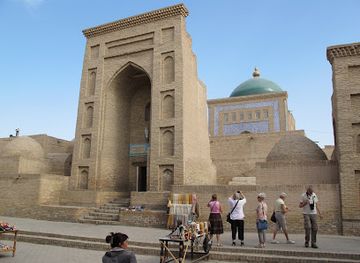
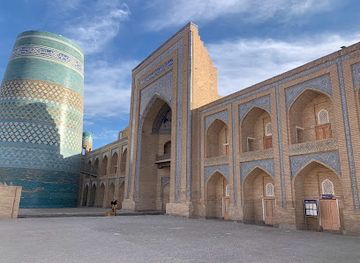
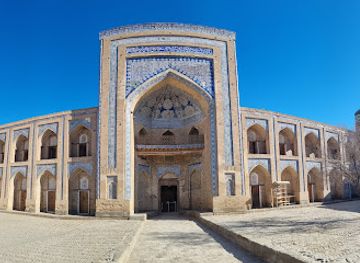
Itchan Kala’s attractions form an unusually concentrated historic ensemble, with most reached within a short walk of the main gates. The unfinished Kalta Minor, faced with blue and green tiles, is the neighbourhood’s most recognisable landmark, while the Kuhna Ark introduces the former citadel, court and administrative centre of Khiva’s rulers. The Juma Mosque offers a remarkable forest of wooden columns and a cooler, quieter interior, and the Tosh Hovli palace reveals the ceremonial scale of nineteenth-century court life through decorated courtyards and reception spaces. Visitors can climb or view the Islam Khoja minaret where access is permitted, visit the richly ornamented mausoleum of Pakhlavan Mahmud, and follow the mud-brick walls between gateways, madrasas and restored caravanserais. Craft workshops and small museums add everyday texture to the monumental architecture.
-
History museum
Itchan Kala
Explore the historical marvel of Itchan Kala, an architectural wonder and UNESCO World Heritage site in the heart of Khiva, Uzbekistan.
1 min walk · 0.1 km from neighbourhood centre
-
Tourist attraction
Juma Mosque
Explore the Juma Mosque in Khiva, a stunning blend of history and architecture, showcasing intricate wooden pillars and serene Islamic design.
1 min walk · 0.1 km from neighbourhood centre
-
Monument
Islam Khoja Minaret
Explore the Islam Khoja Minaret in Khiva, a stunning architectural gem featuring intricate tilework and breathtaking views, steeped in rich cultural heritage.
2 min walk · 0.2 km from neighbourhood centre
-
Tourist attraction
Pahlavan Mahmoud Mausoleum
Explore the Pahlavan Mahmoud Mausoleum, a stunning historical landmark in Khiva showcasing exquisite architecture and rich cultural heritage.
2 min walk · 0.2 km from neighbourhood centre

Best landmarks in Itchan Kala
Itchan Kala’s landmarks express the political, religious and domestic structure of historic Khiva. The Ota Darvoza, or western gate, forms a prominent entrance to the walled city, while the Kalta Minor beside it demonstrates the ambition of the khanate’s monumental building programme despite remaining unfinished. The Kuhna Ark stands as the principal reminder of royal administration and residence, contrasting with the intimate wooden-columned Juma Mosque and the ceremonial rooms of Tosh Hovli. The Islam Khoja minaret and madrasa create one of the quarter’s strongest vertical compositions, and the mausoleum of Pakhlavan Mahmud remains an important devotional site as well as an architectural one. Beneath these monuments, the walls, carved doors, brick façades and winding lanes preserve the physical grain of a historic oasis city rather than a collection of isolated buildings.
-
History museum
Itchan Kala
Explore the enchanting Itchan Kala, a UNESCO World Heritage Site, where history meets breathtaking architecture in the heart of Khiva, Uzbekistan.
1 min walk · 0.1 km from neighbourhood centre
-
Historical landmark
Kalta Minor Minaret
Explore the Kalta Minor Minaret, a stunning historical landmark in Khiva, Uzbekistan, showcasing the beauty of Islamic architecture and rich cultural heritage.
2 min walk · 0.2 km from neighbourhood centre
-
Monument
Toshhovli Palace
Explore Toshhovli Palace, a historical landmark in Khiva, Uzbekistan, showcasing exquisite architecture and rich cultural heritage.
1 min walk · 0.1 km from neighbourhood centre
-
Museum
Kuhna Ark
Explore Kuhna Ark, a historic museum in Khiva, Uzbekistan, showcasing Islamic architecture and rich cultural heritage.
3 min walk · 0.2 km from neighbourhood centre

Explore Itchan Kala on the map
A handpicked selection of must-see spots in Itchan Kala, mapped for you.
Best hotels in Itchan Kala
Best restaurants in Itchan Kala
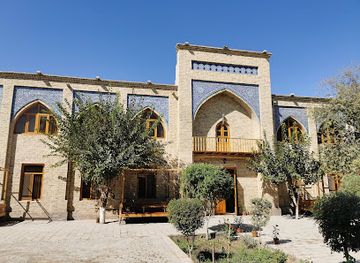
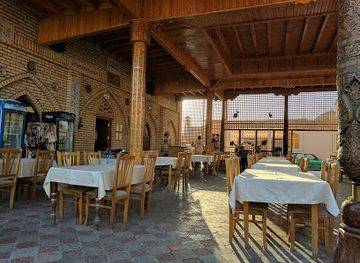
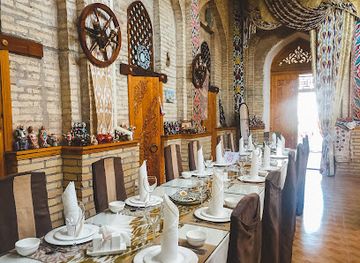
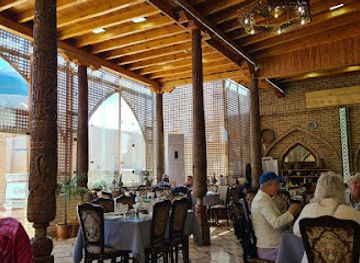
Dining in Itchan Kala is shaped by the needs of visitors and by the domestic food traditions of Khorezm. Guesthouses and small restaurants serve familiar Uzbek dishes such as plov, lagman, shashlik, manti and soups, while Khorezm-influenced specialities may include shivit oshi, green-tinted noodles served with a sauce, and tukhum barak, a dumpling associated with the region. Tea houses and modest cafés provide pauses between monument visits, often with bread, salads and tea rather than an elaborate menu. Some courtyards offer atmospheric settings, though opening arrangements and menus can change. The most practical dining areas are within or close to the principal pedestrian lanes and gates; larger supermarkets and broader restaurant choice are found outside the walled quarter. Eating here is generally as much about courtyard setting and local ingredients as formal culinary presentation.
-
Restaurant
Khiva Moon
Experience authentic Uzbek cuisine at Khiva Moon - where tradition meets modern dining in picturesque Khiva.
7 min walk · 0.5 km from neighbourhood centre
-
Restaurant
Tea House Bir Gumbaz
Experience authentic Uzbek cuisine and traditional teas at Tea House Bir Gumbaz in Khiva's historic setting.
2 min walk · 0.1 km from neighbourhood centre
-
Restaurant
Cafe Zarafshon
Experience authentic Uzbek cuisine at Café Zarafshon in Khiva - where tradition meets flavor.
2 min walk · 0.1 km from neighbourhood centre
-
Restaurant
Tea house Mirza Boshi
Immerse yourself in Uzbek culture at Tea House Mirza Boshi – savor authentic cuisine amidst Khiva's enchanting atmosphere.
2 min walk · 0.1 km from neighbourhood centre
Best bars in Itchan Kala
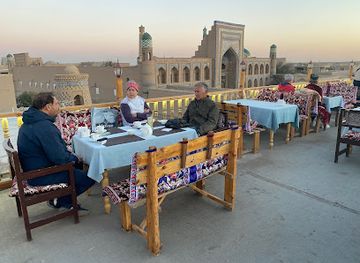
Itchan Kala is not a conventional nightlife district, and evenings are generally quieter than in the entertainment quarters of larger Uzbek cities. After sunset, the main experience is architectural: illuminated portals, minarets and mud-brick walls create a setting for a slow walk before residents return to their homes and guesthouses. Restaurants, hotel courtyards and tea-serving cafés may provide relaxed places for conversation, but alcohol availability varies and nightclubs are not a defining feature of the neighbourhood. Occasional cultural performances or music arranged for visitors should be treated as scheduled experiences rather than permanent nightlife venues. Respectful volume matters in the narrow residential lanes, and visitors should avoid assuming that a historic courtyard or monument is an open evening gathering place. For a livelier late evening, choices are more likely to be found elsewhere in Khiva or in larger nearby urban centres.
-
Cafe
Terrassa Cafe & Restaurant
Experience the authentic flavors of Uzbekistan at Terrassa Cafe & Restaurant in Khiva, where culinary traditions meet warm hospitality.
2 min walk · 0.1 km from neighbourhood centre
-
Restaurant
Khiva Moon
Discover the authentic taste of Uzbekistan at Khiva Moon, where rich flavors and warm hospitality create an unforgettable dining experience.
7 min walk · 0.5 km from neighbourhood centre
-
Restaurant
Tea House Bir Gumbaz
Experience the rich flavors of Uzbekistan at Tea House Bir Gumbaz, a charming tea house in the heart of Khiva offering traditional cuisine and a warm atmosphere.
2 min walk · 0.1 km from neighbourhood centre
-
Restaurant
Cafe Zarafshon
Experience authentic Uzbek flavors at Café Zarafshon in the heart of Khiva, a delightful spot for culinary exploration.
2 min walk · 0.1 km from neighbourhood centre
Best shops in Itchan Kala
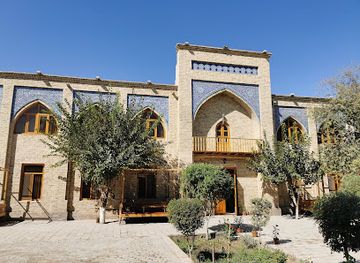
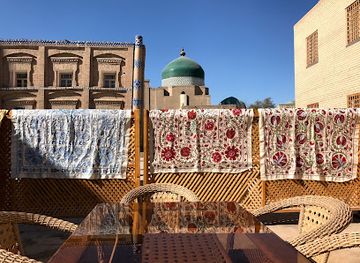
Shopping in Itchan Kala centres on crafts and souvenirs displayed in small workshops, former madrasa spaces, caravanserais and shops along the main visitor routes. Commonly encountered goods include carved wooden objects, embroidered textiles, ceramics, carpets, painted panels and small items inspired by Khorezm’s architectural decoration. Quality and provenance vary, so visitors interested in craft should ask what is locally made and handle pieces carefully rather than treating historic buildings as ordinary retail environments. The quarter is not a modern shopping district: everyday provisions are limited, and broader contemporary retail is found outside the walls. Browsing is most rewarding when combined with attention to the working methods behind the objects, including wood carving, textile decoration and ceramic production. Polite bargaining may be accepted in some shops, but it should remain good-natured and proportionate to the labour involved.
-
Grocery store
Gastronom
Explore Gastronom in Khiva, Uzbekistan – your one-stop destination for local flavors and international delights.
6 min walk · 0.5 km from neighbourhood centre
-
Book store
Palvan Kori Trading Center
Explore the vibrant Palvan Kori Trading Center in Khiva for unique books, handcrafted souvenirs, and a taste of Uzbekistan's rich cultural heritage.
2 min walk · 0.2 km from neighbourhood centre
-
Store
UAM Market
Explore the vibrant UAM Market in Khiva, Uzbekistan, where local culture, crafts, and cuisine come alive in a colorful shopping experience.
8 min walk · 0.6 km from neighbourhood centre
-
 Clothing store
Smeshnyye Tseny Khiva
Experience the vibrant colors and unique styles of traditional Uzbek clothing at Smeshnyye Tseny Khiva, a fashion treasure in the heart of Khiva.
6 min walk · 0.5 km from neighbourhood centre


Itchan Kala essentials
Getting There
Getting Around
Safety
Emergency Situations
Do's and Don'ts
Local Tips

From Eve
Local phrases worth knowing
You don't need to get them perfect. A few words go a long way, and locals appreciate the effort.
Basics
| English | Local | Say it |
|---|---|---|
| Hello | Salom | [sah-lom] |
| Goodbye | Xayr | [khayr] |
| Yes | Ha | [ha] |
| No | Yo'q | [yoq] |
| Please/You're welcome | Iltimos | [il-tee-mos] |
| Thank you | Rahmat | [rah-maht] |
| Excuse me/Sorry | Kechirasiz | [keh-chee-rah-siz] |
| How are you? | Qalaysiz? | [kah-lahy-siz] |
| Fine. And you? | Yaxshi. Sizcha? | [yahk-shee. seez-chah] |
| Do you speak English? | Inglizcha gapirasizmi? | [ing-leez-chah gah-pee-rah-siz-mee] |
| I don't understand | Tushunmadim | [too-shoon-mah-deem] |
Eating & Drinking
| English | Local | Say it |
|---|---|---|
| I'd like to see the menu, please | Menu ni ko'rishni istar edim, iltimos | [meh-noo nee koh-reesh-nee ees-tar eh-deem, il-tee-mos] |
| I don't eat meat | Men go'sht yemayman | [men goh-sht ye-mai-mahn] |
| Cheers! | Salomatliklar! | [sah-loh-maht-leek-lar] |
| I would like to pay, please | To'lashni istar edim, iltimos | [toh-lahsh-nee ees-tar eh-deem, il-tee-mos] |
Emergencies
| English | Local | Say it |
|---|---|---|
| Help! | Yordam! | [yor-dahm] |
| Go away! | Uzoqqa bor! | [oo-zohk-kah bor] |
| Call the Police! | Politsiyani chaqiring! | [poh-lee-tsee-yah-nee chah-keer-eeng] |
| Call a doctor! | Tabibni chaqiring! | [tah-beeb-nee chah-keer-eeng] |
| I'm lost | Men yo'qolganman | [men yoq-ol-gahn-mahn] |
| I'm ill | Men kasallanganman | [men kah-sahl-lahn-gahn-mahn] |
Shopping
| English | Local | Say it |
|---|---|---|
| I'd like to buy... | Sotib olmoqchiman... | [soh-teeb ol-mohch-ee-mahn] |
| I'm just looking | Men faqat ko'z qarashni istar edim | [men fah-kaht kohz kah-rahsh-nee ees-tar eh-deem] |
| How much is it? | Bu qancha? | [boo kahn-chah] |
| That's too expensive | Bu juda qimmat | [boo joo-dah keem-maht] |
| Can you lower the price? | Narxni pastga tushurishingiz mumkinmi? | [na-rkh-nee pahst-gah too-shoo-reesh-ing-eez moo-meen-mee] |
Time & Numbers
| English | Local | Say it |
|---|---|---|
| What time is it? | Saat necha? | [saht neh-chah] |
| It's one o'clock | Bir soat | [beer soh-aht] |
| Half past (10) | O'ng to'rt | [oh-ng toh-rt] |
| Morning | Ertalab | [ehr-tah-lahb] |
| Afternoon | Kecha | [keh-chah] |
| Evening | Kechki | [kehch-kee] |
| Yesterday | Kecha | [keh-chah] |
| Today | Bugun | [boo-goon] |
| Tomorrow | Ertaga | [ehr-tah-gah] |
| 1 | Bir | [beer] |
| 2 | Ikki | [eek-kee] |
| 3 | Uch | [ooch] |
| 4 | To'rt | [toh-rt] |
| 5 | Besh | [behsh] |
| 6 | Olti | [ohl-tee] |
| 7 | Yetti | [yet-tee] |
| 8 | Sakkiz | [sahk-keez] |
| 9 | To'qqiz | [toh-qqeesh] |
| 10 | O'n | [ohn] |
Transport & Directions
| English | Local | Say it |
|---|---|---|
| Where's a/the...? | ...qayerda? | [kah-yehr-dah] |
| What's the address? | Manzil qanday? | [mahz-eel kahn-dai] |
| Can you show me (on the map)? | Meni (xaritada) ko'rsatingiz mumkinmi? | [meh-nee khah-ree-tah-dah kohr-saht-eeng-eez moo-meen-mee] |
| When's the next (bus)? | Keyinchi (avtobus) qachon? | [keh-yin-chee av-toh-boos kah-chohn] |
| A ticket (to ....) | Bir bilet (....ga) | [beer bee-let gah] |
History of Itchan Kala
An Oasis Settlement Takes Shape
Khiva developed around the Khorezm oasis, where irrigation supported settlement and agriculture amid the arid landscape of present-day western Uzbekistan. The inner town that became Itchan Kala grew as a fortified urban centre, protected by earthen walls and connected to wider routes crossing Central Asia. Its position did not make it a single, uniform caravan stop, but it placed Khiva within the commercial and cultural networks linking the oasis with Persia, the steppe and other towns of Khorezm. The neighbourhood’s walled form reflects the practical need for defence as well as the concentration of political, religious and commercial life in a relatively compact space.
The Khanate’s Historic Centre
From the sixteenth century, Khiva became the capital of the Khanate of Khiva, and Itchan Kala developed as the seat of royal, religious and scholarly institutions. Rulers commissioned madrasas, mosques, mausoleums, palaces and gateways, creating the architectural concentration visible today. The Kuhna Ark served as the citadel and a centre of government, while later palace construction, including the Tosh Hovli complex, expressed the authority and ceremony of the khans. The neighbourhood was not solely ceremonial: its lanes also accommodated residents, students, craftspeople, merchants and religious communities whose daily activity sustained the courtly and scholarly district.
Trade, Scholarship and Craft
During the eighteenth and nineteenth centuries, Itchan Kala’s institutions and markets formed part of Khiva’s wider oasis economy. Madrasas provided religious education, mosques anchored communal life and workshops produced objects for local use and elite households. The city’s architecture also records the importance of skilled craftsmanship: carved wooden columns, patterned tilework, plaster decoration and monumental brick construction demanded specialised knowledge. The neighbourhood’s position within a desert oasis meant that water management, agricultural production and regional trade were inseparable from urban life, even though the most visible remains today are religious, residential and official buildings.
Preservation as a Historic City
Khiva came under Russian control in 1873, and the political order that had centred on the khanate changed, but Itchan Kala retained much of its historic street pattern and monumental fabric. In the twentieth century, conservation reshaped the presentation of the inner city, with major buildings repaired and the walled quarter increasingly recognised for its exceptional concentration of Central Asian architecture. Itchan Kala was inscribed on the UNESCO World Heritage List in 1990. Restoration and tourism have brought renewed attention and income, while homes, workshops and everyday religious spaces continue to give the protected quarter a lived dimension beyond its role as a heritage site.
Itchan Kala in Photos
Browse through our photo collection highlighting the charm and character of the destination.
Neighbourhoods near Itchan Kala
The closest neighbourhoods to Itchan Kala, if you have time for more than one stop.

Swipe for more neighbourhoods
Explore more

Explore more of Khiva
Khiva reveals Uzbekistan’s walled Itchan Kala, with Silk Road history, blue-tiled monuments, traditional crafts and atmospheric desert-edge sightseeing.
Explore Khiva