

Shaykhantakhur (Tashkent) Travel Guide - Free
Explore Shaykhantakhur in Tashkent with Evendo's free guide. Find the best shops, historic streets, restaurants, and gems on web or mobile.


Shaykhantakhur in Tashkent pairs ancient mausoleums, Chorsu Bazaar, Kukeldash Madrasah and old-city streets with Uzbek food, craft traditions and daily life.
Historic Setting
Shaykhantakhur is one of Tashkent’s central districts, closely associated with the city’s old quarters, traditional mahallas and the great trading landscape around Chorsu Bazaar. Its name comes from Shaykh Hovendi at-Tahur, a revered Sufi scholar whose mausoleum forms the spiritual centre of the Shaykhantaur Memorial Complex. The district is not a preserved medieval town in the European sense: old shrines, rebuilt streets, Soviet-era avenues and contemporary commercial life stand beside one another, often within a short walk.Read more about Shaykhantakhur
Markets, Madrasahs and Everyday Life
Shrines and Urban Contrasts
Explore Shaykhantakhur on the map
A handpicked selection of must-see spots in Shaykhantakhur, mapped for you.
Best hotels in Shaykhantakhur
Best restaurants in Shaykhantakhur
Eating in Shaykhantakhur is closely connected to Chorsu Bazaar and the practical food culture of Tashkent’s old quarters. Market counters and nearby cafés provide accessible introductions to Uzbek staples such as samsa, non bread, shashlik, lagman and plov, while fresh fruit, dried goods, nuts and sweets make the bazaar useful for informal grazing as well as shopping. The district’s dining identity is less about a single restaurant-lined street than about the relationship between trading, preparation and eating: ingredients arrive through the market and are transformed into filling everyday meals nearby. Visitors will also find tea houses and Central Asian cooking around the commercial streets, alongside more ordinary local restaurants serving families and workers. Menus may be limited in English, so visual menus, translation tools and asking staff about ingredients can be helpful.
-
Uzbeki
Shosh Restaurant & Terrace
Experience the essence of Uzbek cuisine fused with European influences at Shosh Restaurant & Terrace in Tashkent.
5 min drive · 1.6 km from neighbourhood centre

Best shops in Shaykhantakhur
Chorsu Bazaar is the essential shopping experience in Shaykhantakhur, combining wholesale movement, household provisioning and visitor browsing under its celebrated domes and in the surrounding lanes. Stalls carry fruit, vegetables, herbs, spices, nuts, dried fruit, sweets, bread and prepared foods, while other sections serve more practical household needs. The market is also a place to look for Uzbek textiles, small craft items and traditional food products, though stock and presentation vary by trader. Beyond the bazaar, the district’s everyday retail is formed by small shops, bakeries and specialist food sellers rather than a concentrated luxury or fashion scene. Bargaining may be part of the transaction in some stalls, but it is sensible to compare items, confirm the price and handle goods carefully. Shopping here is most rewarding when approached as an encounter with Tashkent’s food and trading culture rather than as a curated souvenir centre.
-
Gift shop
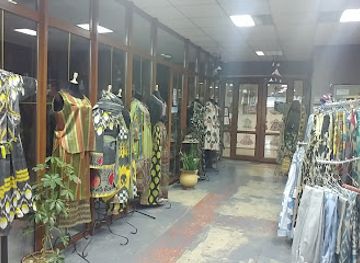
BIBI HANUM
Discover the charm of Bibi Hanum in Tashkent, Uzbekistan - a boutique gift shop offering unique clothing, accessories, and a taste of local culture.
17 min walk · 1.4 km from neighbourhood centre
Shaykhantakhur essentials
Getting There
Getting Around
Safety
Emergency Situations
Do's and Don'ts
Local Tips

From Eve
Local phrases worth knowing
You don't need to get them perfect. A few words go a long way, and locals appreciate the effort.
Basics
| English | Local | Say it |
|---|---|---|
| Hello | Salom | [sa-lom] |
| Goodbye | Xayr | [khayr] |
| Yes | Ha | [ha] |
| No | Yo'q | [yo'q] |
| Please/You're welcome | Marhamat | [mar-ha-mat] |
| Thank you | Rahmat | [rah-mat] |
| Excuse me/Sorry | Kechirasiz | [ke-chi-ra-siz] |
| How are you? | Qalaysiz? | [qa-lay-siz] |
| Fine. And you? | Yaxshi. Sizcha? | [ya-khshi. siz-cha] |
| Do you speak English? | Ingliz tilini bilasizmi? | [ing-liz ti-li-ni bi-la-siz-mi] |
| I don't understand | Tushunmadim | [tu-shun-ma-dim] |
Eating & Drinking
| English | Local | Say it |
|---|---|---|
| I'd like to see the menu, please | Menyuni ko'rishni hohlaysiz, iltimos | [me-nyu-ni ko-rish-ni khokh-la-y-siz, il-ti-mos] |
| I don't eat meat | Men go'sht yemayman | [men gosh-t ye-may-man] |
| Cheers! | Salomatliklar! | [sa-lo-mat-lik-lar] |
| I would like to pay, please | To'lashni hohlaysiz, iltimos | [to-la-shni kho-khla-y-siz, il-ti-mos] |
Emergencies
| English | Local | Say it |
|---|---|---|
| Help! | Yordam! | [yor-dam] |
| Go away! | Uzoqqa ket! | [u-zoq-qa ket] |
| Call the Police! | Militsiyani chaqiring! | [mi-li-tsi-ya-ni cha-qi-ring] |
| Call a doctor! | Shifokor chaqiring! | [shi-fo-kor cha-qi-ring] |
| I'm lost | Men yo'limni yo'q qildim | [men yo-lim-ni yoq qil-dim] |
| I'm ill | Men kasalman | [men ka-sal-man] |
Shopping
| English | Local | Say it |
|---|---|---|
| I'd like to buy... | .... sotib olmoqchiman | [sotib ol-moq-chi-man] |
| I'm just looking | Men faqat ko'z qarashi qilaman | [men fa-qat koz qa-ra-shi qi-la-man] |
| How much is it? | Bu qancha? | [bu qan-cha] |
| That's too expensive | Bu juda qimmat | [bu ju-da qim-mat] |
| Can you lower the price? | Narxni pastga olib ketsangiz bo'ladi | [nar-kni past-ga o-lib ket-san-giz bo-la-di] |
Time & Numbers
| English | Local | Say it |
|---|---|---|
| What time is it? | Soat nechada? | [so-at ne-cha-da] |
| It's one o'clock | Bir soat | [bir so-at] |
| Half past (10) | O'ngan olti | [o-ngan ol-ti] |
| Morning | Ertalab | [er-ta-lab] |
| Afternoon | Tushlik | [tush-lik] |
| Evening | Kech | [kech] |
| Yesterday | Kecha | [ke-cha] |
| Today | Bugun | [bu-gun] |
| Tomorrow | Ertaga | [er-ta-ga] |
| 1 | Bir | [bir] |
| 2 | Ikki | [ik-ki] |
| 3 | Uch | [uch] |
| 4 | To'rt | [to-rt] |
| 5 | Besh | [besh] |
| 6 | Olti | [ol-ti] |
| 7 | Yetti | [yet-ti] |
| 8 | Sakkiz | [sak-kiz] |
| 9 | To'qqiz | [toq-qiz] |
| 10 | O'n | [on] |
Transport & Directions
| English | Local | Say it |
|---|---|---|
| Where's a/the...? | ... qayerda? | [qaye-da] |
| What's the address? | Manzili qanaqa? | [man-zi-li qa-na-qa] |
| Can you show me (on the map)? | Meni (xaritada) ko'rsatingiz mumkinmi? | [me-ni khar-i-ta-da korsa-tin-giz mum-kin-mi] |
| When's the next (bus)? | Keyingi (avtobus) qachon? | [key-in-gi av-to-bus qa-cho] |
| A ticket (to ....) | Bilet (.... uchun) | [bi-let u-chun] |
History of Shaykhantakhur
The Shrine of Shaykh Hovendi at-Tahur
The neighbourhood takes its name from Shaykh Hovendi at-Tahur, also known as Shaykhantaur, a Sufi figure associated with Tashkent’s religious history. His burial place became the focus of a shrine complex that developed over time and attracted visitors seeking blessing and remembrance. The surviving mausoleum and related structures should be understood as part of a changing sacred landscape: buildings were repaired, rebuilt and supplemented across different periods, while the site retained its significance within the old city. The name therefore identifies both a historical religious figure and the wider area that grew around his memory.
Old Tashkent’s Trading Quarter
Before modern transport and planned avenues reshaped the city, this part of Tashkent formed part of a dense network of mahallas, mosques, madrasahs, workshops and bazaars. Chorsu occupied an important position within the city’s commercial life, linking local food production and craft trades with wider routes through Central Asia. Kukeldash Madrasah, generally dated to the sixteenth century and associated with the Shaybanid period, reflects the intellectual and religious institutions that stood alongside those markets. The old-city environment was never only monumental; it was also a place of residence, manufacture, teaching and exchange.
Imperial Rule and Urban Reorganisation
The Russian conquest of Tashkent in 1865 brought new administrative priorities and a gradual reorganisation of the city. European-style planning and institutions developed alongside the older settlements rather than immediately replacing them, creating a layered urban structure that remains visible in the contrast between broad roads and traditional quarters. Trade continued to shape the Shaykhantakhur area, while religious buildings and markets occupied an increasingly complex position within a city governed first by the Russian Empire and later by the Soviet state. These changes connected the district more closely to expanding transport and civic networks.
Soviet Reconstruction and the Modern District
The 1966 Tashkent earthquake led to extensive reconstruction across the capital, bringing new housing, infrastructure and monumental urban planning. In Shaykhantakhur, older sacred and commercial places survived within a city increasingly defined by wide roads, public transport and modern construction. Soviet-era changes altered the setting without erasing the district’s association with Chorsu, Kukeldash and the shrine complex. Since Uzbekistan’s independence, restoration and renewed interest in Islamic architecture and local heritage have made these sites more prominent in the city’s cultural presentation, while the surrounding neighbourhood remains a lived-in commercial and residential district.
Shaykhantakhur in Photos
Browse through our photo collection highlighting the charm and character of the destination.
Neighbourhoods near Shaykhantakhur
The closest neighbourhoods to Shaykhantakhur, if you have time for more than one stop.
-

-

-


Swipe for more neighbourhoods
Explore more

Explore more of Tashkent
Tashkent blends Silk Road history, colourful markets, Soviet modernism and Uzbek cuisine, with grand squares, ornate metro stations and mountain escapes.
Explore Tashkent