


Berlin Third Reich - Small Group Walking Tour
 Berlin, DE
 83% of travellers recommend this
Highlights
- Step into the streets of history
- Visit the Memorial to the Murdered Jews
- Learn about the rise and fall of the Third Reich
- Explore Hitlers underground bunker remains
- Experience the chilling stories of resistance
-
Duration 2 hours
-
Expert Guide
-
Local guide included
-
Wheelchair accessible
-
Children under 13 free
Explore the haunting history of the Third Reich on the Berlin Third Reich Walking Tour. Step back in time as you walk through the former Nazi government district, visiting iconic sites like the Reichstag and Hitlers bunker. Stand in solemn reflection at the Memorial to the Murdered Jews of Europe, hearing the stories of those who suffered under the brutal regime. Led by an expert guide, you'll uncover the chilling rise and dramatic fall of the Third Reich, all while tracing the final days of World War II where history was made. This 2-hour tour will take you on a journey through one of the darkest periods in history, offering a unique perspective on Berlin's past.
At a Glance
-
 Free cancellation
-
 2 hours
-
 Instant Confirmation
-
 Available in English
-
 Wheelchair accessible
-
 Mobile voucher
-
 Small Group tour
-
 Guided
-
 Family friendly

Featured Reviews

Explore Berlin's dark history on this profound 2-hour Third Reich walking tour, led by an expert guide through significant historical sites.
Included
-
 OtherProfessional guide
-
OtherPublic transportation ticket (zone AB) short trip. If you have a day ticket already, you're all set.
-
OtherSmall-group experience
Excluded
-
 OtherHotel pickup and drop off
-
OtherFood and drinks
-
OtherGratuities
Meeting Point
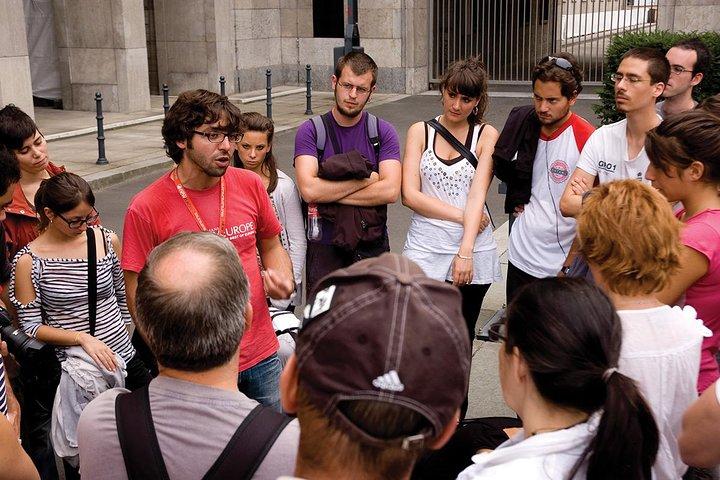
Your Berlin Third Reich Tour meets in front of the Starbucks at the Brandenburg Gate (S/U-Bahn Brandenburger Tor). Look for the SANDEMANs Tours team with a SANDEMANs red umbrella.

Pariser Platz 4A, 10117 Berlin , Germany

End Point
Your Berlin Third Reich Tour usually finishes by the Große Hamburger Straße, a 28-min walk away from the starting point of the tour. There are MANY great options for food and drinks in the area after your tour, and your guide will be happy to share their favorites.

10115 Berlin , Germany
What to expect
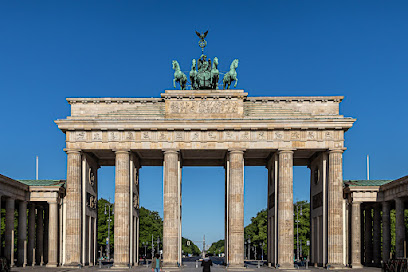
Meet your guide at the Brandenburg Gate, the neoclassical monument that has stood at Berlin's heart since 1791 and witnessed nearly every turn of the city's modern history. Our story starts with a nation in crisis: a Germany humiliated by defeat in the First World War, crushed by the Treaty of Versailles, and battered through the 1920s by hyperinflation, unemployment and political chaos. The Weimar Republic — Germany's first democracy — struggled to hold the country together as extremist parties gained ground. Into that instability stepped Adolf Hitler and the Nazi Party. Your guide traces how they exploited fear and resentment, and how the Reichstag Fire of February 1933 became the pretext for sweeping away civil liberties. Weeks later, the Enabling Act let Hitler rule by decree. The theme to carry through the whole walk: the Nazi dictatorship was not seized in a coup, but built through crisis, propaganda, intimidation and legal manoeuvring — a democracy dismantled from within.
15 minutes
Reichstag Building

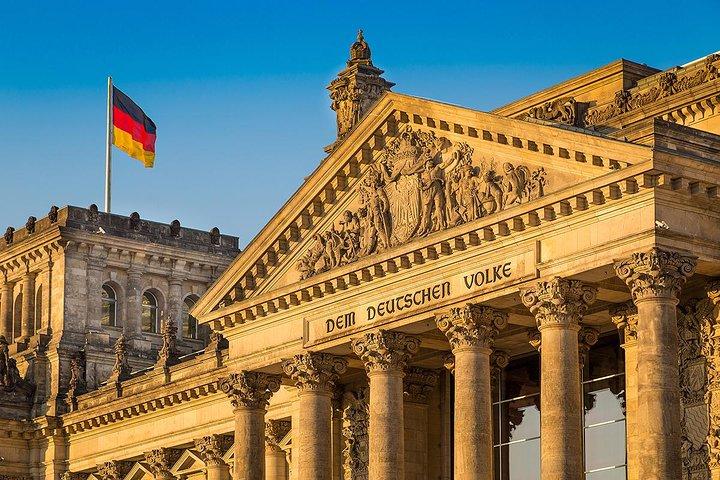
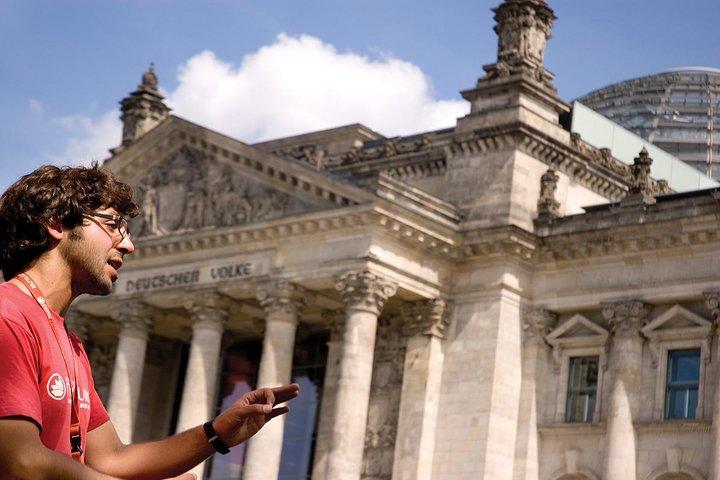
A short walk brings us to the Reichstag, the vast neo-Renaissance parliament completed in 1894 and crowned today by Norman Foster's glass dome. Here, and in the government district around it, your guide picks up the story as the Nazis began to consolidate absolute power. At the heart of it was propaganda: Joseph Goebbels seized the press, radio and cinema, turning the media into a single amplified voice for the regime, while mass rallies and torch-lit parades manufactured the image of a united, adoring nation. Behind the spectacle came force — your guide explains the roles of the SA, the SS and the Gestapo, and how the book burnings of 1933 sent "un-German" authors up in flames. In 1934, the Night of the Long Knives saw Hitler purge his own allies, and when President Hindenburg died that August, Hitler became Führer. In a matter of months, not years, Germany had been transformed from a parliamentary democracy into a one-party totalitarian state.
15 minutes
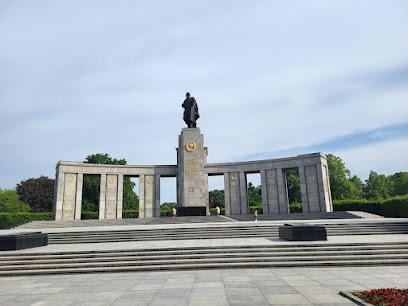
Here the walk leaps forward twelve years, to the violent collapse of everything the regime had built. The Soviet War Memorial in the Tiergarten, flanked by two tanks said to be among the first to enter the city, was raised by the victors on the ground where the Third Reich met its end. Your guide describes the final months of the war closing in on Berlin, and the Battle of Berlin of April and May 1945, when the Red Army fought its way into the capital street by street. In the nearby Führerbunker, Hitler spent his last days detached from reality before taking his own life on 30 April 1945; Germany's surrender followed on 8 May. Your guide shares the human dimension behind the dates — the tens of thousands of Soviet soldiers killed, the flag raised over the Reichstag, and the ordeal of civilians caught in the fighting. The Battle of Berlin brought a definitive, violent end to the Third Reich — a fall as catastrophic as its rise.
15 minutes
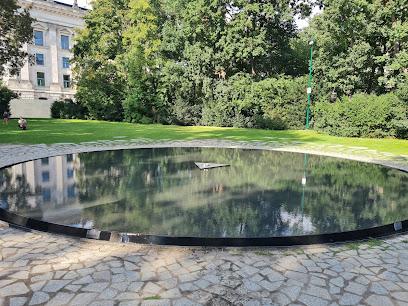
Facing the Reichstag, this reflective black pool memorializes the estimated 500,000 Sinti and Roma people murdered under Nazi rule, a genocide often referred to as the Porrajmos, or "the Devouring." A single fresh flower is placed at the center of the pool daily, a simple, ongoing act of remembrance for a persecution that received far less historical attention than other Nazi atrocities for decades after the war. Your guide will share why recognition for Sinti and Roma victims lagged so far behind other memorials, and how this space, completed in 2012, works to correct that historical imbalance.
10 minutes
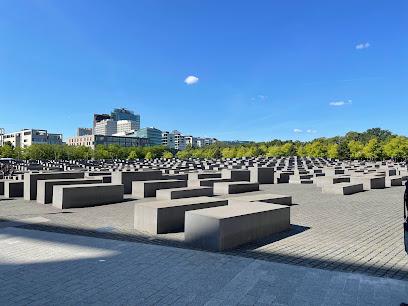
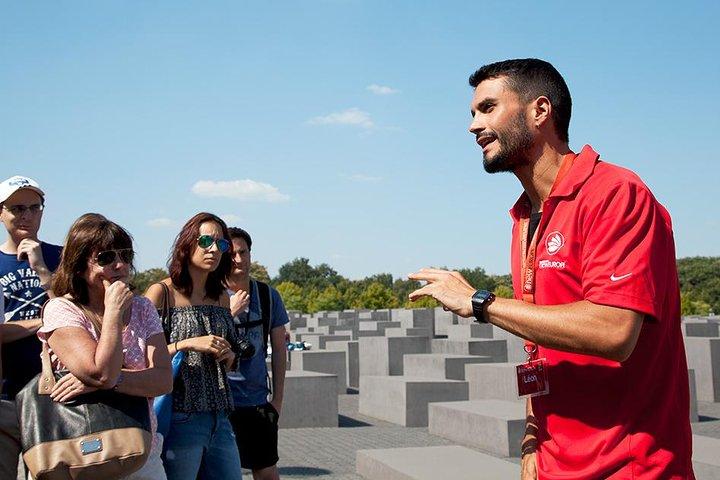
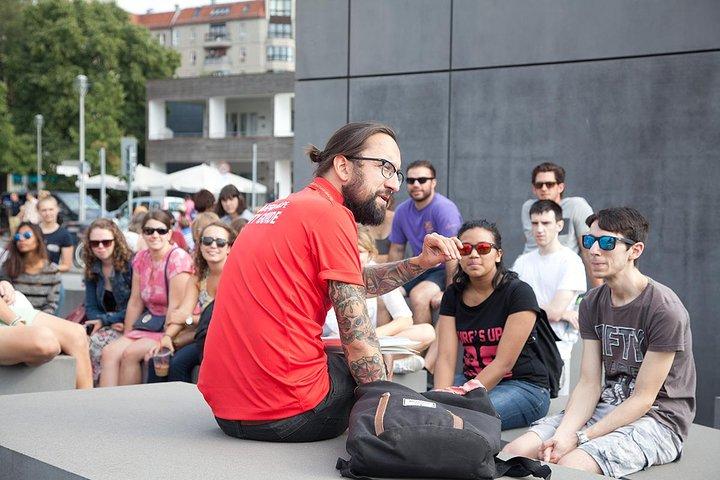
We arrive at the Memorial to the Murdered Jews of Europe, Peter Eisenman's vast field of 2,711 grey concrete stelae rising and falling across undulating ground in the centre of the city. Walk in among the columns and the noise of Berlin falls away, the ground drops, and the blocks rise far above your head. Standing at its edge, your guide traces the path that led here: the anti-Jewish laws that stripped Germany's Jews of their rights; the Nuremberg Laws of 1935 that made discrimination a matter of race; and the violence of Kristallnacht in 1938. What followed was ghettoisation, deportation, and the camps through which the regime pursued its "Final Solution" — the murder of six million European Jews. Your guide also opens up the memorial itself — why it carries no names or symbols, and how visitors read its abstract form so differently — as a way into how modern Germany chooses to confront this systematic, state-organised genocide rather than conceal it.
20 minutes
Wilhelmstraße 10
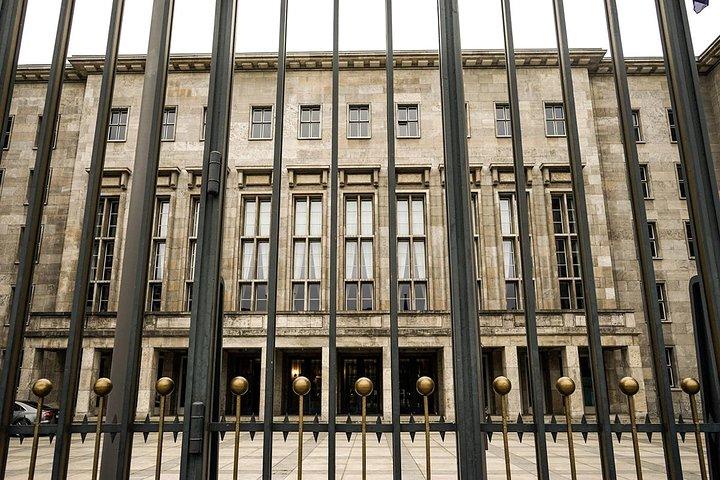
Along Wilhelmstraße, once the address of German power, your guide brings the walk back to the cold machinery of the state. Little of the Nazi-era architecture survives — much was destroyed in the war or demolished afterwards — but this unassuming street was the nerve centre of the entire regime. It was here that Hitler's New Reich Chancellery stood, and here that the ministries of the Third Reich clustered, alongside the headquarters of the SS and the Gestapo. Your guide introduces Heinrich Himmler, who oversaw this apparatus and became one of the principal architects of the Holocaust, and draws out the chilling ordinariness of it all: the genocide was administered not by fanatics alone, but by clerks, lawyers and civil servants moving paperwork through offices like these. Some of the century's greatest crimes, your guide explains, were organised from behind ordinary government desks — a reminder of how bureaucracy and obedience can be turned to monstrous ends.
10 minutes
New Synagogue Berlin - Centrum Judaicum
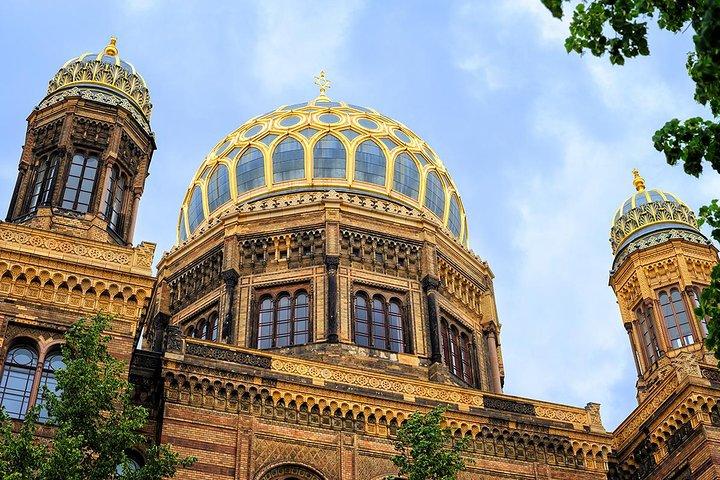
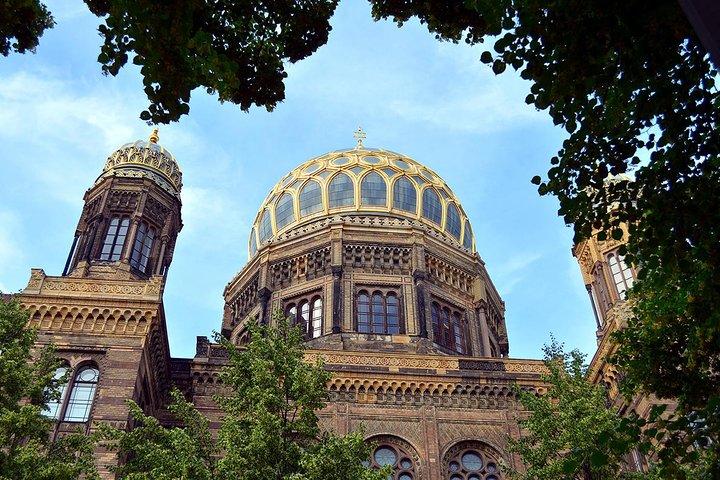
On Oranienburger Straße, the great gilded dome of the New Synagogue rises once more above the rooftops, as it did when the building was completed in 1866 as the largest synagogue in Germany. Here your guide shifts the focus from persecutors to the community they sought to destroy — and to its remarkable survival. Before 1933, Berlin was home to a vibrant Jewish community of some 160,000 people, woven deeply into the city's cultural, commercial and intellectual life. Your guide brings that world to life, then tells the story of its unravelling: the boycotts and exclusions, and the night of Kristallnacht in 1938 — when this very synagogue was saved from the flames by a local police officer who stood down the mob. What the fire began, the deportations completed. Yet the story does not end there — and your guide closes on how, since reunification, Jewish life has slowly and determinedly returned to a city that once brought its community to the edge of annihilation.
15 minutes
Grosse Hamburger Strasse
Our walk ends on Große Hamburger Straße, at the site of Berlin's oldest Jewish cemetery — and one of its most poignant places of memory. During the war the adjacent Jewish old people's home was seized by the Gestapo and turned into an assembly point, where thousands of Berlin Jews were gathered before deportation to the camps. The cemetery itself was later desecrated; today a memorial marks what was lost. Standing here, your guide draws the threads of the day together. Set into the pavements are the Stolpersteine — small brass "stumbling stones," each engraved with the name of a person who once lived there and the fate that befell them; bend to read one and an abstract history becomes a single human life. The story of the Third Reich is not only about Hitler and war. It is a warning of how a democracy can collapse, how prejudice can harden into state policy, and how ordinary institutions can become instruments of persecution — preserved so it is never forgotten.
20 minutes
The experience can be subject to change due to bad weather or unforseen circumstances. We always endeavour to give you the best possible experience.
Additional Information
-
 A moderate amount of walking is involved, comfortable shoes are recommended.
-
All areas and surfaces are wheelchair accessible
-
Children under the age of 13 may join free, however, please note that some content may not be suitable for younger guests.
-
Infants and small children can ride in a pram or stroller
-
Our guides have your best interests in mind; while the tour usually includes the sites & stories mentioned and lasts about 2-2.5 hours, your tour may vary depending on what your guide thinks is best for your group.
-
Public transportation options are available nearby
-
Transportation options are wheelchair accessible
-
Travelers should have at least a moderate level of physical fitness
-
Wheelchair accessible
What our experts say
-
 Bring an AB transport ticket for travel
-
Visit the nearby Brandenburg Gate
-
Try local cuisine at nearby eateries
-
Wear comfortable shoes for walking
-
Consider visiting the Jewish Museum after

More About this Experience
Introduction
Embark on a journey through the haunting past of Berlin with the Berlin Third Reich Walking Tour. This 2-hour experience will take you through the very streets where one of the darkest regimes in history unfolded, offering a unique insight into the rise and fall of the Third Reich.What to expect?
On this tour, you can expect to delve deep into the history of the Nazi regime, from the Reichstag to the chilling remains of Hitlers underground bunker. Stand at the Memorial to the Murdered Jews of Europe and hear the stories of those who suffered under Hitlers brutal rule. Learn how Berlin transformed from a democratic nation to a dictatorship, and discover the tales of devastation and resistance that unfolded in this city.Who is this for?
This tour is ideal for history enthusiasts, travelers interested in World War II, and anyone looking to gain a deeper understanding of the events that shaped Berlin and the world. It is a must-do experience for those who want to explore the shadows of history and uncover the secrets of the Third Reich.Why book this?
Immerse yourself in the rich history of Berlin with a knowledgeable guide who will lead you through the key sites of the Third Reich. From the Reichstag to the Memorial to the Murdered Jews of Europe, this tour offers a unique perspective on a dark chapter in history. Experience the stories of resilience and resistance that emerged from this period, and gain a deeper understanding of the events that shaped the world we live in today.Good to know
During the tour, you will have the opportunity to hop on public transport, so be sure to bring a short-trip AB ticket with you. Please note that food, drinks, and transportation to/from attractions are not included in the tour, so make sure to plan accordingly. The tour typically ends at the womens protest memorial "Rosenstrae" between Alexanderplatz and Hackescher Markt.Reviews
Travelers who have experienced the Berlin Third Reich Walking Tour have been captivated by the in-depth exploration of the city's history. Many have praised the knowledgeable guides and the immersive experience that offers a unique perspective on this dark period of history. Overall, reviewers have found the tour to be educational, thought-provoking, and highly recommended for those interested in World War II history.
Your all‑in‑one travel companion app
Explore expert travel guides, compare and book tours, experiences, hotels, and more—all from the palm of your hand. Download now for seamless trip planning wherever your wanderlust takes you.


This is a popular product and the date you are looking for just sold out. Next available date is
