

Full Day Trip to El-Fayoum Oasis & Wadi El-Hitan from Cairo
 Al Faiyum Governorate Desert, EG
 84% of travellers recommend this

Highlights
- Visit the Valley of the Whales at Wadi El-Hitan
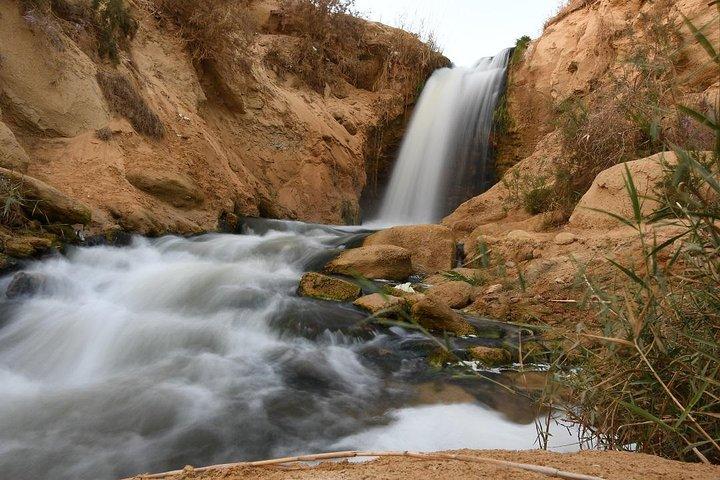
- Explore the stunning Wadi El-Rayan waterfalls
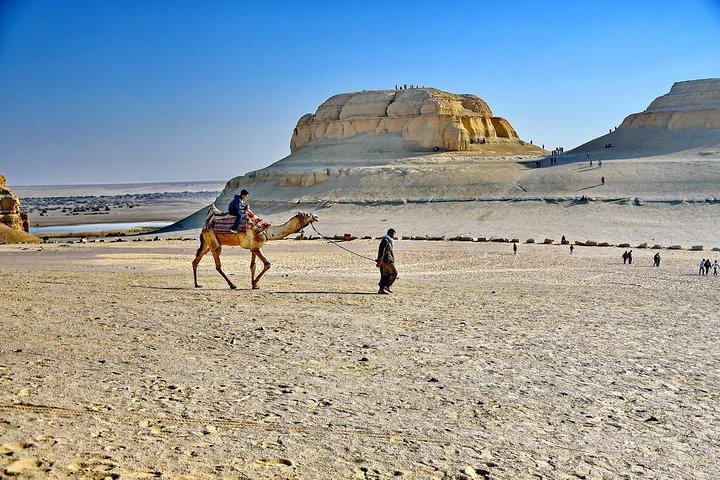
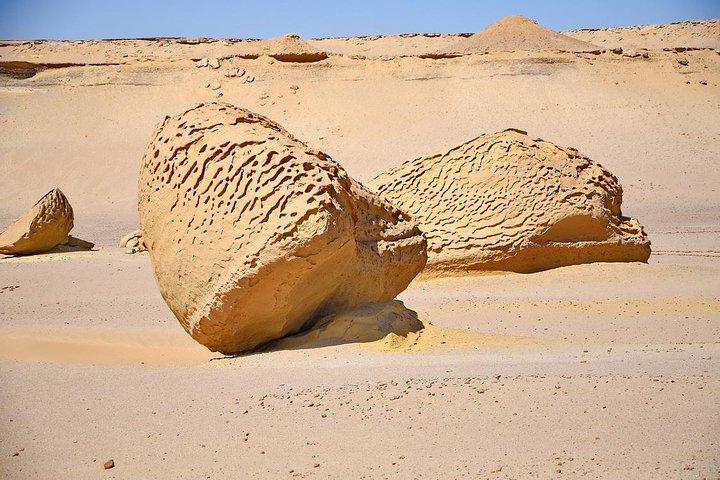
- See the beautiful landscapes of Fayoum Oasis
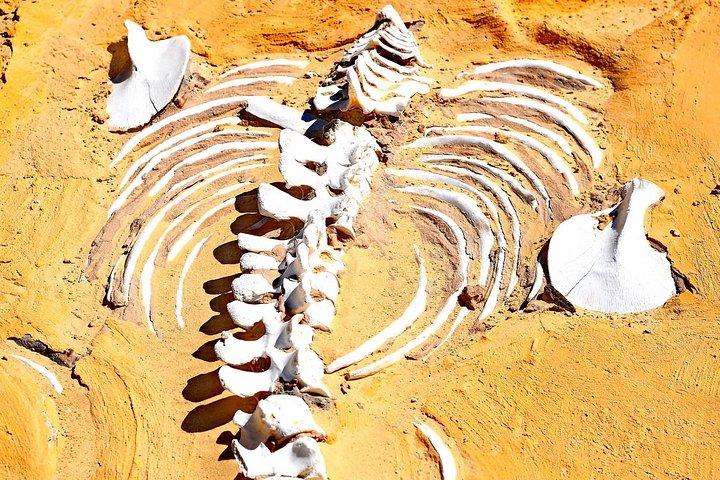
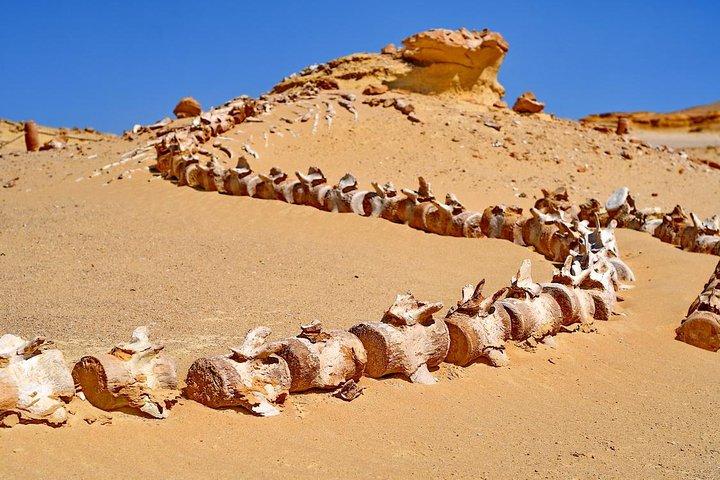
- Witness the fossils of ancient whales
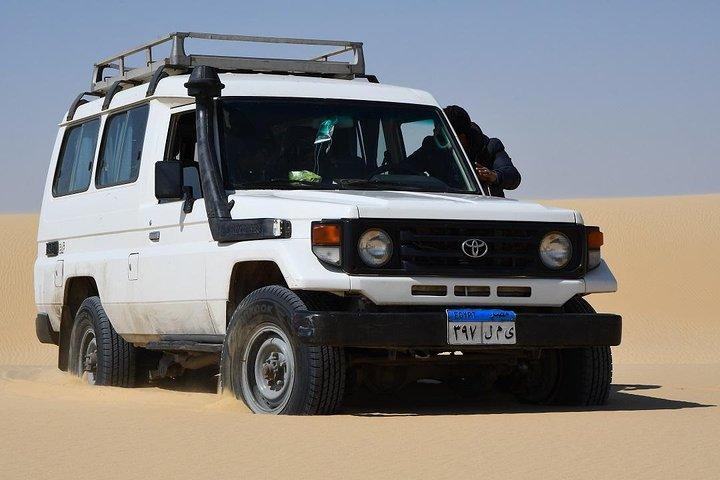
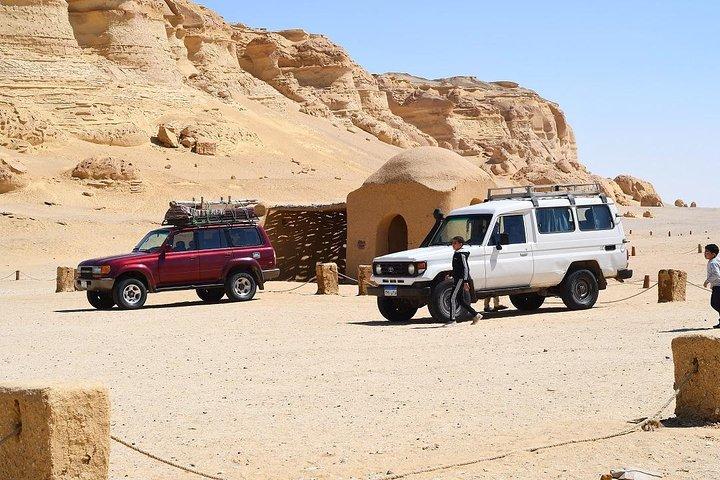
- Experience a thrilling 4W Jeep safari
-
Private transportation included
-
Lunch included
-
Admission to Wadi El-Hitan
-
Expert English-speaking guide
-
Duration: 8 to 10 hours
Embark on a thrilling adventure to the El-Fayoum Oasis and Wadi El-Hitan with this full-day trip from Cairo. Hop into a 4W Jeep safari and explore the breathtaking landscapes of this hidden gem. Start your day by visiting the stunning Wadi Al-Hitan, also known as "Whale Valley," a UNESCO World Heritage Site. Marvel at the numerous fossils of early forms of whales, providing fascinating insights into the evolution of these magnificent creatures. Continue your journey to the picturesque Wadi El-Rayan, where you will be amazed by the largest waterfalls in Egypt and the rich marine fossils found in the area. Lastly, immerse yourself in the beauty of the Fayoum Oasis, with its lush fields nourished by the Bahr Yussef. Get ready for an unforgettable day filled with wonders and natural treasures that will leave you in awe.
At a Glance
-
 Free cancellation
-
 8 hours
-
 Instant Confirmation
-
 Available in English, Arabic
-
 Wheelchair accessible
-
 Mobile voucher
-
 Private Tour
-
 Self-guided
-
 Family friendly

Featured Reviews

Experience the natural wonders of El-Fayoum Oasis and Wadi El-Hitan on a private full-day adventure from Cairo, exploring fossils and breathtaking landscapes.
Included
-
 Private transportation
 -
All fees and taxes
-
Lunch
Excluded
-
 Gratuities (optional)
Pickup
Check if pick-up is available from your location, you will select during checkout (providers may allow other pickup locations)

What to expect
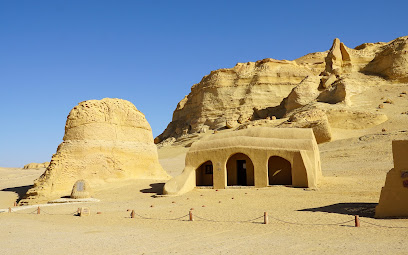
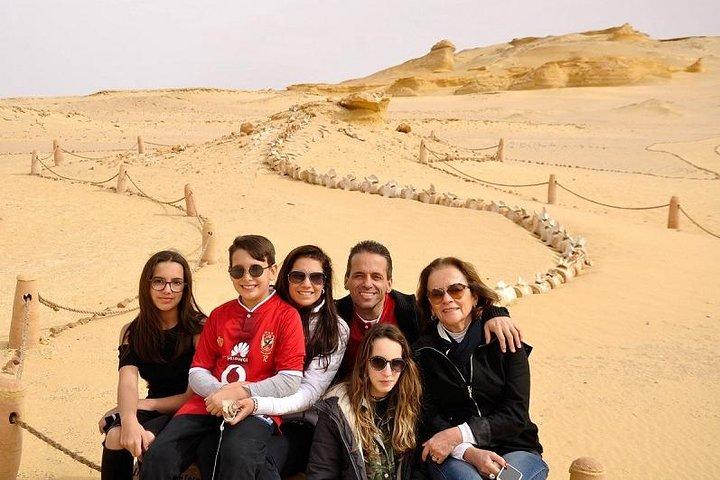
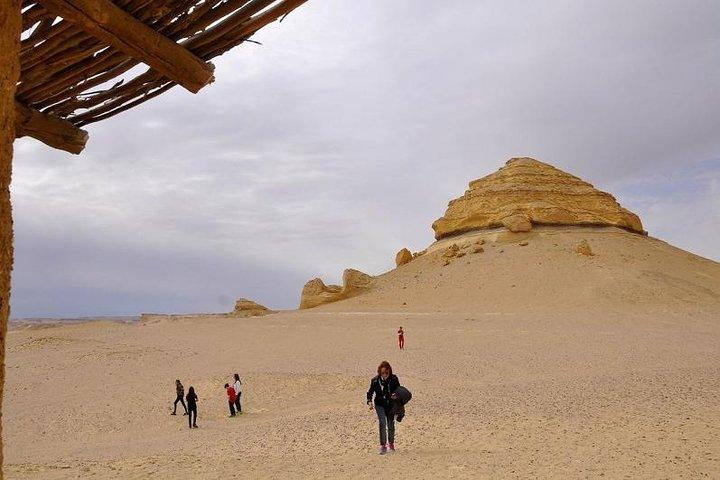
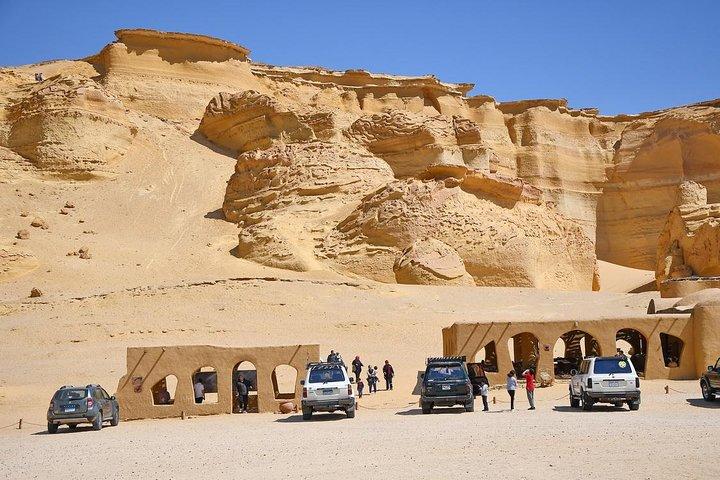
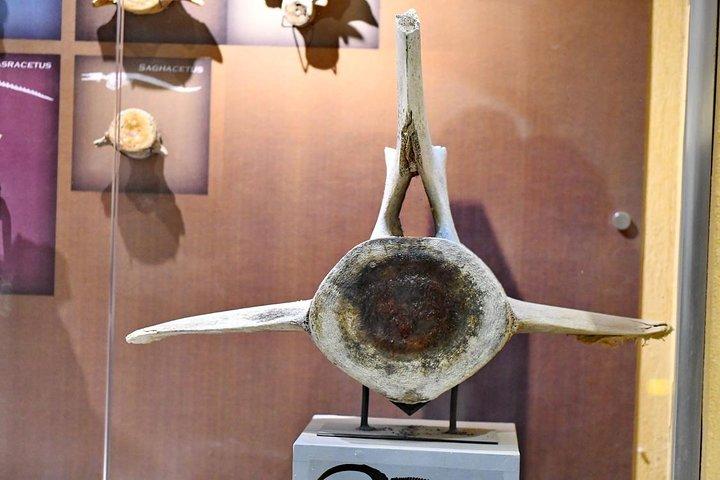
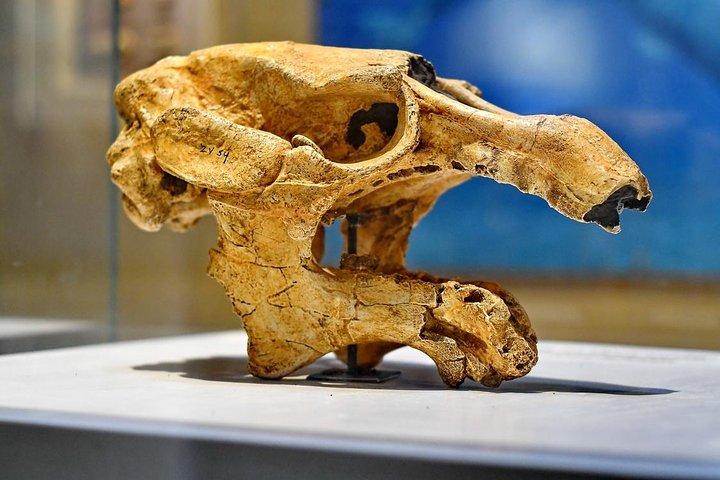
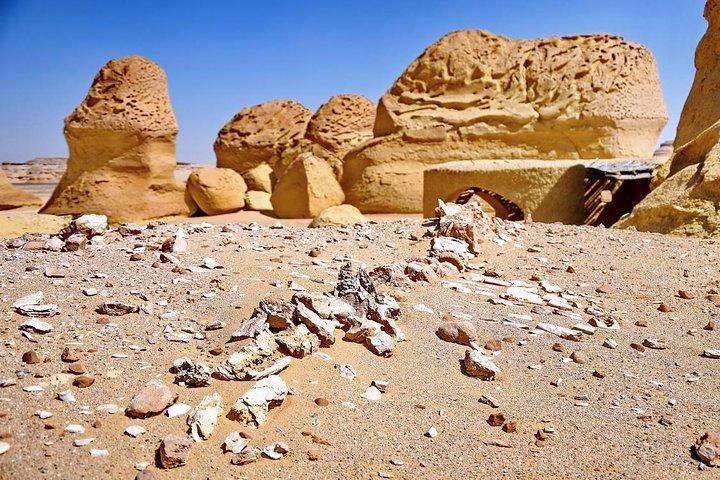
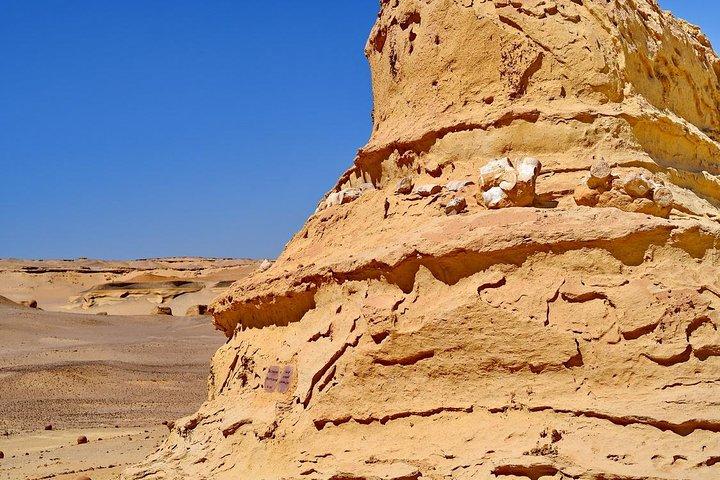
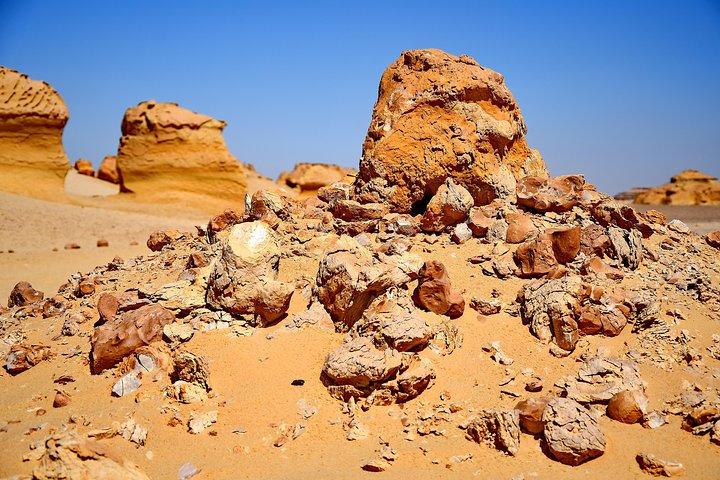
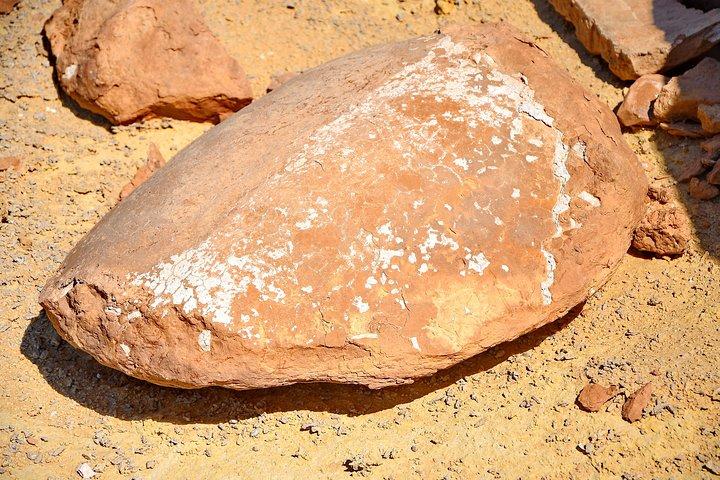
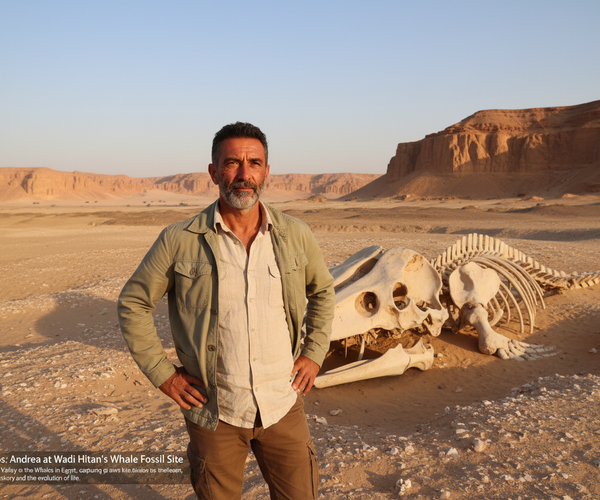
Wadi Al-Hitan "Whale Valley" is a paleontological site in the Faiyum Governorate of Egypt, some 150 km southwest of Cairo.[1] It was designated a UNESCO World Heritage Site[2] in July 2005[3] for its hundreds of fossils of some of the earliest forms of whale, the archaeoceti (a now extinct sub-order of whales). The site reveals evidence for the explanation of one of the greatest mysteries of the evolution of whales: the emergence of the whale as an ocean-going mammal from a previous life as a land-based animal. No other place in the world yields the number, concentration and quality of such fossils, as is their accessibility and setting in an attractive and protected landscape.[4] This is why it was added by the UNESCO to the list of protected World Heritage sites.[5] The fossils found at the site may not be the oldest but their great concentration in the area and the degree of their preservation is to the extent that even some stomach contents are intact. The presence of fossils of other early animals such as sharks, crocodiles, sawfish, turtles and rays found at Wadi El-Hitan makes it possible to reconstruct the surrounding environmental and ecological conditions of the time, adding to its justification to be cited as a Heritage site. The first fossil skeletons of whales were discovered in the winter of 1902-3.[1] For the next 80 years they attracted relatively little interest, largely due to the difficulty of reaching the area. In the 1980s interest in the site resumed as four wheel drive vehicles became more readily available. Continuing interest coincided with the site being visited by fossil collectors, and many bones were removed, prompting calls for the site to be conserved. The remains display the typical streamlined body form of modern whales, yet retaining some of the primitive aspects of skull and tooth structure. The largest skeleton found reached up to 21 m in length,[6] with well-developed five-fingered flippers on the forelimbs and the unexpected presence of hind legs, feet, and toes, not known previously in any archaeoceti. Their form was serpentine and they were carnivorous. A few of these skeletal remains are exposed but most are shallowly buried in sediments, slowly uncovered by erosion. Wadi El-Hitan provides evidences of millions of years of coastal marine life.
240 minutes
 Admission Included
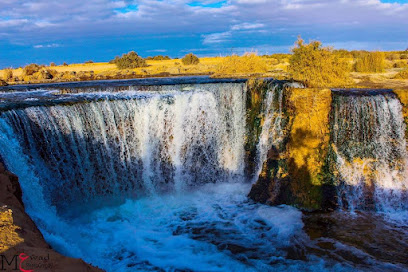
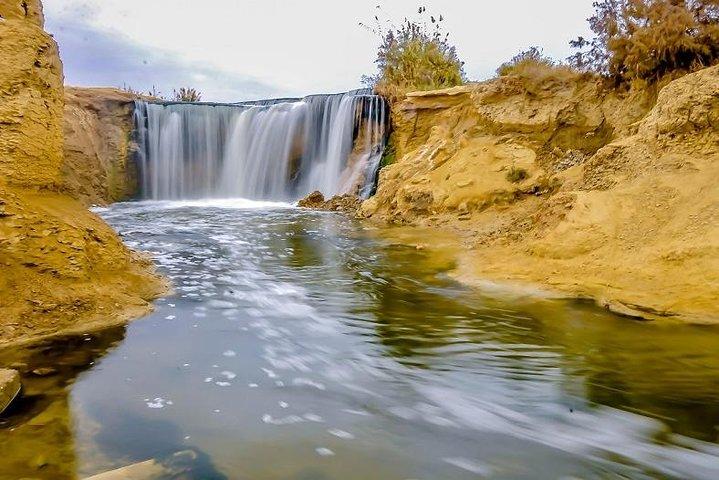
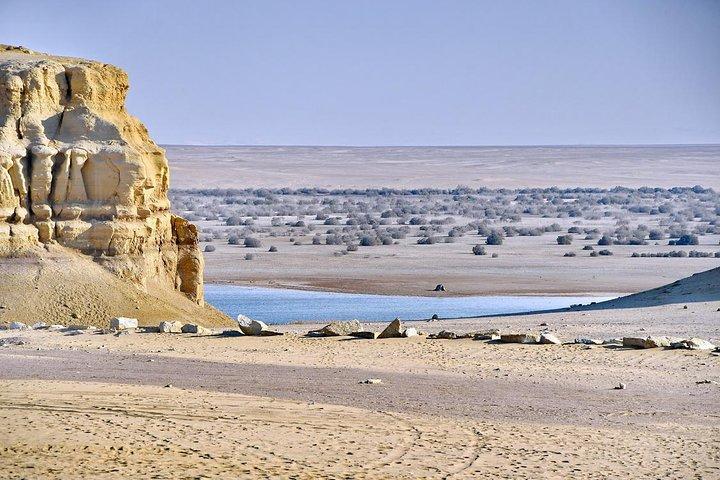
The valley of Wadi El-Rayan is an area of 1759km2, 113km2 of which are the dominating water body of the Wadi El Rayan lakes. It is located about 65km southwest of Faiyum city and 80km west of the Nile River. The Wadi has been used for man-made lakes from agricultural drainage which has made a reserve of the two separate Wadi El Rayan Lakes. The reserve is composed of a 50.90km2 upper lake and a 62.00km2 lower lake, with waterfalls between the two. Among the springs, there are three sulphur springs at the southern side of the lower lake, with extensive mobile sand dunes. Wadi El Rayan Waterfalls are considered to be the largest waterfalls in Egypt. At the south and southeast of the springs is Gabal Manqueer Al Rayan, where marine fossils and archeological remains are found. Gabal Madwera, near the lower lake, is known for its extensive dune formations. In the northwest is Wadi El Hitan, a protectorate containing fossils of extinct whales.
60 minutes
Admission Included
Fayoum Oasis
The Faiyum Oasis (Waḥet El Fayyum) is a depression or basin in the desert immediately to the west of the Nile south of Cairo in Egypt. The extent of the basin area is estimated at between 1,270 km2 (490 mi2) and 1700 km2 (656 mi2). The basin floor comprises fields watered by a channel of the Nile, the Bahr Yussef, as it drains into a desert depression to the west of the Nile Valley. The Bahr Yussef veers west through a narrow neck of land north of Ihnasya, between the archaeological sites of El Lahun and Gurob near Hawara; it then branches out, providing rich agricultural land in the Faiyum basin, draining into the large saltwater Lake Moeris (Birket Qarun).[1] The lake was freshwater in prehistory but is today a saltwater lake.[1] It is a source for tilapia and other fish for the local area. Differing from typical oases, whose fertility depends on water obtained from springs, the cultivated land in the Faiyum is formed of Nile mud brought down by the Bahr Yussef, 24 km (15 miles) in length. Between the beginning of Bahr Yussef at El Lahun to its end at the city of Faiyum, several canals branch off to irrigate the Faiyum Governorate. The drainage water flows into Lake Moeris.
The experience can be subject to change due to bad weather or unforseen circumstances. We always endeavour to give you the best possible experience.
Additional Information
-
 Wheelchair accessible
 -
Infants and small children can ride in a pram or stroller
-
Service animals allowed
-
Transportation options are wheelchair accessible
-
All areas and surfaces are wheelchair accessible
-
Not recommended for participants with spinal injuries
-
Not recommended for pregnant participants
-
Suitable for all physical fitness levels
What our experts say
-
 Visit the Wadi El Rayan waterfalls
 -
Bring a camera for stunning views
-
Pack sunscreen, it can be very sunny
-
Try local Faiyum dishes for lunch
-
Wear comfortable shoes for walking

More About this Experience
Introduction
Get ready for an unforgettable adventure as you embark on a full-day trip to El-Fayoum Oasis & Wadi El-Hitan from Cairo. This tour promises to take you on a journey through time and nature, allowing you to explore the wonders of ancient fossils and breathtaking landscapes. Starting with a pick-up at 7:30 am, you will embark on a private 4W jeep safari to fully immerse yourself in the beauty of the surroundings. The itinerary includes visits to Lake Qaroon, the Valley of Rayyan, Mudawara Mountain, and more.What to expect?
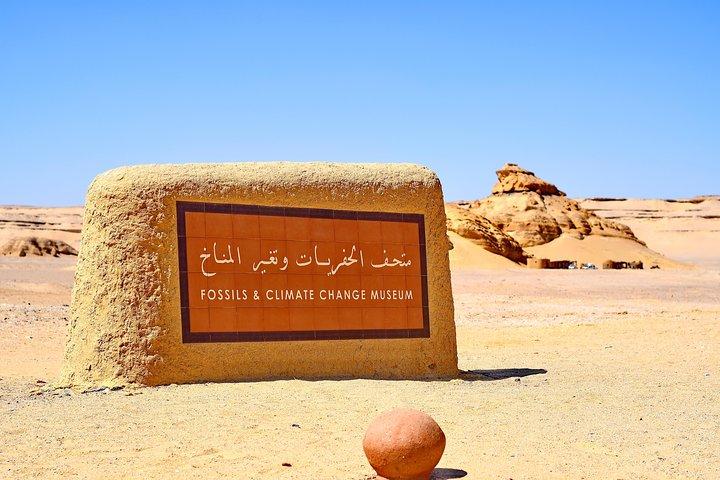
During this tour, you can expect to discover the mystical Valley of the Whales (Wadi Al-Hitan), a UNESCO World Heritage Site. Immerse yourself in the wonders of paleontology as you explore a site that holds fossils of some of the earliest forms of whales. Witness the evolution of these incredible creatures from land-based animals to ocean-going mammals. Additionally, you will have the opportunity to visit the fossils museum and witness the fossils track, further deepening your understanding of this unique prehistoric site.Who is this for?
This tour is perfect for history enthusiasts, nature lovers, and anyone with a sense of adventure. Whether you're a passionate paleontology buff or simply looking to explore stunning landscapes, this experience caters to a wide range of interests. The tour is suitable for solo travelers, couples, or small groups, allowing you to share this unforgettable experience with loved ones or make new friends along the way.Why book this?
Embarking on this tour is a once-in-a-lifetime opportunity to witness the remnants of an ancient world and gain a deeper understanding of the Earth's history. The chance to explore the Valley of the Whales and witness the evidence of millions of years of coastal marine life is an experience that is not to be missed. Beyond the historical aspect, this tour also offers the thrill of a 4W jeep safari, allowing you to fully immerse yourself in the stunning landscapes of El-Fayoum Oasis.Good to know
It's important to note that this tour has a duration of 480 to 600 minutes, ensuring that you have ample time to explore the various destinations on the itinerary. Comfortable shoes and clothing are recommended, as there will be opportunities for short walks and capturing the beauty of the surroundings. Don't forget to bring your camera to capture the incredible moments and unique fossils you will encounter throughout the tour.Reviews
Feedback from previous travelers speaks volumes about the incredible experiences offered by this tour. Visitors have praised the knowledgeable guides who provide insightful information about the fossils and the surrounding areas. Many have expressed their awe at witnessing the well-preserved fossils and the captivating landscapes. Overall, travelers have raved about the tour, recommending it to fellow adventure seekers and history enthusiasts alike. Don't miss out on your chance to embark on this extraordinary journey into the past.Journals from our explorers at this location





This is a popular product and the date you are looking for just sold out. Next available date is
