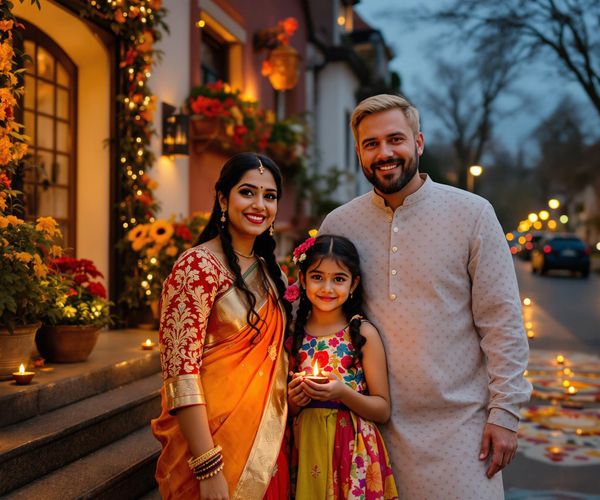
As a software engineer and an Indian expat living in Heidelberg, Germany, with my husband Thomas and our daughter Leela, travel is more than just a vacation for us; it's an opportunity to learn, connect, and grow as a family. We've discovered that immersing ourselves in different cultures, even in small ways, can have a profound impact on Leela's understanding of the world. Let me share some insights and experiences from our family travels, focusing on how we make cultural immersion fun and educational for our little one.
Embracing Cultural Immersion as a Family
Cultural immersion offers incredible benefits for children. It fosters empathy, broadens their understanding of diverse perspectives, and enhances their adaptability. I've seen firsthand how travel has shaped Leela's worldview. For instance, during our trip to India, she was fascinated by the vibrant colors, the bustling markets, and the intricate stories behind our traditional festivals. These experiences sparked her curiosity and encouraged her to ask questions about her heritage.
Remember, cultural immersion doesn't require traveling to far-off lands. Even local experiences can be deeply immersive. Exploring Heidelberg's Christmas markets, participating in local festivals, or visiting nearby historical sites can all provide valuable cultural insights. The key is to be open to new experiences and to approach them with a sense of curiosity and respect.
Planning Family-Friendly Cultural Activities
When planning our trips, I always research age-appropriate cultural activities. It's crucial to strike a balance between structured activities, like visiting museums or taking guided tours, and unstructured exploration, such as wandering through local markets or parks. Leela enjoys visiting museums, but her attention span is limited, so we usually focus on a specific exhibit or activity that interests her.
For example, during our visit to the Deutsches Museum in Munich, we spent most of our time in the children's area, where she could interact with exhibits and learn about science and technology in a fun and engaging way. We also make sure to incorporate plenty of free time for her to explore and discover things on her own. One of her favorite things to do is to visit local parks and playgrounds, where she can interact with other children and experience the local culture firsthand.
Engaging Children Through Storytelling and Local Lore
Storytelling is a powerful tool for connecting children to a culture's history and values. Before our trips, I often read Leela local folktales or legends to introduce her to the culture's narratives. During our travels, we visit historical sites and museums that bring these stories to life. In India, I shared stories from the Mahabharata and the Ramayana, explaining the moral lessons embedded in these epics. In Germany, we explored castles and learned about the knights and princesses who once lived there.
I also encourage Leela to ask questions about the stories and the characters. This helps her to connect with the culture on a deeper level and to understand the values and beliefs that are important to the people who live there. For instance, she was curious about the story of Savitri from the Mahabharata and her devotion to her husband, Satyavan. It sparked a conversation about love, loyalty, and the power of determination.
Making Learning Fun: Cultural Games and Activities
To make learning about different cultures fun and interactive, we incorporate cultural games and activities into our travels. One of our favorite games is Passport to Culture, where we create a pretend passport for each country we visit and stamp it with cultural symbols and landmarks. We also play geography trivia, testing our knowledge of different countries and cultures. For our trip to France, we created a travel-themed scavenger hunt in Paris, searching for famous landmarks and trying local delicacies like croissants and macarons.
Hands-on activities are another great way to engage children. We often cook local dishes together, like making gulab jamun for Diwali or baking Apfelstrudel during our time in Germany. We also learn basic phrases in the local language, like Namaste in India or Guten Tag in Germany. We also enjoy trying traditional crafts, such as making rangoli patterns with colored powder or painting Easter eggs.
There are also many travel-inspired board games and apps that can be used during travel. Ticket to Ride is a fun game that teaches geography and strategy, while Duolingo is a great app for learning basic phrases in different languages.
Respectful Travel: Teaching Children Cultural Sensitivity
It is essential to teach children about cultural sensitivity and respect before and during travel. We discuss the importance of interacting with locals respectfully, being mindful of cultural differences, and respecting customs. Before visiting Japan, we learned about bowing etiquette and the importance of removing shoes before entering someone's home. In India, we discussed the significance of dressing modestly and respecting religious customs.
I always encourage Leela to ask questions and show genuine interest in learning about other cultures. We talk about how different cultures have different ways of doing things and that there is no right or wrong way. It's important to be open-minded and respectful of others' beliefs and customs. For instance, when we visited a mosque in Turkey, we explained to Leela the importance of removing her shoes and covering her hair. She was curious about the prayer rituals and the call to prayer, and we took the time to explain the significance of these practices.
Explore the world with your children through cultural immersion. Anjali Müller shares tips on family-friendly activities, storytelling, cultural games, and respectful travel.