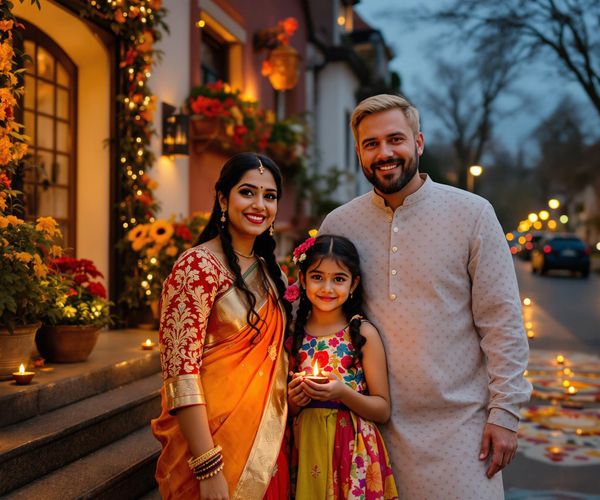
Moving to a new country is an exciting adventure, but let's be honest, the language barrier can feel like hitting a brick wall. When I moved from Nashik to Heidelberg, Germany, it was a whole new world, and not just because of the fairytale castles. Suddenly, everyday tasks like ordering coffee or asking for directions became mini-challenges. But over time, I've learned that navigating these language gaps can actually enrich your travel experiences. So, let me share some tips that have helped me along the way!
The Initial Shock and My 'Lost in Translation' Moments
When I first arrived in Germany, even simple interactions felt daunting. I remember one particularly funny incident at a local bakery. I was trying to order a 'Berliner' (a type of donut), but my pronunciation was so off that the baker looked completely bewildered. I ended up pointing and miming eating, which thankfully worked, but it was definitely a 'lost in translation' moment! These moments, while sometimes embarrassing, are a crucial part of cultural immersion. They force you to step outside your comfort zone and engage with the local culture in a more meaningful way.
Essential Phrases: My German Starter Pack
One of the first things I did was learn some basic German phrases. Knowing how to say 'Hallo' (hello), 'Danke' (thank you), 'Entschuldigung' (excuse me), and 'Bitte' (please) made a huge difference. These simple phrases can significantly improve your interactions with locals. When I visited Egypt a few years ago, even knowing basic Arabic greetings made people much more welcoming and patient. It shows that you're making an effort to connect with their culture. A little effort goes a long way!
Tech to the Rescue: Translation Apps I Swear By
In today's world, we have amazing technology at our fingertips. Translation apps have been a lifesaver for me. I highly recommend Google Translate, DeepL, and Microsoft Translator. Google Translate is fantastic for its image translation feature – you can simply point your camera at a sign or menu, and it will translate it for you. DeepL is known for its accuracy and nuanced translations, which is great for more complex conversations. Microsoft Translator has a useful conversation mode that allows you to have real-time translated conversations with someone. Don't forget to download the necessary languages for offline use – you never know when you'll be without internet access!
Beyond Words: The Power of Non-Verbal Communication
Sometimes, you don't need words at all! Non-verbal communication, like body language, gestures, and facial expressions, can be incredibly powerful. I've often used gestures to explain what I need, especially when my German fails me. However, it's important to be aware of cultural differences. What might be a friendly gesture in one culture could be offensive in another. For example, the 'OK' sign (thumb and forefinger forming a circle) is considered rude in some countries. A little research and awareness can go a long way in avoiding misunderstandings.
Embracing the Learning Curve: My Journey with German Idioms
German idioms are a whole different ball game! They can be quite confusing and often hilarious when translated literally. For instance, the idiom 'Ich drücke dir die Daumen' translates to 'I press my thumbs for you,' which means 'I'll keep my fingers crossed for you.' Understanding idioms like this can deepen your cultural understanding and improve your communication. I've found that using flashcards, watching German TV shows, and practicing with native speakers are great ways to learn idioms. It's a fun way to immerse yourself in the language and culture.
The Kindness of Strangers: Asking for Help and Making Connections
Don't be afraid to ask for help! Most people are happy to assist you, especially if you show that you're making an effort to communicate. I've had so many positive experiences asking for directions or recommendations in Germany. People have gone out of their way to help me, and I've even made some lovely connections along the way. Just remember to be polite and respectful, and you'll be surprised at how willing people are to lend a hand.
From Nashik to Heidelberg: A World of Languages
Looking back on my journey from Nashik to Heidelberg, I realize how much I've grown and learned through navigating different languages and cultures. Language barriers are not obstacles; they're opportunities for growth and connection. Effective communication is about more than just words; it's about understanding and empathy. So, embrace the challenge, be open to new experiences, and remember that every 'lost in translation' moment is a chance to learn and connect with the world around you.
Practical tips for travelers on overcoming language barriers, including learning basic phrases, using translation apps, and non-verbal communication.