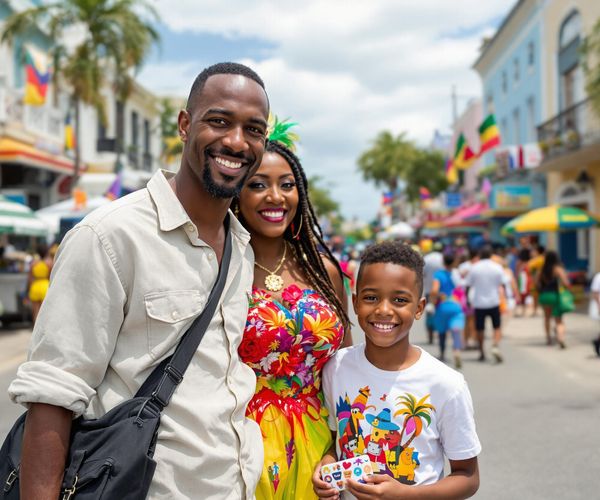
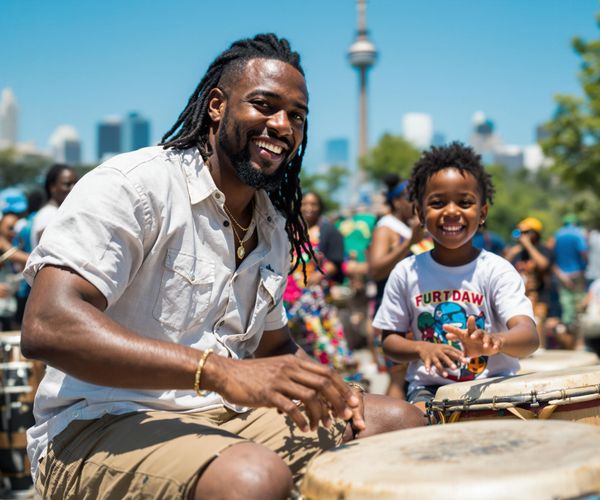
Hey everyone, David here! Over the years, I've learned that travel isn't just about seeing new places; it's about capturing those moments in a way that lets you relive them forever. As a software developer with a passion for photography, I've combined my tech skills with my love for travel to document my adventures. Whether it's the vibrant streets of Bridgetown or the serene landscapes of Ontario, photography has been my way of preserving memories. Today, I'm sharing some beginner-friendly tips to help you capture your own travel memories through the lens.
Choosing the Right Gear: It's More Than Just the Camera
Choosing the right gear can feel overwhelming, but it doesn't have to be! The best camera is the one you have with you, whether it's a simple point-and-shoot, your smartphone, or something more advanced like a mirrorless or DSLR camera. Each has its strengths and weaknesses, so let’s break it down.
For casual travelers, a point-and-shoot camera is compact, easy to use, and delivers decent image quality. Smartphones have become incredibly capable, often rivaling point-and-shoots in terms of image quality and convenience. If you're looking to step up your game, consider a mirrorless or DSLR camera. These offer more control over settings and allow you to use different lenses for various shooting scenarios. I remember when I upgraded to a mirrorless camera before a trip to Iceland; the difference in image quality was astounding!
Here are a few beginner-friendly cameras I recommend:
- Canon EOS Rebel Series: A great entry-level DSLR with plenty of features to learn and grow with.
- Sony Alpha a6000: A compact mirrorless camera with excellent image quality and fast autofocus.
- Fujifilm X-T200: A stylish mirrorless camera with a retro design and user-friendly interface.
Don't forget the accessories! A versatile zoom lens is a must-have for capturing a variety of subjects, from landscapes to portraits. Extra batteries and memory cards are essential for longer trips. And a lightweight tripod can be a lifesaver for steady shots in low light or for group photos. I once forgot my extra battery on a hike in the Rockies, and let me tell you, I learned my lesson that day!
Also, consider investing in a good camera sling bag. It keeps your gear accessible and secure while you're on the move. Trust me, fumbling with a backpack every time you want to take a photo gets old quickly.
Mastering the Basics: Composition and Lighting
Composition and lighting are the building blocks of a great photo. You don't need fancy equipment to master these; just a bit of understanding and practice.
The rule of thirds is a simple yet effective guideline for creating visually appealing compositions. Imagine dividing your frame into nine equal parts with two horizontal and two vertical lines. Place your subject at one of the intersections or along one of the lines to create a more balanced and interesting image. I used this constantly while photographing the architecture in Barcelona, and it made a huge difference.
Leading lines, symmetry, and framing are other techniques to enhance your photos. Leading lines draw the viewer's eye into the scene, symmetry creates a sense of balance, and framing adds depth and context. Think of a cobblestone road leading to a distant cathedral (leading lines), a perfect reflection in a still lake (symmetry), or a shot of a bustling market framed by an archway (framing).
Lighting is everything in photography. Natural light is your best friend, especially during the golden hour (the hour after sunrise and the hour before sunset) and the blue hour (the hour after sunset and the hour before sunrise). These times offer soft, warm light that can transform any scene. I remember waking up early to capture the sunrise over the Sahara Desert; the colors were simply breathtaking.
Shooting in different lighting conditions requires adjustments. In sunny conditions, use a lower ISO and a faster shutter speed to avoid overexposure. On cloudy days, increase the ISO to brighten the image. Indoors, look for natural light sources like windows and doorways. Understanding these nuances can make a world of difference. I once struggled to photograph a dimly lit temple in Thailand until I adjusted my ISO and aperture settings.
Capturing Culture and Cuisine: Telling Stories Through Your Lens
Travel photography is about more than just pretty landscapes; it's about capturing the essence of a place, its culture, and its cuisine. These are the elements that truly tell a story.
When photographing people, always be respectful and ask for permission. A simple gesture or phrase in the local language can go a long way. Engage with your subjects, show genuine interest, and try to capture their personality. I've had some amazing encounters simply by asking if I could take someone's photo. One time in Morocco, I spent an hour chatting with a local artisan after taking his picture, learning about his craft and his life.
Food is an integral part of any culture, so don't forget to capture the culinary delights of your destination. Visit local markets, food stalls, and restaurants to photograph the ingredients, the preparation, and the finished dishes. Pay attention to the colors, textures, and details that make each dish unique. I love wandering through markets, capturing the vibrant produce and the bustling atmosphere. It's a feast for the senses!
Photographing cultural events can be challenging but incredibly rewarding. Be mindful of the customs and traditions, and try to capture the energy and excitement of the event. Use a zoom lens to get close to the action without being intrusive. I once photographed a Carnival celebration in Trinidad, and it was an explosion of color and music. It was chaotic, but I managed to capture some amazing shots by being patient and observant.
To capture the human spirit, focus on emotions and expressions. Look for moments of joy, sorrow, or contemplation. Capture the small details that reveal character, like a weathered hand or a knowing glance. These are the images that will truly resonate with viewers. I always try to capture candid moments rather than posed shots; they feel more authentic and real.
Essential Camera Settings and Techniques for Travel
Understanding the basic camera settings can greatly improve your travel photos. Aperture, shutter speed, and ISO are the three main settings that control the exposure of your image.
Aperture controls the depth of field, which is the area of the image that is in focus. A wide aperture (e.g., f/2.8) creates a shallow depth of field, blurring the background and isolating the subject. A narrow aperture (e.g., f/16) creates a deep depth of field, keeping everything in focus. I often use a wide aperture for portraits and a narrow aperture for landscapes.
Shutter speed controls the amount of time the camera's shutter is open, allowing light to hit the sensor. A fast shutter speed (e.g., 1/500s) freezes motion, while a slow shutter speed (e.g., 1s) blurs motion. I use a fast shutter speed for action shots and a slow shutter speed for capturing light trails.
ISO controls the sensitivity of the camera's sensor to light. A low ISO (e.g., ISO 100) produces a clean image with minimal noise, while a high ISO (e.g., ISO 3200) allows you to shoot in low light but can introduce noise. I try to keep the ISO as low as possible to maintain image quality.
For beginners, I recommend using aperture priority mode. This allows you to control the aperture while the camera automatically adjusts the shutter speed. It's a great way to experiment with depth of field without getting overwhelmed. Focusing techniques are also crucial. Use single-point autofocus to select a specific focus point, or use continuous autofocus for moving subjects. And don't forget to adjust the white balance to ensure accurate colors.
As you become more comfortable, try shooting in manual mode. This gives you complete control over all the settings and allows you to fine-tune your images to your liking. It takes practice, but it's worth it. I remember the first time I shot a Milky Way photo in manual mode; it was a game-changer!
Preserving Your Memories: Photo Storage and Backup
Backing up your photos while traveling is crucial to prevent data loss. Imagine losing all your precious memories from a trip due to a lost or damaged memory card. It's a photographer's worst nightmare!
I recommend using a combination of cloud storage services and external hard drives. Cloud storage services like Google Photos, Dropbox, and OneDrive automatically back up your photos to the cloud, so you can access them from anywhere. External hard drives provide a physical backup of your photos, which is useful if you don't have access to the internet. I always carry a portable hard drive with me on my trips.
Organizing and labeling your photos is also important for easy retrieval. Create a folder structure based on date and location, and use descriptive filenames. Add keywords and tags to your photos to make them searchable. I use Adobe Lightroom to organize and edit my photos; it's a powerful tool for managing large photo libraries.
Creating a travel photography workflow can streamline the process. This involves setting up a system for backing up, organizing, and editing your photos while you're on the road. It might seem like a lot of work, but it will save you time and headaches in the long run. I have a checklist that I follow every time I travel, ensuring that my photos are safe and organized.
Preserving memories through well-organized and backed-up photos is invaluable. These photos are more than just images; they're stories, emotions, and experiences that you can relive for years to come. So take the time to protect them. After all, memories are all we have.
Beginner-friendly tips to capture your travel memories through photography. Learn about gear, composition, lighting, camera settings, and photo storage.