
As a translator, I've always believed in the power of communication, whether through words or images. My journey as a travel blogger on Evendo has allowed me to combine my love for cultural exploration with my passion for photography. It's more than just ticking off destinations; it's about capturing the soul of a place, the stories etched in its landscapes and the smiles of its people. So, grab your camera, and let's embark on a journey to capture the world through a lens!
The Essence of Travel Photography: More Than Just Pretty Pictures
For me, travel photography is about so much more than just taking aesthetically pleasing photos. It's about storytelling, cultural preservation, and connecting with the world around us on a deeper level. A picture should evoke emotion, tell a story, and capture the unique essence of a place.
I remember once in a small village in Guizhou, China, I photographed an elderly woman weaving intricate patterns on a loom. Her wrinkled hands, the vibrant threads, the focused expression on her face – it all told a story of tradition, skill, and resilience. That photograph, more than any words, encapsulated the heart of that community. It's those kinds of moments I strive to capture.
Gear Essentials: What's in My Camera Bag?
Over the years, I've honed my camera gear to suit my travel style. You don't need the most expensive equipment to take great photos, but having the right tools can certainly enhance your experience. Here’s a peek inside my camera bag:
- Camera: I primarily use a mirrorless camera for its lightweight design and excellent image quality. However, a DSLR or even a smartphone with a good camera can work wonders!
- Lenses: A wide-angle lens (around 16-35mm) is essential for capturing landscapes and cityscapes. A zoom lens (like a 24-70mm or 70-200mm) allows you to get closer to your subjects and capture details from a distance.
- Accessories: A sturdy tripod is a must for low-light photography and landscapes. Filters (polarizing and neutral density) can help you control light and reduce glare.
Currently, I am enjoying the versatility of my Sony α7 III paired with a Tamron 28-75mm lens. It's a great combination for travel because it's relatively lightweight and covers a wide range of shooting scenarios.
Mastering Camera Settings: A Practical Guide
Understanding your camera settings is crucial for taking control of your images. Here are a few key settings to master:
- Aperture: Controls the depth of field (how much of the image is in focus). A wide aperture (low f-number like f/2.8) creates a shallow depth of field, blurring the background and isolating your subject. A narrow aperture (high f-number like f/16) creates a large depth of field, keeping everything in focus, ideal for landscapes.
- Shutter Speed: Controls how long the camera's sensor is exposed to light. Fast shutter speeds (like 1/500s) freeze motion, while slow shutter speeds (like 1 second) blur motion, creating a sense of movement.
- ISO: Controls the sensitivity of the camera's sensor to light. Low ISO (like 100) produces clean images in bright light, while high ISO (like 3200) allows you to shoot in low light, but can introduce noise (grain) into the image.
- White Balance: Adjusts the color temperature of the image to accurately reflect the colors of the scene. Different light sources have different color temperatures (e.g., daylight is cool, while incandescent light is warm).
For example, when photographing the vibrant lanterns during the Mid-Autumn Festival in Hong Kong, I used a wide aperture (f/2.8) to blur the background and isolate the lanterns, and a low ISO (100) to minimize noise. I also adjusted the white balance to accurately capture the warm glow of the lanterns.
Composition Techniques: Framing Your Story
Composition is the art of arranging elements within your frame to create a visually appealing image. Here are a few basic rules to keep in mind:
- Rule of Thirds: Divide your frame into nine equal parts and place your subject along the lines or at the intersections. This creates a more balanced and visually interesting composition.
- Leading Lines: Use lines to guide the viewer's eye through the image and towards your subject. Roads, rivers, and fences can all be used as leading lines.
- Symmetry: Use symmetry to create a sense of balance and harmony in your image. Reflections in water or symmetrical buildings can make for stunning photographs.
- Perspective: Experiment with different perspectives to create unique and engaging images. Try shooting from a low angle to make your subject look larger or from a high angle to get a wider view of the scene.
I remember photographing the rice terraces in Sapa, Vietnam. By using leading lines created by the terraces themselves, I was able to draw the viewer's eye through the landscape and highlight the intricate patterns. Breaking the rules can also lead to great results! Sometimes an off-center composition or a deliberately unbalanced frame can create a sense of tension or unease, adding to the story you're trying to tell.
Capturing Cultural Moments: Respect and Authenticity
When photographing people and cultures, it's essential to be respectful and mindful of local customs and traditions. Always ask for permission before taking someone's photo, and be prepared to accept a polite refusal. Avoid taking photos of people in situations that might be considered disrespectful or exploitative.
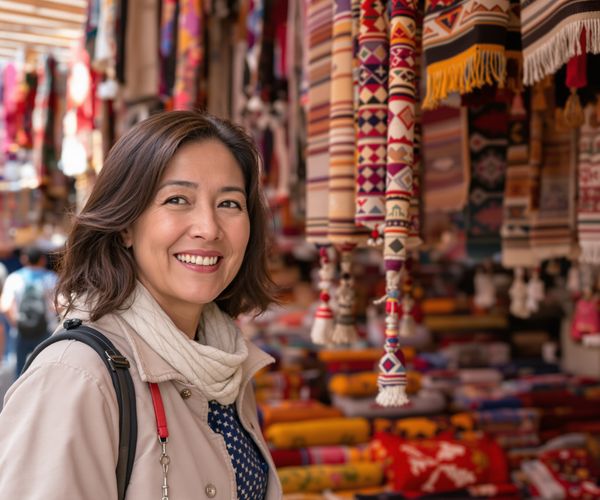
In Morocco, I always made sure to ask for permission before photographing people in the souks. I also tried to learn a few basic phrases in Arabic to show my respect for the local culture. One time, I was invited to share tea with a family after asking to take their photo. It was a wonderful experience that taught me the importance of connecting with people on a personal level.
Landscape Photography: Showcasing the Beauty of Nature
Landscape photography is all about capturing the beauty and grandeur of the natural world. Here are a few tips for taking stunning landscape photos:
- Find the Best Light: The best time to photograph landscapes is during the golden hour (the hour after sunrise and the hour before sunset) when the light is soft and warm.
- Use Filters: A polarizing filter can help reduce glare and enhance colors, while a neutral density filter can help you control the amount of light entering the camera, allowing you to use longer shutter speeds.
- Create Depth: Use leading lines, foreground elements, and atmospheric perspective to create a sense of depth in your image.
Photographing the Canadian Rockies has always been a source of immense joy for me. The towering peaks, the turquoise lakes, the pristine forests – it's a photographer's paradise! I always try to practice sustainable tourism and leave no trace when photographing natural environments. It's our responsibility to protect these places for future generations.
Post-Processing Essentials: Enhancing Your Images
Post-processing is an essential part of the photography workflow. It allows you to enhance your images and bring out their full potential. Here are a few basic techniques to try:
- Adjust Exposure: Brighten or darken the image to achieve the desired level of brightness.
- Adjust Contrast: Increase or decrease the contrast to make the image more punchy or subdued.
- Adjust Color Balance: Correct any color casts and fine-tune the colors in the image.
I personally use Adobe Lightroom for post-processing, but there are many other user-friendly software and apps available for beginners. The key is to use post-processing subtly and maintain the authenticity of the image. I never want my photos to look artificial or over-processed.
Discover tips and techniques for capturing stunning travel photographs that tell a story. Learn from Mei Wong's experiences and insights.