Nathalie's Solo Cultural Exploration in Kyoto
Day 8: Zen Gardens and Golden Reflections: A Day of Serenity in Kyoto
Discover Kyoto's tranquil beauty at Ryoan-ji's enigmatic rock garden and Kinkaku-ji's golden splendor, a journey of reflection and awe.
Finding Peace in Stone and Gold
Today, I embarked on a journey to explore the serene and reflective spaces that Kyoto is so renowned for. Leaving behind the bustling city streets, I sought solace in the meticulously crafted gardens and the shimmering beauty of ancient temples. It was a day of quiet contemplation, a chance to connect with history, and a reminder of the enduring power of simplicity and elegance.
My day began with a hearty breakfast at Arash's Kitchen. It was an interesting mix of Persian and Indian cuisine, and quite delicious! I fueled up for the day ahead with some naan and chai.

Experience authentic Asian cuisine at Arash's Kitchen in Kyoto—a culinary delight for every traveler seeking unique flavors.
Ryoan-ji: A Garden of Riddles
My first destination was Ryoan-ji, home to Japan's most famous rock garden. As a librarian specializing in historical archives, I'm naturally drawn to places steeped in history and mystery, and Ryoan-ji certainly didn't disappoint. The temple itself, originally an aristocrat's villa, was converted into a Zen temple in 1450. But it's the garden that truly captivates. Stepping onto the veranda, I was immediately struck by the garden's simplicity: fifteen rocks of varying sizes arranged on a bed of white gravel, surrounded by low earthen walls. It’s a deceptively simple layout, yet it holds a universe of meaning.

Discover the tranquil beauty of Ryōan-ji in Kyoto, a renowned Zen temple known for its iconic rock garden and rich cultural heritage.
The origins and the creator of the rock garden remain shrouded in mystery, adding to its allure. The garden's design features fifteen stones arranged in such a way that one is always hidden from view, no matter where you stand. Some believe the garden represents islands in an ocean, others a tigress carrying her cubs across a pond. Still others claim it embodies abstract concepts like infinity, or the Japanese aesthetic principles of *wabi* (refined austerity) and *sabi* (subdued taste). I found myself pondering these interpretations, losing myself in the garden's enigmatic beauty.
The meaning of the garden is not explicit; it is up to each viewer to find the meaning for him/herself.
I spent a long time sitting on the veranda, letting my mind wander and attempting to decipher the garden's secrets. I considered the theory that the arrangement of stones represents a tiger carrying cubs across a pond, and another, that it represents islands in a sea. I found myself drawn to the idea that the garden embodies the Zen concept of *mu*, or nothingness, encouraging a meditative state where the mind can transcend the material world. It was so quiet and still, and I could feel my mind clearing.
The garden is meant to be viewed from a seated position on the veranda of the *hojo*, the abbot's residence. As I sat there, I noticed an interesting feature of the garden's design: from any vantage point, at least one of the rocks is always hidden from the viewer. This is said to represent the imperfection of human perception and the idea that we can never see the complete picture.
After contemplating the rock garden, I explored the rest of the temple grounds, including the Kyoyochi Pond, a water garden dating back to the 12th century. It was a pleasant contrast to the starkness of the rock garden, with cherry trees just beginning to show buds, promising a beautiful display in a few weeks. I also visited the stone water basin near the teahouse, which requires one to crouch down in a sign of reverence and humility.
Kinkaku-ji: The Golden Pavilion
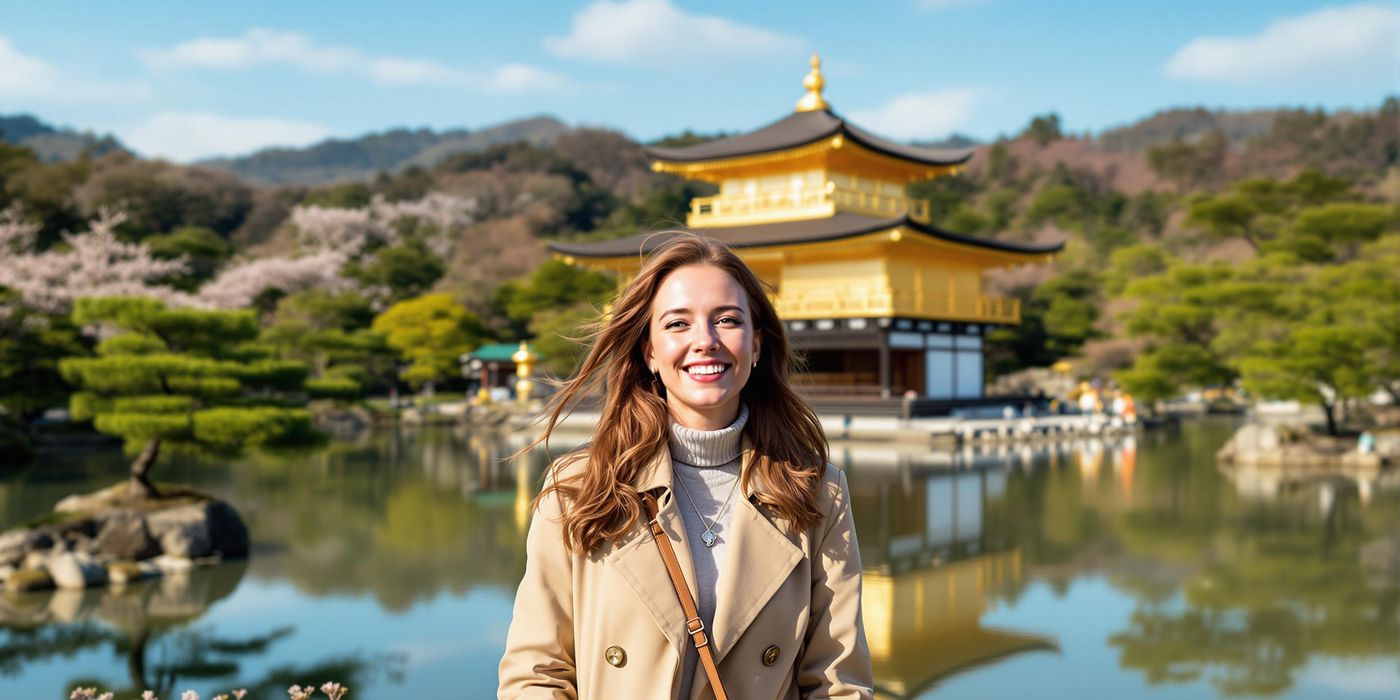
From the serene contemplation of Ryoan-ji, I journeyed to the dazzling beauty of Kinkaku-ji, the Golden Pavilion. Formally known as Rokuonji, this Zen temple is famous for its top two floors being completely covered in gold leaf. As I approached the temple, the sight of the Golden Pavilion shimmering in the sunlight took my breath away. It was a truly magnificent sight, a testament to the artistry and craftsmanship of the Muromachi period.
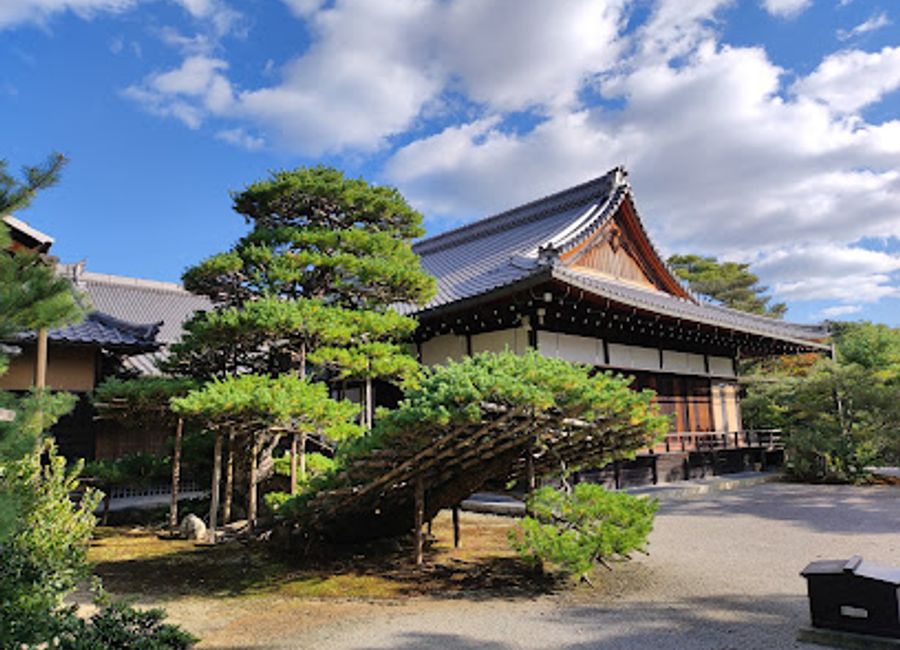
Explore Kinkaku-ji, the Golden Pavilion of Kyoto, a stunning Zen Buddhist temple adorned in gold and surrounded by tranquil gardens and reflective ponds.
Originally built in 1397 as a retirement villa for Shogun Ashikaga Yoshimitsu, it was converted into a Zen temple after his death in 1408, according to his wishes. The pavilion has burned down several times throughout history, including once in 1950 when it was set on fire by a fanatic monk. The current structure was rebuilt in 1955, a faithful replica of the original.
The Golden Pavilion is built overlooking a large pond, and its reflection in the water creates a stunning visual effect. The gold leaf covering the upper floors is not merely decorative; it is said to symbolize purification from negative thoughts towards death. The pavilion's three stories each represent a different architectural style: the first floor is built in the Shinden style used for palace buildings during the Heian Period, the second floor in the Bukke style used in samurai residences, and the third floor in the style of a Chinese Zen hall. Each floor holds different statues, although it is not possible to enter the pavilion itself.
I strolled through the gardens surrounding the Golden Pavilion, admiring the meticulously manicured trees and the carefully placed stones. The gardens hold a few other spots of interest, including Anmintaku Pond, which is said to never dry up, and statues that people throw coins at for luck. I also visited the Sekkatei Teahouse, added to Kinkaku-ji during the Edo Period, before exiting the paid temple area. Outside the exit are souvenir shops, a small tea garden where you can have matcha tea and sweets, and Fudo Hall, a small temple hall which houses a statue of Fudo Myoo, one of the Five Wisdom Kings and protector of Buddhism. The statue is said to be carved by Kobo Daishi, one of the most important figures in Japanese religious history.
The Golden Pavilion was built to echo the extravagant Kitayama culture that developed in the wealthy aristocratic circles of Kyoto during Yoshimitsu's times. Each floor represents a different style of architecture. The first floor is built in the Shinden style used for palace buildings during the Heian Period, and with its natural wood pillars and white plaster walls contrasts yet complements the gilded upper stories of the pavilion. Statues of the Shaka Buddha (historical Buddha) and Yoshimitsu are stored in the first floor. Although it is not possible to enter the pavilion, the statues can be viewed from across the pond if you look closely, as the sliding doors are usually left open.
The second floor is built in the Bukke style used in samurai residences and has its exterior completely covered in gold leaf. Inside is a seated Kannon Bodhisattva surrounded by statues of the Four Heavenly Kings; however, the statues are not shown to the public. Finally, the third and uppermost floor is built in the style of a Chinese Zen hall. It is gilded inside and out and is capped with a golden phoenix.
As I stood there, gazing at the Golden Pavilion, I couldn't help but feel a sense of awe and wonder. The temple's beauty and history are truly captivating, and it's easy to see why it's one of Kyoto's most popular attractions. It's more than just a building covered in gold; it's a symbol of Kyoto's rich cultural heritage and a reminder of the enduring power of art and architecture.
A Culinary Interlude
After a morning of temples and gardens, it was time for lunch. I headed to Hyoto Shijo Karasuma, a restaurant known for its *dashi shabu-shabu*. I opted for the Dashi Shabu lunch with branded pork. The meal began with a Sakura-scented sesame tofu, followed by the *dashi shabu-shabu* itself, featuring thinly sliced branded pork and an assortment of seasonal vegetables cooked in a flavorful *dashi* broth. To finish, I enjoyed fresh udon noodles in the remaining broth, enhanced with a touch of curry powder. It was a delightful culinary experience, a perfect blend of flavors and textures.

Experience authentic Japanese flavors with exquisite hot pot and Kaiseki dishes at Hyoto Shijo Karasuma in Kyoto.
Teppanyaki Delights
For dinner, I decided to indulge in some *teppanyaki* at Teppanyaki Minami. I savored the expertly prepared dishes, each cooked on a *teppan* grill right before my eyes. The chef's skill and artistry were evident in every bite, from the perfectly seared scallops to the tender and flavorful steak. I chose a set menu that started with a caprese salad, followed by butter-sautéed vegetables and fish (Buri), then shrimp, scallops, and bell peppers. The main course featured both fillet and sirloin steak. It was a delicious meal and a delightful experience.
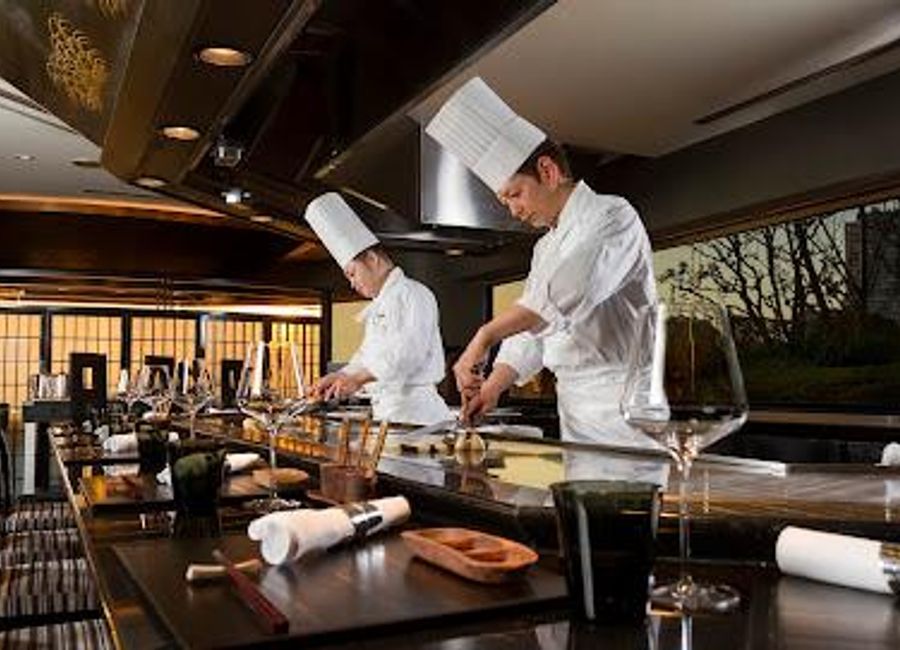
Experience authentic teppanyaki at Teppanyaki Minami in Osaka—where culinary artistry meets breathtaking city views.
Nightcap at Turquoise Bar
To cap off the evening, I ventured to the Turquoise Bar, a hidden gem in Kyoto's Kiyamachi area. This stylish bar offers a cozy and inviting atmosphere, perfect for unwinding after a day of exploration. The bartenders are skilled mixologists, crafting a wide range of classic and original cocktails. I enjoyed a carefully prepared drink, savoring the quiet ambiance and reflecting on the day's experiences. The bar had a wide selection of original cocktails, and the bartender was helpful in selecting one that matched my preferences.
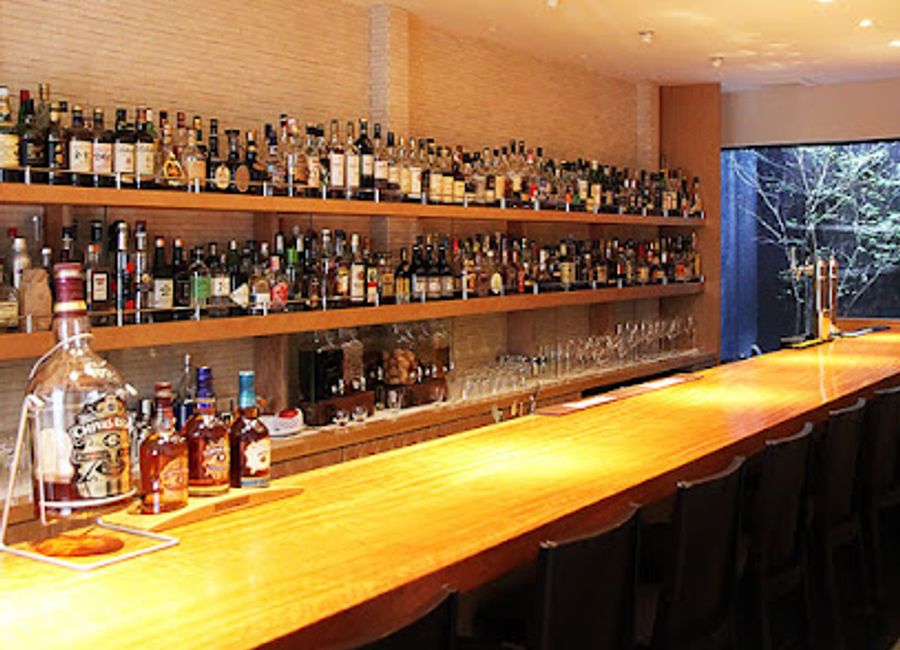
Discover the vibrant nightlife of Kyoto at Turquoise Bar, where expertly crafted cocktails meet a stylish and inviting atmosphere.
As I sipped my drink, I thought about tomorrow's itinerary. I'll be visiting Heian Shrine and the Kyoto Botanical Gardens, eager to explore more of Kyoto's cultural and natural beauty. I'm particularly looking forward to seeing the vibrant colors of Heian Shrine and the diverse plant life in the botanical gardens.
Today was a day of contrasts, from the quiet contemplation of Ryoan-ji to the dazzling beauty of Kinkaku-ji. It was a reminder of the many facets of Kyoto, a city that seamlessly blends history, culture, and natural beauty. I am so glad I decided to take this trip, and I'm excited to see what tomorrow brings.
Before heading back to the hotel, I made a mental note to buy a travel adapter tomorrow. I'm still kicking myself for forgetting it. It's a small thing, but it would make charging my devices so much easier. Oh well, live and learn!
Good night from Kyoto! I can’t wait to share more of my adventure with you all tomorrow!
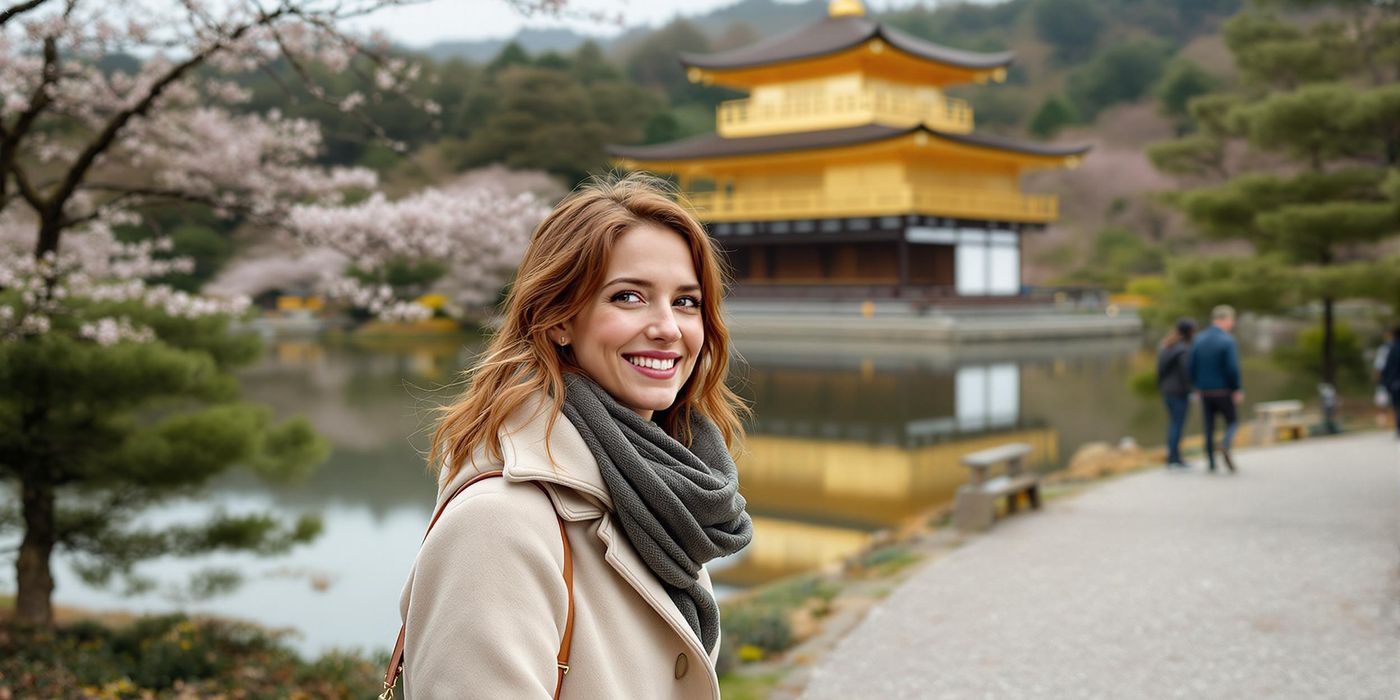
Explore Kyoto's cultural and historical gems on a solo adventure, embracing the beauty of Japan's ancient traditions and serene landscapes.
Meet this Featured Explorer

-
 Occupation:
Librarian specializing in historical archives
Occupation:
Librarian specializing in historical archives
-
 Country:
Switzerland
Country:
Switzerland
-
 Age:
47
Age:
47
Bonjour, fellow travelers! I'm Nathalie, a librarian from France with a passion for history and a love for exploring the world. My blog is a place where I share my travel experiences, blending historical facts with personal anecdotes to create narratives that are both educational and entertaining. Join me as I uncover hidden gems, delve into local traditions, and seek out unique and authentic destinations. I hope to inspire you to embark on your own journeys of discovery!
Find Similar Travel Diaries
Explore locations from this diary
-
Solaria Nishitetsu Hotel Kyoto Premier
Experience Kyoto's charm at Solaria Nishitetsu Hotel Premier – a serene riverside retreat with modern comforts and easy access to attractions.
-
Ryōan-ji
Discover the tranquil beauty of Ryōan-ji in Kyoto, a renowned Zen temple known for its iconic rock garden and rich cultural heritage.
-
Kinkaku-ji
Explore Kinkaku-ji, the Golden Pavilion of Kyoto, a stunning Zen Buddhist temple adorned in gold and surrounded by tranquil gardens and reflective ponds.
-
Arash's Kitchen
Experience authentic Asian cuisine at Arash's Kitchen in Kyoto—a culinary delight for every traveler seeking unique flavors.
-
Hyoto Shijo Karasuma
Experience authentic Japanese flavors with exquisite hot pot and Kaiseki dishes at Hyoto Shijo Karasuma in Kyoto.
-
Teppanyaki Minami
Experience authentic teppanyaki at Teppanyaki Minami in Osaka—where culinary artistry meets breathtaking city views.
-
Turquoise Bar
Discover the vibrant nightlife of Kyoto at Turquoise Bar, where expertly crafted cocktails meet a stylish and inviting atmosphere.