Exploring the Heart of Renaissance: A Journey to Florence
Day 7: A Day of Discovery: Unearthing Florence's Hidden Gems
Delving into Florence's soul, from historic basilicas to scientific wonders and charming piazzas, with culinary delights along the way.
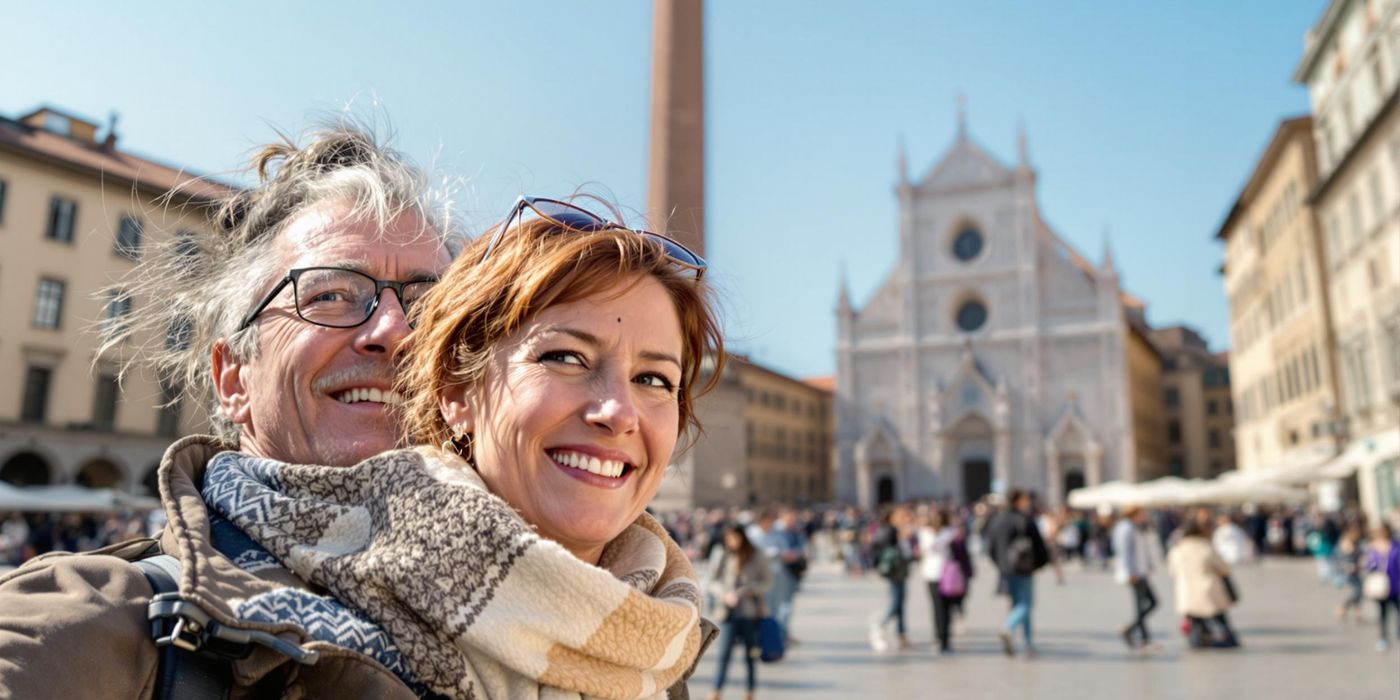
Santa Croce and Scientific Pursuits
Today was a day of exploring the multifaceted soul of Florence, a city where art, history, and science intertwine. From the hallowed halls of Basilica of Santa Croce in Florence, to the intriguing exhibits of the Museo Galileo, and the charming ambiance of Piazza Santa Trinita, Florence revealed more of its captivating character.
Our day began with a hearty breakfast at Il Vezzo. Marco and Giovanni, the duo behind this delightful spot, have truly created something special. Their dedication to local ingredients and Tuscan culinary traditions shone through in every bite. It was the perfect start to a day brimming with exploration. Jan was particularly impressed with their wine list featuring a vast selection of Tuscan wines. I opted for a simple pastry and strong coffee, steeling myself for a day of historical immersion. We knew we needed the energy for the day ahead.
First on our itinerary was the Basilica of Santa Croce. As we approached, the sheer scale of the basilica was breathtaking. The neo-gothic facade, added in the 19th century, is striking. Inside, the atmosphere was reverent, filled with shadows and the echoes of centuries. It's fascinating to think that this basilica, the largest Franciscan church in the world, was built on what were once marshlands outside the city walls. The basilica's construction, funded by Florence's wealthiest families, began in 1294, and it stands as a testament to the city's enduring faith and artistic patronage. The structure itself is planned as an Egyptian cross, with an open timber roof. The nave is wide and well-lit, with massive, widely-spaced piers supporting pointed arches. It's a classic example of Florentine Gothic architecture.
Santa Croce is not just a church; it's a pantheon of sorts, housing the tombs of some of Italy's most celebrated figures. To walk through its halls is to walk among giants: Michelangelo, Galileo, Machiavelli, and Rossini all rest here. I found myself particularly moved by the tomb of Michelangelo. His contributions to art and culture are immeasurable, and it was humbling to stand before his final resting place. Jan was keen to find the tomb of Galileo, a fellow scientist. We both pondered the weight of history contained within those walls. It is known as the Temple of Italian Glories for a reason, after all. We spent a good while wandering through the chapels, admiring the frescoes by Giotto and his followers. These artworks, depicting scenes from the lives of Christ and St. Francis, are vibrant and full of emotion, offering a glimpse into the artistic sensibilities of the 14th century.
Art washes away from the soul the dust of everyday life.
Leaving Santa Croce, we made our way to the Museo Galileo, a treasure trove of scientific instruments and artifacts. Housed in the Palazzo Castellani, this museum celebrates Florence's rich history of scientific inquiry. The museum's collection originates from the Medici and Lorraine families, who were avid patrons of the sciences. Cosimo I and Francesco de' Medici, in particular, encouraged scientific and artistic research, fostering an environment of innovation and discovery. The Medici Collection on the first floor showcased quadrants, astrolabes, and armillary spheres, each a testament to the ingenuity of Tuscan and European artists. But the highlight of the museum, for me, was Galileo's original instruments. To see the telescopes he used to make his groundbreaking observations of the cosmos was truly awe-inspiring. It brought to life the stories I'd read about his discoveries and the challenges he faced in a world that wasn't always ready to accept new ideas. Jan was fascinated by the thermometers used by the Accademia del Cimento, a 17th-century scientific society that played a crucial role in advancing experimental physics. The second floor, dedicated to the Lorraine family, featured instruments used for mechanical, electrostatic, and pneumatic applications. It was a fascinating journey through the evolution of scientific thought and technology.
After the Museo Galileo, we strolled through Piazza Santa Trinita, a charming square that preserves the layout of medieval Florence. The square is dominated by the Church of Santa Trinita, which has an interesting history of its own. Founded in 1092 by the Vallombrosan Order of Monks, the church has undergone several reconstructions over the centuries, resulting in a mix of architectural styles. The Mannerist facade, added in the late 16th century, is particularly striking. In the center of the square stands the Column of Justice, a massive granite column from the Baths of Caracalla in Rome. It was gifted to Cosimo I de' Medici by Pope Pius IV in 1560. The statue of Justice, added later, symbolizes the city's commitment to fairness and order. The square is surrounded by historic buildings, including the Palazzo Spini Feroni, which now houses the Salvatore Ferragamo maison and museum. The Collezione Roberto Casamonti, a museum of contemporary art, is also located on the square. It's a wonderful blend of history, art, and commerce, reflecting the vibrant spirit of Florence.
For lunch, we chose Buca dell'Orafo, a restaurant recommended to us by a Florentine friend. Tucked away on a side street near the Ponte Vecchio, this cozy spot offered a welcome respite from the bustling city. The name 'Buca dell'Orafo' translates to 'Goldsmith's Hole,' a nod to the neighborhood's history as a center for gold workshops. The atmosphere was warm and inviting, the service friendly and efficient. The menu featured traditional Tuscan dishes made with regional ingredients. We started with Tuscan white beans drizzled with olive oil and a serving of fennel salami. For our main courses, Jan opted for the Florentine steak, while I chose the taglierini ai piselli freschi, pasta with fresh peas. Both dishes were delicious, showcasing the simple yet satisfying flavors of Tuscan cuisine. We ended the meal with cantucci cookies dipped in vin santo, a sweet dessert wine.
As evening approached, we decided to experience Florence's cocktail scene at Bitter Bar. Located in the Sant'Ambrogio district, this bar is known for its innovative and experimental cocktails. The atmosphere was sophisticated and stylish, with a touch of old-world charm. The bartenders were true mixologists, crafting unique and flavorful drinks using a variety of ingredients and techniques. I decided to try the Prosecco Lavanda, a delightful concoction infused with lavender notes. Jan opted for the Rosmarino Old Fashioned, a classic cocktail with a hint of rosemary. Both drinks were expertly made and beautifully presented. It was the perfect way to unwind after a day of exploration.
For dinner, we indulged in a truly special experience at Enoteca Pinchiorri. This three-Michelin-starred restaurant is renowned for its exceptional cuisine and extensive wine list. The atmosphere was elegant and refined, the service impeccable. We opted for the tasting menu, which featured a series of innovative and beautifully presented dishes. Each course was a work of art, showcasing the chef's creativity and skill. The wine pairings were equally impressive, with each wine carefully selected to complement the flavors of the dish. While the food was good, it wasn't the most memorable dining experience I've ever had. One cool thing was that they had a water menu, which I had never seen before. It was a pricey meal but an experience nonetheless.
As the day drew to a close, we reflected on all that we had seen and experienced. Florence is a city that rewards exploration, offering a rich tapestry of art, history, and culture at every turn. Tomorrow, we plan to visit the Leonardo da Vinci Museum, the Palatine Gallery, and Piazza della Santissima Annunziata. I'm particularly excited about the Leonardo da Vinci Museum. I've always been fascinated by his genius and his contributions to art and science. I'm also looking forward to visiting the Palatine Gallery, which houses an impressive collection of Renaissance paintings. And, of course, I'm eager to explore Piazza della Santissima Annunziata, a beautiful square that's home to several important landmarks.
It's comforting to know that, as Jan and I continue our journey through Italy, delving into the history of these cities, Aoife is back in Warsaw, continuing her own journey as well. She has such a passion for art and design, it would have been lovely to have her here, but I know she is fulfilling her own dreams.
Until tomorrow, arrivederci!

Join us in Florence for a 10-day cultural odyssey, exploring art, history, and the vibrant pulse of Italy's Renaissance heart.
Meet this Featured Explorer

-
 Occupation:
Librarian specializing in Polish-Irish cultural exchange resources
Occupation:
Librarian specializing in Polish-Irish cultural exchange resources
-
 Country:
Poland
Country:
Poland
-
 Age:
53
Age:
53
Dia dhuit! I'm Róisín Boyle, a librarian from Ireland currently living in Warsaw, Poland, with my husband, Jan. By day, I curate resources on Polish-Irish cultural connections. By night (and weekends!), I document my travel adventures here on Evendo. At 53, I've learned that travel isn't just about seeing new places; it's about connecting with people, understanding cultures, and creating lasting memories. Join me as I share my experiences, blending historical insights with practical tips for culture enthusiasts and budget travelers alike. Expect a mix of personal anecdotes, sustainable travel advice, and a dash of Irish charm!
- Genealogy
- Irish Mythology
- Polish Folklore
- Sustainable Living
- Cultural Exchange Programs
Find Similar Travel Diaries
Explore locations from this diary
-
Il Terrazzino Sulla Cattedrale
Experience the heart of Florence at Il Terrazzino Sulla Cattedrale, where modern comforts meet historic charm just steps from iconic landmarks.
-
Basilica of Santa Croce in Florence
Discover the Basilica of Santa Croce in Florence, a masterpiece of Gothic architecture and the final resting place of Italy's greatest artists and thinkers.
-
Museo Galileo
Discover the rich history of science at Museo Galileo, a must-visit museum in Florence, showcasing incredible inventions and the legacy of Galileo Galilei.
-
Piazza Santa Trinita
Discover the historical beauty and vibrant culture of Piazza Santa Trinita, a must-see landmark in Florence, Italy.
-
Il Vezzo
Discover authentic Tuscan flavors at Il Vezzo, Florence's beloved Italian restaurant offering a delightful dining experience.
-
Buca dell'Orafo
Discover Buca dell'Orafo: An enchanting restaurant in Florence offering authentic Tuscan dishes within a charming cellar setting.
-
Enoteca Pinchiorri
Experience exquisite fine dining at Enoteca Pinchiorri in Florence—where Italian tradition meets modern culinary artistry.
-
Bitter Bar
Discover Bitter Bar in Florence – where inventive cocktails and a lively atmosphere create an unforgettable night out.