Khwaja Abdullah Ansari Shrine Travel Guide
Free Guide: Explore the spiritual heart of Herat at the Khwaja Abdullah Ansari Shrine, a stunning example of Timurid-era architecture and Islamic heritage.


A brief summary of Khwaja Abdullah Ansari Shrine
Explore the spiritual heart of Herat at the Khwaja Abdullah Ansari Shrine, a stunning example of Timurid-era architecture and Islamic heritage.
The Khwaja Abdullah Ansari Shrine, located in Gazur Gah near Herat, Afghanistan, is a significant funerary complex dedicated to the Sufi saint Khwaja Abdullah Ansari. Known as "Pir-e Herat," Ansari was a revered mystic, poet, and Islamic scholar. The shrine, with its Timurid-era architecture, stands as a beacon of spiritual and cultural heritage.
Opening hours
- Every dayOpen 24 hours
Opening hours as listed on the venue’s Google Business Profile. Hours can change for services and special events, so check with the venue before you go.
- Address
- 96FR+W8H, Khaja Abdullah Ansari Rd, Herat, Afghanistan
Getting there
Walking
Taxi
Discover more about Khwaja Abdullah Ansari Shrine
Overview
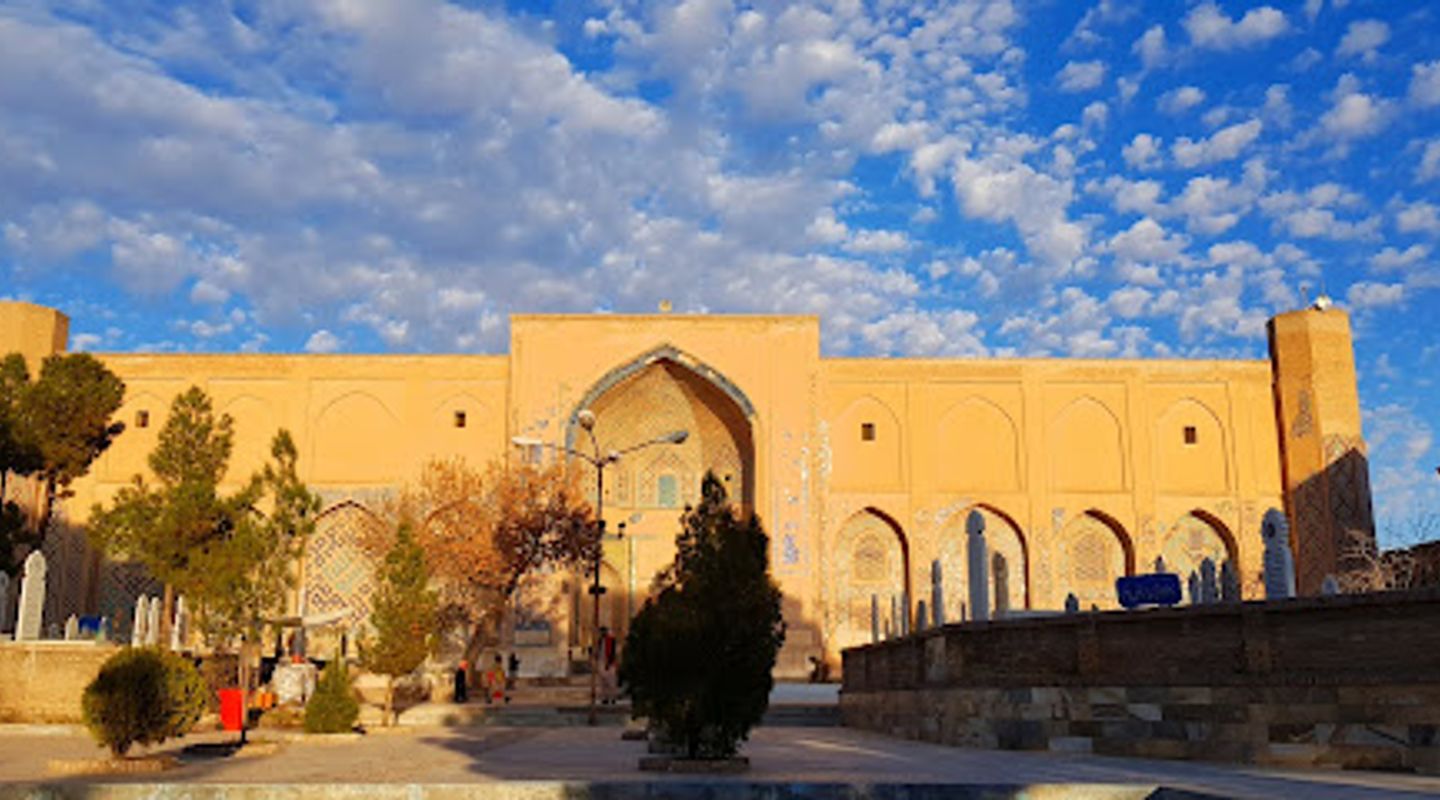
Nestled in the village of Gazur Gah, a few kilometers northeast of Herat, the Khwaja Abdullah Ansari Shrine is a testament to Afghanistan's rich spiritual and architectural history [4, 6]. This funerary compound, also known as the Shrine at Gazur Gah, is dedicated to Khwaja Abdullah Ansari, a Sufi saint celebrated for his profound teachings and devotion to Islam [4, 5]. Khwaja Abdullah Ansari, or "Pir-e Herat," was an influential mystic, poet, and Islamic scholar of the 11th and 12th centuries [4, 5, 6, 7].The shrine's history dates back to Ansari's death in 1088, though the main structure was commissioned by the Timurid ruler Shah Rukh and completed in 1425 by the architect Qavam al-Din Shirazi [4, 6, 9]. The Timurids infused the shrine with artistic styles influenced by their Asiatic traditions [4, 6, 9]. The complex has undergone several restorations, most notably by the Aga Khan Trust for Culture since 2005, ensuring its preservation [4, 6, 10].The architecture showcases Timurid artistry [4]. The primary entrance portal is a semi-domed, five-sided structure leading to a threshold [4, 9]. The west-facing entrance facade features glazed turquoise and black brickwork in a chevron pattern [4, 9]. Niches flank the doorway, and windows above allow light to filter into the second floor [4, 9]. The shrine centers around a rectangular four-iwan courtyard, resembling a madrasa [4, 6, 8]. Inside, intricate tile work, calligraphy, and Quranic inscriptions adorn the walls [4, 5]. Ansari's tomb is enclosed in a marble and gold enclosure [4]. The complex includes a mosque divided into five sections by arches and a library containing manuscripts and rare books [4].Beyond the main shrine, the complex features notable structures such as the Zarnigar Khana (Gilded Room) and the Namakdan Pavilion [4, 6, 9]. The shrine is a hub of Sufi practices and spiritual gatherings [4]. Despite periods of conflict and damage, the shrine has been restored and preserved, symbolizing spiritual reverence and historical continuity in Herat [4, 5].
Evendo Review Centre
 Google
Guest reviews
Explore Khwaja Abdullah Ansari Shrine on the map
A handpicked selection of must-see spots near Khwaja Abdullah Ansari Shrine, mapped for you.
Get your free copy of our complete guide to Khwaja Abdullah Ansari Shrine, delivered straight to you.
Everything on this page, from opening hours and how to get there to Eve’s tips and the best time to go, in one PDF you can read offline, print or share.
Already have an account? Sign in
Your Khwaja Abdullah Ansari Shrine guide is ready.
We'll send it to · Not you? Sign out

Getting your guide ready…
We are putting together a fresh copy of the Khwaja Abdullah Ansari Shrine guide. This can take up to a minute.
This can take a few moments. If your browser asks, choose Allow so the download can start. You'll find the guide in your Downloads folder.
Nothing happened? Download it again
Sorry, the guide is taking longer than usual. Please try again in a minute, or get it by email instead.
Other nearby places you may find interesting
The closest places of the same kind, if this one is not quite what you had in mind.
-
-
-
-
-


Swipe for more places
More to explore near Khwaja Abdullah Ansari Shrine
-
 Best experiences near Khwaja Abdullah Ansari Shrine
-
 Best hotels near Khwaja Abdullah Ansari Shrine
-
 Best landmarks near Khwaja Abdullah Ansari Shrine
-
 Best attractions near Khwaja Abdullah Ansari Shrine
-
 Best shops near Khwaja Abdullah Ansari Shrine
-
 Best restaurants near Khwaja Abdullah Ansari Shrine
-
 Best bars near Khwaja Abdullah Ansari Shrine


Do you manage this location?
Take control to get all the benefits, like improved information, better appearance, and stronger visibility across AI-powered discovery.
Explore more

Explore more of Bactria
Explore Bactria in Afghanistan: A Journey Through Ancient Civilizations and Stunning Landscapes.
Explore Bactria
Explore more of Afghanistan
Discover Afghanistan's rich history, stunning landscapes, and diverse cultures. From ancient cities to breathtaking nature, this Central Asian gem offers a unique travel experience.
Explore Afghanistan