
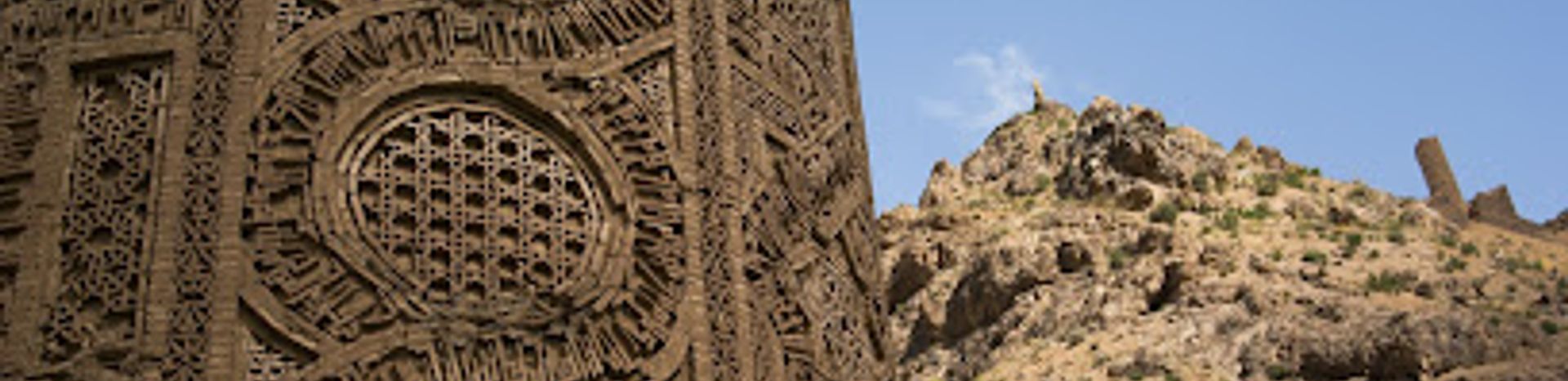
Minaret of Jam: A Ghurid Dynasty Masterpiece
Discover the Minaret of Jam, a UNESCO World Heritage Site and a stunning example of Ghurid architecture in the heart of Afghanistan.
The Minaret of Jam, a UNESCO World Heritage Site in a remote region of Afghanistan, is a towering example of 12th-century Islamic architecture. Adorned with intricate brickwork, Kufic calligraphy, and geometric patterns, this 65-meter minaret stands as a testament to the Ghurid dynasty's artistic and engineering prowess [2, 4].
A brief summary to Minaret of Jam
- 9GW8+H69, Dżam, AF
- +989036822392
Local tips
- Wear comfortable hiking shoes, as the terrain around the minaret can be uneven [7].
- Visit during the early morning or late afternoon for the best lighting for photography [7].
- Check local weather conditions before your visit, as access may be affected by seasonal changes [7].

Getting There
-
Shared Taxi/Minibus
From Herat, take a shared taxi or minibus towards Dzhami. Inform the driver that you wish to visit the Minaret of Jam. The journey to the Minaret of Jam from Herat can take approximately 15 hours [6]. The cost for the taxi/bus from Herat to Dzhami will cost around 1000 AFN [7].
-
Motorbike Taxi
From Garmao, where you may be dropped off by transport between Chaghcheran and Herat, local motorbike taxis can take you to the minaret. The ride takes about two hours on a rough track [6]. Negotiate the fare in advance.
Discover more about Minaret of Jam
Iconic landmarks you can’t miss

Pushtah-ye Sang-e Safed
27.9 km
Discover the breathtaking beauty of Pushtah-ye Sang-e Safed, a serene mountain peak in Afghanistan offering stunning views and a peaceful escape into nature.

Taygh-e Khushk Ab
57.2 km
Explore the stunning landscapes of Taygh-e Khushk Ab, a serene slope in Afghanistan, perfect for hiking, photography, and cultural engagement.
Kunpal-e Sarmay
96.6 km
Explore Kunpal-e Sarmay, a breathtaking mountain peak in Afghanistan, offering stunning views and thrilling adventures in nature's untouched paradise.
Darah-ye Gulchin
96.8 km
Discover the serene beauty and cultural richness of Darah-ye Gulchin, a hidden ravine in Afghanistan perfect for nature and adventure enthusiasts.
Nawah-ye Khwajah Ghar
98.3 km
Experience the breathtaking beauty of Nawah-ye Khwajah Ghar, an enchanting ravine in Afghanistan, perfect for nature lovers and adventurers.
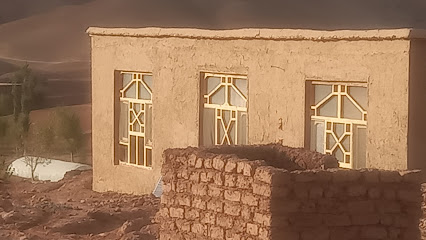
Unmissable attractions to see

Band-e Sabz
54.7 km
Discover the breathtaking beauty of Band-e Sabz, a majestic mountain peak in Afghanistan, perfect for nature lovers and adventurers seeking tranquility.
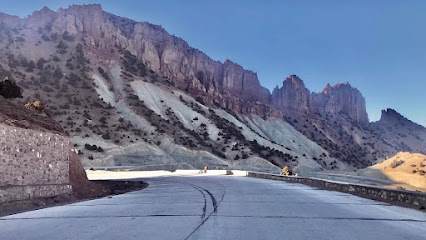
Archah Yak
57.3 km
Discover the untamed beauty of Archah Yak, Afghanistan: A challenging climb with rewarding panoramic views and a glimpse into remote cultural traditions.
Silsilah-ye Safēd Kōh
69.6 km
Discover the majestic Silsilah-ye Safēd Kōh in Afghanistan: a stunning mountain range offering breathtaking landscapes and rich cultural experiences.
Sar-e Chop
87.6 km
Discover the breathtaking beauty of Sar-e Chop, a majestic mountain peak in Afghanistan, perfect for outdoor adventures and serene escapes into nature's wonders.
Asprah
97.0 km
Discover Asprah, Afghanistan: Awe-inspiring mountain views, cultural immersion, and unforgettable adventures await in the heart of the Afghan wilderness.
Markets, malls and hidden boutiques

Asia Tailor
67.6 km
Discover the art of Afghan tailoring at Asia Tailor in Chagcharan, where tradition meets contemporary style for a unique shopping experience.

فروشگاه جان محمد حیدری Haidari shopping mall
69.2 km
Explore Haidari Shopping Mall in Chagcharan for an authentic shopping experience showcasing local culture and diverse products.
Multi store
80.9 km
Explore a treasure trove of home goods near Masjid Shareef in Nowshera, embracing local craftsmanship and cultural heritage.
Essential bars & hidden hideouts

هتل و مسافر خانه دره تخت
42.5 km
Savor the rich flavors of Afghan cuisine at هتل و مسافر خانه دره تخت, a cozy restaurant in Derreh-Ye Takht, perfect for an authentic dining experience.
رستورانت دارچینDarchin restaurant
69.1 km
Experience the authentic taste of Afghanistan at Darchin Restaurant, where fast food meets local flavors in Chagcharan.
Ghor Chaqhcharan Barg Restaurant
69.9 km
Discover the rich flavors of traditional Afghan cuisine at Ghor Chaqhcharan Barg Restaurant in Chagcharan, a must-visit culinary destination.
Pushtah-ye Lākh Bār
84.9 km
Discover the awe-inspiring beauty of Pushtah-ye Lākh Bār, a breathtaking mountain peak in Afghanistan that offers thrilling adventures and stunning views.
Ristorante Dagli Sbusbiani
99.1 km
Experience authentic Afghan cuisine at Ristorante Dagli Sbusbiani, where local flavors and warm hospitality unite in Dehe Qadzi.


