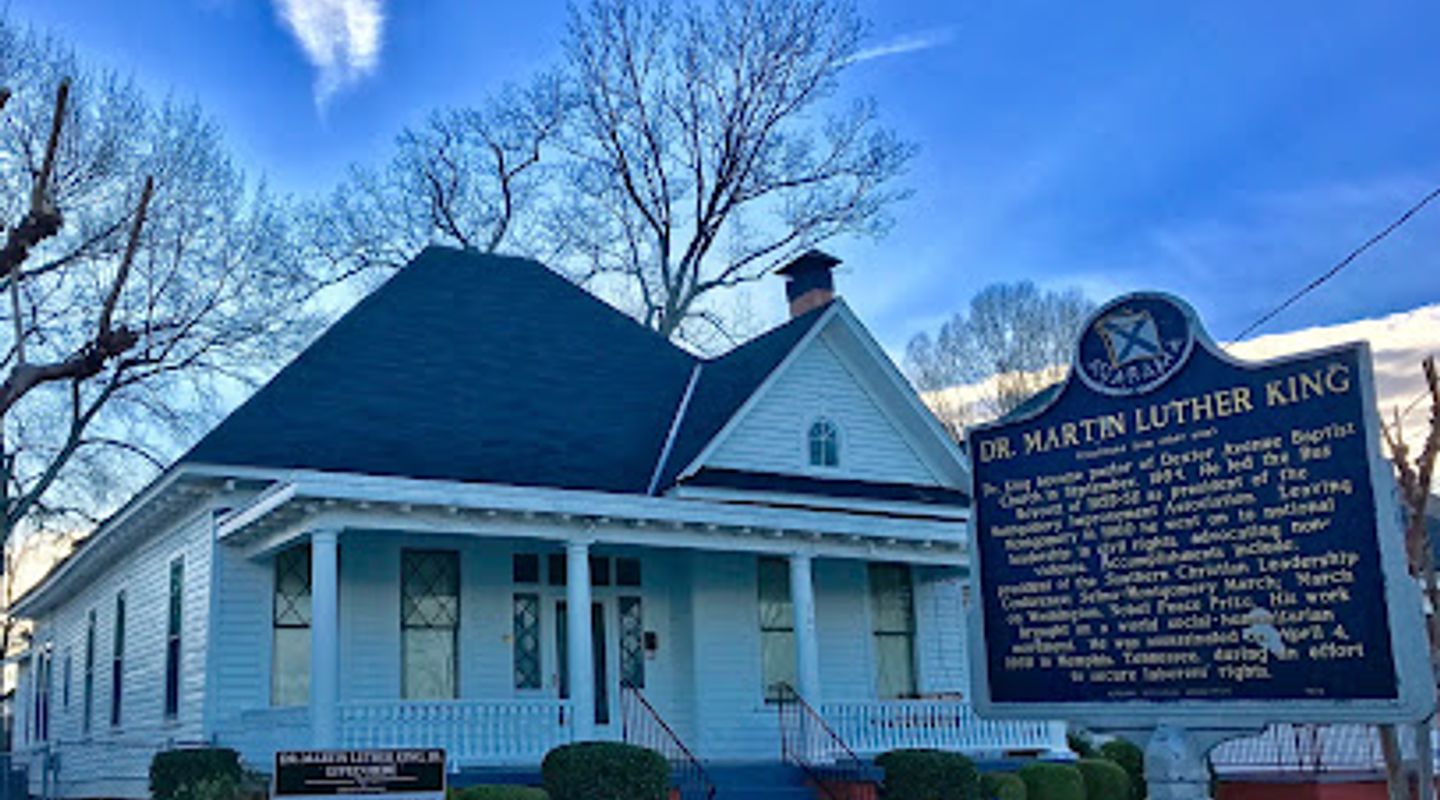
Dexter Parsonage Museum, Hill Country Travel Guide
Explore the home of Dr. Martin Luther King Jr. and a pivotal landmark of the Civil Rights Movement in Montgomery, Alabama.
Step back in time at the Dexter Parsonage Museum, the former home of Dr. Martin Luther King Jr. in Montgomery, Alabama, from 1954 to 1960. This preserved landmark offers a glimpse into his life, the Civil Rights Movement, and the struggles for equality.
A brief summary to Dexter Parsonage Museum
- 309 S Jackson St, Montgomery, Alabama, 36104, US
- Click to display
- Click to display
- Friday 12 pm-4 pm
- Saturday 10 am-4 pm

Know before you go
Hi, I'm Eve. Here are a few practical things to know before exploring Dexter Parsonage Museum.
- Check the museum's website for updated hours and tour schedules, as they may vary.
- Allow at least 1.5 to 2 hours for a thorough tour and exploration of the museum, interpretive center, and reflection garden.
- Consider combining your visit with a trip to the nearby Dexter Avenue King Memorial Baptist Church for a more complete historical experience.
Do you manage this location?
Take control to get all the benefits, like improved information, better appearance, and stronger visibility across AI-powered discovery. Learn more about listing your business on Evendo
Activate your presenceOther nearby places you may find interesting
The closest places of the same kind, if this one is not quite what you had in mind.
Explore Dexter Parsonage Museum on the Map
A handpicked selection of must-see spots near Dexter Parsonage Museum, mapped for you.
Unlock the Best of Dexter Parsonage Museum
Buy tickets
-
No tickets available
Book tours with entry
-
No tours available
Book tours without entry

Getting There
-
Walking
The Dexter Parsonage Museum is located within walking distance of several other historical sites in downtown Montgomery. From the Alabama State Capitol, head east on Dexter Avenue toward Bainbridge Street, then turn right onto S Jackson Street. Walk approximately four blocks south. The Dexter Parsonage Museum will be on your left. The walk is approximately 10-15 minutes. Alternatively, from the Civil Rights Memorial, walk north on N Hull Street, turn right onto Washington Avenue, then turn left onto S Jackson Street. The Museum will be on your right after a few blocks.
-
Public Transport
From the Montgomery Transfer Center, take the Montgomery Area Transit System (MATS) bus route that goes to the South Jackson Street stop. Check the MATS website for the most up-to-date route information and schedules. A single ride fare is $1.25 [https://www.montgomeryal.gov/city-government/departments/transportation/montgomery-area-transit-system-mats].
-
Driving
If driving, navigate to 309 S Jackson St, Montgomery, AL 36104. From I-85, take the Union St exit and follow signs to downtown. Turn onto High Street, then left onto S Jackson Street. From I-65, take the Clay Street exit, which becomes Herron Street, then Bibb Street, and finally Madison Avenue. Turn right onto S Jackson Street. Limited street parking is available near the museum. Several parking lots are located within a few blocks, with hourly rates typically ranging from $1 to $2. Metered street parking costs around $1 per hour.
Discover more about Dexter Parsonage Museum
More to explore near Dexter Parsonage Museum













Your all‑in‑one travel companion app
Explore expert travel guides, compare and book tours, experiences, hotels, and more—all from the palm of your hand. Download now for seamless trip planning wherever your wanderlust takes you.


Explore More of Hill Country
Looking beyond Dexter Parsonage Museum? Discover Hill Country for broader travel guides, local hot-spots, and regional highlights.
Explore Hill Country
Visit the Confederate Memorial Monument in Montgomery, AL, and explore a significant historical landmark commemorating the valor of Confederate soldiers during the Civil War.

Discover the Jackson-Community House in Montgomery, a landmark of African American resilience and a hub for civil rights activism.