

El Hamri (Oran) Travel Guide - Free
Explore El Hamri in Oran with Evendo's free guide. Find the best shops, historic streets, restaurants, and gems on web or mobile.


El Hamri in Oran reveals working-class history, football culture, local markets, cafés and everyday Algerian street life beyond the seafront.
A Neighbourhood Shaped by Oran
\n\nEl Hamri occupies a substantial area south-west of Oran’s historic centre, extending across a dense urban landscape of apartment blocks, older houses, commercial streets and busy local institutions. Often associated with the French colonial-era name Lamur, the neighbourhood developed as Oran expanded beyond its older core and became closely identified with working-class life. Its streets are less polished than the city’s seafront districts, but they offer a direct encounter with everyday Oran: shopkeepers opening their shutters, families moving between markets and cafés, and traffic threading through streets that remain important to local residents.\n\nFootball, Markets and Street Life
\n\nEl Hamri’s strongest public identity is linked to football and the Mouloudia Club Oranais, one of Oran’s best-known sporting institutions. The Stade Ahmed-Zabana gives the neighbourhood a major landmark and brings a heightened sense of anticipation on match days, while the surrounding streets reveal the social world that supports the club. Local shopping is concentrated around ordinary commercial streets and market activity rather than a single grand retail boulevard, with food shops, bakeries, cafés and small independent businesses serving the neighbourhood’s daily needs.\n\nAn Urban Base for Exploring Oran
\n\nFor visitors, El Hamri works best as a neighbourhood to explore slowly and respectfully, particularly during the daytime. Its relationship with central Oran makes it useful for combining local street life with visits to the city’s better-known historic quarters, although attractions outside El Hamri should not be mistaken for local landmarks. The area has a strong communal atmosphere, a practical rather than ornamental character, and a cultural importance rooted in sport, family life and the continuing evolution of Oran’s urban identity.Explore El Hamri on the map
A handpicked selection of must-see spots in El Hamri, mapped for you.
Best hotels in El Hamri
Best bars in El Hamri
El Hamri is not primarily a nightclub district, and its evening life is more closely associated with cafés, family routines, football conversation and casual gatherings than with a dense concentration of late-night venues. Cafés provide the most visible social spaces, particularly around commercial streets and areas connected with the stadium, while match nights can alter the sound and movement of the neighbourhood. Visitors seeking clubs, live music or a broader bar scene will generally find more established options in central Oran and along the city’s busier entertainment corridors, rather than within El Hamri itself. After dark, the neighbourhood’s atmosphere can become quieter away from main roads, so newcomers should plan their return transport and avoid treating unfamiliar residential side streets as an evening walking route. Respect for homes and businesses is especially important when football crowds or late café conversations bring activity close to residential buildings.
-
 Bar
مديوني
Experience the lively spirit of Oran at Madiouni, a bar where local culture, refreshing drinks, and friendly faces come together.
15 min walk · 1.2 km from neighbourhood centre
-
Bar
Mohamed HamrawaDOLARA
Discover the lively ambiance and diverse beverage selection at Mohamed HamrawaDOLARA, a must-visit bar in the heart of Oran.
15 min walk · 1.2 km from neighbourhood centre
Best shops in El Hamri
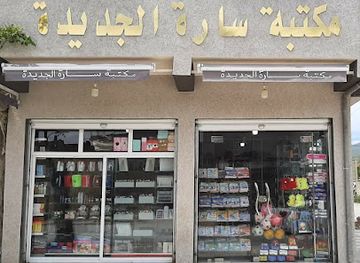
Shopping in El Hamri is practical, local and closely connected to daily life. Small grocers, bakeries, butchers, clothing businesses, household retailers and cafés line the neighbourhood’s commercial streets, while market activity provides a window onto the ingredients and routines of Oran households. The area is better suited to buying food, bread, everyday goods and modest local necessities than to browsing a specialised district of boutiques or luxury shops. Visitors should take time to observe how independent businesses occupy older street fronts and newer buildings, creating a mixed commercial landscape typical of a large Algerian urban neighbourhood. Stock, trading days and the scale of market activity can change, so local directions are more reliable than searching for a fixed tourist market itinerary. For crafts, souvenirs and broader retail choice, central Oran offers more established options outside El Hamri.
-
Women's clothing store
Boutique R&R
Discover stylish women's clothing at Boutique R&R in Oran, where fashion meets local flair in a welcoming shopping atmosphere.
17 min walk · 1.3 km from neighbourhood centre
-
Thrift store
Friperie El-Hamri
Explore the charm of Friperie El-Hamri, a thrift store in Oran, Algeria, and uncover unique vintage treasures while supporting sustainable shopping.
17 min walk · 1.4 km from neighbourhood centre

El Hamri essentials
Getting There
Getting Around
Safety
Emergency Situations
Do's and Don'ts
Local Tips

From Eve
Local phrases worth knowing
You don't need to get them perfect. A few words go a long way, and locals appreciate the effort.
Basics
| English | Local | Say it |
|---|---|---|
| Hello | مرحبا | [marhaba] |
| Goodbye | وداعا | [wadaan] |
| Yes | نعم | [naam] |
| No | لا | [laa] |
| Please/You're welcome | من فضلك | [min fadlik] |
| Thank you | شكرا | [shukran] |
| Excuse me/Sorry | عذرا | [aathiraa] |
| How are you? | كيف حالك؟ | [kayf halik?] |
| Fine. And you? | بخير. وأنت؟ | [bkheir. want?] |
| Do you speak English? | هل تتحدث الإنجليزية؟ | [hal tatahadath al'injlizia?] |
| I don't understand | لا أفهم | [laa afham] |
Eating & Drinking
| English | Local | Say it |
|---|---|---|
| I'd like to see the menu, please | أريد أن أرى القائمة، من فضلك | [ureed an araa alqa'ima, min fadlik] |
| I don't eat meat | أنا لا آكل اللحم | [ana la aakul allaham] |
| Cheers! | صحتين! | [sahhtain!] |
| I would like to pay, please | أريد أن أدفع، من فضلك | [ureed an adfaa, min fadlik] |
Emergencies
| English | Local | Say it |
|---|---|---|
| Help! | النجدة! | [annajda!] |
| Go away! | ارحل! | [irhal!] |
| Call the Police! | اتصل بالشرطة! | [itasil bialshurta!] |
| Call a doctor! | اتصل بطبيب! | [itasil bitalib!] |
| I'm lost | لقد ضللت | [laqad dalalt] |
| I'm ill | أنا مريض | [ana mareed] |
Shopping
| English | Local | Say it |
|---|---|---|
| I'd like to buy... | أريد أن أشتري... | [ureed an ashtari...] |
| I'm just looking | أنا فقط أتفرج | [ana faqat atfaraj] |
| How much is it? | بكم هذا؟ | [bi kam hadha?] |
| That's too expensive | هذا غالي جدا | [hadha ghali jiddan] |
| Can you lower the price? | هل يمكنك خفض السعر؟ | [hal yumkinuk kaffat alsaeer?] |
Time & Numbers
| English | Local | Say it |
|---|---|---|
| What time is it? | كم الساعة؟ | [kam alsaa'a?] |
| It's one o'clock | الساعة الواحدة | [alsaa'at alwaahida] |
| Half past (10) | الساعة العاشرة والنصف | [alsaa'at al'ashra wannahf] |
| Morning | صباحا | [sabahan] |
| Afternoon | بعد الظهر | [ba'd aldhuhur] |
| Evening | مساء | [masa'] |
| Yesterday | أمس | [ams] |
| Today | اليوم | [alyawm] |
| Tomorrow | غدا | [ghadan] |
| 1 | واحد | [wahid] |
| 2 | اثنين | [ithnayn] |
| 3 | ثلاثة | [thalatha] |
| 4 | أربعة | [arba'a] |
| 5 | خمسة | [khamsa] |
| 6 | ستة | [sitta] |
| 7 | سبعة | [sab'a] |
| 8 | ثمانية | [thamania] |
| 9 | تسعة | [tis'a] |
| 10 | عشرة | [ashara] |
Transport & Directions
| English | Local | Say it |
|---|---|---|
| Where's a/the...? | أين... | [ayn...] |
| What's the address? | ما هو العنوان؟ | [ma huwa al'ainwan?] |
| Can you show me (on the map)? | هل يمكنك أن تريني (على الخريطة)؟ | [hal yumkinuk an tarini (ala alkhareeta)?] |
| When's the next (bus)? | متى الحافلة القادمة؟ | [mata alhafilat alqadima?] |
| A ticket (to ....) | تذكرة (إلى...) | [tazkirat (ila...)] |
History of El Hamri
From Lamur to El Hamri
El Hamri is widely associated with the name Lamur, used during the French colonial period, when Oran expanded beyond its older fortified and port-centred quarters. The area developed as part of the city’s outward growth rather than as an ancient settlement with a separate urban history. Its position south-west of the historic centre encouraged the formation of a dense residential district serving workers, families and small trades. After Algerian independence, the name El Hamri became the established local reference, reflecting the wider process through which Oran’s streets and neighbourhoods acquired renewed Algerian identities.
A District of Urban Expansion
During the nineteenth and twentieth centuries, Oran’s population growth and economic importance pushed development into areas beyond the old city. El Hamri took shape through a mixture of housing, shops, cafés and everyday services, creating a neighbourhood whose character was more residential and working-class than monumental. Its built environment records successive phases of urban change: colonial-era structures, post-independence apartment buildings and later commercial adaptations. The result is a layered district whose significance lies less in one preserved historic ensemble than in the continuity of ordinary urban life.
Sport and Mouloudia Club Oranais
Sport became central to El Hamri’s public identity through its close association with Mouloudia Club Oranais, commonly known as MC Oran. The club was founded in 1917 and grew into one of the most important sporting institutions in western Algeria; its football culture is deeply embedded in Oran’s social life. The presence of Stade Ahmed-Zabana gives that connection a physical focus, while match-day gatherings demonstrate how football can bind neighbourhood identity to the wider city. The stadium’s current name honours Ahmed Zabana, an Algerian independence-era figure.
Post-Independence Urban Life
Following independence in 1962, El Hamri became part of a rapidly changing Oran in which housing demand, demographic movement and new public infrastructure reshaped established districts. Colonial names, institutions and spatial hierarchies were replaced or reinterpreted, while local commerce and neighbourhood associations maintained a strong sense of continuity. El Hamri’s streets subsequently absorbed the pressures common to a large Algerian city—traffic, denser construction, changing retail patterns and the adaptation of older buildings—without losing its reputation as a socially rooted quarter associated with family life and football.
El Hamri in Photos
Browse through our photo collection highlighting the charm and character of the destination.
Neighbourhoods near El Hamri
The closest neighbourhoods to El Hamri, if you have time for more than one stop.
-

-

-

-

-


Swipe for more neighbourhoods
Explore more

Explore more of Oran
Oran, Algeria’s Mediterranean city, blends Spanish forts, Ottoman heritage, French architecture, rai music, lively markets and coastal sightseeing by the Bay of Oran.
Explore Oran