Sidi M'Cid Bridge, Saharan Atlas Travel Guide
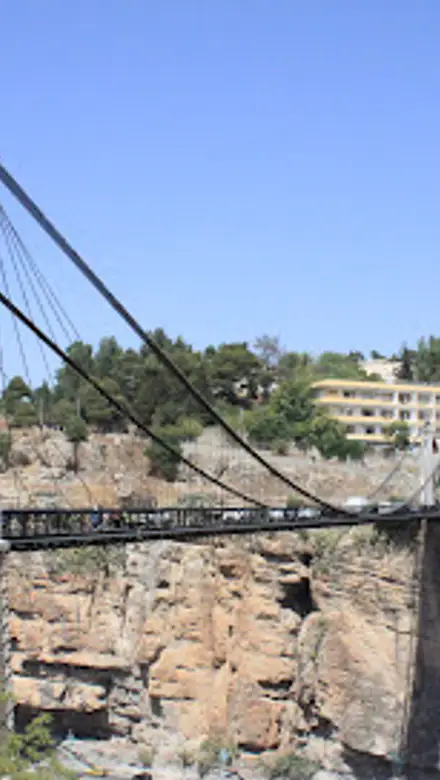
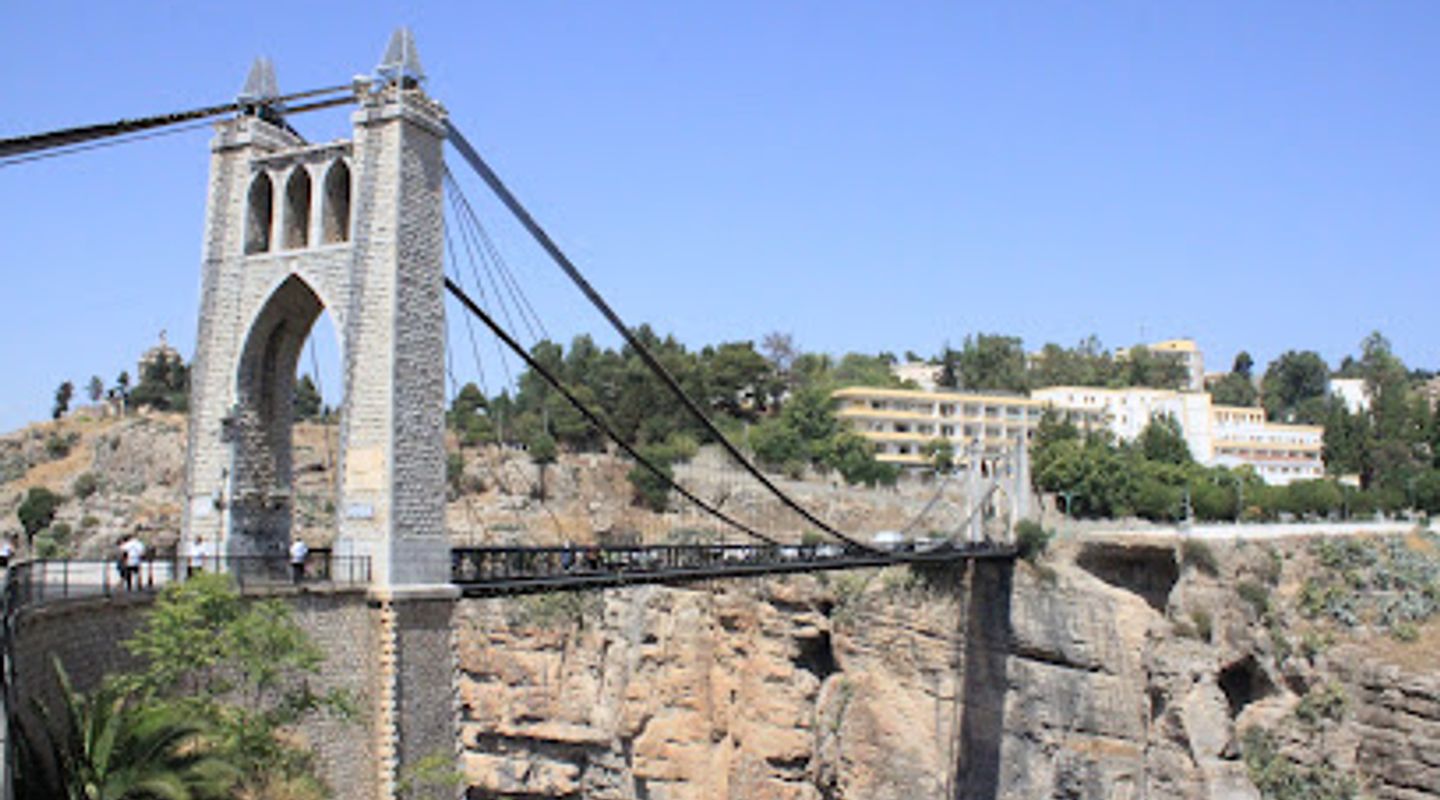
Experience breathtaking views from Constantine's iconic Sidi M'Cid Bridge, a historic landmark that was once the world's highest suspension bridge.
The Sidi M'Cid Bridge is a historic suspension bridge in Constantine, Algeria. Opened in 1912, it spans the Rhumel River gorge, offering breathtaking views and connecting the Casbah to Sidi M'Cid hill. For nearly two decades, it was the highest bridge in the world.
A brief summary to Sidi M'Cid Bridge
- Pont du diable, M'Cid, Constantine, Constantine, DZ
- Click to display

Know before you go
Hi, I'm Eve. Here are a few practical things to know before exploring Sidi M'Cid Bridge.
- Visit early in the morning or late afternoon for the best lighting for photographs of the bridge and the surrounding gorge.
- Wear comfortable shoes, as you may want to explore the surrounding areas, including the Casbah and Sidi M'Cid hill.
- Check local weather conditions before your visit, as the area can be windy due to its high elevation.
- Take a guided tour to learn more about the history and significance of the bridge and its surroundings.
Do you manage this location?
Take control to get all the benefits, like improved information, better appearance, and stronger visibility across AI-powered discovery. Learn more about listing your business on Evendo
Activate your presenceOther nearby places you may find interesting
The closest places of the same kind, if this one is not quite what you had in mind.


Explore Sidi M'Cid Bridge on the Map
A handpicked selection of must-see spots near Sidi M'Cid Bridge, mapped for you.
Unlock the Best of Sidi M'Cid Bridge
Buy tickets
-
No tickets available
Book tours with entry


Book tours without entry

Getting There
-
Walking
From Place des Martyrs in the city center, walk towards Rue de la République. Follow it to the Kasbah entrance. Walk through the Kasbah, exiting to a viewpoint overlooking the Rhumel River. Follow signs towards Pont du Diable, leading to Sidi M'Cid Bridge. Allow about 30 minutes.
-
Public Transport
From Constantine's central bus station, take bus number 7 towards M'Cid. Disembark at the M'Cid stop and follow signs to the bridge. The bus ride takes 15-20 minutes, followed by a 10-minute walk. A single bus fare costs approximately 20-30 DZD.
-
Taxi
Take a taxi from the city center (e.g., Place des Martyrs). Specify 'Sidi M'Cid Bridge' or 'Pont du Diable' as your destination. The ride takes 10-15 minutes, depending on traffic. A typical taxi fare from the city center to the bridge ranges from 200-400 DZD.
Discover more about Sidi M'Cid Bridge













Your all‑in‑one travel companion app
Explore expert travel guides, compare and book tours, experiences, hotels, and more—all from the palm of your hand. Download now for seamless trip planning wherever your wanderlust takes you.


Explore More of Saharan Atlas
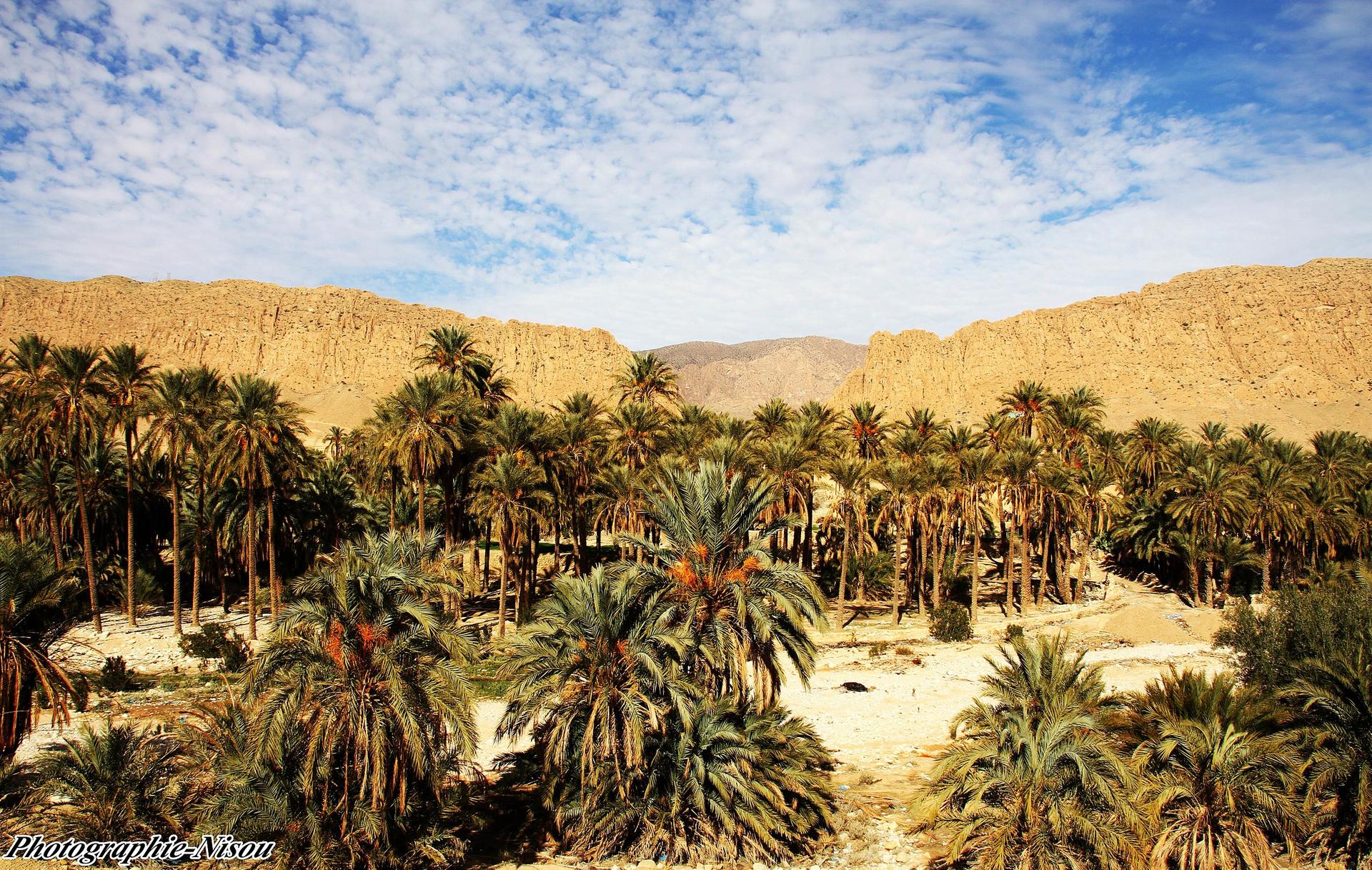
Looking beyond Sidi M'Cid Bridge? Discover Saharan Atlas for broader travel guides, local hot-spots, and regional highlights.
Explore Saharan Atlas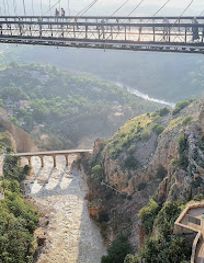
Experience the breathtaking views from Constantine's Pont des Chutes, a historic bridge offering a unique blend of nature and architecture.
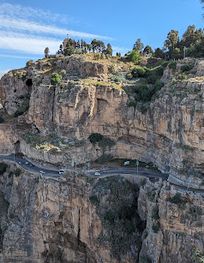
Experience breathtaking panoramic views from Constantine's iconic Sidi M'Cid Bridge, a historic landmark and engineering marvel.