
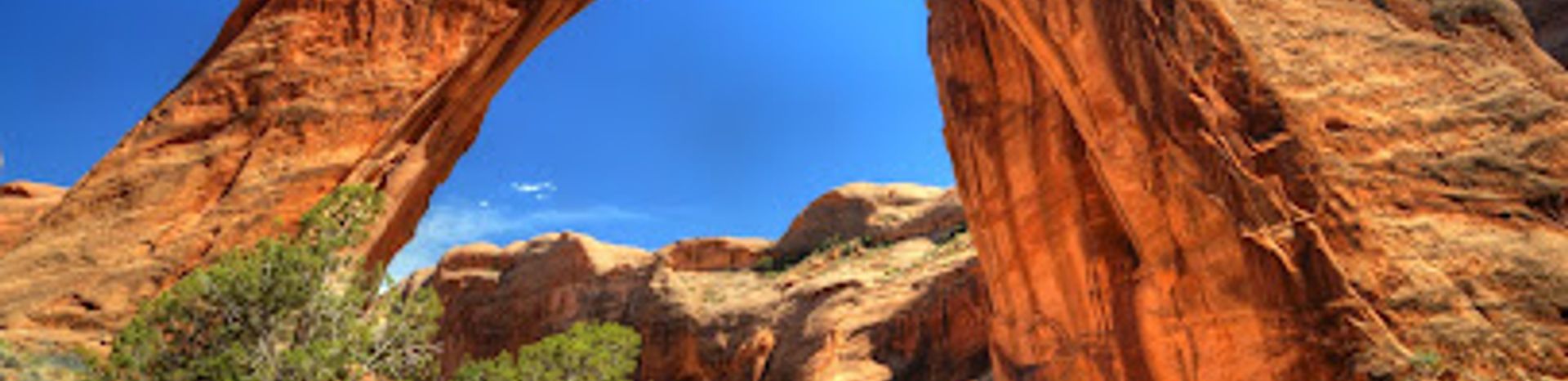
Rainbow Bridge National Monument: A Natural and Sacred Wonder
Discover Rainbow Bridge National Monument: Awe-inspiring natural bridge and sacred Native American site in the heart of Lake Powell, Utah.
Rainbow Bridge National Monument protects one of the world's largest natural bridges, a soaring sandstone formation revered by Native American tribes. Accessible primarily by boat on Lake Powell, followed by a short hike, the bridge offers a stunning testament to the power of erosion and a place of profound cultural significance.
A brief summary to Rainbow Bridge National Monument
- Forbidding Canyon Lake, Powell, UT, 84533, US
- +1928-608-6200
- Visit website
Local tips
- Respect the sacred nature of Rainbow Bridge by not walking under the arch and staying on marked trails.
- Bring plenty of water, sunscreen, and sturdy shoes, as the desert environment can be harsh.
- Check Lake Powell water levels and boat tour schedules in advance, as they can vary seasonally.
- Consider visiting in the spring or fall for more moderate temperatures.
- If hiking, obtain required permits from the Navajo Nation and be prepared for a strenuous trek.

Getting There
-
Boat Tour
The most common way to access Rainbow Bridge is via a boat tour from Lake Powell. Several marinas, including Wahweap and Bullfrog, offer tours that typically last 7-8 hours. These tours involve a 50-mile boat ride each way, followed by a 1.2-mile hike to the bridge. Cost: Boat tours range from $145-$165 per adult. A Glen Canyon National Recreation Area entrance fee of $30 per vehicle is also required. Check with Lake Powell Resorts & Marinas for current pricing and schedules.
-
Hiking
Experienced hikers can access Rainbow Bridge via two strenuous, unmaintained trails from Navajo Mountain. These trails, ranging from 14-18 miles each way, require permits from the Navajo Nation Parks and Recreation Department. Cost: Hiking permits are required from the Navajo Nation, contact them directly for pricing. There are no fees for entering Rainbow Bridge, but there is an entrance fee for Glen Canyon Recreation Area.
Discover more about Rainbow Bridge National Monument
Iconic landmarks you can’t miss

West Canyon
21.3 km
Explore the stunning natural beauty of West Canyon, a mesmerizing channel in Utah filled with hiking trails and breathtaking landscapes.
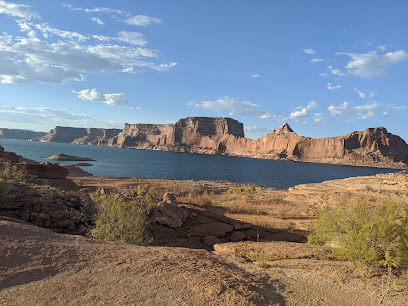
Cathedral in the Desert
23.4 km
Discover the awe-inspiring Cathedral in the Desert, where nature's artistry and stunning rock formations create a memorable escape in Utah's breathtaking landscapes.
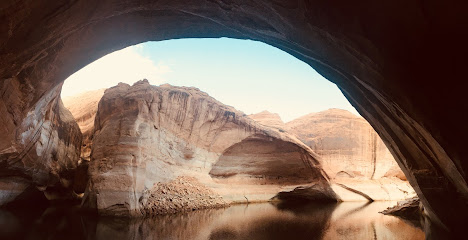
Upper Antelope Canyon
43.6 km
Discover the magical world of Upper Antelope Canyon, a sacred Navajo site sculpted by time and illuminated by breathtaking light.
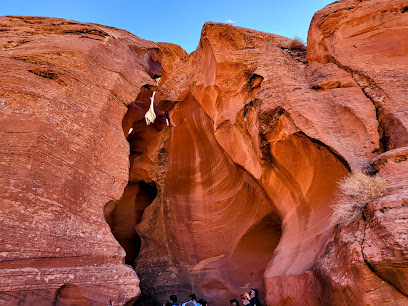
ANTALOPE CANYON
44.1 km
Explore the magical slot canyons of Antelope Canyon, a natural masterpiece sculpted by time and light on Navajo Nation land.
Dixie's Lower Antelope Canyon Tours
44.2 km
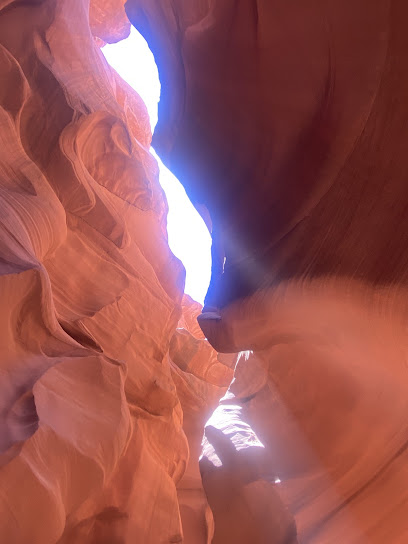
Experience the magic of Lower Antelope Canyon with authentic Navajo-guided tours. Explore the vibrant colors and stunning rock formations.
Papillon Grand Canyon Helicopters - Page, AZ
46.5 km
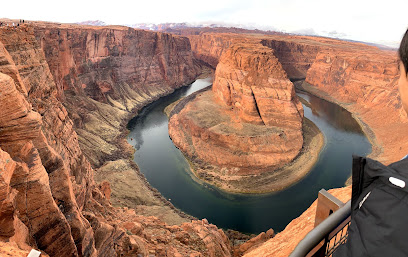
Soar above the breathtaking landscapes of the Grand Canyon and Lake Powell with Papillon Helicopters in Page, Arizona. Unforgettable aerial adventures await!
Rose Walk Inn Bed & Breakfast
46.7 km
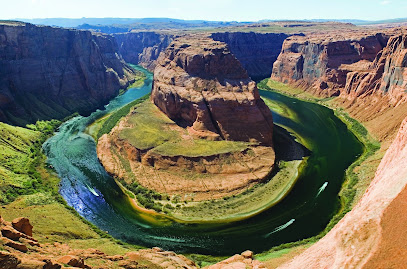
Experience warm hospitality and comfortable lodging at this centrally located Page, Arizona bed and breakfast, perfect for exploring nearby attractions.
Grandview Inn Bed and Breakfast
46.7 km
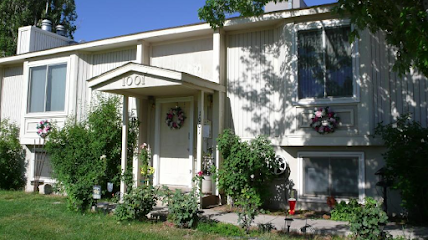
Experience Southwestern charm and stunning views at Grandview Inn B&B, your perfect gateway to Lake Powell, Antelope Canyon, and Horseshoe Bend.
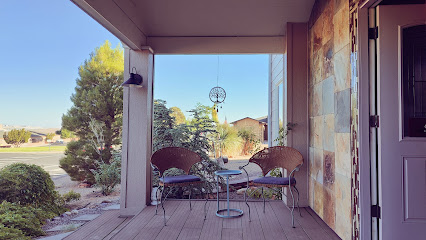
The Bears Den B&B
46.8 km
A cozy and welcoming bed & breakfast in Page, Arizona, perfect for exploring Lake Powell, Antelope Canyon, and other natural wonders.
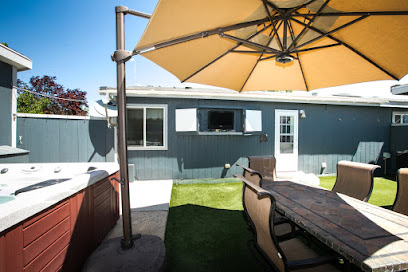
Hyatt Place Page / Lake Powell
47.1 km
Explore Lake Powell and Antelope Canyon from this comfortable and convenient hotel in Page, Arizona. Your adventure starts here!

Big John's Texas BBQ
47.2 km
Authentic Texas BBQ in Page, AZ! Enjoy slow-smoked meats, generous portions, and a friendly atmosphere. A must-visit for BBQ lovers!
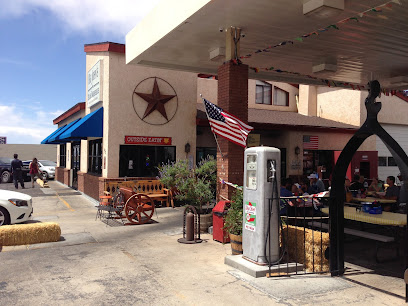
Rodeway Inn at Lake Powell
47.3 km
Explore Lake Powell and beyond from this comfortable and budget-friendly hotel in Page, Arizona.
Grand Canyon Brewing +Distillery
47.4 km
Experience craft brews and spirits in a unique firehouse setting, just a stone's throw from Horseshoe Bend and other Page attractions.
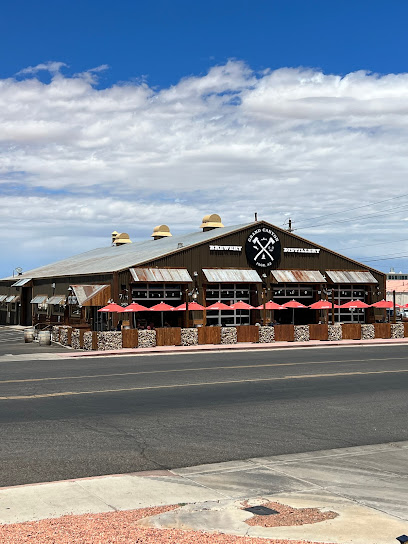
Page Lake Powell Hub
47.4 km
Your adventure starts here! Get info, book tours, and explore local art at the Page Lake Powell Hub, the heart of Canyon Country.
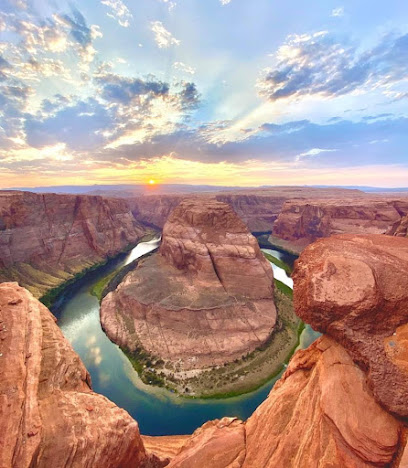
Page Plaza
47.4 km
Discover Page Plaza in Page, AZ: Your one-stop destination for shopping, dining, and local finds near Lake Powell and Antelope Canyon.
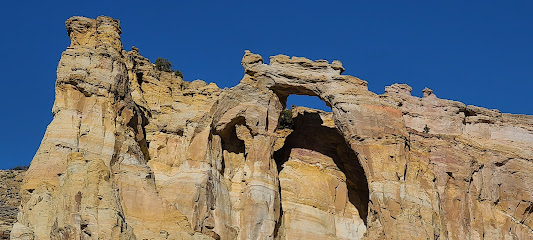
Unmissable attractions to see

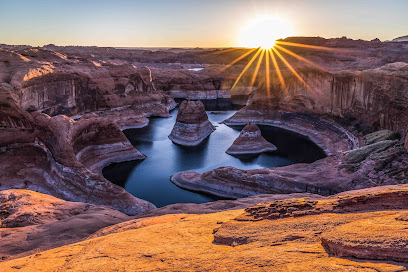
Reflection Canyon
13.0 km
Explore the stunning vistas of Reflection Canyon, a breathtaking vista point in Utah offering unique geological beauty and serene landscapes.
Lake Powell
24.8 km
Discover the breathtaking beauty and adventure at Lake Powell, a premier reservoir known for its stunning landscapes and endless recreational activities.
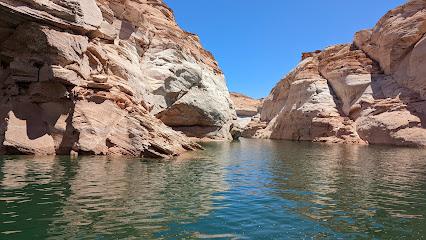
Padre Bay
30.8 km
Explore the natural beauty and tranquility of Padre Bay in Utah, a perfect destination for outdoor adventures and serene getaways.
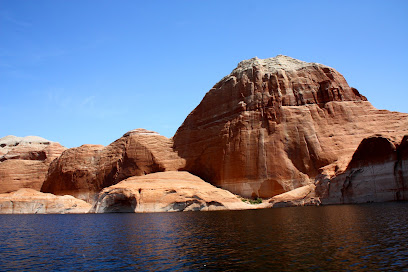
Alstrom Point
35.6 km
Unveil the stunning vistas of Alstrom Point, a hidden treasure in Utah offering breathtaking views, serene landscapes, and an escape into nature's beauty.
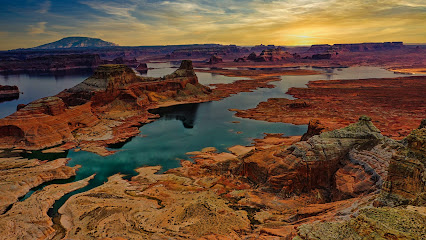
Glen Canyon National Recreation Area
36.0 km
Experience the stunning natural beauty and outdoor adventures at Glen Canyon National Recreation Area, a premier destination in Utah's majestic landscapes.
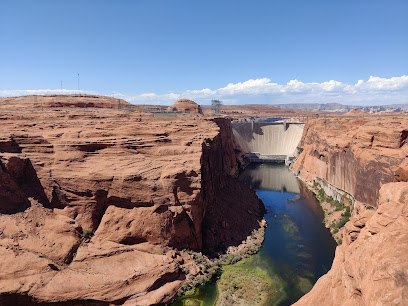
Hurricane Wash Trailhead
37.4 km
Explore the breathtaking landscapes and thrilling trails at Hurricane Wash Trailhead, a must-visit hiking area in Utah for outdoor enthusiasts.
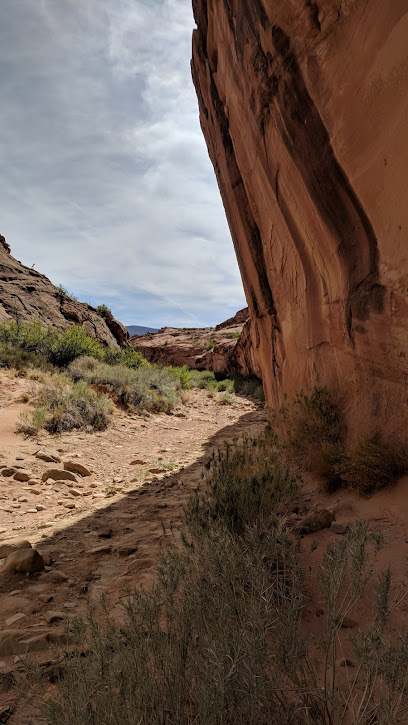
Jacob Hamblin Arch
38.7 km
Explore Jacob Hamblin Arch in Kane County, Utah - a breathtaking natural arch offering stunning hikes and picturesque landscapes in the heart of the desert.
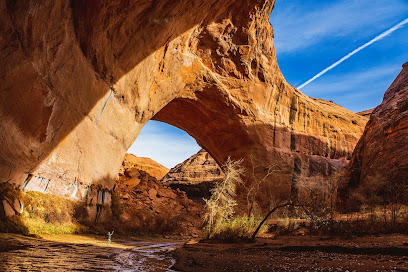
Adventurous Antelope Canyon
41.5 km
Explore the enchanting beauty of Adventurous Antelope Canyon, a natural wonder featuring stunning slot canyons and vibrant sandstone formations.
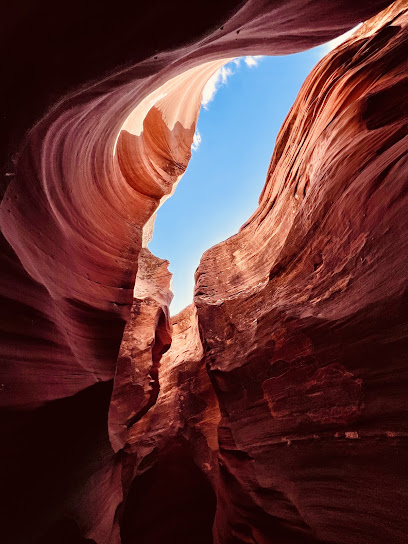
Antelope Canyon
43.6 km
Explore the breathtaking beauty of Antelope Canyon, a natural wonder in Arizona that enchants visitors with its vibrant colors and stunning rock formations.
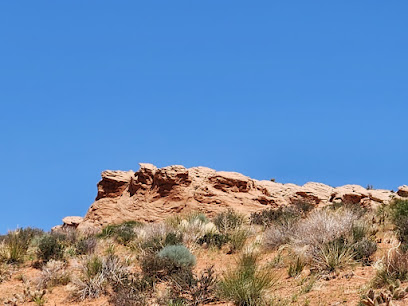
Rattlesnake Canyon
43.8 km
Discover the stunning Rattlesnake Canyon in Arizona, a serene park known for its vibrant rock formations and breathtaking hiking trails.
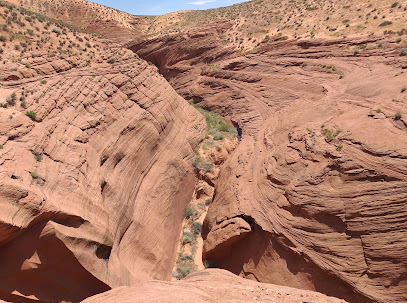
Antelope Canyon Sunset Trail (Diné)
43.9 km
Experience the magic of Antelope Canyon on this stunning trail, where the setting sun paints the sandstone walls in breathtaking hues. A must-see in Arizona!
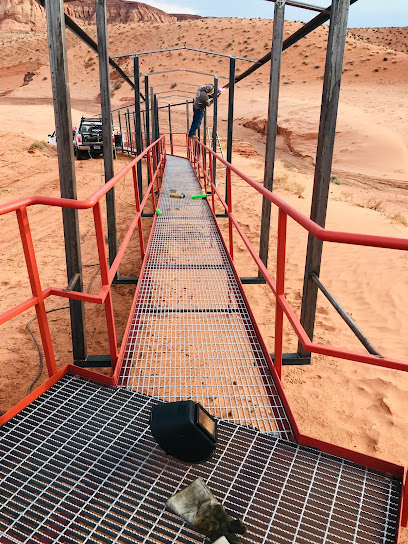
Ken's Tours Lower Antelope Canyon
44.2 km
Explore the breathtaking beauty of Lower Antelope Canyon with Ken's Tours, where nature's artistry unfolds in vibrant colors and stunning formations.
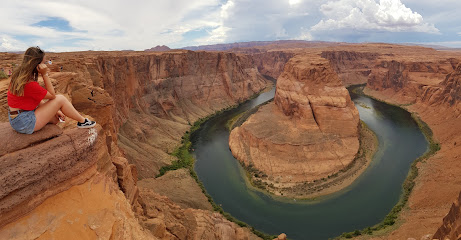
Upper Antelope Can.
44.2 km
Discover the breathtaking beauty of Upper Antelope Canyon, Arizona's iconic slot canyon, where nature and light create a stunning visual masterpiece.
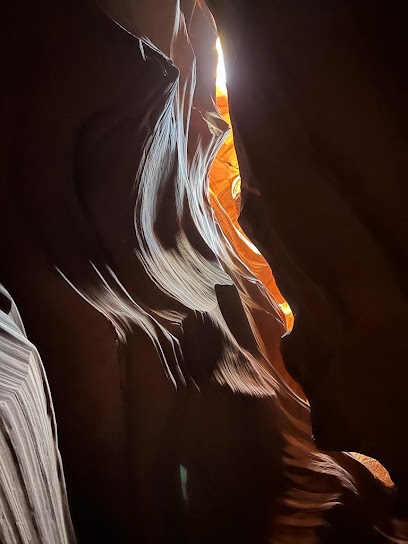
Tse Bighanilini Tours
44.2 km
Experience the breathtaking landscapes of the American Southwest with Tse Bighanilini Tours, your gateway to adventure in Page, Arizona.
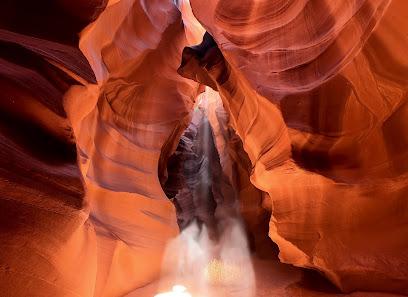
Antelope Canyon Navajo Tours
44.3 km
Explore the enchanting Antelope Canyon in Arizona, a stunning natural wonder with vibrant colors and breathtaking formations, perfect for nature lovers and photographers.
Essential places to dine

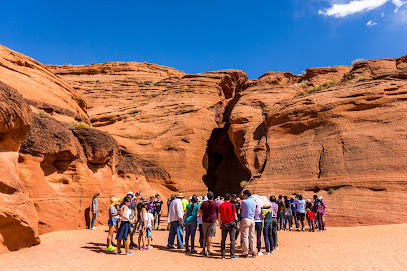
Antelope Point Marina Restaurant
43.5 km
Experience exquisite American dining at Antelope Point Marina Restaurant with stunning views of Lake Powell's enchanting landscape.
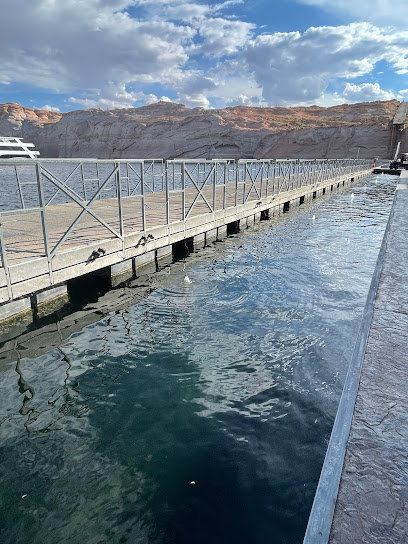
Latitude 37
47.1 km
Experience exquisite dining with breathtaking views at Latitude 37 by Lake Powell - where culinary delight meets stunning landscapes.
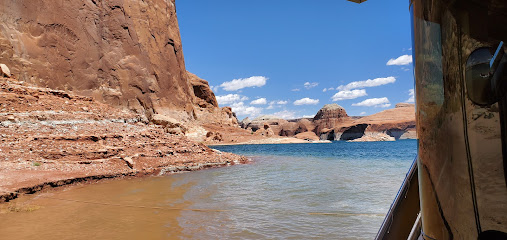
Prickly Pear Kitchen
47.2 km
Discover exquisite Southwestern cuisine at Prickly Pear Kitchen inside Hyatt Place Page Lake Powell – where every meal is a taste of adventure.
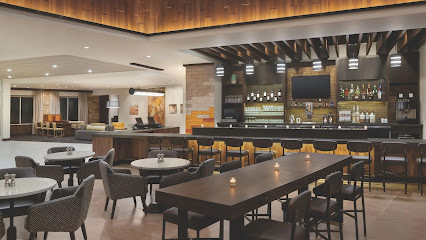
Ranch House Grille
47.2 km
Experience authentic Southwestern flavors at Ranch House Grille in Page, Arizona—perfect for breakfast or lunch amidst stunning natural beauty.
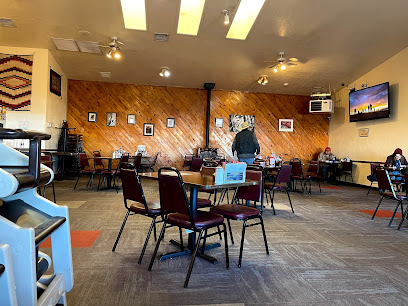
Rainbow Room
47.2 km
Experience exquisite American cuisine with stunning views of Lake Powell at the Rainbow Room in Page, Arizona.
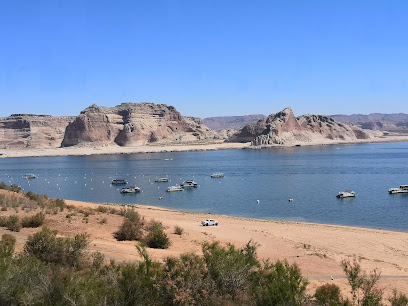
Driftwood Lounge
47.2 km
Experience mouthwatering American cuisine with breathtaking views at Driftwood Lounge by Lake Powell.
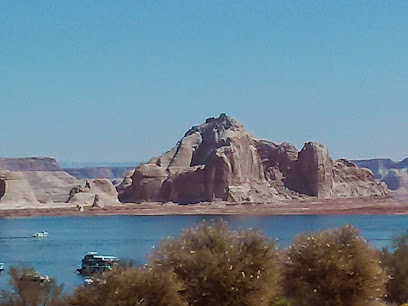
Fiesta Mexicana Restaurant
47.2 km
Experience authentic Mexican flavors at Fiesta Mexicana Restaurant in Page, AZ – where every meal is a celebration.
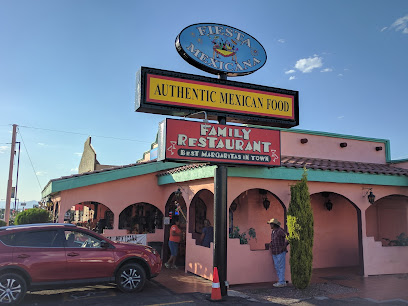
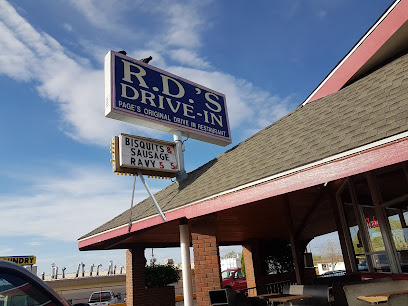
R D's Drive-In
47.2 km
Experience classic American fast food at R D's Drive-In in Page, AZ - perfect for families seeking delicious meals and delightful ice cream.
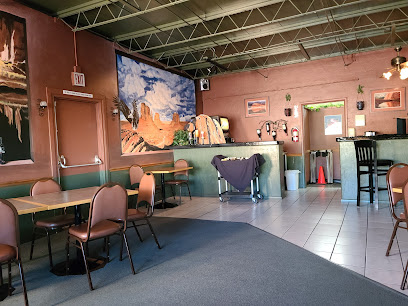
Bonkers Restaurant
47.3 km
Experience the perfect blend of Italian and American cuisines at Bonkers Restaurant in Page, AZ – where every meal is a celebration of flavor.
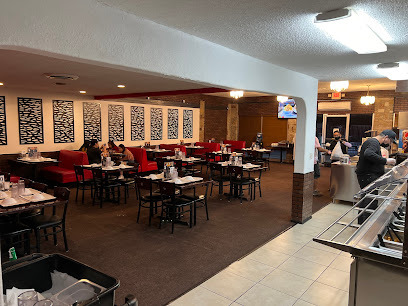
Mongolian BBQ Grill
47.3 km
Discover a unique dining experience at Mongolian BBQ Grill in Page, AZ – create your own stir-fry with fresh ingredients cooked just for you.
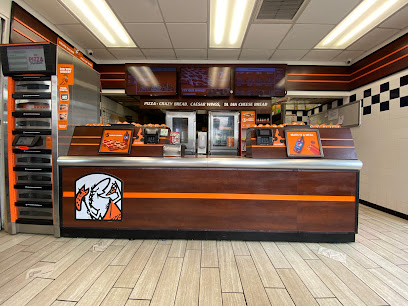
Little Caesars Pizza
47.3 km
Experience quick bites of deliciousness at Little Caesars Pizza in Page - perfect for hungry travelers exploring Arizona's natural beauty!
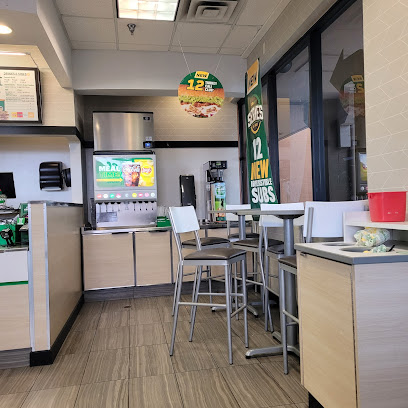
Subway
47.3 km
Experience fresh flavors at Subway in Page, Arizona—perfectly crafted sandwiches await your visit amidst stunning landscapes.
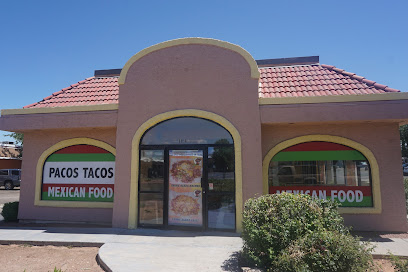
Paco's Tacos
47.3 km
Experience authentic Mexican cuisine at Paco's Tacos in Page, AZ – where every bite transports you to Mexico!
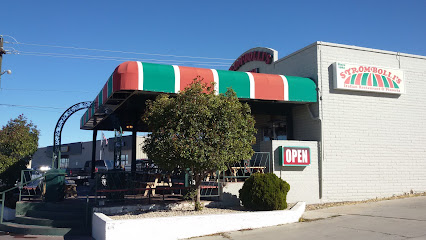
Strombolli’s Italian Restaurant & Pizzeria
47.3 km
Discover authentic Italian cuisine at Strombolli's in Page, AZ – where every meal feels like a trip to Italy.
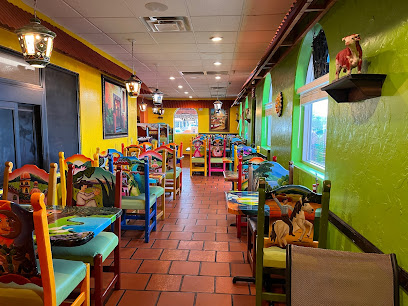
El Tapatio
47.3 km
Discover authentic Mexican cuisine at El Tapatio in Page, AZ—where every meal is a fiesta of flavors.
Markets, malls and hidden boutiques

Fred's Liquor Store
47.1 km
Discover a diverse selection of beverages at Fred's Liquor Store in Page, Arizona—your go-to spot for all your drink needs.
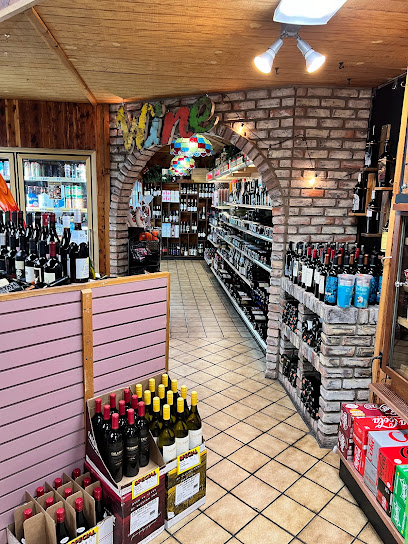
Big Lake Trading Post
47.2 km
Discover Big Lake Trading Post in Page, Arizona, your essential stop for snacks, drinks, and travel needs while exploring the breathtaking Southwest.
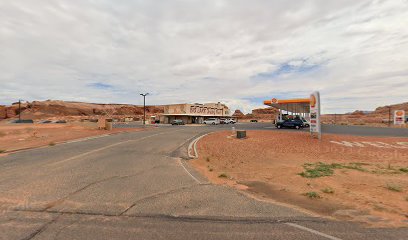
The Grand Circle Arts Gallery
47.3 km
Discover unique local art and handmade gifts at The Grand Circle Arts Gallery in Page, Arizona, a vibrant hub for creativity and culture.
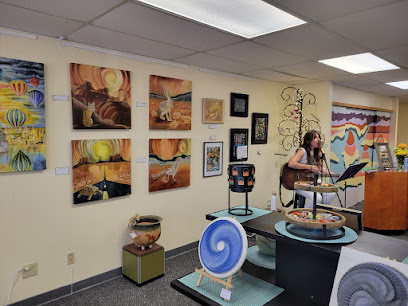
Dollar General
47.3 km
Discover Dollar General in Page, Arizona - your affordable shopping destination for essentials, unique gifts, and seasonal finds.
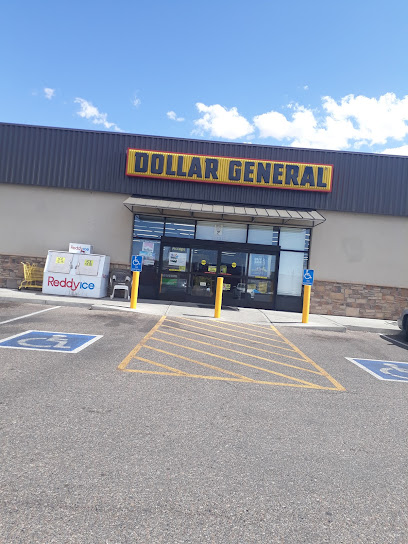
Lake Powell Rentals and Retail
47.3 km
Discover Lake Powell Rentals and Retail - Your ultimate adventure hub for unforgettable experiences in the breathtaking landscapes of Lake Powell.
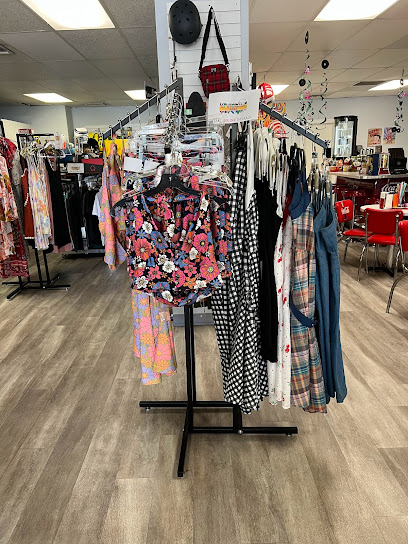
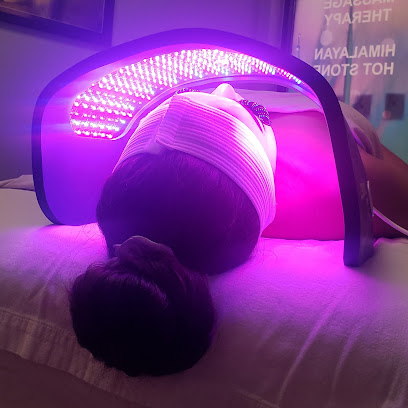
Lake Powell Massage & Spa Boutique
47.3 km
Discover the ultimate relaxation experience at Lake Powell Massage & Spa Boutique with expert treatments and a serene atmosphere in Page, Arizona.
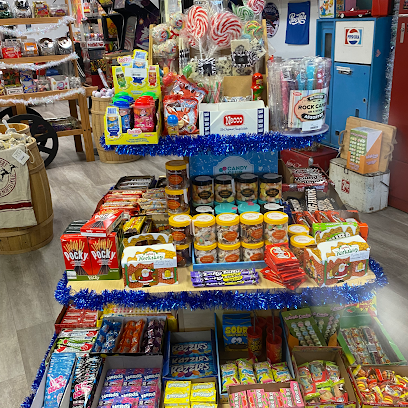
Kelly's Sugar House
47.3 km
Explore Kelly's Sugar House in Page, AZ: A candy store with trendy clothing, unique gifts, and delightful treats for every traveler.
Safeway
47.4 km
Experience the convenience of Safeway in Page, AZ—your go-to grocery store for fresh produce, baked goods, and more during your travels.
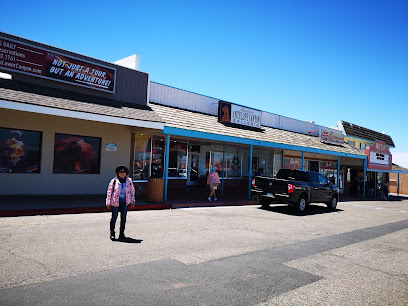
Safeway Liquor
47.4 km
Discover Safeway Liquor in Page, Arizona, your one-stop shop for groceries and beverages while exploring breathtaking landscapes.
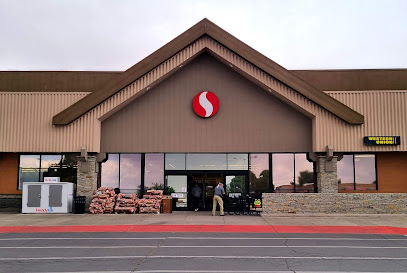
Stix Liquor & Sporting Goods
47.4 km
Explore the best of Page, Arizona at Stix Liquor & Sporting Goods, your go-to for liquor and fishing supplies.
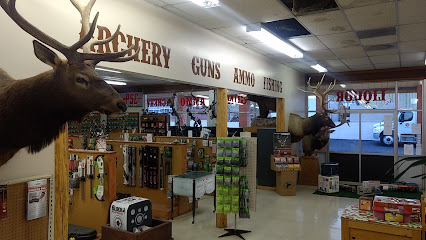
Starbucks
47.4 km
Experience the welcoming atmosphere of Starbucks in Page, Arizona, where rich coffee blends meet breathtaking scenery.
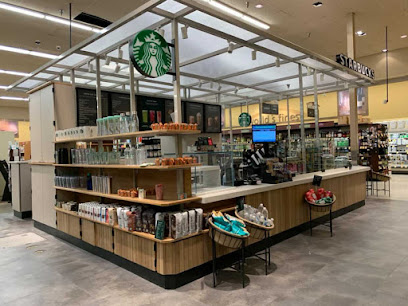
Hot n Sweet Coffee and Donut Shop
47.4 km
Experience the ultimate coffee and donut paradise at Hot n Sweet Coffee and Donut Shop, where every bite is a delicious journey in Page, Arizona.
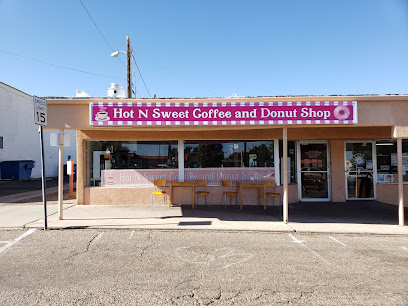
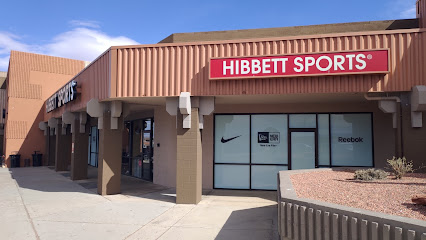
Hibbett Sports
47.4 km
Discover top-quality athletic footwear and apparel at Hibbett Sports in Page, Arizona, your go-to shop for outdoor adventures.
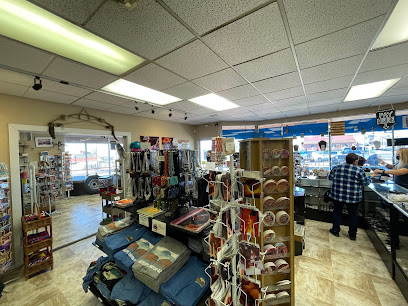
Page Bead Store
47.4 km
Explore the Page Bead Store for unique beads, local art, and an inspiring crafting experience in the heart of Arizona.
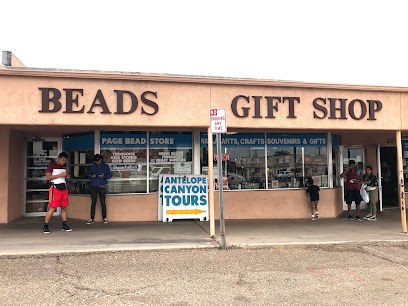
Antelope Canyon Gift Shop
47.4 km
Explore the Antelope Canyon Gift Shop for unique souvenirs and local crafts that celebrate the beauty of Arizona.
Essential bars & hidden hideouts

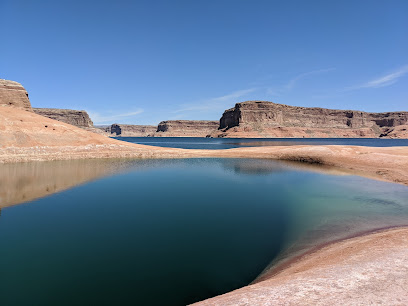
Last Chance Bay
27.2 km
Explore Last Chance Bay in Utah, a serene and picturesque destination perfect for nature lovers, adventure seekers, and those seeking tranquility.
Blue Bar & Wine
47.5 km
Experience the vibrant atmosphere and exquisite wine selection at Blue Bar & Wine, the perfect retreat for travelers in Page, Arizona.
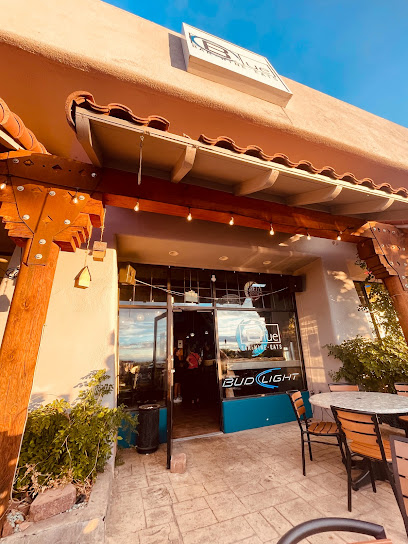
Drink It
47.6 km
Experience the vibrant flavors of Drink It, a top-rated restaurant in Page, Arizona, serving delightful drinks and delicious meals in a cozy atmosphere.
Rimview
47.6 km
Experience the perfect blend of scenic views and exquisite dining at Rimview in Page, Arizona, where every meal is a celebration of local flavors.
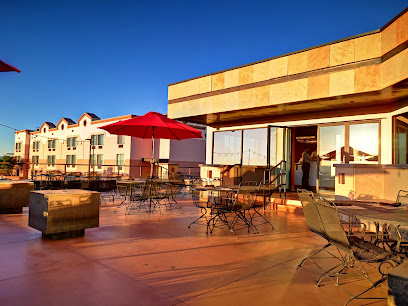
Mulligan's Pub & Patio
48.1 km
Experience the best of American cuisine at Mulligan's Pub & Patio, where delicious meals meet breathtaking views in Page, Arizona.
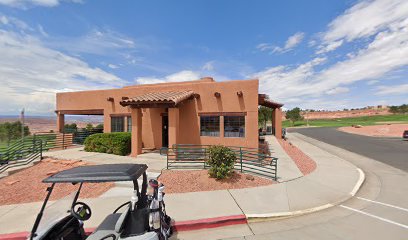
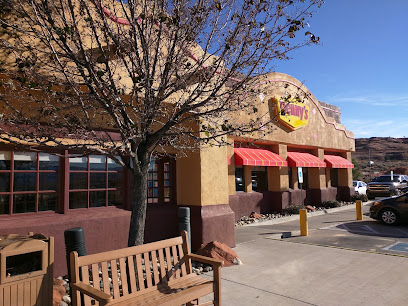
Denny's
48.3 km
Experience a classic American diner offering affordable breakfast favorites in Page, Arizona, the gateway to stunning natural wonders.
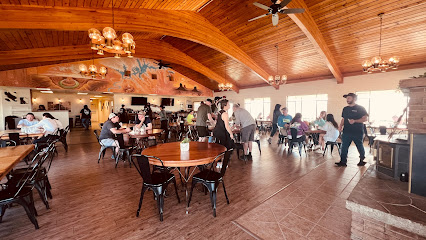
Sunset 89
49.0 km
Discover a vibrant bar and restaurant in Page, Arizona, where unique cocktails and delicious food meet stunning sunset views.
Nightclubs & after hour spots

Page Shores Amphitheater
47.1 km
Discover the enchanting Page Shores Amphitheater in Arizona, a perfect blend of nature and entertainment for an unforgettable outdoor experience.
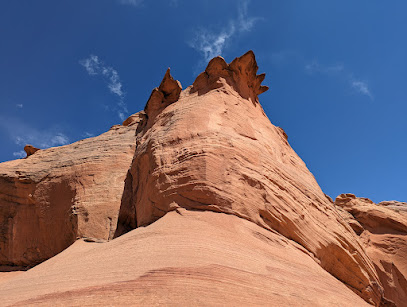
DJ Cody Inc
48.4 km
DJ Cody Inc: Elevate your event with top-notch DJ services for unforgettable celebrations filled with music and joy.
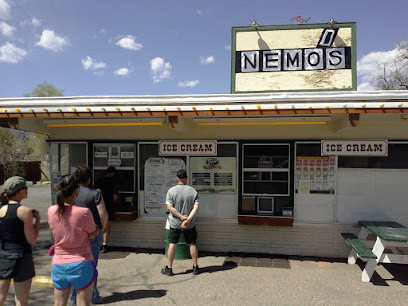
Nemo's Drive Thru
95.3 km
Discover delicious burgers and local flavors at Nemo's Drive Thru, a must-visit dining spot in the heart of Escalante, Utah.
Historic Escalante Showhouse
95.4 km
Experience the vibrant live music scene at the Historic Escalante Showhouse, a cultural hub in the heart of Utah's picturesque Escalante.
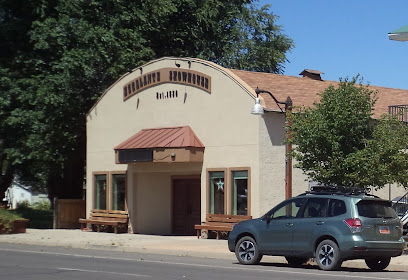
Cowboy Country Inn
95.4 km
Discover the rustic charm and natural beauty at Cowboy Country Inn, your perfect base for exploring Escalante, Utah's breathtaking landscapes.
Esca-latte Restaurant
95.7 km
Experience the best of Escalante with fresh, local flavors at Esca-latte Restaurant, the perfect café for travelers seeking comfort and delicious meals.
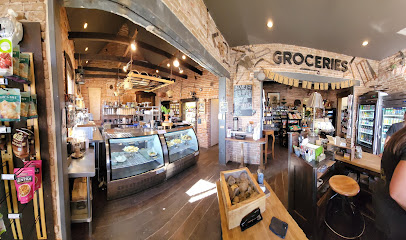
The INN of Escalante
95.7 km
Discover the charm of The INN of Escalante, your perfect base to explore Utah's stunning natural landscapes and outdoor adventures.
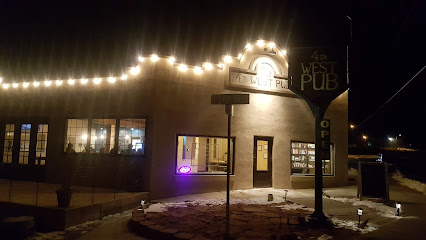
4th West Pub
95.8 km
Experience the local flavors and cozy atmosphere at 4th West Pub, the perfect bar and grill in Escalante, Utah.
Prospector Inn
95.8 km
Experience the charm of Escalante at Prospector Inn, your cozy retreat for exploring Utah's stunning natural landscapes.
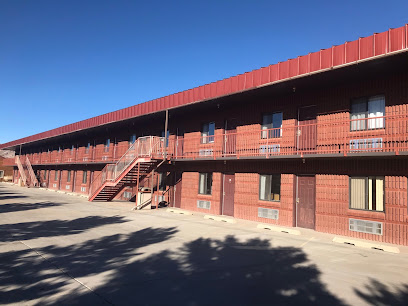
Circle D Motel
95.8 km
Experience tranquility and adventure at Circle D Motel - your gateway to explore Escalante's stunning landscapes and outdoor activities.
Circle D Restaurant
95.8 km
Experience the essence of American comfort food at Circle D Restaurant in Escalante, where every meal is a memorable occasion.
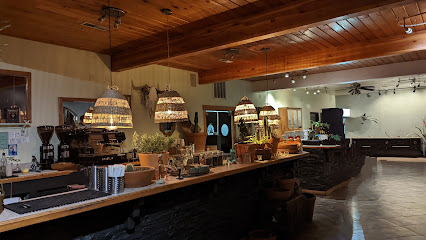
Entrada Escalante Lodge
95.9 km
Discover comfort and adventure at Entrada Escalante Lodge, your ideal base for exploring Utah's breathtaking landscapes.


