

Akhtala Monastery Fortress Travel Guide
Free Guide: Discover Akhtala Monastery-Fortress: A stunning blend of medieval architecture, vibrant frescoes, and rich history in Armenia's Lori region.


A brief summary of Akhtala Monastery Fortress
Discover Akhtala Monastery-Fortress: A stunning blend of medieval architecture, vibrant frescoes, and rich history in Armenia's Lori region.
Nestled in the Lori region of Northern Armenia, the Akhtala Monastery-Fortress is a 10th-century architectural marvel renowned for its well-preserved frescoes and strategic location. Originally a fortress called Pghindzahank, it transformed into a monastery in 1188 and became a vital religious and defensive site.
- Address
- 5Q27+5HW, Akhtala
- Phone
Getting there
Car
Public Transport
Discover more about Akhtala Monastery Fortress
Overview
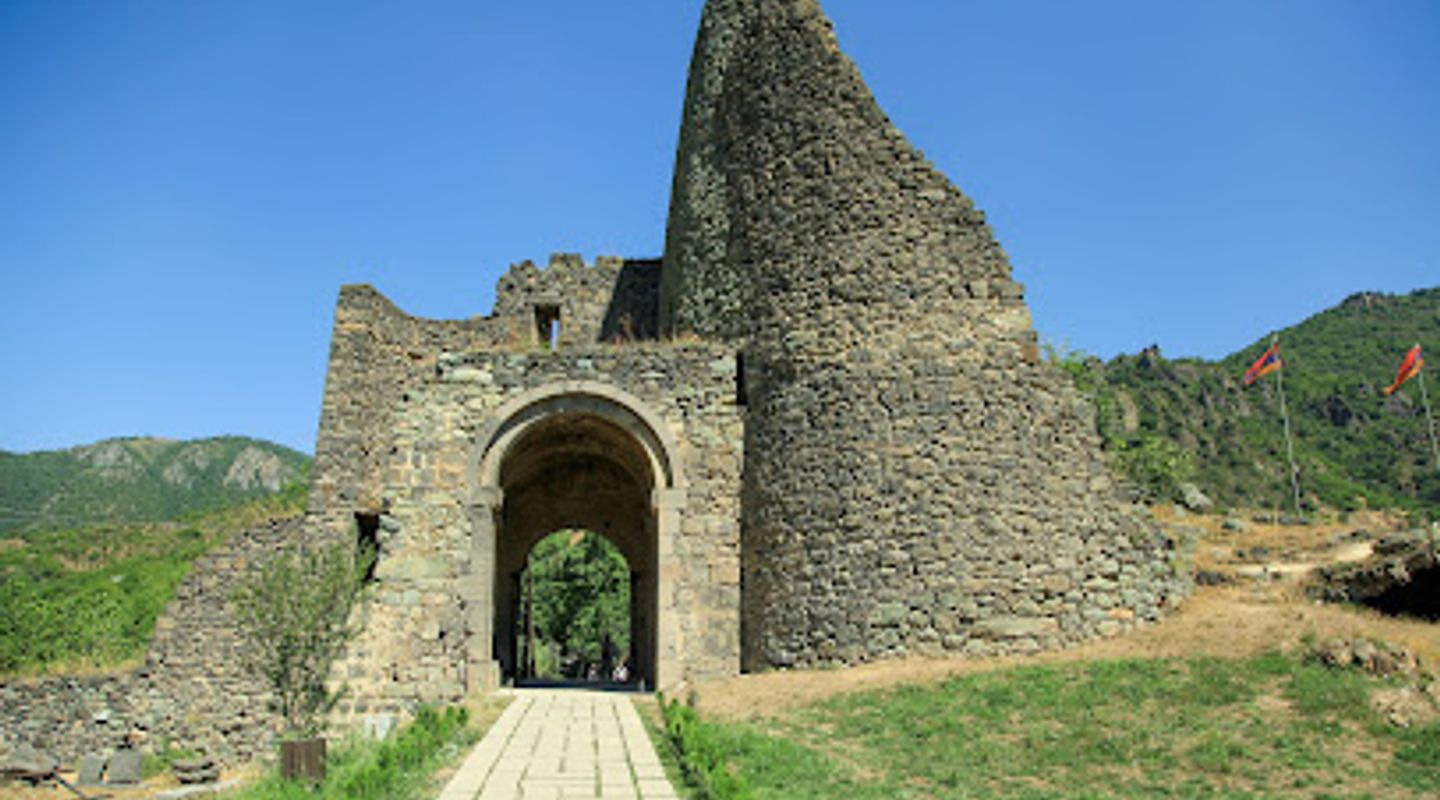
Akhtala Monastery-Fortress, also known as Pghindzavank (Coppermine Monastery), is a captivating blend of history, art, and architecture in Armenia's Lori region. Founded in the 10th century as a fortress, it guarded the northern approaches to Armenia. In 1188, Princess Miriam of the Kyurikyan clan commissioned the Church of the Holy Mother of God, transforming the fortress into a prominent Chalcedonian monastery.Perched on a high plateau overlooking the Debed River, the fortress boasts natural defenses with steep cliffs on three sides. The remaining accessible areas were fortified with basalt and lime mortar walls and towers. The only entrance, on the northern side, is protected by a three-story conical tower.The main church, Surb Astvatsatsin (Holy Mother of God), is celebrated for its vibrant, remarkably well-preserved frescoes dating back to the early 13th century. These frescoes, commissioned by Zakarid ruler Ivane I Zakarian, showcase a unique blend of Byzantine and Armenian artistic styles. The frescoes depict scenes from the Old and New Testaments, Christian saints, and other religious figures. The church's architecture also reflects a fusion of Armenian and Georgian influences.Other structures within the complex include the Church of the Holy Trinity, a chapel-sepulcher, monks' cells, and the remains of other buildings. The monastery has witnessed numerous historical events, including Mongol invasions and conflicts between the Ottoman Empire and Persia. Despite suffering damage over the centuries, it has retained its spiritual significance and artistic beauty. Today, Akhtala Monastery is a popular pilgrimage destination, attracting visitors from Armenia, Greece, and Georgia.
Evendo Review Centre
 Google
Guest reviews
Explore Akhtala Monastery Fortress on the map
A handpicked selection of must-see spots near Akhtala Monastery Fortress, mapped for you.
Get your free copy of our complete guide to Akhtala Monastery Fortress, delivered straight to you.
Everything on this page, from opening hours and how to get there to Eve’s tips and the best time to go, in one PDF you can read offline, print or share.
Already have an account? Sign in
Your Akhtala Monastery Fortress guide is ready.
We'll send it to · Not you? Sign out

Getting your guide ready…
We are putting together a fresh copy of the Akhtala Monastery Fortress guide. This can take up to a minute.
This can take a few moments. If your browser asks, choose Allow so the download can start. You'll find the guide in your Downloads folder.
Nothing happened? Download it again
Sorry, the guide is taking longer than usual. Please try again in a minute, or get it by email instead.
Unlock the best of Akhtala Monastery Fortress
Skip-the-line tickets, guided tours with entry, and walking tours of the area, booked in a few clicks.
 Tour with entry
From Tbilisi to Armenia: Akhtala, Haghpat & Sanahin Day-Trip
from $34.17 Tour with entry
Tbilisi to Akhtala Haghpat Sanahin Alaverdi Monasteries GroupTour
from $37.37 Tour with entry
Discover Georgia to Armenia Group Tour
from $38.00 Tour with entry
Haghpat Sanahin Akhtala Aramyant's Castle From Yerevan
from $40.85

Other nearby places you may find interesting
The closest places of the same kind, if this one is not quite what you had in mind.
-
-
-
-

-


Swipe for more places
More to explore near Akhtala Monastery Fortress
-
 Best experiences near Akhtala Monastery Fortress
-
 Best hotels near Akhtala Monastery Fortress
-
 Best landmarks near Akhtala Monastery Fortress
-
 Best attractions near Akhtala Monastery Fortress
-
 Best shops near Akhtala Monastery Fortress
-
 Best restaurants near Akhtala Monastery Fortress
-
 Best bars near Akhtala Monastery Fortress


Do you manage this location?
Take control to get all the benefits, like improved information, better appearance, and stronger visibility across AI-powered discovery.
Explore more

Explore more of Tavush
Discover Tavush, Armenia's Emerald Jewel, where lush forests, medieval monasteries, and serene landscapes await. A perfect escape for nature lovers and history enthusiasts.
Explore Tavush
Explore more of Armenia
Explore Armenia's ancient wonders, vibrant cities, and breathtaking landscapes. From historic monasteries to delicious cuisine, there's something for every traveler.
Explore Armenia
