

Rudolfsheim-Fünfhaus (Vienna) Travel Guide - Free
Explore Rudolfsheim-Fünfhaus in Vienna with Evendo's free guide. Find the best shops, historic streets, restaurants, and gems on web or mobile.


Rudolfsheim-Fünfhaus in Vienna blends railway history, migrant cuisines, Reindorfgasse cafés, Schmelz green space and Wiener Stadthalle events.
A District Shaped by Movement
Rudolfsheim-Fünfhaus occupies Vienna’s 15th municipal district, west of the historic centre and between the Gürtel and Schönbrunn-side suburbs. Its character is urban, densely settled and distinctly local: late nineteenth-century apartment blocks line streets where bakeries, grocers, cafés, workshops and family-run businesses share space with newer cultural venues. Vienna’s main western railway gateway, Westbahnhof, forms the district’s eastern edge, making Rudolfsheim-Fünfhaus one of the city’s most convenient bases for exploring beyond the centre.Read more about Rudolfsheim-Fünfhaus
Streets, Markets and Everyday Life
Culture, Sport and Green Space
Best attractions in Rudolfsheim-Fünfhaus
Rudolfsheim-Fünfhaus offers an urban sightseeing experience built around streets, markets, performance venues and everyday public space rather than a single monumental centre. The Wiener Stadthalle is the district’s best-known cultural attraction, hosting major concerts, sporting events and exhibitions in a large post-war complex. Reindorfgasse provides a more intimate route through independent cafés, shops and local businesses, while Schwendermarkt introduces visitors to the neighbourhood’s food culture and commercial life. The red-brick Church of Maria vom Siege, near the eastern side of the district, is a notable architectural stop, as is the Fünfhauser Kirche on Mariahilfer Straße. Märzpark and Vogelweidpark provide open space among dense residential streets, and the wider Schmelz area offers recreational paths and sports facilities. The district is also a useful place to observe Vienna’s multicultural shopfronts, bakeries and restaurants without leaving the established urban fabric.
-
Tourist attraction
Lobkowitzbrücke
Experience tranquility at Lobkowitzbrücke in Vienna: a historic bridge offering scenic views and a peaceful escape in the heart of the city.
6 min drive · 1.9 km from neighbourhood centre
-
Tourist attraction
Graffiti
Discover Vienna's vibrant street art scene along the Gürtel, a dynamic outdoor gallery showcasing diverse styles and urban culture.
5 min drive · 1.7 km from neighbourhood centre


Best landmarks in Rudolfsheim-Fünfhaus
The district’s landmarks express its development as a railway-side suburb and dense nineteenth-century residential quarter. Westbahnhof, on the eastern edge, is both a major transport building and a visible marker of Vienna’s westward connections, while the Gürtel records the importance of later metropolitan traffic and transit infrastructure. The Wiener Stadthalle is a significant post-war landmark, designed as a large modern complex for sport and culture rather than as a historic monument. Religious architecture provides a contrasting local scale: the Church of Maria vom Siege is recognisable for its prominent brick exterior and tower, and the Fünfhauser Kirche anchors the Mariahilfer Straße corridor. Schwendermarkt represents the district’s commercial history, while the surviving Gründerzeit apartment blocks, courtyards and street-front shops around Fünfhaus and Sechshaus form the broader architectural landmark of everyday Rudolfsheim-Fünfhaus.
-
Tourist attraction
Water World
Explore Vienna's Water World: A historic water tower, interactive exhibits, and lush gardens in Rudolfsheim-Fünfhaus.
6 min walk · 0.4 km from neighbourhood centre
-
Catholic church
Katholische Kirche Rudolfsheim (Maria, Königin der Märtyrer)
Discover Vienna's Neo-Gothic gem: Katholische Kirche Rudolfsheim, a testament to faith and architectural grandeur in Rudolfsheim-Fünfhaus.
5 min walk · 0.4 km from neighbourhood centre
-
Museum
Museum 15 - Bezirksmuseum Rudolfsheim-Fünfhaus
Discover the captivating history and culture of Vienna's 15th district at Museum 15, a community hub preserving local heritage.
15 min walk · 1.2 km from neighbourhood centre
-
Playground
Braunhirschen Park
A vibrant park in Vienna's 15th district, offering playgrounds, workout facilities, and green spaces for relaxation and recreation.
16 min walk · 1.3 km from neighbourhood centre


Explore Rudolfsheim-Fünfhaus on the map
A handpicked selection of must-see spots in Rudolfsheim-Fünfhaus, mapped for you.
Best hotels in Rudolfsheim-Fünfhaus
Best restaurants in Rudolfsheim-Fünfhaus
Eating in Rudolfsheim-Fünfhaus reflects the district’s long history as a working, residential and migrant quarter. Around Reindorfgasse, Sechshauser Straße and the streets near Westbahnhof, visitors encounter Viennese cafés and bakeries alongside Turkish, Balkan, Middle Eastern, South Asian and other international cuisines. Small restaurants, takeaway counters and grocery shops often provide a more informal dining experience than the grand cafés of the historic centre, with grilled meats, filled breads, pastries, soups and regional home-style cooking appearing across the local offer. Schwendermarkt and nearby food retailers are useful for understanding the relationship between shopping and cooking in the neighbourhood, although the market is more a place of everyday provisioning than a dedicated tourist food hall. The area around the Stadthalle also has practical pre- and post-event dining, while side streets away from the Gürtel tend to feel more residential and less oriented towards passing visitors.
-
Restaurant
Das Augustin
Experience the vibrant fusion of European flavors at Das Augustin – Vienna's ultimate destination for food lovers seeking unique culinary adventures.
5 min walk · 0.4 km from neighbourhood centre
-
Restaurant
Pulkautaler Winehouse and Restaurant
Experience authentic Austrian cuisine at Pulkautaler Winehouse - where tradition meets flavor in Vienna's charming atmosphere.
18 min walk · 1.4 km from neighbourhood centre
-
Restaurant
Gasthaus Quell
Experience authentic Austrian cuisine at Gasthaus Quell in Vienna - where tradition meets taste in a cozy setting.
17 min walk · 1.4 km from neighbourhood centre
-
Restaurant
Restaurant Mader
Experience authentic Viennese cuisine at Restaurant Mader – where tradition meets taste in the heart of Vienna.
11 min walk · 0.9 km from neighbourhood centre


Best bars in Rudolfsheim-Fünfhaus
Rudolfsheim-Fünfhaus has an understated evening scene shaped by local bars, cafés, restaurants and the programme at the Wiener Stadthalle rather than by a concentrated club strip. Reindorfgasse and nearby streets are the most natural places to look for relaxed drinks and late socialising, with independent venues complementing the district’s international dining culture. Around Westbahnhof, the atmosphere is busier and more transient, particularly when trains arrive or events finish, but it is primarily a transport and commercial hub rather than a nightlife quarter. Concerts, sporting events and large performances at the Stadthalle can bring a pronounced evening energy to the surrounding streets. For a quieter night, residential sections around Sechshaus and the smaller parks offer local cafés and restaurants, though visitors should remember that much of the district remains a lived-in neighbourhood rather than an all-night entertainment zone.
-
Bar
MIKES im 15.
Discover the vibrant atmosphere of MIKES im 15., a bar and restaurant in Vienna offering a diverse menu and extensive drink selection.
17 min walk · 1.4 km from neighbourhood centre
-
Irish pub
The Golden Harp Irish Pub
Experience the spirit of Ireland at The Golden Harp Irish Pub in Vienna, where great food, drinks, and live music await every visitor.
1 min walk · 0.1 km from neighbourhood centre
-
Bar
The Chapel Bar Speakeasy
Experience the enchanting ambiance and exquisite cocktails at The Chapel Bar Speakeasy in Vienna, a must-visit for nightlife enthusiasts.
17 min walk · 1.4 km from neighbourhood centre
-
Bar
Exil in der Märzstraße
Discover the vibrant nightlife of Vienna at Exil in der Märzstraße, where expertly crafted cocktails meet a lively atmosphere.
7 min walk · 0.5 km from neighbourhood centre


Best nightclubs in Rudolfsheim-Fünfhaus
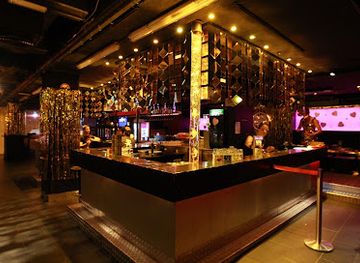
Rudolfsheim-Fünfhaus has an understated evening scene shaped by local bars, cafés, restaurants and the programme at the Wiener Stadthalle rather than by a concentrated club strip. Reindorfgasse and nearby streets are the most natural places to look for relaxed drinks and late socialising, with independent venues complementing the district’s international dining culture. Around Westbahnhof, the atmosphere is busier and more transient, particularly when trains arrive or events finish, but it is primarily a transport and commercial hub rather than a nightlife quarter. Concerts, sporting events and large performances at the Stadthalle can bring a pronounced evening energy to the surrounding streets. For a quieter night, residential sections around Sechshaus and the smaller parks offer local cafés and restaurants, though visitors should remember that much of the district remains a lived-in neighbourhood rather than an all-night entertainment zone.
-
Disco club
U4 Vienna
Discover the electrifying nightlife at U4 Vienna, a premier disco club where music, dance, and vibrant energy collide in an unforgettable experience.
6 min drive · 1.9 km from neighbourhood centre
-
Bar
Travel Shack Vienna
Join the vibrant nightlife at Travel Shack Vienna, where karaoke meets a lively bar atmosphere and affordable drinks in the heart of the city.
5 min drive · 1.6 km from neighbourhood centre
-
Bar
Ponyhof
Discover Ponyhof, Vienna's dynamic bar and club, where nightlife meets great music in a vibrant atmosphere.
5 min drive · 1.6 km from neighbourhood centre
-
Night club
UNIQUEx
Discover the electrifying nightlife of UNIQUEx, Vienna's premier night club, blending music, dance, and vibrant social experiences.
5 min drive · 1.7 km from neighbourhood centre


Best shops in Rudolfsheim-Fünfhaus
Shopping in Rudolfsheim-Fünfhaus is practical, independent and closely tied to the district’s international population. Reindorfgasse has become the most appealing local street for browsing cafés, small businesses, design-led shops and neighbourhood services, while Sechshauser Straße and the streets near Westbahnhof offer a broader mix of food shops, clothing, household goods and convenience retail. Schwendermarkt remains important for fresh provisions and local market trade, and Meiselmarkt provides a larger indoor market and retail setting towards the northern part of the district. International grocers are one of the area’s notable strengths, with ingredients from Turkey, the Balkans, the Middle East and elsewhere appearing alongside Austrian staples. Visitors should expect a working commercial district rather than a luxury shopping destination: the pleasure lies in specialist food stores, bakery counters, small retailers and the changing shopfronts of streets used daily by residents.
-
Shopping mall
BahnhofCity Wien West
Discover BahnhofCity Wien West, Vienna's premier shopping destination with over 100 stores and diverse dining options, perfect for tourists and locals alike.
18 min walk · 1.5 km from neighbourhood centre
-
Store
METAWARE – Gifts for Nerds & Geeks
Discover a world of geeky treasures at METAWARE, Vienna's premier store for nerds and fans of all things pop culture.
15 min walk · 1.2 km from neighbourhood centre
-
Women's clothing store
ONLY
Discover contemporary women's fashion at ONLY in Vienna's vibrant Rudolfsheim-Fünfhaus, where style meets comfort in every piece.
18 min walk · 1.4 km from neighbourhood centre
-
Store
Aa collections
Discover the charm of Vienna through unique gifts and local crafts at Aa Collections, your go-to store for unforgettable souvenirs.
18 min walk · 1.5 km from neighbourhood centre


Rudolfsheim-Fünfhaus essentials
Getting There
Getting Around
Safety
Emergency Situations
Do's and Don'ts
Local Tips

From Eve
Local phrases worth knowing
You don't need to get them perfect. A few words go a long way, and locals appreciate the effort.
Basics
| English | Local | Say it |
|---|---|---|
| Hello | Servus | [Zer-vus] |
| Goodbye | Auf Wiedersehen | [Owf Vee-der-zay-en] |
| Yes | Ja | [Yah] |
| No | Nein | [Nine] |
| Please/You're welcome | Bitte | [Bit-teh] |
| Thank you | Danke | [Dank-eh] |
| Excuse me/Sorry | Entschuldigung | [Ent-shul-di-gung] |
| How are you? | Wie geht es dir? | [Vee geyt es deer?] |
| Fine. And you? | Gut. Und dir? | [Goot. Oont deer?] |
| Do you speak English? | Sprechen Sie Englisch? | [Shpre-khen zee Eng-lish?] |
| I don't understand | Ich verstehe nicht | [Ikh fer-shtay-eh nikht] |
Eating & Drinking
| English | Local | Say it |
|---|---|---|
| I'd like to see the menu, please | Ich hätte gerne die Speisekarte, bitte | [Ikh hat-eh gern-eh dee Shp-eye-zeh-kar-teh, bit-teh] |
| I don't eat meat | Ich esse kein Fleisch | [Ikh ess-eh kine Flysh] |
| Cheers! | Prost! | [Prohst!] |
| I would like to pay, please | Ich würde gerne zahlen, bitte | [Ikh vur-deh gern-eh tsahl-en, bit-teh] |
Emergencies
| English | Local | Say it |
|---|---|---|
| Help! | Hilfe! | [Hil-fuh!] |
| Go away! | Geh weg! | [Geh vekh!] |
| Call the Police! | Rufen Sie die Polizei! | [Roo-fen zee dee Po-lee-tsai!] |
| Call a doctor! | Rufen Sie einen Arzt! | [Roo-fen zee i-nen Ahrts!] |
| I'm lost | Ich habe mich verlaufen | [Ikh hah-beh mikh fer-lou-fen] |
| I'm ill | Mir ist schlecht | [Meer ist sh-lekht] |
Shopping
| English | Local | Say it |
|---|---|---|
| I'd like to buy... | Ich würde gerne kaufen... | [Ikh vur-deh gern-eh kow-fen...] |
| I'm just looking | Ich schaue nur | [Ikh sh-ow-eh noor] |
| How much is it? | Wie viel kostet es? | [Vee feel koss-tet es?] |
| That's too expensive | Das ist zu teuer | [Dahs ist tsoy toi-er] |
| Can you lower the price? | Können Sie den Preis senken? | [Koo-nen zee den prys zeng-ken?] |
Time & Numbers
| English | Local | Say it |
|---|---|---|
| What time is it? | Wie spät ist es? | [Vee shpeht ist es?] |
| It's one o'clock | Es ist ein Uhr | [Es ist iyn oor] |
| Half past (10) | Halb elf | [Halb elf] |
| Morning | Morgen | [Mor-gen] |
| Afternoon | Nachmittag | [Nakh-mit-tag] |
| Evening | Abend | [Ah-bent] |
| Yesterday | Gestern | [Ges-tern] |
| Today | Heute | [Hoy-teh] |
| Tomorrow | Morgen | [Mor-gen] |
| 1 | Eins | [Iyns] |
| 2 | Zwei | [Tsvy] |
| 3 | Drei | [Dray] |
| 4 | Vier | [Feer] |
| 5 | Fünf | [Foonf] |
| 6 | Sechs | [Zeks] |
| 7 | Sieben | [Zee-ben] |
| 8 | Acht | [Akht] |
| 9 | Neun | [Noy-n] |
| 10 | Zehn | [Tsen] |
Transport & Directions
| English | Local | Say it |
|---|---|---|
| Where's a/the...? | Wo ist ein/der...? | [Vo ist iyn/dehr...?] |
| What's the address? | Was ist die Adresse? | [Vas ist dee Ah-dre-seh?] |
| Can you show me (on the map)? | Können Sie mir zeigen (auf der Karte)? | [Koo-nen zee meer tsai-gen (owf dehr Kar-teh)?] |
| When's the next (bus)? | Wann kommt der nächste (Bus)? | [Vann komt dehr nekh-steh (Boos)?] |
| A ticket (to ....) | Eine Fahrkarte (nach ....) | [Iyn-eh Far-kar-teh (nakh ....)] |
History of Rudolfsheim-Fünfhaus
From Village Settlements to Fünfhaus
The area now called Rudolfsheim-Fünfhaus developed from several settlements beyond Vienna’s historic walls, including Fünfhaus, Sechshaus and Reindorf. Fünfhaus is traditionally associated with a small group of houses established outside the city, while Reindorf grew around an older village settlement. Their position along routes leading west from Vienna encouraged farming, small trade and roadside development. As the city expanded beyond its former fortifications, these villages increasingly became part of Vienna’s suburban belt, with the distinction between separate settlements gradually weakening as new streets and housing filled the intervening land.
Industrial Growth and Urban Expansion
During the nineteenth century, factories, workshops and transport links transformed the district from a semi-rural fringe into a densely built working-class suburb. The construction of the Westbahnhof in the 1850s and the opening of the railway linking Vienna with the west brought passengers, workers and commercial activity to the area. Apartment blocks and communal courtyards multiplied around Fünfhauser Straße, Sechshauser Straße and the roads leading towards the Gürtel. The district’s early urban identity was therefore closely tied to mobility, affordable housing, manufacturing and the daily movement of people between Vienna and the growing western suburbs.
The Formation of the Fifteenth District
Rudolfsheim, Fünfhaus and Sechshaus were incorporated into Vienna during the late nineteenth-century expansion of the city, and in 1892 they were combined to form the fifteenth municipal district. The name Rudolfsheim commemorated Crown Prince Rudolf, while Fünfhaus remained embedded in the district’s official title and local terminology. Churches, schools, markets and municipal infrastructure followed the rapid population increase. Much of the street pattern and the characteristic multi-storey residential architecture visible today date from this period of urban consolidation, when Vienna’s outer districts acquired a more continuous and metropolitan form.
Railways, the Gürtel and Modern Vienna
Transport infrastructure continued to define Rudolfsheim-Fünfhaus in the twentieth century. Westbahnhof remained a major gateway for journeys towards western Austria and Germany, while the Gürtel became a significant north–south traffic corridor and transit route along the district’s eastern side. The Schmelz, historically used for military exercises and parade activities, gradually acquired sporting, educational and recreational functions. After the Second World War, rebuilding and changing transport patterns altered parts of the district, although the dense nineteenth-century housing fabric survived as its prevailing architectural framework.
Migration and Contemporary Identity
From the second half of the twentieth century, migration reshaped the district’s shops, restaurants, religious life and public culture. Workers and families arriving from Turkey, the Balkans and other parts of Europe and the wider world established businesses alongside older Viennese firms, giving streets such as Reindorfgasse and Sechshauser Straße a broad culinary and commercial range. The Wiener Stadthalle, opened in 1958, added a major cultural and sporting venue to the neighbourhood. Today, Rudolfsheim-Fünfhaus retains its working urban character while experiencing selective renewal around housing, independent retail, public space and the railway corridor.
Rudolfsheim-Fünfhaus in Photos
Browse through our photo collection highlighting the charm and character of the destination.
Neighbourhoods near Rudolfsheim-Fünfhaus
The closest neighbourhoods to Rudolfsheim-Fünfhaus, if you have time for more than one stop.
-

-

-
-

-


Swipe for more neighbourhoods
Explore more

Explore more of Vienna
Vienna blends imperial palaces, classical music, grand coffeehouses and contemporary culture in Austria’s elegant capital, rich in history, art and architecture.
Explore Vienna