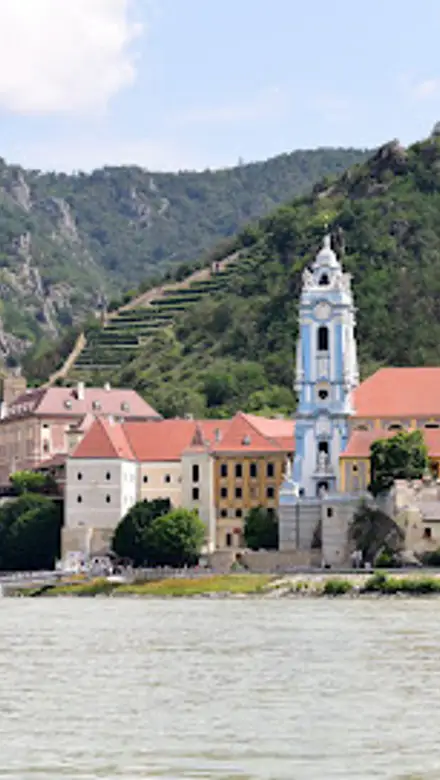
Stift Dürnstein Travel Guide
Free Guide: Discover Baroque splendor and rich history at Stift Dürnstein, an iconic monastery in Austria's Wachau Valley, famed for its blue-and-white tower.


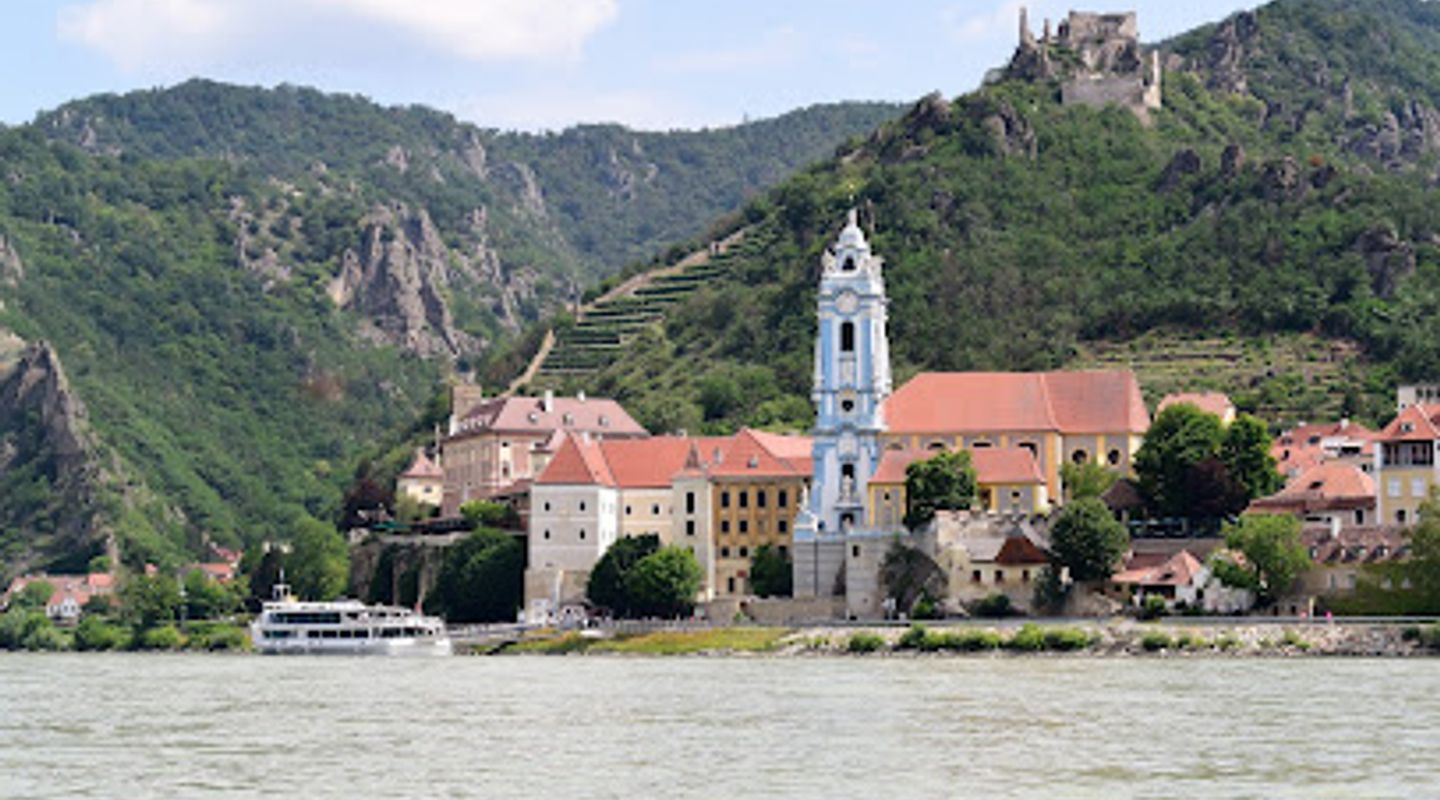
A brief summary of Stift Dürnstein
Discover Baroque splendor and rich history at Stift Dürnstein, an iconic monastery in Austria's Wachau Valley, famed for its blue-and-white tower.
Stift Dürnstein, an iconic monastery in Austria's Wachau Valley, is famed for its stunning Baroque architecture and its distinctive blue-and-white church tower. Founded in 1410, the monastery has evolved through centuries, playing a significant role in the region's cultural and religious landscape.
Opening hours
- Mon–Sat9 am–5 pm
- Sun10 am–5 pm
Opening hours as listed on the venue’s Google Business Profile. Hours can change for services and special events, so check with the venue before you go.
- Address
- Dürnstein 1, 3601 Dürnstein
- Phone
- Website
Getting there
Walking
Public Transport
Car
Ferry
Discover more about Stift Dürnstein
Overview
Perched on the banks of the Danube in the Wachau Valley, Stift Dürnstein is one of Lower Austria's most famous and striking monasteries. Known for its stunning Baroque architecture and iconic blue-and-white church tower, this former Augustinian monastery attracts thousands of visitors each year. The monastery's location on the Danube River has made it a strategic and influential site throughout its existence.The history of Dürnstein Abbey begins in 1372 with the dedication of a Mary Chapel. In 1410, Augustinian-Canons from Wittingau in Bohemia were invited to take over pastoral care, thus starting Dürnstein Abbey. The monastery experienced its golden age in the 18th century when it underwent a complete Baroque transformation. Renowned architects like Jakob Prandtauer and Joseph Munggenast transformed the medieval structure into the magnificent Baroque masterpiece that stands today.The abbey church, with its intricate details and opulent design, exemplifies the high Baroque style. The high altar is a particularly spectacular feature, showcasing the artistic mastery of the period. The blue-and-white tower, designed by Matthias Steinl, is not only an architectural marvel but also a symbol of the monastery's spiritual significance. Its vibrant colors and elegant design make it one of the most photographed landmarks in the Wachau Valley.Visitors can explore the abbey's architecture, wander through its peaceful courtyard, and learn about its rich history and cultural significance. The Abbey Church, which has also been the parish church since 1745, is dedicated to the Virgin Mary's assumption into Heaven. The side chapels contain paintings by Martin Johann Schmidt. One unique feature is the fully rotatable tabernacle of the high altar, in the form of a globe decorated with 44 scenes from the life of Jesus. The Abbey organ was built in 1724 and is still in its original condition.
Evendo Review Centre
 Google
Guest reviews
Explore Stift Dürnstein on the map
A handpicked selection of must-see spots near Stift Dürnstein, mapped for you.
Get your free copy of our complete guide to Stift Dürnstein, delivered straight to you.
Everything on this page, from opening hours and how to get there to Eve’s tips and the best time to go, in one PDF you can read offline, print or share.
Already have an account? Sign in
Your Stift Dürnstein guide is ready.
We'll send it to · Not you? Sign out

Getting your guide ready…
We are putting together a fresh copy of the Stift Dürnstein guide. This can take up to a minute.
This can take a few moments. If your browser asks, choose Allow so the download can start. You'll find the guide in your Downloads folder.
Nothing happened? Download it again
Sorry, the guide is taking longer than usual. Please try again in a minute, or get it by email instead.
Unlock the best of Stift Dürnstein
Skip-the-line tickets, guided tours with entry, and walking tours of the area, booked in a few clicks.
 Tour with entry
Wachau Valley Wine Tasting Bike Tour from Vienna
from $143.90 Tour with entry
Wachau Beauty & Medieval Heritage – Dürnstein Private Shore Tour
from $1,266.32 Tour with entry
5 days private sightseeing tour from Prague to Budapest
from $2,451.52 Tour with entry
10 days private sightseeing tour from Prague to Budapest
from $5,329.53


Other nearby places you may find interesting
The closest places of the same kind, if this one is not quite what you had in mind.
-
-
-
-
-


Swipe for more places
More to explore near Stift Dürnstein

 Best experiences near Stift Dürnstein
 Best hotels near Stift Dürnstein
 Best landmarks near Stift Dürnstein
 Best attractions near Stift Dürnstein
 Best shops near Stift Dürnstein
 Best restaurants near Stift Dürnstein
 Best bars near Stift Dürnstein
Do you manage this location?
Take control to get all the benefits, like improved information, better appearance, and stronger visibility across AI-powered discovery.
Explore more

Explore more of Waldviertel
Discover the natural beauty, rich history, and culinary delights of Waldviertel, Austria's enchanting woodland retreat perfect for nature lovers and cultural enthusiasts.
Explore Waldviertel
Explore more of Austria
Discover Austria's blend of alpine landscapes, rich cultural heritage, and culinary delights, from Vienna's historic charm to Tyrol's dramatic beauty.
Explore Austria