Lalbagh Fort Travel Guide
Free Guide: Explore the unfinished Mughal masterpiece of Lalbagh Fort in Dhaka, Bangladesh, and step back in time to discover the rich history and architectural splendor of the 17th century.


A brief summary of Lalbagh Fort
Explore the unfinished Mughal masterpiece of Lalbagh Fort in Dhaka, Bangladesh, and step back in time to discover the rich history and architectural splendor of the 17th century.
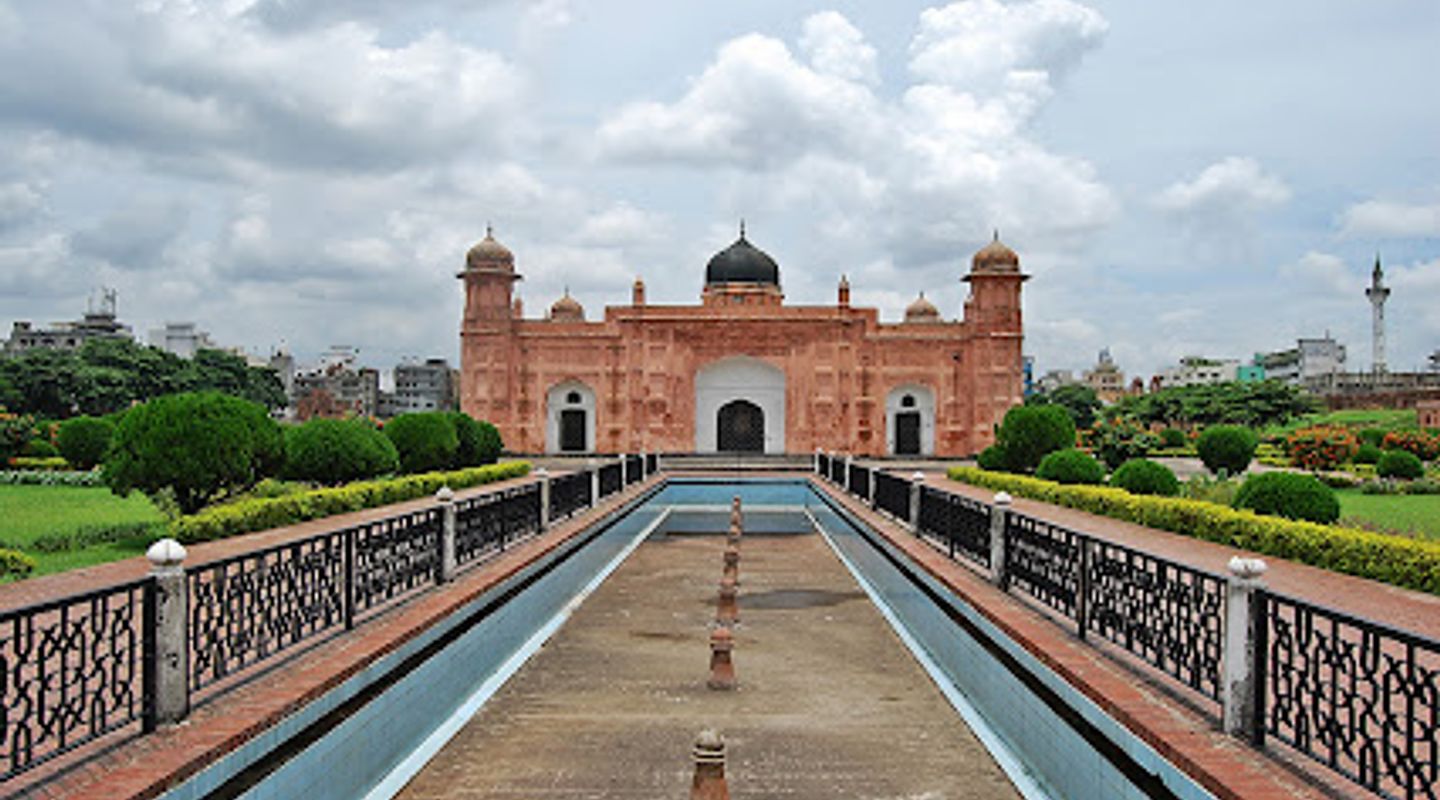
Lalbagh Fort, an unfinished Mughal masterpiece in Dhaka, Bangladesh, offers a captivating glimpse into 17th-century Mughal architecture and history. Construction began in 1678 by Prince Muhammad Azam, son of Emperor Aurangzeb, but was halted after he was called away to deal with a Maratha uprising. The fort later came under the control of Shaista Khan, the then governor, who abandoned the project after the untimely death of his daughter, Pari Bibi, whose mausoleum stands as one of the fort's most striking features. Visitors can explore the Diwan-i-Aam (hall of public audience), the Hammam Khana (bathhouse), and the three-domed mosque, all showcasing intricate Mughal designs. The fort's serene gardens and waterways provide a tranquil escape from the bustling city, making it a must-visit destination for history buffs and architecture enthusiasts alike. The on-site museum displays Mughal artifacts, further enriching the historical experience. Exploring Lalbagh Fort is like stepping back in time, offering a tangible connection to the grandeur and ambition of the Mughal Empire.
Opening hours
- Mon2 pm–5 pm
- Tue10 am–1 pm, 1:30 pm–5 pm
- Wed10 am–1 pm, 1:30 pm–5 pm
- Thu10 am–1 pm, 1:30 pm–5 pm
- Fri10 am–12:30 pm, 3 pm–5 pm
- Sat10 am–1 pm, 1:30 pm–5 pm
- SunClosed
Opening hours as listed on the venue’s Google Business Profile. Hours can change for services and special events, so check with the venue before you go.
- Address
- Lalbagh Rd, Dhaka 1211
- Website
Getting there
Public Transport
Taxi/Ride-Share
Walking
Discover more about Lalbagh Fort
Overview
Lalbagh Fort, also known as Fort Aurangabad, stands as a testament to the grandeur and ambition of the Mughal Empire in Bengal. Situated in the old city of Dhaka, Bangladesh, this incomplete 17th-century fort offers visitors a captivating journey into the region's rich history and architectural heritage. The fort's construction was initiated in 1678 by Prince Muhammad Azam, the son of Emperor Aurangzeb, during his viceroyalty of Bengal. However, his tenure was short-lived, as he was soon summoned by his father to quell a Maratha uprising. Consequently, the fort's construction was left unfinished. The fort later came under the control of Shaista Khan, the new governor of Bengal. He, too, ceased construction after the tragic death of his beloved daughter, Pari Bibi, whose mausoleum became an integral part of the fort complex. Lalbagh Fort is a sprawling complex encompassing several structures, each reflecting the distinct Mughal architectural style. The Diwan-i-Aam, or hall of public audience, is a two-storied structure that served as the administrative and judicial center of the fort. Its intricate stucco decorations and arched gateways showcase the refined craftsmanship of the Mughal artisans. The Hammam Khana, or bathhouse, provides insights into the luxurious lifestyle of the Mughal elite. This complex features a network of underground chambers, steam rooms, and bathing areas, adorned with colorful tiles and intricate carvings. The water supply system, ingeniously designed, demonstrates the advanced engineering capabilities of the Mughals. The three-domed mosque is another prominent structure within the fort complex. Its elegant design, characterized by its symmetrical arches, minarets, and intricate floral motifs, exemplifies the Mughal style of religious architecture. The mosque served as a place of worship for the fort's inhabitants and stands as a reminder of the Mughal Empire's Islamic heritage. Pari Bibi's Mausoleum is perhaps the most visually striking structure within Lalbagh Fort. This elegant tomb was built by Shaista Khan in memory of his daughter, who died at a young age. The mausoleum is adorned with intricate marble panels, floral carvings, and a copper dome, showcasing a blend of Mughal and Persian architectural influences. The interior of the mausoleum houses Pari Bibi's cenotaph, which is revered by visitors as a symbol of love and remembrance. The fort's gardens and waterways provide a tranquil escape from the bustling city. The meticulously manicured gardens feature a network of fountains, canals, and flowerbeds, creating a serene and picturesque environment. The waterways, ingeniously designed to channel water throughout the complex, add to the fort's aesthetic appeal and demonstrate the Mughal's mastery of hydraulic engineering. Lalbagh Fort also houses a museum that showcases a collection of Mughal artifacts, including weapons, pottery, textiles, and manuscripts. These artifacts provide valuable insights into the daily life, culture, and artistic achievements of the Mughal period. The museum serves as an educational resource for visitors, enhancing their understanding of the fort's historical significance. Visiting Lalbagh Fort is like stepping back in time, offering a tangible connection to the grandeur and ambition of the Mughal Empire. The fort's intricate architecture, serene gardens, and rich historical significance make it a must-visit destination for history buffs, architecture enthusiasts, and anyone seeking to experience the cultural heritage of Bangladesh. The fort is open to visitors from Saturday to Wednesday, with varying hours depending on the day. It is advisable to check the official website or local sources for the most up-to-date information on opening hours and any special events or closures. To fully appreciate the fort's historical significance, it is recommended to hire a local guide. These guides can provide valuable insights into the fort's history, architecture, and cultural context. They can also answer questions and point out hidden details that might otherwise be missed. Lalbagh Fort is a popular tourist destination, so it is advisable to visit during off-peak hours to avoid crowds. The best time to visit is during the cooler months of October to March, when the weather is more pleasant for exploring the fort's outdoor areas. Lalbagh Fort stands as a symbol of Dhaka's rich history and cultural heritage. Its intricate architecture, serene gardens, and captivating stories make it a must-visit destination for anyone seeking to experience the grandeur of the Mughal Empire in Bangladesh.
Evendo Review Centre
 Google
Guest reviews
Explore Lalbagh Fort on the map
A handpicked selection of must-see spots near Lalbagh Fort, mapped for you.
Get your free copy of our complete guide to Lalbagh Fort, delivered straight to you.
Everything on this page, from opening hours and how to get there to Eve’s tips and the best time to go, in one PDF you can read offline, print or share.
Already have an account? Sign in
Your Lalbagh Fort guide is ready.
We'll send it to · Not you? Sign out

Getting your guide ready…
We are putting together a fresh copy of the Lalbagh Fort guide. This can take up to a minute.
This can take a few moments. If your browser asks, choose Allow so the download can start. You'll find the guide in your Downloads folder.
Nothing happened? Download it again
Sorry, the guide is taking longer than usual. Please try again in a minute, or get it by email instead.
Unlock the best of Lalbagh Fort
Skip-the-line tickets, guided tours with entry, and walking tours of the area, booked in a few clicks.


Other nearby places you may find interesting
The closest places of the same kind, if this one is not quite what you had in mind.
-
-
-
-
-


Swipe for more places
More to explore near Lalbagh Fort

 Best experiences near Lalbagh Fort
 Best hotels near Lalbagh Fort
 Best landmarks near Lalbagh Fort
 Best attractions near Lalbagh Fort
 Best shops near Lalbagh Fort
 Best restaurants near Lalbagh Fort
 Best bars near Lalbagh Fort
Do you manage this location?
Take control to get all the benefits, like improved information, better appearance, and stronger visibility across AI-powered discovery.
Explore more

Explore more of Ganges Delta
Discover the Ganges Delta in Bangladesh: A mesmerizing blend of rivers, wildlife, and local culture awaits in the world's largest river delta.
Explore Ganges Delta
Explore more of Bangladesh
Discover Bangladesh: A land of rivers, rich culture, and breathtaking landscapes. Explore ancient sites, vibrant cities, and the unique flavors of this South Asian gem.
Explore Bangladesh