
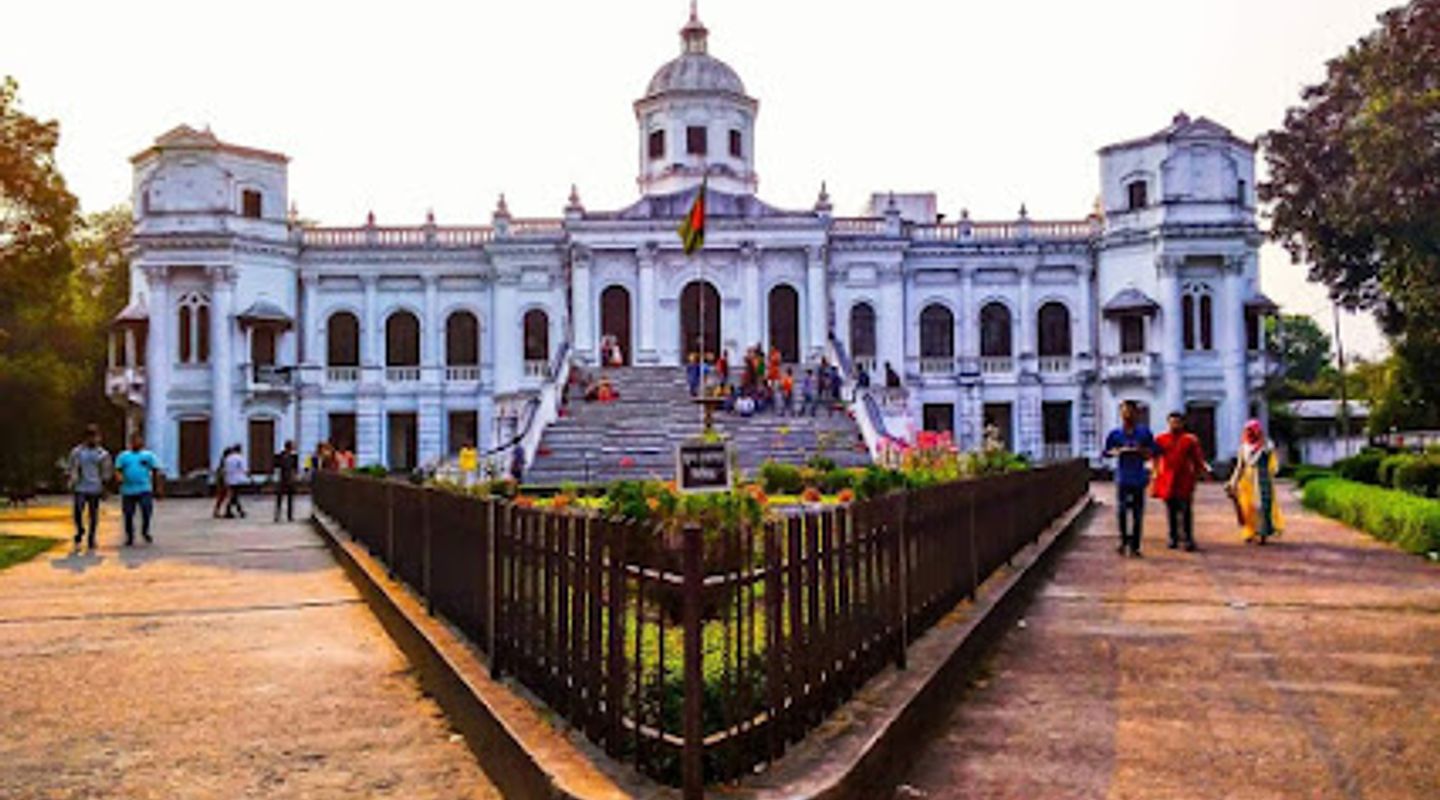
Tajhat Palace, Haor Basin Travel Guide
Explore the grandeur of Tajhat Palace in Rangpur, a historical landmark showcasing a unique blend of Mughal and European architecture and housing a rich collection of artifacts.
Tajhat Palace, a stunning early 20th-century palace in Rangpur, Bangladesh, offers a captivating journey into the region's rich history and architectural heritage. Built by Maharaja Kumar Gopal Lal Roy, a successful jeweler turned zamindar (landlord), the palace showcases a unique blend of Mughal and European styles. Today, it houses the Rangpur Museum, displaying a fascinating collection of artifacts, including terracotta relics from the 10th and 11th centuries, ancient Sanskrit and Arabic manuscripts, and black stone Hindu carvings. With its grand structure, serene gardens, and historical significance, Tajhat Palace is a must-visit destination for those seeking to explore the cultural and architectural treasures of Bangladesh. Visitors can explore the palace's intricate design, learn about the life of the Maharaja, and immerse themselves in the region's vibrant past. Don't miss the opportunity to witness the architectural splendor and historical significance of this remarkable landmark.
A brief summary to Tajhat Palace
- Tajhat Road, Rangpur, 5400, BD
- Click to display
- Monday 10 am-4:30 pm
- Tuesday 10 am-4:30 pm
- Wednesday 10 am-4:30 pm
- Thursday 10 am-4:30 pm
- Friday 10 am-4:30 pm
- Saturday 10 am-4:30 pm
- Sunday 10 am-4:30 pm

Know before you go
Hi, I'm Eve. Here are a few practical things to know before exploring Tajhat Palace.
- Visit early in the morning to avoid crowds and enjoy a peaceful exploration of the palace and its gardens.
- Photography is prohibited inside the museum, so be mindful of the restrictions while capturing the beauty of the palace.
- Take a guided tour to learn more about the history, architecture, and artifacts of Tajhat Palace.
- Explore the lush gardens surrounding the palace for a serene and picturesque experience.
- Combine your visit to Tajhat Palace with other nearby attractions in Rangpur to make the most of your trip.
Do you manage this location?
Take control to get all the benefits, like improved information, better appearance, and stronger visibility across AI-powered discovery. Learn more about listing your business on Evendo
Activate your presenceOther nearby places you may find interesting
The closest places of the same kind, if this one is not quite what you had in mind.

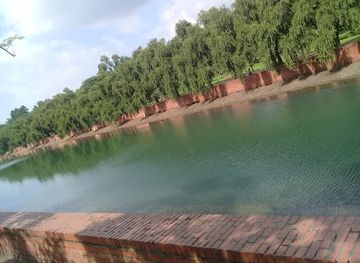
Explore Tajhat Palace on the Map
A handpicked selection of must-see spots near Tajhat Palace, mapped for you.
Getting There
-
Rickshaw/CNG
From Rangpur city center, the most convenient way to reach Tajhat Palace is by rickshaw or CNG (auto-rickshaw). Head southeast, following Tajhat Road. The journey typically takes 15-20 minutes, depending on traffic. Landmarks along the way include Carmichael College and Rangpur Bus Terminal. The fare should range from 50 to 100 BDT. Negotiate the fare beforehand.
-
Taxi/Ride-Share
Taxis and ride-sharing services like Uber are available in Rangpur. Use the app to book a ride to Tajhat Palace, located on Tajhat Road. The journey from the city center takes approximately 15-20 minutes. Expect to pay around 200-500 BDT, depending on the distance and traffic. Confirm the fare before starting your ride. Uber Tuk (auto-rickshaw) and Uber Moto (bike taxi) are also available.
-
Local Bus
Local buses frequently travel throughout Rangpur. Catch a bus heading towards Tajhat Road and request the conductor to drop you off near Tajhat Palace. The fare is typically around 15-30 BDT, depending on your location. Make sure to ask the locals or bus staff for confirmation that the bus goes to Tajhat Road.
Discover more about Tajhat Palace













Your all‑in‑one travel companion app
Explore expert travel guides, compare and book tours, experiences, hotels, and more—all from the palm of your hand. Download now for seamless trip planning wherever your wanderlust takes you.


Explore More of Haor Basin
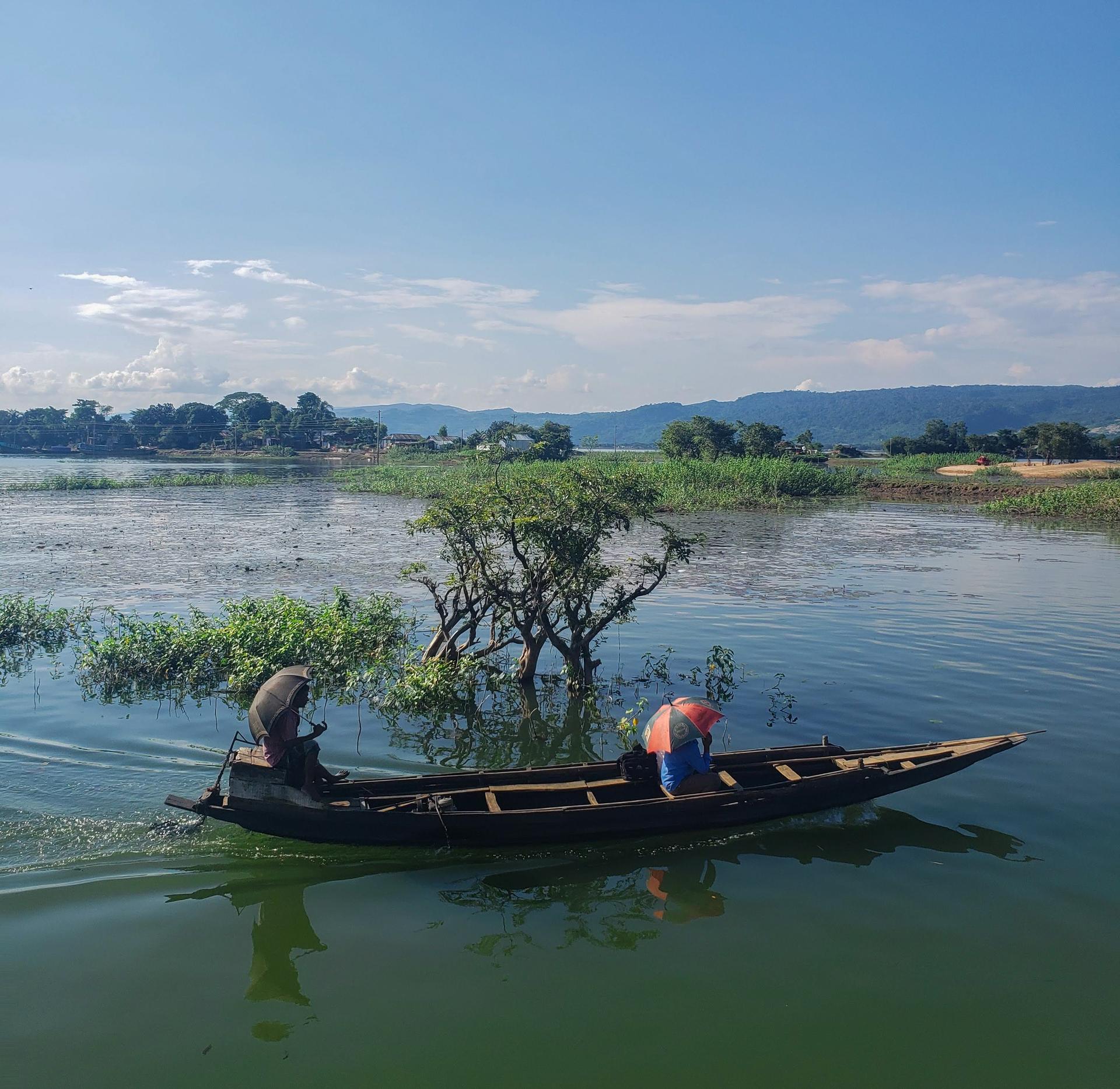
Looking beyond Tajhat Palace? Discover Haor Basin for broader travel guides, local hot-spots, and regional highlights.
Explore Haor Basin
Discover diverse wildlife and lush greenery at Rangpur Zoo, the largest zoo in North Bengal and a beloved family destination.
Explore the architectural beauty and spiritual serenity of Jame Masjid, a historical mosque in Rangpur that embodies the essence of Bangladesh's rich cultural heritage.
