Background

Palais du Coudenberg: Brussels' Royal History Unearthed

Unearth Brussels' royal past: Explore the excavated ruins of Coudenberg Palace beneath Place Royale, a journey through centuries of power, art, and dramatic history.

4.3

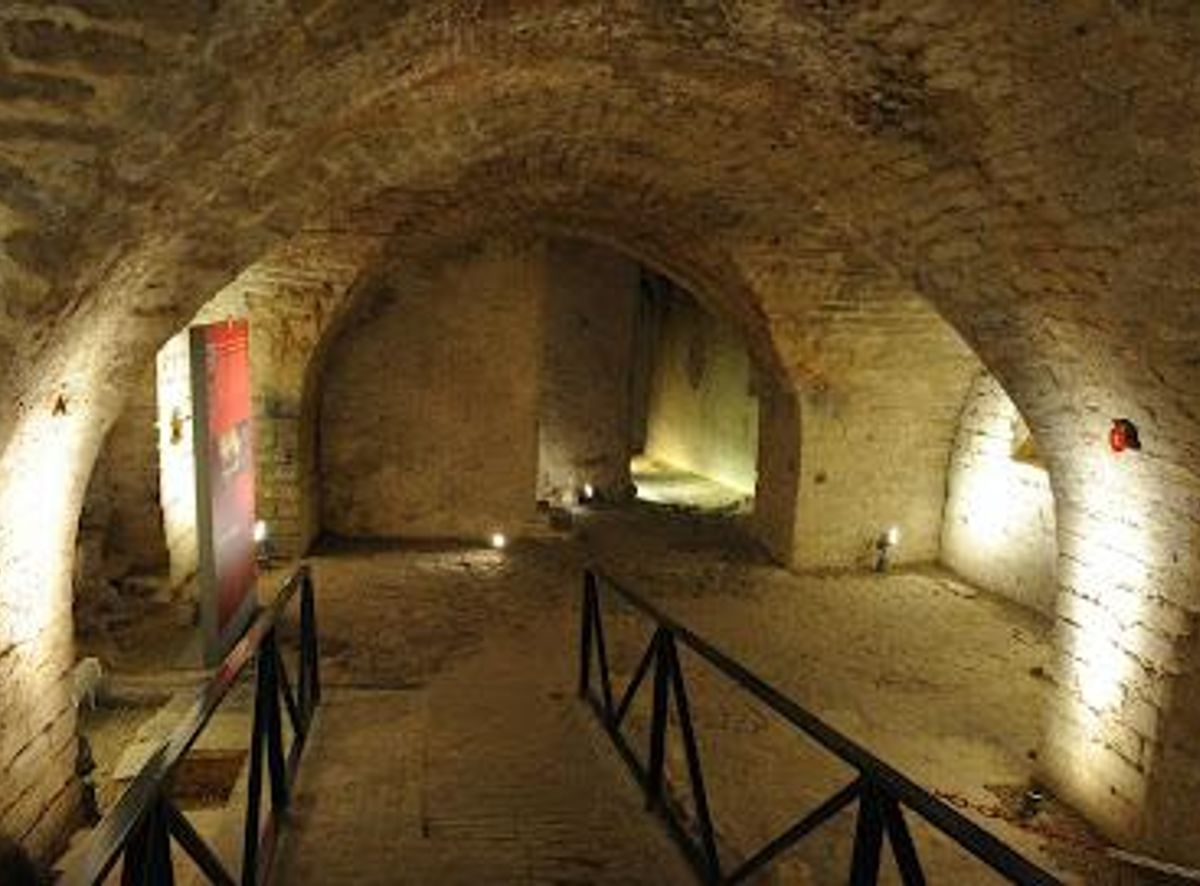
Delve into the heart of Brussels and unearth the secrets of the Palais du Coudenberg, the former palace of Brussels. Once one of Europe's most magnificent princely residences, home to rulers like Charles V, it met a fiery end in 1731. Today, descend beneath Place Royale to explore the excavated ruins, a fascinating archaeological site revealing the palace's foundations, underground passages, and the preserved Rue Isabelle. The adjacent BELvue Museum complements the experience, offering insights into Belgian history. It's a unique journey through time, offering a tangible connection to Brussels' rich royal past and a glimpse into the lives of those who shaped its destiny.

A brief summary to Palais du Coudenberg

  • Tuesday 9:30 am-5 pm
  • Wednesday 9:30 am-5 pm
  • Thursday 9:30 am-5 pm
  • Friday 9:30 am-5 pm
  • Saturday 11 am-7 pm
  • Sunday 11 am-7 pm

Local tips

  • Wear comfortable shoes, as the underground site involves walking on uneven surfaces and cobblestone paths.
  • Download the audio guide on your smartphone for a self-guided tour in English, French, Dutch, or German.
  • Combine your visit with the BELvue Museum to gain a broader understanding of Belgian history.
  • Book your visit in advance, especially if you are visiting with a group, to ensure availability.
  • Note that the archaeological site is only partly accessible to wheelchair users; contact the museum for specific accessibility information.
widget icon

Getting There

  • Public Transport

    The Palais du Coudenberg is easily accessible by public transport. From Brussels Central Station, it's a short 7-minute walk. Alternatively, take Metro lines 1 or 5 to Parc station, or Metro lines 2 or 6 to Trône or Porte de Namur stations, all within a few minutes' walk. Tram lines 92 and 93 stop at Royale and Palais, close to the entrance. Several bus lines (27, 38, 71, 95) also serve the Royale stop. A single journey ticket within Brussels costs €2.30 if purchased in advance or €2.50 if purchased on board. A 24-hour ticket costs €8.40, offering unlimited travel within the city.

  • Taxi/Ride-Share

    Taxis and ride-sharing services are readily available throughout Brussels. A short taxi ride from Brussels Central Station to Palais du Coudenberg will cost approximately €8-€12, depending on traffic. Ride-sharing services like Uber may offer slightly lower fares. Keep in mind that taxi fares in Brussels start at €2.60, with an additional charge of €2.30 per kilometer and €0.60 per minute. There may be a surcharge of €2 for rides between 10 PM and 6 AM.

  • Driving

    If driving, several parking options are available near Palais du Coudenberg, including Place des Palais, Grand Sablon, Parking Albertine (Rue des Sols), Place du Trône, and Rue Ducale. Parking fees typically range from €2 to €3 per hour. Consider using a parking app like Mobypark to reserve a spot in advance. Be aware that traffic in the city center can be congested, especially during peak hours.

Unlock the Best of Palais du Coudenberg

Buy tickets

    No tickets available

Book tours with entry

    No tours available

Book tours without entry

    No tours available

Discover more about Palais du Coudenberg

Beneath the bustling Place Royale in Brussels lies a captivating journey into the past: the Palais du Coudenberg, or Coudenberg Palace. This was once one of the most impressive royal residences in Europe, a center of power and prestige for nearly 700 years. From the 12th century until a devastating fire in 1731, it served as the seat of the Counts, Dukes, Archdukes, Kings, Emperors, and Governors who ruled over the Duchy of Brabant and later, the Burgundian, Spanish, and Austrian Netherlands. The palace's story is one of continuous evolution. Originally a fortified castle on the Coudenberg hill, it grew in importance with the creation of the Duchy of Brabant in 1183. The Dukes transformed the castle into a political hub, a magnet for diplomats, and a prime location for lavish entertainment. In the 15th century, Philip the Good of Burgundy ordered the construction of new wings and the Aula Magna, a grand hall for royal receptions. This hall witnessed significant historical events, including the first regular meetings of the States General and the formal relinquishment of regency by Duchess Margaret of Austria to Charles of Habsburg in 1515. Charles V, one of the most powerful emperors of the West, further developed the palace in the 16th century. He commissioned a large market square in front of the palace, known as the Place des Bailles, and instructed the building of galleries, rooms in the Renaissance style, and the Grand Chapel in late Gothic style. The palace became a showcase of art and luxury, adorned with exquisite tapestries, silver and gold objects, illuminated books, sculptures, and paintings by renowned artists like Titian, Rubens, and Brueghel. In the 17th century, Archdukes Albert VII and Isabella established their court on the Coudenberg, continuing the tradition of royal patronage and splendor. However, the palace's golden age came to an abrupt end on the night of February 3, 1731. A fire, sparked by negligence, engulfed the palace, reducing it to ashes. The destruction was so complete that the ruins were eventually buried beneath the new Royal Quarter in the 1770s. For centuries, the Coudenberg Palace faded from memory, its existence relegated to history books. However, in recent decades, archaeological excavations have unearthed the palace's foundations and underground structures, revealing a hidden world beneath Place Royale. Today, visitors can descend into these subterranean remains and explore the principal buildings of the palace, including the Aula Magna, the kitchens, and the Rue Isabelle, an underground street that once connected different parts of the complex. The Coudenberg Museum, located in the Hoogstraeten House, displays the finest archaeological discoveries made during the excavations, providing further context and insight into the palace's history and significance. The museum also offers audio guides in multiple languages, enhancing the visitor experience and providing detailed information about the site's various features. A visit to the Palais du Coudenberg is more than just a tour of ancient ruins; it's a journey through time, offering a tangible connection to Brussels' rich royal past. Walking through the underground passages, one can almost hear the echoes of royal gatherings, imagine the grandeur of the palace in its prime, and appreciate the resilience of history, buried but not forgotten. It's a unique and unforgettable experience that provides a deeper understanding of Brussels' cultural heritage.

Popular Experiences near Palais du Coudenberg

Popular Hotels near Palais du Coudenberg

Select Currency