

St. Salvator's Cathedral, Bruges Travel Guide
Free Guide: Explore Bruges' oldest church, a captivating blend of architectural styles and home to a treasury of Flemish art and religious artifacts.


A brief summary of St. Salvator's Cathedral
Explore Bruges' oldest church, a captivating blend of architectural styles and home to a treasury of Flemish art and religious artifacts.
St. Salvator's Cathedral, the main church of Bruges, boasts a rich history dating back to the 10th century. Originally a parish church, it gained cathedral status in the 19th century after the destruction of St. Donatian's Cathedral. Its architecture showcases a blend of Romanesque, Gothic, and Neo-Romanesque styles, housing a treasury of Flemish art.
- Address
- Sint-Salvatorskoorstraat 8, 8000 Brugge
Getting there
Walking
Public Transport
Taxi
Discover more about St. Salvator's Cathedral
Overview
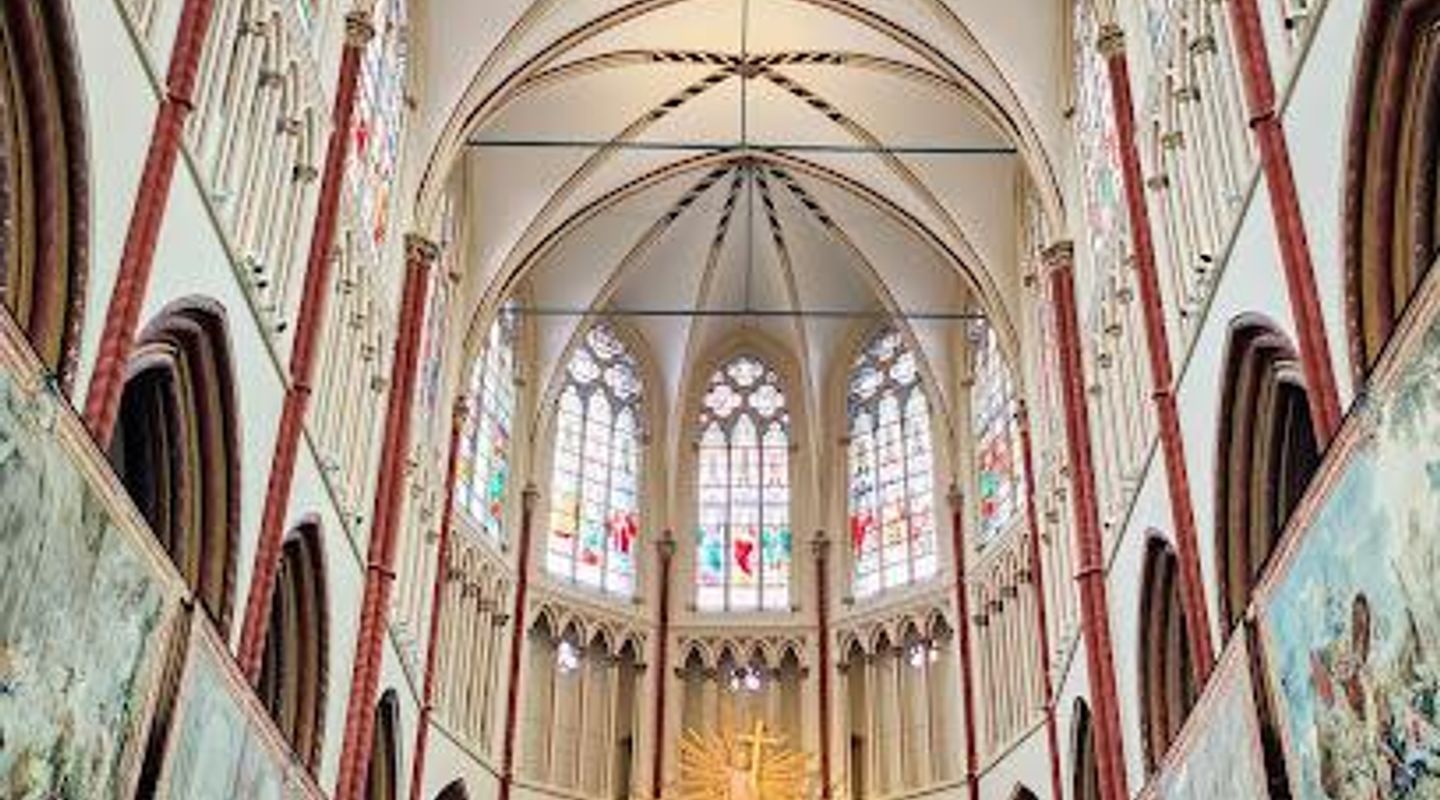
St. Salvator's Cathedral, or Sint-Salvatorskathedraal in Dutch, stands as a prominent symbol of Bruges, with its origins tracing back to the 10th century. Initially a humble parish church, it rose to prominence in the 19th century following the destruction of the Sint-Donaaskathedraal (St. Donatian's Cathedral) by French occupiers. This event led to St. Salvator's being granted cathedral status in 1834, shortly after Belgium's independence.Over the centuries, the cathedral has undergone numerous transformations, resulting in a captivating fusion of architectural styles. The oldest section, the base of the tower, dates back to the 12th century and exhibits Romanesque influences. The main body of the church reflects Gothic design from the 14th century, while the tower received a Neo-Romanesque redesign in the 19th century by English architect Robert Chantrell after a fire. The interior is equally impressive, housing a wealth of artistic treasures. Visitors can admire the Gothic choir stalls from 1430, stunning stained glass windows, and wall carpets crafted by Jasper van der Borcht in 1731. The treasury displays a rich collection of Flemish paintings from the 14th to 18th centuries, including works by renowned artists like Hugo van der Goes and Dieric Bouts. The cathedral also features a Jacobus Van Eynde organ built in 1719, which is still played during services and concerts.Today, St. Salvator's Cathedral remains an active place of worship and a major tourist attraction. Its towering spire, reaching 99 meters (325 feet), dominates the Bruges skyline. Visitors can explore the cathedral's rich history, admire its architectural grandeur, and appreciate its impressive collection of art and artifacts.
Evendo Review Centre
 Google
Guest reviews
Explore St. Salvator's Cathedral on the map
A handpicked selection of must-see spots near St. Salvator's Cathedral, mapped for you.
Get your free copy of our complete guide to St. Salvator's Cathedral, delivered straight to you.
Everything on this page, from opening hours and how to get there to Eve’s tips and the best time to go, in one PDF you can read offline, print or share.
Already have an account? Sign in
Your St. Salvator's Cathedral guide is ready.
We'll send it to · Not you? Sign out

Getting your guide ready…
We are putting together a fresh copy of the St. Salvator's Cathedral guide. This can take up to a minute.
This can take a few moments. If your browser asks, choose Allow so the download can start. You'll find the guide in your Downloads folder.
Nothing happened? Download it again
Sorry, the guide is taking longer than usual. Please try again in a minute, or get it by email instead.
Unlock the best of St. Salvator's Cathedral
Skip-the-line tickets, guided tours with entry, and walking tours of the area, booked in a few clicks.

Other nearby places you may find interesting
The closest places of the same kind, if this one is not quite what you had in mind.
-
-
-
-
-


Swipe for more places
More to explore near St. Salvator's Cathedral
-
 Best experiences near St. Salvator's Cathedral
-
 Best hotels near St. Salvator's Cathedral
-
 Best landmarks near St. Salvator's Cathedral
-
 Best attractions near St. Salvator's Cathedral
-
 Best shops near St. Salvator's Cathedral
-
 Best restaurants near St. Salvator's Cathedral
-
 Best bars near St. Salvator's Cathedral


Do you manage this location?
Take control to get all the benefits, like improved information, better appearance, and stronger visibility across AI-powered discovery.
Explore more

Explore more of Bruges
Discover Bruges, the enchanting medieval city in Belgium, renowned for its canals, historic architecture, and world-famous chocolates and beers.
Explore Bruges
Explore more of Belgium
Discover Belgium: A blend of medieval charm, culinary delights, and stunning landscapes. Explore historic cities, savor exquisite chocolates, and enjoy a perfect getaway.
Explore Belgium
