
Background

Los Angeles Union Station, Los Angeles County Travel Guide

4.5 (7884)

Experience the grandeur of Los Angeles Union Station, a historic landmark blending Art Deco and Spanish Colonial architecture, serving as a major transportation hub and cultural destination.

Los Angeles Union Station, a magnificent blend of Art Deco, Spanish Colonial Revival, and Mission Revival architecture, stands as the largest passenger rail terminal in the Western United States. Opened in 1939, it replaced several smaller stations, consolidating rail services and becoming a symbol of the city's burgeoning growth. Beyond its functional role, Union Station is a historical and cultural landmark, celebrated for its stunning design, spacious courtyards, and intricate details. Today, it serves as a major transportation hub, connecting various rail lines, bus services, and offering access to key attractions and events throughout the Los Angeles area. Whether you're a traveler or architecture enthusiast, Union Station offers a glimpse into the golden age of rail travel and the vibrant spirit of Los Angeles.

A brief summary to Los Angeles Union Station

  • 800 N Alameda St, Los Angeles, Downtown Los Angeles, California, 90012, US
  • Click to display
  • Monday 4 am-1 am
  • Tuesday 4 am-1 am
  • Wednesday 4 am-1 am
  • Thursday 4 am-1 am
  • Friday 4 am-1 am
  • Saturday 4 am-1 am
  • Sunday 4 am-1 am
Eve
From Eve

Know before you go

Hi, I'm Eve. Here are a few practical things to know before exploring Los Angeles Union Station.

  • Explore the station's architecture: Take time to admire the blend of Art Deco, Spanish Colonial Revival, and Mission Revival styles, both inside and outside the building.
  • Join a guided tour: The LA Conservancy offers walking tours of Union Station, providing insights into its history, architecture, and significance.
  • Attend an event: Check the station's calendar for events, including art exhibitions, cultural performances, and community celebrations.

Do you manage this location?

Take control to get all the benefits, like improved information, better appearance, and stronger visibility across AI-powered discovery. Learn more about listing your business on Evendo

Activate your presence

Explore Los Angeles Union Station on the Map

A handpicked selection of must-see spots near Los Angeles Union Station, mapped for you.

Unlock the Best of Los Angeles Union Station

Buy tickets

  • No tickets available

Book tours with entry

  • No tours available

Book tours without entry

  • No tours available

Getting There

  • Public Transport

    Los Angeles Union Station is readily accessible via the Metro Rail system. Take the A, B, D, or J Line directly to Union Station. A single fare is $1.75, which includes two hours of free transfers to other Metro lines. TAP cards can be purchased at vending machines within the station. From the station's main entrance, follow the signs to access the various Metro Rail lines.

  • Bus

    Several Metro Bus lines, including the 33, 70, 78, and DASH B, stop near Union Station. Check the Metro website or app for specific routes and schedules. The fare is $1.75, with free transfers to other Metro lines within two hours when using a TAP card. Buses typically stop on Alameda Street or at the Patsaouras Transit Plaza on the east side of the station.

  • Taxi/Ride-Share

    Taxis and ride-sharing services like Uber and Lyft provide convenient access to Union Station. A ride from Downtown Los Angeles typically costs between $8 and $15, depending on traffic and distance. Designated pick-up and drop-off zones are located near the station's entrances.

  • Driving

    If driving, use the address 800 N Alameda St, Los Angeles, CA 90012. There are two main parking areas: Union Station East and Union Station West. Union Station East charges $2 every 15 minutes, with a maximum of $8 per 24-hour period. Union Station West charges $2 every 15 minutes, with a maximum of $16 per 24-hour period. Limited short-term parking is available in Lots B & D, accessible from Alameda Street and E Cesar Chavez Avenue.

Discover more about Los Angeles Union Station

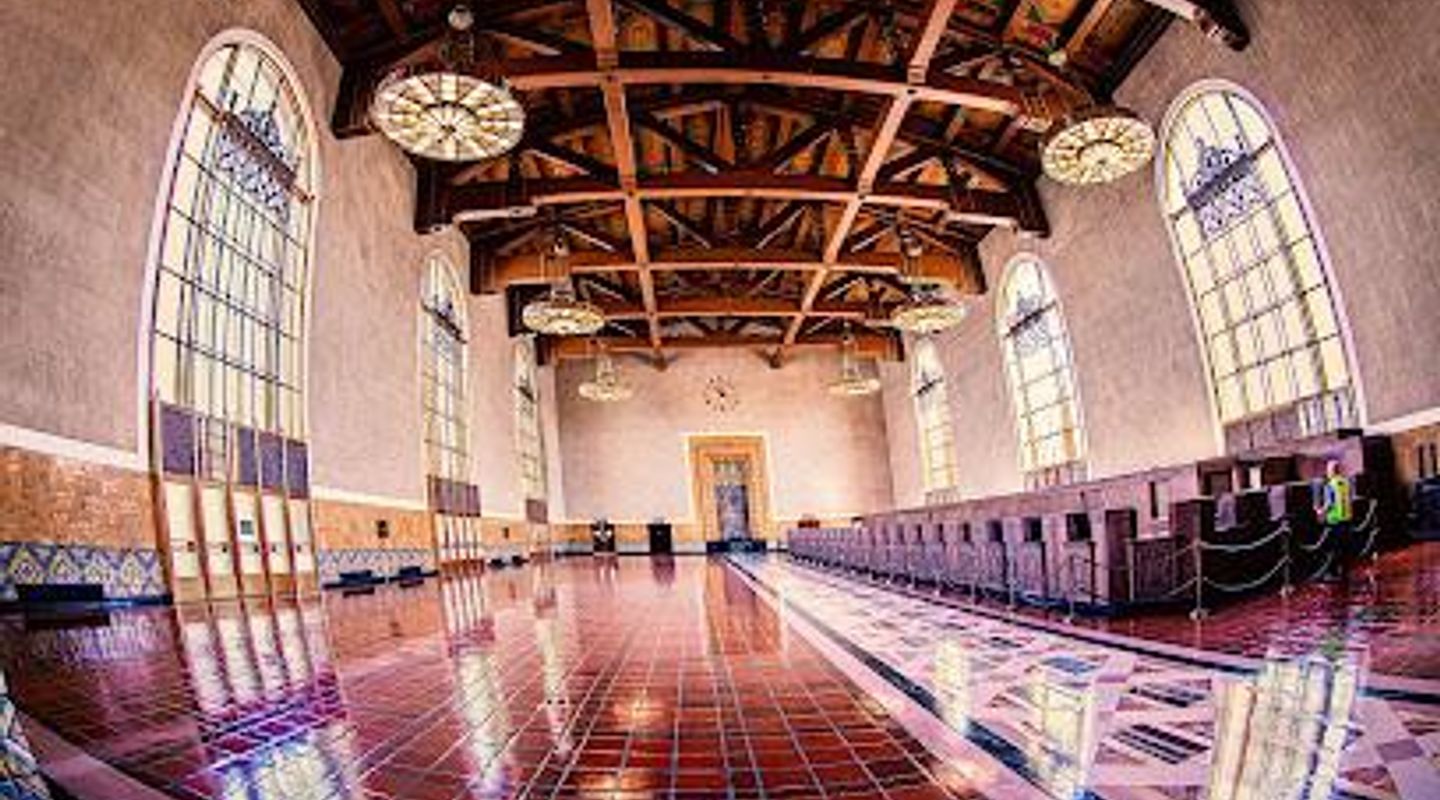
Los Angeles Union Station, often hailed as “the last of the great train stations,” is more than just a transportation hub; it's a living museum and a testament to the grandeur of early 20th-century architecture and design. Opened in May 1939, this iconic landmark consolidated the operations of the Southern Pacific, Union Pacific, and Atchison, Topeka & Santa Fe railroads, replacing the aging La Grande Station, Central Station, and Salt Lake Station. The vision behind Union Station was to create a unified terminal that would not only alleviate traffic congestion but also serve as a grand gateway to the city. Designed by the father-and-son team of John and Donald Parkinson, the station is a masterful blend of Art Deco, Spanish Colonial Revival, and Mission Revival styles, often referred to as “Mission Moderne.” This unique combination reflects the diverse cultural heritage of Los Angeles, creating a space that is both elegant and inviting. The architecture incorporates eight-pointed stars, and even elements of Dutch Colonial Revival architecture. Upon entering Union Station, visitors are immediately struck by the immense scale and attention to detail. The soaring ceilings, massive brass windows, and hand-painted steel beams evoke a sense of timeless elegance. The Historic Ticket Hall, now an event space, once bustled with passengers purchasing tickets from one of 30 windows crafted from American black walnut. The Grand Waiting Room, illuminated by massive Art Deco chandeliers, offers a tranquil space for travelers to relax in the plush leather upholstery of the 286 Art Deco mahogany chairs. The station's courtyards, adorned with orange trees, fan palms, and espalier magnolias, provide a serene oasis from the bustling city. These lush gardens reflect the sunny and mild climate of Southern California, welcoming visitors with a touch of natural beauty. The Patsaouras Transit Plaza, located on the east side of the station, features a tiled River Bench that depicts the LA River, incorporating Chinese artifacts unearthed during the station's construction. Throughout its history, Union Station has played a pivotal role in the life of Los Angeles. During World War II, it served as a dynamic pathway for troops, war workers, and supplies, handling as many as 100 troop trains daily. Although the rise of automobile and airplane travel led to a decline in rail travel in the mid-20th century, Union Station remained a vital part of the city's transportation network. In 1972, Los Angeles Union Station was designated as a Los Angeles Historic-Cultural Monument, and in 1980, it was added to the National Register of Historic Places. In 2011, the Los Angeles County Metropolitan Transportation Authority (LACMTA) acquired the property, embarking on an ambitious plan to enhance public transportation and streamline routes through the station. Today, Union Station is the busiest train station in the Western United States, serving nearly 110,000 passengers daily. It is a major transportation hub for Amtrak, Metrolink, Metro Rail, and various bus lines, connecting travelers to destinations throughout Southern California and beyond. The station also hosts a variety of events, including art exhibitions, cultural performances, and community celebrations, making it a vibrant destination for locals and tourists alike. Visitors can explore the station's rich history and architecture through self-guided tours or guided walking tours offered by the LA Conservancy. The station's blend of architectural styles, its meticulously restored interiors, and its beautifully landscaped gardens offer a glimpse into the golden age of rail travel and the enduring allure of Los Angeles. Union Station's significance extends beyond its architectural and historical value. It represents a vision of a connected and accessible city, a place where people from all walks of life come together to embark on journeys, create memories, and experience the vibrant spirit of Los Angeles. Whether you're a seasoned traveler, an architecture enthusiast, or simply looking for a unique cultural experience, Los Angeles Union Station is a must-see destination that captures the essence of the city's past, present, and future. As Union Station celebrates its 85th anniversary, it continues to evolve and adapt to the changing needs of Los Angeles. With ongoing efforts to enhance its transportation infrastructure, preserve its historical integrity, and create engaging public spaces, Union Station remains a vital portal to the promise of the California dream and a vibrant destination for arts and culture. The station's enduring appeal lies in its ability to blend the romance of a bygone era with the dynamism of a modern metropolis, making it a truly unique and unforgettable landmark.
Mobile App

Your all‑in‑one travel companion app

Explore expert travel guides, compare and book tours, experiences, hotels, and more—all from the palm of your hand. Download now for seamless trip planning wherever your wanderlust takes you.


Explore More of Los Angeles County
Looking beyond Los Angeles Union Station? Discover Los Angeles County for broader travel guides, local hot-spots, and regional highlights.

Explore Los Angeles County

Select Currency





