

Free Los Angeles County Travel Guide & Mobile App
Explore Los Angeles County with free travel guides. Discover regional history, expert tips, proposed trips, and audio guides on web or mobile app.


Explore Los Angeles County for Pacific beaches, mountain trails, world-class museums, diverse food and distinctive cities stretching from coast to desert.
Read more about Los Angeles County
When is the best time to visit Los Angeles County?
Best: May–June, October · 24–25°C| Month | High (°C) | Rainfall (mm) |
|---|---|---|
| January | 19 | 80 |
| February | 20 | 75 |
| March | 22 | 61 |
| April | 22 | 24 |
| May (best) | 24 | 9 |
| June (best) | 25 | 3 |
| July | 28 | 1 |
| August | 29 | 1 |
| September | 27 | 5 |
| October (best) | 24 | 17 |
| November | 21 | 36 |
| December | 19 | 67 |
Getting to and around Los Angeles County
How to get there
Transportation
Top city travel guides in Los Angeles County
The cities of Los Angeles County, and the easiest places to base yourself.
-

-

-

-

-

-


Swipe for more cities
Destinations in Los Angeles County
Resorts, valleys and scenic spots worth a trip of their own.

Swipe for more destinations
Best attractions in Los Angeles County
Los Angeles County's attractions range from major urban museums and performance spaces to beaches, mountain trails and historic districts. In Los Angeles, the Getty Center, Los Angeles County Museum of Art, Natural History Museum of Los Angeles County, California Science Center and Griffith Observatory represent different strands of art, science and civic culture. Pasadena adds the Huntington Library, Art Museum, and Botanical Gardens, Norton Simon Museum and a concentration of historic architecture, while Long Beach offers the Aquarium of the Pacific, waterfront museums and access to harbour scenery. The coast provides surfing, swimming and walking at beaches from Malibu to the South Bay, with the Palos Verdes Peninsula offering cliff-top landscapes. Inland, the Santa Monica Mountains and Angeles National Forest support hiking and wildlife observation, subject to seasonal conditions and fire restrictions. The Antelope Valley California Poppy Reserve is a distinctive springtime destination in the county's high desert, while Catalina Island offers boating, walking and island landscapes reached by ferry services from the mainland. Film and television locations are part of the county's cultural appeal, but the destination is broader than studio tours: historic neighbourhoods, gardens, galleries, markets and community festivals reveal its many local identities.
-
Theme park
Universal Studios Hollywood
Discover thrilling rides, captivating shows, and the magic of movies at Universal Studios Hollywood, the ultimate theme park experience.
-
Fishing pier
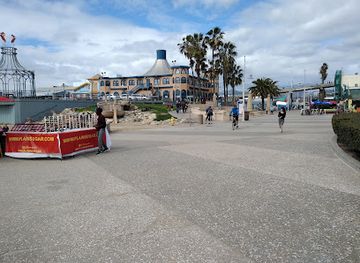
Santa Monica Pier
Discover the iconic Santa Monica Pier, a historic landmark blending fun, dining, and stunning ocean views in beautiful Santa Monica, California.
-
 Park
Griffith Park
Explore Griffith Park in Los Angeles, a vast urban oasis filled with stunning views, hiking trails, and cultural attractions for every traveler.
-
Shopping mall
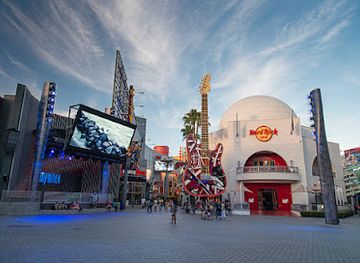
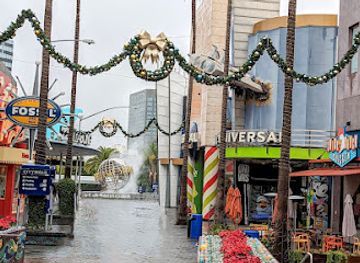
Universal CityWalk Hollywood
Discover Universal CityWalk Hollywood, the ultimate shopping and entertainment destination for tourists, featuring diverse dining, unique shops, and exciting attractions.
Best landmarks in Los Angeles County
The Hollywood Sign on Mount Lee is Los Angeles County's most recognisable visual emblem, although it is viewed from public areas rather than entered as a conventional monument. Griffith Observatory, positioned on the southern slopes of Griffith Park, is both a civic landmark and a vantage point over the Los Angeles Basin. The Bradbury Building and Los Angeles City Hall give Downtown Los Angeles distinctive architectural reference points, while the Walt Disney Concert Hall represents a later phase of the city's cultural architecture. Pasadena's City Hall, the Gamble House and the Colorado Street Bridge reflect different aspects of the city's historic development. Along the coast, the Santa Monica Pier marks the western end of the historic Route 66 tradition, and the Point Vicente Lighthouse and coastal cliffs define the Palos Verdes Peninsula. Mission San Gabriel Arcángel and the San Fernando Mission preserve important colonial-era structures, though their histories must be understood alongside the experiences of Indigenous communities. In Long Beach, the Queen Mary is a major maritime landmark, while the Vincent Thomas Bridge links the harbour landscape to the broader story of shipping and industry.
-
Park
Griffith Park
Discover Griffith Park: A breathtaking urban oasis in Los Angeles, perfect for outdoor adventures, cultural landmarks, and stunning views.
-
Historical landmark
Hollywood Walk of Fame
Discover the Hollywood Walk of Fame, where you can stroll among the stars and experience the heart of the entertainment industry in Los Angeles.
-
Natural history museum
Natural History Museum of Los Angeles County
Discover the Natural History Museum of Los Angeles County, where the past meets the present in a captivating journey through our planet's history.
-
Historical landmark
Venice Canals
Discover the captivating Venice Canals in California—an enchanting blend of history, nature, and charming architecture that transports you to a serene world.


Explore Los Angeles County on the map
Plan your trip on one map. See where the top cities, national parks and sights are, and book hotels and experiences in a few clicks.
Best hotels in Los Angeles County
Best restaurants in Los Angeles County
Dining in Los Angeles County reflects its Pacific location, agricultural surroundings and long history of immigration. Mexican and Mexican American cooking is central to the county's food culture, while Korean barbecue, Japanese restaurants, Thai Town, Persian and Armenian specialities, Salvadoran and Guatemalan cooking, Chinese regional cuisines and Vietnamese food are especially important in particular neighbourhoods. Santa Monica, Malibu and the South Bay offer coastal dining, though seafood is only one part of the wider culinary picture. Pasadena and the San Gabriel Valley are strong areas for cafés, bakeries, tea shops, family-run restaurants and regional Asian food, while Los Angeles contains everything from historic markets and casual taquerias to contemporary dining rooms. Farmers' markets provide Californian fruit, vegetables, flowers and prepared foods, and craft breweries, coffee roasters and bakeries are widespread. Menus change quickly, but the durable character of the county's dining scene lies in its neighbourhood specialities, extensive produce and exceptional cultural variety rather than in one single regional cuisine.
-
French
République Café Bakery & République Restaurant
Experience exquisite French cuisine at République Café Bakery & Restaurant in Los Angeles – where every meal is a celebration.
-
Steak
Castaway
Experience fine dining at Castaway in Burbank - where steakhouse elegance meets stunning valley views.
-
Hamburger
In-N-Out Burger
Fresh California burgers grilled to perfection, hand-cut fries, and late-night shakes at this Baldwin Park In-N-Out classic—fast, fresh, and forever iconic.
-
French
Perch
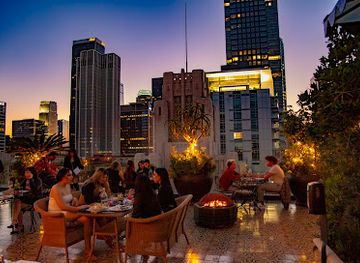
Experience exquisite French cuisine with breathtaking views at Perch in downtown Los Angeles—an unforgettable dining destination.


Best bars in Los Angeles County
Evening life in Los Angeles County is decentralised, with different styles in Hollywood, Downtown Los Angeles, West Hollywood, Santa Monica, Long Beach, Pasadena and selected San Fernando Valley neighbourhoods. Visitors will find cocktail bars, music venues, comedy clubs, theatres, dance clubs and late-opening restaurants, but venues and operating patterns change frequently. Hollywood and Downtown Los Angeles have the greatest concentration of large-scale entertainment, while West Hollywood is noted for established nightlife and live performance. Long Beach combines bars, music and waterfront evening activity, and Pasadena has a more measured restaurant-and-bar scene around its historic commercial areas. Outside these centres, evening life often means neighbourhood restaurants, breweries, wine bars, small venues or traditional pubs rather than a major club circuit. Plan transport home in advance, particularly where late-night public transport is limited, and check current arrangements directly with venues.
-
Bar
Nobu Malibu
Discover the exquisite flavors of Nobu Malibu, where ocean views and world-class cuisine create an unforgettable dining experience.
-
Sports bar
Tom's Watch Bar - Los Angeles
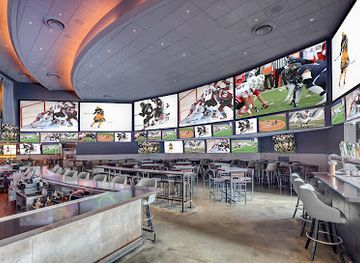
Discover the ultimate sports bar experience at Tom's Watch Bar in Los Angeles, where great food meets the excitement of live sports.
-
Bar
Seven Grand
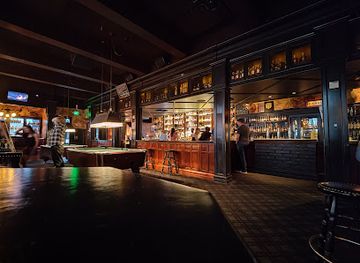
Explore the vibrant nightlife at Seven Grand, a stylish bar in LA's Financial District known for its extensive whiskey selection and lively atmosphere.
-
Bar
Good Times at Davey Wayne's
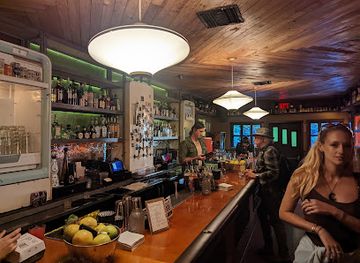
Discover the vibrant 70s atmosphere at Good Times at Davey Wayne's, a unique bar in Hollywood known for cocktails and lively nightlife.

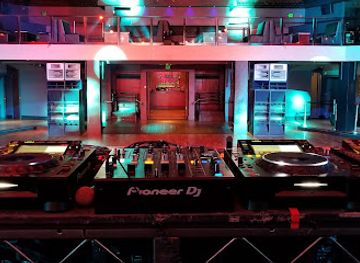
Best nightclubs in Los Angeles County
Evening life in Los Angeles County is decentralised, with different styles in Hollywood, Downtown Los Angeles, West Hollywood, Santa Monica, Long Beach, Pasadena and selected San Fernando Valley neighbourhoods. Visitors will find cocktail bars, music venues, comedy clubs, theatres, dance clubs and late-opening restaurants, but venues and operating patterns change frequently. Hollywood and Downtown Los Angeles have the greatest concentration of large-scale entertainment, while West Hollywood is noted for established nightlife and live performance. Long Beach combines bars, music and waterfront evening activity, and Pasadena has a more measured restaurant-and-bar scene around its historic commercial areas. Outside these centres, evening life often means neighbourhood restaurants, breweries, wine bars, small venues or traditional pubs rather than a major club circuit. Plan transport home in advance, particularly where late-night public transport is limited, and check current arrangements directly with venues.
-
Bar
La Cita Bar
Discover La Cita Bar in Los Angeles: A fusion of a lively dance club and a charming bar, perfect for nightlife lovers.
-
Night club
Savoy Entertainment Center
Experience the vibrant nightlife at Savoy Entertainment Center in Inglewood, where great music and a lively atmosphere come together for an unforgettable night.
-
Night club
Exchange LA
Discover the pulsating nightlife of Los Angeles at Exchange LA, a premier nightclub known for its electrifying beats and unforgettable experiences.
-
Night club
Catch One
Experience the best of Los Angeles nightlife at Catch One, featuring live music, diverse DJs, and an unforgettable atmosphere.



Best shops in Los Angeles County
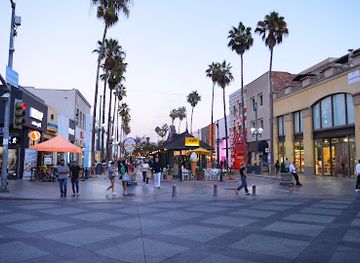
Shopping in Los Angeles County is as geographically diverse as its communities. Rodeo Drive in Beverly Hills is associated with luxury fashion, while Melrose Avenue, Abbot Kinney Boulevard in Venice and parts of West Hollywood offer independent fashion, design and lifestyle shops. Downtown Los Angeles has historic jewellery and wholesale districts alongside newer retail, and Pasadena's Old Pasadena combines restored commercial architecture with boutiques, restaurants and national retailers. The county's most distinctive shopping often lies in neighbourhood businesses: the San Gabriel Valley is known for Asian supermarkets, bakeries, tea shops and specialist food stores, while East Los Angeles and other communities offer Mexican groceries, crafts and regional products. Farmers' markets provide Californian produce, flowers and prepared foods, and galleries and studios sell photography, ceramics, jewellery and design objects in several arts districts. Visitors should distinguish permanent markets and shopping streets from temporary pop-ups, whose locations and schedules can change.
-
Shopping mall
Downtown Santa Monica
Experience the vibrant shopping, dining, and entertainment in Downtown Santa Monica, a must-visit destination for tourists on the California coast.
-
Outlet mall
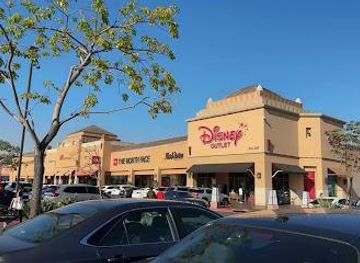
Citadel Outlets
Discover unbeatable deals and a vibrant shopping experience at Citadel Outlets, California's premier outlet mall featuring top brands and delicious dining.
-
Shopping mall
The Grove
Discover the charm of The Grove in Los Angeles, where shopping, dining, and entertainment come together in a picturesque outdoor setting.
-
Shopping mall
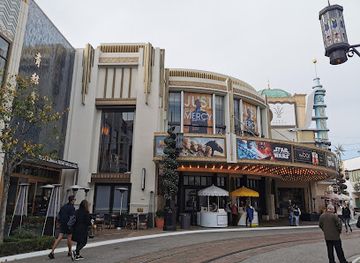
Ovation Hollywood
Experience the glamour of Hollywood at Ovation Hollywood, where shopping meets entertainment in a vibrant atmosphere.
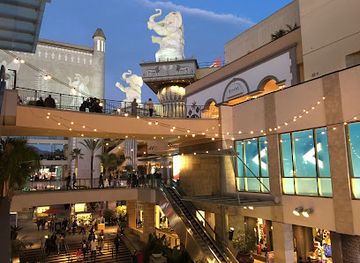
Get your free copy of our complete guide to Los Angeles County, delivered straight to you.
Everything on this page, from attractions and restaurants to essentials and local phrases, in one PDF you can read offline, print or share.
Already have an account? Sign in
Your Los Angeles County guide is ready.
We'll send it to · Not you? Sign out

Getting your guide ready…
We are putting together a fresh copy of the Los Angeles County guide. This can take up to a minute.
This can take a few moments. If your browser asks, choose Allow so the download can start. You'll find the guide in your Downloads folder.
Nothing happened? Download it again
Sorry, the guide is taking longer than usual. Please try again in a minute, or get it by email instead.
Los Angeles County essentials
Currency and Payment
Safety
Emergency Situations
Do's and Don'ts
Local Tips
From Eve
Local phrases worth knowing
You don't need to get them perfect. A few words go a long way, and locals appreciate the effort.
Basics
| English | Local | Say it |
|---|---|---|
| Hello | Hey | [hey] |
| Goodbye | Later | [lay-ter] |
| Yes | Yeah | [yeah] |
| No | Nah | [nah] |
| Please/You're welcome | No problem | [noh prob-lum] |
| Thank you | Thanks | [thanks] |
| Excuse me/Sorry | Excuse me | [ex-cuse me] |
| How are you? | How's it going? | [how's it go-ing] |
| Fine. And you? | Good. You? | [good. you?] |
| Do you speak English? | Do you speak English? | [do you speak English?] |
| I don't understand | I don't get it | [I don't get it] |
Eating & Drinking
| English | Local | Say it |
|---|---|---|
| I'd like to see the menu, please | Can I see the menu? | [can I see the men-u?] |
| I don't eat meat | I'm vegetarian | [I'm ve-ge-tar-i-an] |
| Cheers! | Cheers! | [cheers] |
| I would like to pay, please | Can I get the check? | [can I get the check?] |
Emergencies
| English | Local | Say it |
|---|---|---|
| Help! | Help! | [help] |
| Go away! | Leave me alone! | [leave me a-lone] |
| Call the Police! | Call 911! | [call nine-one-one] |
| Call a doctor! | Get a doctor! | [get a doc-tor] |
| I'm lost | I'm lost | [I'm lost] |
| I'm ill | I'm not feeling well | [I'm not feel-ing well] |
Shopping
| English | Local | Say it |
|---|---|---|
| I'd like to buy... | I want to buy... | [I want to buy...] |
| I'm just looking | Just browsing | [just brows-ing] |
| How much is it? | How much? | [how much?] |
| That's too expensive | That's way too much | [that's way too much] |
| Can you lower the price? | Can you drop the price? | [can you drop the price?] |
Time & Numbers
| English | Local | Say it |
|---|---|---|
| What time is it? | What time is it? | [what time is it?] |
| It's one o'clock | It's one | [it's one] |
| Half past (10) | It's half past ten | [it's half past ten] |
| Morning | Morning | [morn-ing] |
| Afternoon | Afternoon | [af-ter-noon] |
| Evening | Evening | [eve-ning] |
| Yesterday | Yesterday | [yes-ter-day] |
| Today | Today | [to-day] |
| Tomorrow | Tomorrow | [to-mor-row] |
| 1 | One | [one] |
| 2 | Two | [two] |
| 3 | Three | [three] |
| 4 | Four | [four] |
| 5 | Five | [five] |
| 6 | Six | [six] |
| 7 | Seven | [sev-en] |
| 8 | Eight | [eight] |
| 9 | Nine | [nine] |
| 10 | Ten | [ten] |
Transport & Directions
| English | Local | Say it |
|---|---|---|
| Where's a/the...? | Where's the...? | [where's the...?] |
| What's the address? | What’s the address? | [what’s the ad-dress?] |
| Can you show me (on the map)? | Can you show me on the map? | [can you show me on the map?] |
| When's the next (bus)? | When's the next bus? | [when's the next bus?] |
| A ticket (to ....) | A ticket to... | [a tick-et to...] |
History of Los Angeles County
Indigenous Homelands Before European Settlement
For thousands of years, the Los Angeles Basin, surrounding valleys, mountains and islands were home to Indigenous peoples including the Tongva, often known in older sources as the Gabrielino, as well as the Tataviam and Chumash in parts of the county's northern and western margins. Communities maintained sophisticated relationships with rivers, wetlands, oak woodlands, coastal waters and the islands. Tongva villages were distributed across much of the basin, and their language and cultural presence remain important today. Archaeological sites, place names and contemporary tribal organisations provide reminders that Los Angeles County's history did not begin with Spanish colonisation.
Spanish Missions and Colonial Administration
Spanish settlement expanded into the region in the late eighteenth century. Mission San Gabriel Arcángel was founded in 1771 near present-day Montebello, and the Mission San Fernando Rey de España was established in 1797 in the San Fernando Valley. Missions reorganised land, labour and Indigenous life through a coercive colonial system that caused profound disruption and population loss. In 1781, settlers founded El Pueblo de Nuestra Señora la Reina de los Ángeles de Porciúncula, the community that became Los Angeles. Mission buildings, historic districts and place names still reflect this period, although their interpretation increasingly acknowledges Indigenous experience.
Mexican Ranchos and the Early American Period
After Mexican independence from Spain in 1821, mission lands were secularised and large ranchos reshaped the landscape. Cattle, hides and tallow supported an economy connected to coastal trade, while families such as the Sepúlvedas, Domínguezes and Yorbas held extensive grants in different parts of the region. The Treaty of Guadalupe Hidalgo transferred California to the United States after the Mexican-American War, and Los Angeles County was formally organised in 1850. The change brought new legal and political systems, land disputes and rapid demographic transformation, while many rancho names and property boundaries survived in local geography.
Railways, Citrus and the Growth of Los Angeles
Rail connections in the late nineteenth century transformed Los Angeles County from a relatively small agricultural region into a major urban and commercial centre. New lines connected Los Angeles with the rest of the United States, encouraging migration, real-estate development and suburban expansion. Irrigation and citrus cultivation became especially important in the San Gabriel Valley, Pomona Valley and other inland districts, while oil discoveries and port development added further momentum. Pasadena, Long Beach and numerous streetcar suburbs developed distinctive identities. Many historic commercial streets, civic buildings, bungalows and gardens date from this period of accelerated growth.
Oil, Aviation and the Rise of the Film Industry
During the early twentieth century, oil production, manufacturing, aviation and entertainment helped establish the county as an international economic centre. Oil fields operated in areas including Signal Hill and the Los Angeles Basin, and Long Beach became an important port and industrial city. Aircraft production and research expanded around sites such as Burbank and the San Fernando Valley. Motion-picture studios clustered in Hollywood and other parts of the county, turning local locations, workers and technical expertise into a global cultural industry. The surviving studio districts, theatres and industry-related buildings are part of a much wider history than the Hollywood sign alone suggests.
War, Freeways and Postwar Suburbanisation
The Second World War brought a major expansion of shipbuilding, aircraft manufacture, military production and population. After 1945, freeways, mass automobile ownership and new housing transformed the San Fernando Valley, South Bay, Gateway Cities and inland suburbs. Los Angeles County became increasingly polycentric, with employment and cultural life spread across numerous municipalities rather than concentrated in one downtown. The period also produced major civic works, modernist architecture and environmental conflicts over water, air quality and development. The physical form of the present county, including its dependence on roads and its extensive suburban districts, was largely shaped during these decades.
Migration, Civil Rights and a Global County
From the mid-twentieth century onwards, Los Angeles County was reshaped by migration from across the United States and the world. Mexican American communities, African American Angelenos, Asian American populations and arrivals from Latin America, the Middle East and the Pacific built institutions, businesses and neighbourhoods that changed the county's culture and economy. The Watts uprising of 1965, the Chicano movement, the civil-rights struggle and later debates about immigration and policing form important parts of this history. Today, the county's languages, religious communities, foodways and commercial districts reflect this layered, continuing transformation.
Los Angeles County in Photos
Browse through our photo collection highlighting the charm and character of the destination.
Neighbouring regions of Los Angeles County
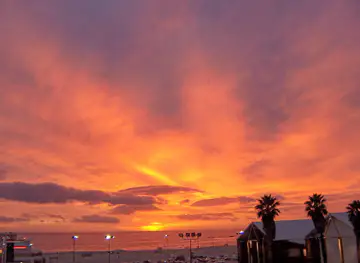
The closest regions to Los Angeles County, if you have time for more than one.
-

-
-

-

-


Swipe for more regions
Explore more
Explore more of California
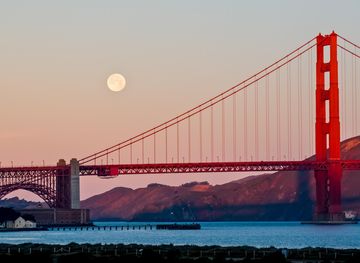
Discover California: A land of diverse landscapes, iconic cities, and endless adventures, from sun-soaked beaches to towering redwoods and vibrant cultural experiences.
Explore California