Background

Millard House, San Gabriel Valley Travel Guide

4.4 (8)

Discover La Miniatura, Frank Lloyd Wright's textile block masterpiece in Pasadena, a unique blend of pre-Columbian design and organic architecture, a must-see for architecture enthusiasts.

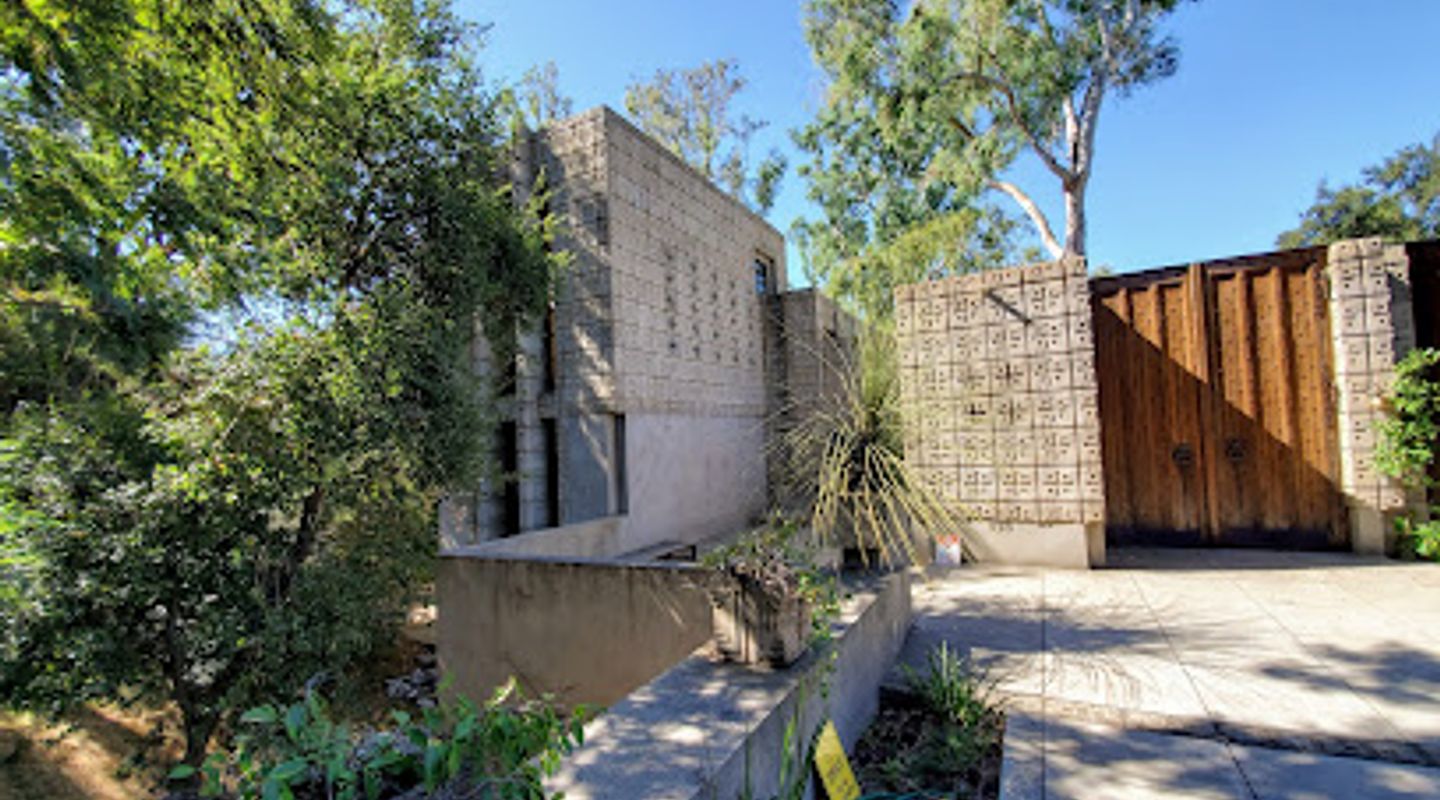
The Millard House, also known as La Miniatura, is a groundbreaking architectural creation by Frank Lloyd Wright in Pasadena, California. Built in 1923, it stands as the first of Wright's innovative 'textile block' houses, a departure from his earlier Prairie style. Constructed from patterned concrete blocks made with materials sourced directly from the property, the house seamlessly integrates with its natural surroundings. While not open for public tours, glimpses of this historic landmark can be enjoyed from the street, offering a unique perspective on Wright's experimentation with modular construction and pre-Columbian motifs. Located in the North Arroyo neighborhood, the Millard House is a testament to Wright's vision of organic architecture, where buildings harmonize with their environment. Its innovative design and historical significance make it a must-see for architecture enthusiasts visiting Pasadena, even if only from the exterior. The house represents a pivotal moment in Wright's career, showcasing his willingness to challenge conventions and explore new materials and techniques. Its enduring appeal lies in its unique blend of modernity and ancient influences, making it a truly remarkable architectural gem.

A brief summary to Millard House

  • 645 Prospect Crescent, Pasadena, North Arroyo, California, 91103, US
  • Click to display
Eve
From Eve

Know before you go

Hi, I'm Eve. Here are a few practical things to know before exploring Millard House.

  • While the house is private, admire the exterior details from Prospect Crescent and Rosemont Avenue for different perspectives.
  • Combine your visit with a walk through the surrounding North Arroyo neighborhood to appreciate other architectural styles.
  • Visit the nearby Gamble House, a Craftsman masterpiece, to contrast different architectural approaches in Pasadena.

Do you manage this location?

Take control to get all the benefits, like improved information, better appearance, and stronger visibility across AI-powered discovery. Learn more about listing your business on Evendo

Activate your presence

Other nearby places you may find interesting

The closest places of the same kind, if this one is not quite what you had in mind.

Explore Millard House on the Map

A handpicked selection of must-see spots near Millard House, mapped for you.

Unlock the Best of Millard House

Buy tickets

  • No tickets available

Book tours with entry

  • No tours available

Book tours without entry

  • No tours available

Getting There

  • Walking

    From the intersection of Arroyo Boulevard and Prospect Boulevard, walk west on Prospect Boulevard for approximately 0.3 miles. Turn right onto Prospect Crescent. The Millard House is located at 645 Prospect Crescent, a short walk up the street on your right. Note that street parking is available but can be limited.

  • Public Transport

    From Pasadena City Hall, take the Metro Bus Line 180 or 256 towards Pasadena. Ride for about 10-15 minutes until you reach the intersection of Colorado Blvd and Arroyo Parkway. Transfer to the Pasadena Transit Route 10 bus heading towards Sierra Madre Villa Station. Stay on the bus for approximately 15 minutes until you reach the stop at Linda Vista Ave & Prospect Blvd. From this stop, walk up Prospect Blvd for about 10 minutes until you reach Prospect Crescent. Millard House will be located at 645 Prospect Crescent on your left. A single ride on Pasadena Transit is $0.75. A day pass is $2.00.

  • Taxi/Ride-Share

    From Old Pasadena, a taxi or ride-share to Millard House will cost approximately $10-$15, depending on traffic. The ride is about 3 miles and should take around 10-15 minutes. Be sure to specify the address: 645 Prospect Crescent, Pasadena, CA 91103.

Discover more about Millard House

Nestled in the North Arroyo neighborhood of Pasadena, California, the Millard House, also known as La Miniatura, stands as a testament to Frank Lloyd Wright's architectural genius and his willingness to push boundaries. Completed in 1923, this residence marks a significant turning point in Wright's career, representing his first foray into the 'textile block' style, a departure from the Prairie School designs that had previously defined his work. Commissioned by Alice Millard, a rare-book dealer who had previously engaged Wright to design a home in Highland Park, Illinois, the Millard House embodies Wright's vision of organic architecture, where buildings seamlessly integrate with their natural surroundings. Seeking to harmonize the structure with the land, Wright designed the house to cling to a steep ravine, nestling it among the trees and incorporating materials sourced directly from the property. The house's most distinctive feature is its construction from patterned concrete blocks, a material Wright famously described as 'the cheapest (and ugliest) thing in the building world.' However, Wright saw potential in the humble concrete block, transforming it into a medium for artistic expression and modular construction. The blocks were created using sand, gravel, and minerals found on the property, further grounding the house in its environment. Each block features a symmetrical pattern of a cross with a square in each corner, a motif inspired by pre-Columbian designs, reflecting the architectural culture of the 1920s. The use of roughly textured, earth-toned blocks was a deliberate choice, intended to blend the house with the color and form of the trees and hillside. Wright sought to create a structure that appeared to emerge organically from the landscape, blurring the lines between the built environment and the natural world. He later remarked that the Millard House 'belonged to the ground on which it stood,' a sentiment that encapsulates his philosophy of organic architecture. The Millard House is not only an architectural marvel but also a testament to Wright's innovative approach to construction. The use of modular concrete blocks allowed for a flexible and cost-effective building system, a concept that Wright hoped would enable ordinary people to build their own homes. While the project ultimately exceeded its initial budget, it demonstrated the potential of modular construction and the transformative power of design. The interior of the Millard House is as remarkable as its exterior. The three-story structure features a double-height living room, four bedrooms, four baths, a kitchen, and a formal dining room, all meticulously arranged to create a harmonious and functional living space. A studio, designed by Wright's son Lloyd, was added in 1926, further expanding the house's footprint and adding to its architectural significance. Throughout the house, Wright incorporated elements that reflected his love of natural materials and his attention to detail. The textile concrete blocks filter natural light into the interior spaces, creating a warm and inviting atmosphere. A reflecting pool outside the kitchen adds to the sense of tranquility and connection to nature. The Millard House has been recognized for its architectural significance and has been listed on the National Register of Historic Places since 1976. It stands as a lasting example of Wright's innovation, creativity, and his commitment to creating buildings that are both beautiful and functional. While the Millard House remains a private residence and is not open for public tours, glimpses of this architectural gem can be enjoyed from the street. Visitors can admire the intricate patterns of the concrete blocks, the way the house nestles into its hillside setting, and the overall sense of harmony and balance that Wright achieved. The surrounding neighborhood also features other notable examples of Arts and Crafts-style architecture, making it a worthwhile destination for architecture enthusiasts. The Millard House exemplifies a turning point in Wright's practice as he expanded beyond the Prairie Style for which he had become known. Its design was inspired by pre-Columbian motifs, which evoked a sense of exoticism. Evidence of Mesoamerican designs are seen in the house's heavy massing, its flat roofs, geometric arrangement of spaces, and the concrete block pattern. The house stands out as a lasting example of Wright's innovations in building technology. Visiting the Millard House offers a unique opportunity to witness the evolution of Frank Lloyd Wright's architectural vision and to appreciate the beauty and innovation of his 'textile block' style. Even from the exterior, the house's distinctive design and its seamless integration with the landscape are sure to leave a lasting impression. To fully appreciate the architectural significance of the Millard House, consider exploring other Frank Lloyd Wright sites in the Los Angeles area, such as the Ennis House, Storer House, and Samuel Freeman House. These 'textile block' houses offer further insights into Wright's experimentation with modular construction and his commitment to creating buildings that are both modern and timeless. Whether you are an architecture aficionado or simply appreciate beauty and innovation, a visit to the Millard House is a must for anyone exploring the cultural landscape of Pasadena. Its unique design, historical significance, and its embodiment of Wright's vision of organic architecture make it a truly remarkable destination.
Mobile App

Your all‑in‑one travel companion app

Explore expert travel guides, compare and book tours, experiences, hotels, and more—all from the palm of your hand. Download now for seamless trip planning wherever your wanderlust takes you.


Explore More of San Gabriel Valley

Looking beyond Millard House? Discover San Gabriel Valley for broader travel guides, local hot-spots, and regional highlights.

Explore San Gabriel Valley

Select Currency