
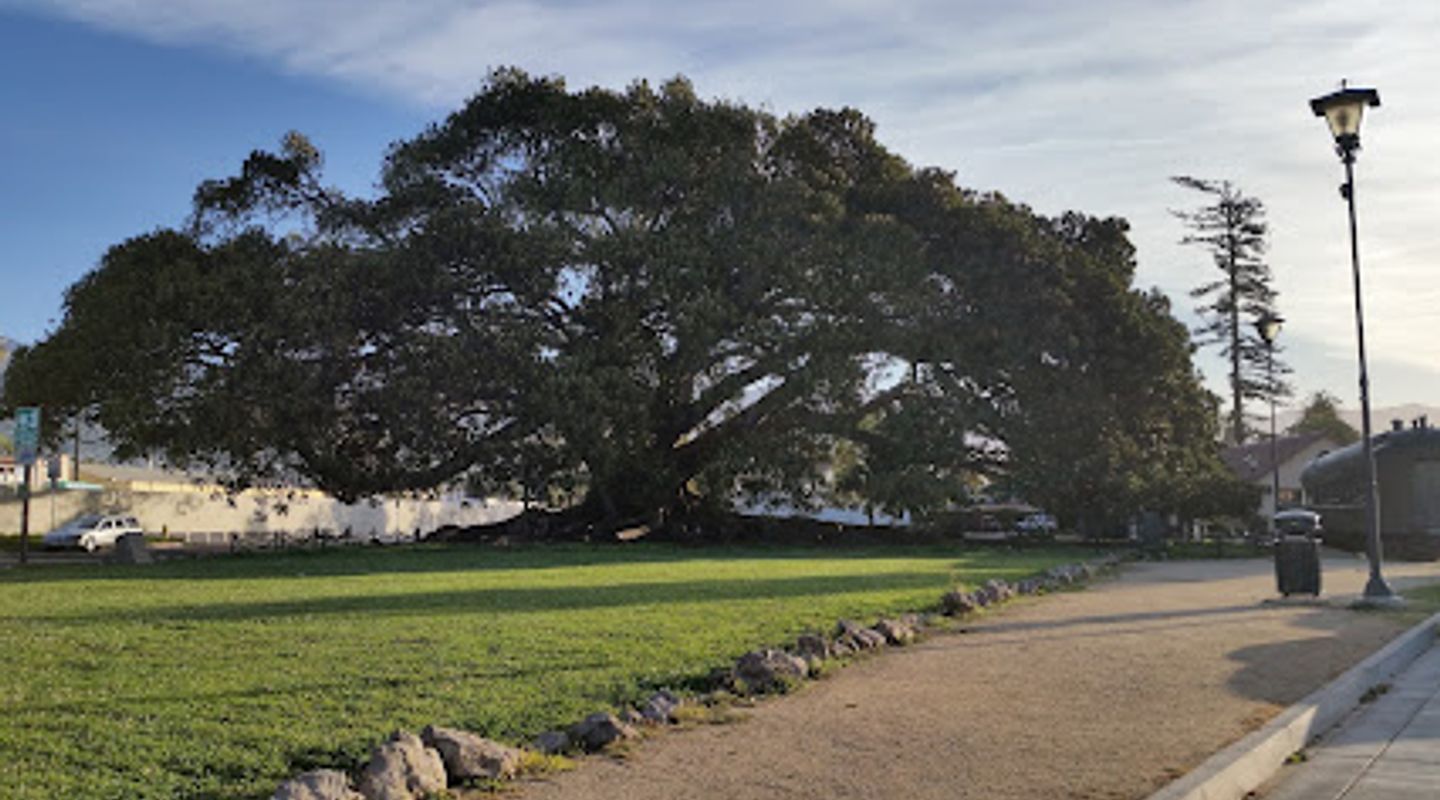
Moreton Bay Fig Tree, South Coast Travel Guide
Discover Santa Barbara's iconic Moreton Bay Fig Tree, a majestic natural landmark and believed to be the largest of its kind in the U.S., offering a tranquil escape near the Amtrak station.
Behold the grandeur of Santa Barbara's Moreton Bay Fig Tree, a living landmark gracing the city since 1877. This magnificent Ficus macrophylla, native to Australia, is believed to be the largest of its kind in the United States, boasting a sprawling canopy that stretches over 175 feet and a trunk with a circumference exceeding 41 feet. Its colossal buttress roots create a captivating spectacle, resembling the tentacles of a giant octopus. Located near the Amtrak station, this urban oasis offers a tranquil escape and a stunning photo opportunity, inviting visitors to marvel at nature's artistry amidst the city's vibrant atmosphere. A true testament to time and nature, the Moreton Bay Fig is a must-see for any visitor to Santa Barbara, offering a unique glimpse into the region's history and natural beauty.
A brief summary to Moreton Bay Fig Tree
- Chapala St & Montecito Street, Santa Barbara, Lower State, CA, 93101, US

Know before you go
Hi, I'm Eve. Here are a few practical things to know before exploring Moreton Bay Fig Tree.
- Visit during the early morning or late afternoon for the best lighting for photography, capturing the tree's silhouette against the sky.
- Combine your visit with a stroll through the nearby Funk Zone, known for its art galleries, wine tasting rooms, and unique shops.
- Take a moment to appreciate the tree's massive root system, but be sure to stay behind the protective barriers to help preserve its health.
- Check out the plaque at the base of the tree to learn more about its history and significance to Santa Barbara.
- Pack a picnic and enjoy a relaxing lunch under the shade of the tree's expansive canopy.
Do you manage this location?
Take control to get all the benefits, like improved information, better appearance, and stronger visibility across AI-powered discovery. Learn more about listing your business on Evendo
Activate your presenceOther nearby places you may find interesting
The closest places of the same kind, if this one is not quite what you had in mind.
Explore Moreton Bay Fig Tree on the Map
A handpicked selection of must-see spots near Moreton Bay Fig Tree, mapped for you.
Unlock the Best of Moreton Bay Fig Tree
Buy tickets
-
No tickets available
Book tours with entry


Getting There
-
Walking
From State Street Promenade, head towards the Amtrak Station. Walk southwest on State Street, then turn left onto W Montecito Street. The Moreton Bay Fig Tree will be on your right, adjacent to the train station. The walk is approximately 5-10 minutes. The area around the tree is wheelchair accessible.
-
Public Transport
Santa Barbara Metropolitan Transit District (MTD) buses serve the Amtrak Station, near the Moreton Bay Fig Tree. Several routes connect to the Transit Center at 1020 Chapala Street. Check the MTD website or app for the most up-to-date schedules and routes. A single ride fare is between $0.85 and $1.75.
-
Taxi/Ride-Share
Taxis and ride-sharing services (Uber/Lyft) are readily available throughout Santa Barbara. A short ride from downtown to the Moreton Bay Fig Tree will typically cost between $8 and $15, depending on the service and time of day. Be sure to confirm the fare before starting your trip. Metered taxi rates start at $2.90 for the first drop and $4.00 per mile.
-
Driving
If driving, navigate to the Amtrak station at 209 State Street. Limited street parking is available in the vicinity, but it can be challenging to find during peak hours. There are paid parking lots nearby, with hourly rates typically ranging from $2 to $4. Be aware of parking restrictions and time limits to avoid fines.
Discover more about Moreton Bay Fig Tree













Your all‑in‑one travel companion app
Explore expert travel guides, compare and book tours, experiences, hotels, and more—all from the palm of your hand. Download now for seamless trip planning wherever your wanderlust takes you.


Explore More of South Coast
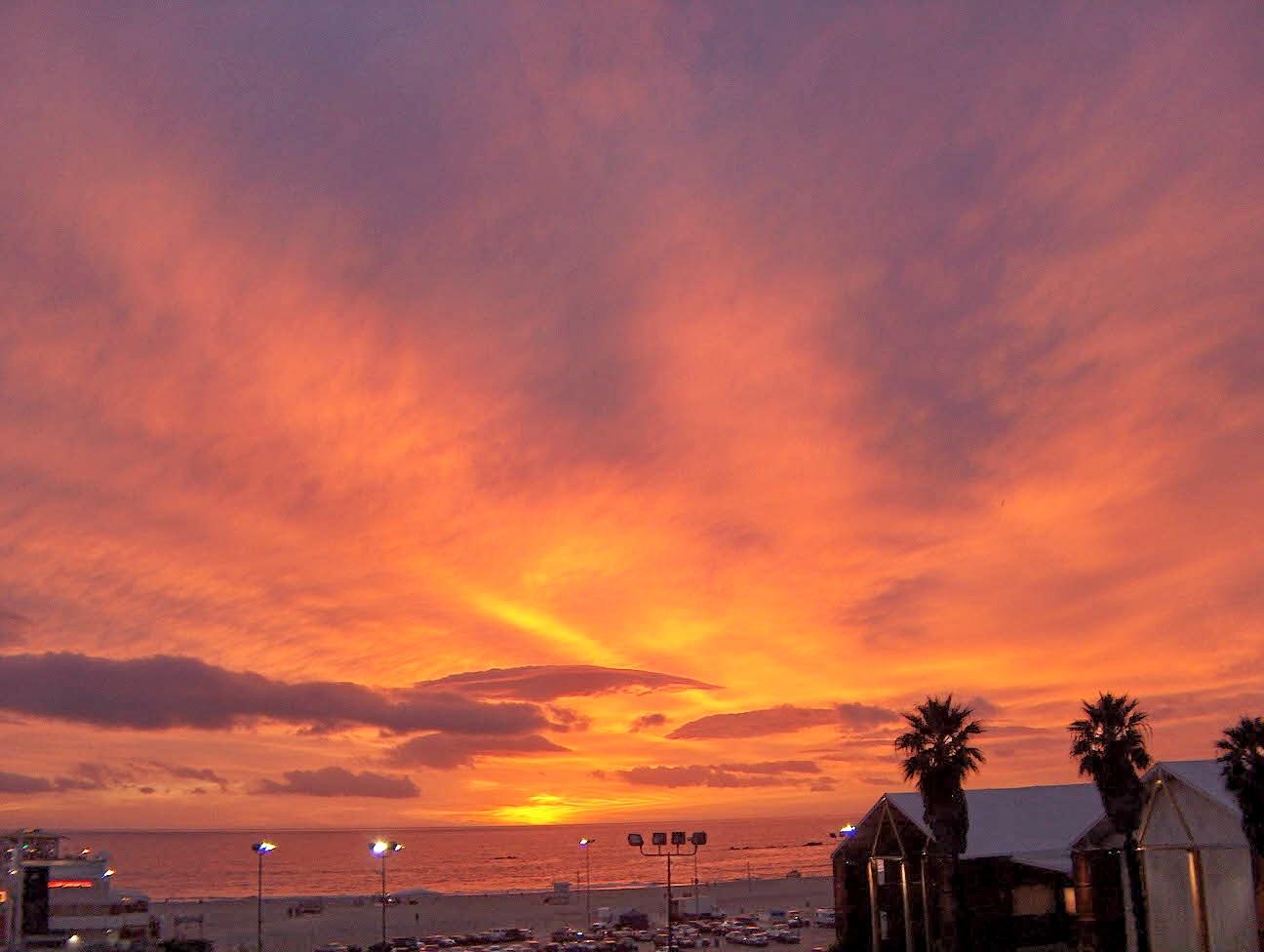
Looking beyond Moreton Bay Fig Tree? Discover South Coast for broader travel guides, local hot-spots, and regional highlights.
Explore South Coast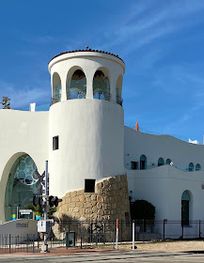
Ignite your curiosity at Santa Barbara's MOXI, The Wolf Museum of Exploration + Innovation, where hands-on exhibits blend science, technology, and art for an unforgettable learning experience.
Discover the Andalucia Building in Santa Barbara: A unique Moorish-style landmark on State Street, blending history, architecture, and downtown charm for an unforgettable experience.
