

Harbor Point (Stamford) Travel Guide - Free
Explore Harbor Point in Stamford with Evendo's free guide. Find the best shops, historic streets, restaurants, and gems on web or mobile.


Harbor Point Stamford blends waterfront walks, industrial heritage, Commons Park, modern dining and South End culture near Connecticut’s rail hub.
Waterfront Setting and Urban Character
Harbor Point is a modern waterfront district in Stamford’s South End, a short distance south of the city centre and Stamford Transportation Center. Its streets, apartments, offices, restaurants and public spaces occupy a former industrial landscape beside Stamford Harbor, where working waterfront traditions have given way to mixed-use development. The area is recognised locally as Harbor Point, although it remains closely connected to the broader South End and its historic streets.Read more about Harbor Point
From Industry to Public Space
Eating, Walking and Waterfront Life
Best landmarks in Harbor Point
The most important landmarks in Harbor Point are tied to its industrial inheritance and waterfront redevelopment. The former Yale & Towne manufacturing complex is the defining historical reference, representing the South End’s role in Stamford’s lock and hardware industry and providing a contrast to the district’s newer residential architecture. Commons Park is a contemporary civic landmark: its lawns and landscaped paths make public space a visible part of the regenerated waterfront rather than an incidental gap between buildings. Harbor Point’s newer towers and mixed-use blocks are also significant as a record of Stamford’s twenty-first-century shift towards denser coastal development. Nearby portions of the South End Historic District contain additional historic buildings, but they should be described as part of the surrounding South End rather than automatically assigned to Harbor Point. Together, these places show the neighbourhood’s connection to both manufacturing and redevelopment.
-
Brewery
Third Place by Half Full Brewery
Experience the best of craft brewing and artisanal coffee at Third Place by Half Full Brewery in Stamford, Connecticut, a vibrant hub for relaxation and social events.
7 min walk · 0.5 km from neighbourhood centre
-
Historical landmark
Stamford Old Town Hall
Discover the historical charm of Stamford Old Town Hall, a beautifully preserved landmark showcasing 19th-century architecture in downtown Connecticut.
4 min walk · 0.3 km from neighbourhood centre
-
Historical landmark
Landmark Tower
Explore the rich history and stunning architecture of Landmark Tower, a premier historical landmark in downtown Stamford, Connecticut.
6 min walk · 0.5 km from neighbourhood centre


Explore Harbor Point on the map
A handpicked selection of must-see spots in Harbor Point, mapped for you.
Best hotels in Harbor Point
Best restaurants in Harbor Point
Harbor Point has one of Stamford’s more concentrated modern dining scenes, centred on Harbor Point Road and the newer mixed-use buildings around the waterfront. Restaurants and cafés occupy a range of settings, from casual spaces suited to an informal meal to polished venues designed for residents, office workers and visitors. Outdoor seating and views towards the harbour can be part of the appeal in warmer months, although individual arrangements vary. The district’s food culture reflects its redevelopment: rather than a single historic speciality, it offers contemporary American dining alongside international influences and familiar café formats. The wider South End adds further options in converted industrial and street-level premises, but the restaurant clusters should not be confused with Stamford’s downtown dining streets. Checking current opening arrangements is sensible, since commercial tenants and seasonal offerings can change as the district continues to evolve.
-
Australian
Flinders Lane Kitchen & Bar
Discover Flinders Lane Kitchen & Bar - where Australian cuisine meets creative cocktails in a lively downtown setting.
6 min walk · 0.5 km from neighbourhood centre
-
Pizza
T's Wine Bar + Kitchen
Discover exceptional pizza and fine wines at T's Wine Bar + Kitchen in Stamford - where every meal becomes a memorable occasion.
6 min walk · 0.5 km from neighbourhood centre


Best bars in Harbor Point
After dark, Harbor Point is more associated with restaurants, bars and social waterfront spaces than with a dense nightclub circuit. Evening activity gathers around the newer mixed-use buildings and dining venues, where residents, office workers and visitors create a sociable atmosphere without making the whole district a late-night entertainment strip. Some establishments offer drinks alongside dinner and may have outdoor seating or event programming, while the adjacent South End retains a quieter, more residential character away from the main commercial pockets. The district’s open spaces can host seasonal cultural or community events, but schedules and access vary. Visitors should follow venue policies, keep noise down near apartment buildings and arrange their return journey in advance if staying late, particularly when walking beyond the best-lit streets towards the station or less active industrial areas.
-
Australian
Flinders Lane Kitchen & Bar
Experience the best of Australian cuisine and cocktails at Flinders Lane Kitchen & Bar, a vibrant dining destination in Downtown Stamford.
6 min walk · 0.5 km from neighbourhood centre
-
Pizza
T's Wine Bar + Kitchen
Discover the flavors of gourmet pizza and fine wines at T's Wine Bar + Kitchen in Stamford, Connecticut, where culinary excellence meets a cozy atmosphere.
6 min walk · 0.5 km from neighbourhood centre
-
Bar
Peruvian Club
Discover the lively Peruvian Club in Stamford, CT - a vibrant bar offering authentic Peruvian drinks and a social atmosphere perfect for tourists.
8 min walk · 0.6 km from neighbourhood centre


Best nightclubs in Harbor Point
After dark, Harbor Point is more associated with restaurants, bars and social waterfront spaces than with a dense nightclub circuit. Evening activity gathers around the newer mixed-use buildings and dining venues, where residents, office workers and visitors create a sociable atmosphere without making the whole district a late-night entertainment strip. Some establishments offer drinks alongside dinner and may have outdoor seating or event programming, while the adjacent South End retains a quieter, more residential character away from the main commercial pockets. The district’s open spaces can host seasonal cultural or community events, but schedules and access vary. Visitors should follow venue policies, keep noise down near apartment buildings and arrange their return journey in advance if staying late, particularly when walking beyond the best-lit streets towards the station or less active industrial areas.
-
Night club
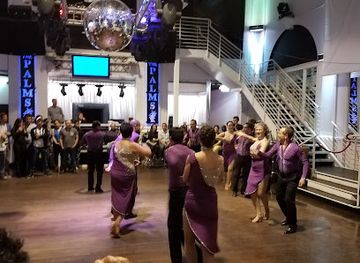
The Palms Night Club
Experience the electrifying nightlife at The Palms Night Club in Stamford, where music, dancing, and fun come together for an unforgettable evening.
5 min walk · 0.4 km from neighbourhood centre
-
Bar
Peruvian Club
Discover the lively Peruvian Club in Stamford, CT - a vibrant bar offering unique drinks and an energetic atmosphere perfect for unwinding and socializing.
8 min walk · 0.6 km from neighbourhood centre

Best shops in Harbor Point
Shopping in Harbor Point is limited and mixed-use rather than comparable with a traditional high street or enclosed regional mall. Street-level premises around the newer development provide convenience retail, cafés and services alongside restaurants, while the district’s strongest commercial identity remains residential and dining-oriented. Visitors interested in local character will find more to observe in the relationship between contemporary ground-floor businesses, landscaped public areas and the older industrial streets of the surrounding South End than in a concentration of specialist shops. Retail occupancies can change as development phases mature, so specific stock and opening arrangements should be checked locally. For a broader shopping selection, visitors generally need to travel beyond Harbor Point into downtown Stamford or other parts of the city; the neighbourhood is best approached as a place for waterfront walking, eating and urban observation rather than a dedicated shopping destination.
-
Shopping mall
Stamford Town Center
Discover Stamford Town Center, the ultimate shopping destination in downtown Stamford, CT, featuring diverse stores, delightful dining, and vibrant events.
4 min walk · 0.3 km from neighbourhood centre
-
Gift shop
The Accessory Store
Explore unique gifts and local craftsmanship at The Accessory Store in Stamford, a must-visit for every traveler seeking special souvenirs.
8 min walk · 0.6 km from neighbourhood centre
-
Antique store
The Antique And Artisan Gallery
Explore a world of vintage charm and craftsmanship at The Antique And Artisan Gallery, where history and artistry come together in Stamford, CT.
7 min walk · 0.5 km from neighbourhood centre
-
Gift shop
As Seen On TV Store
Explore the As Seen On TV Store in Stamford for unique gifts and quirky gadgets inspired by your favorite TV shows and commercials.
4 min walk · 0.3 km from neighbourhood centre


Harbor Point essentials
Getting There
Getting Around
Safety
Emergency Situations
Do's and Don'ts
Local Tips

From Eve
Local phrases worth knowing
You don't need to get them perfect. A few words go a long way, and locals appreciate the effort.
Basics
| English | Local | Say it |
|---|---|---|
| Hello | Hey | [hey] |
| Goodbye | Later | [lay-ter] |
| Yes | Yeah | [yeah] |
| No | Nah | [nah] |
| Please/You're welcome | Please | [pleez] |
| Thank you | Thanks | [thanks] |
| Excuse me/Sorry | Sorry | [sor-ee] |
| How are you? | How you doin'? | [how yu do-in] |
| Fine. And you? | Good. You? | [good yu] |
| Do you speak English? | Speak English? | [speek ing-lish] |
| I don't understand | Don't get it | [dont get it] |
Eating & Drinking
| English | Local | Say it |
|---|---|---|
| I'd like to see the menu, please | Menu, please | [men-yu pleez] |
| I don't eat meat | No meat | [no meet] |
| Cheers! | Cheers! | [cheers] |
| I would like to pay, please | Pay, please | [pay pleez] |
Emergencies
| English | Local | Say it |
|---|---|---|
| Help! | Help! | [help] |
| Go away! | Leave me | [leave me] |
| Call the Police! | Police! | [puh-lease] |
| Call a doctor! | Doctor! | [doc-tor] |
| I'm lost | Lost | [lost] |
| I'm ill | Sick | [sik] |
Shopping
| English | Local | Say it |
|---|---|---|
| I'd like to buy... | I want that | [I want that] |
| I'm just looking | Just looking | [just look-ing] |
| How much is it? | How much? | [how much] |
| That's too expensive | Too much | [too much] |
| Can you lower the price? | Lower the price? | [low-er the price] |
Time & Numbers
| English | Local | Say it |
|---|---|---|
| What time is it? | What time? | [what time] |
| It's one o'clock | It's one | [its one] |
| Half past (10) | Half past ten | [half past ten] |
| Morning | Morning | [mor-ning] |
| Afternoon | Afternoon | [af-ter-noon] |
| Evening | Evening | [ee-ven-ing] |
| Yesterday | Yesterday | [yes-ter-day] |
| Today | Today | [to-day] |
| Tomorrow | Tomorrow | [to-mor-row] |
| 1 | One | [wun] |
| 2 | Two | [too] |
| 3 | Three | [three] |
| 4 | Four | [four] |
| 5 | Five | [five] |
| 6 | Six | [six] |
| 7 | Seven | [sev-en] |
| 8 | Eight | [ate] |
| 9 | Nine | [nine] |
| 10 | Ten | [ten] |
Transport & Directions
| English | Local | Say it |
|---|---|---|
| Where's a/the...? | Where is...? | [where is] |
| What's the address? | Address? | [ad-dress] |
| Can you show me (on the map)? | Show me | [show me] |
| When's the next (bus)? | Next (bus)? | [next bus] |
| A ticket (to ....) | Ticket | [tic-ket] |
History of Harbor Point
The South End’s Industrial Waterfront
Before Harbor Point became a planned mixed-use district, this part of Stamford was part of the South End’s industrial waterfront. Factories, warehouses, transport links and harbour-related activity made the area important to the city’s manufacturing economy, while streets near the water developed a practical, working character rather than the formal civic identity of central Stamford. The shoreline and industrial plots also separated the area from much of the residential city. This history remains visible in the scale of older buildings and in the South End’s surviving industrial streetscape.
Yale & Towne in Stamford
The Yale & Towne Manufacturing Company became one of the most significant industrial names associated with Stamford’s South End. The company produced locks and related hardware, and its extensive factory complex helped establish the area as a centre of manufacturing and employment. Industrial activity brought workers, suppliers and transport requirements to the waterfront, shaping the physical form of the district for generations. Buildings connected with the former complex later became an important part of the architectural and historical context for Harbor Point’s redevelopment.
Preserving the South End’s Character
As Stamford’s older industries declined and land uses changed, the South End faced the wider challenge of adapting large industrial properties without erasing the area’s past. The South End Historic District, listed on the National Register of Historic Places in 1979, helped recognise the value of surviving historic buildings and streets. Harbor Point is not identical to the historic district, but the two areas meet within a wider South End landscape in which newer construction sits alongside older industrial and residential fabric.
Harbor Point Redevelopment
During the twenty-first century, former industrial land in the South End was redeveloped as Harbor Point, a large mixed-use project combining housing, offices, restaurants, public spaces and redesigned streets. Development proceeded in phases, changing the waterfront edge from a largely industrial zone into a denser urban neighbourhood. Commons Park and other landscaped areas introduced public-facing spaces into a district once dominated by private industrial premises. The result is a contemporary extension of Stamford’s centre, while the continuing presence of older buildings and the nearby South End Historic District keeps the area’s industrial origins legible.
Harbor Point in Photos
Browse through our photo collection highlighting the charm and character of the destination.
Neighbourhoods near Harbor Point
The closest neighbourhoods to Harbor Point, if you have time for more than one stop.
-

-


Swipe for more neighbourhoods
Explore more

Explore more of Stamford
Stamford, Connecticut combines coastal parks, historic homes, arts venues, diverse dining and New England city life with accessible urban sightseeing.
Explore Stamford