

Free Stamford Travel Guide & Mobile App
Plan your Stamford trip with Evendo. Get free guides to top attractions, restaurants, hotels, and bars. Web access or download the mobile app.


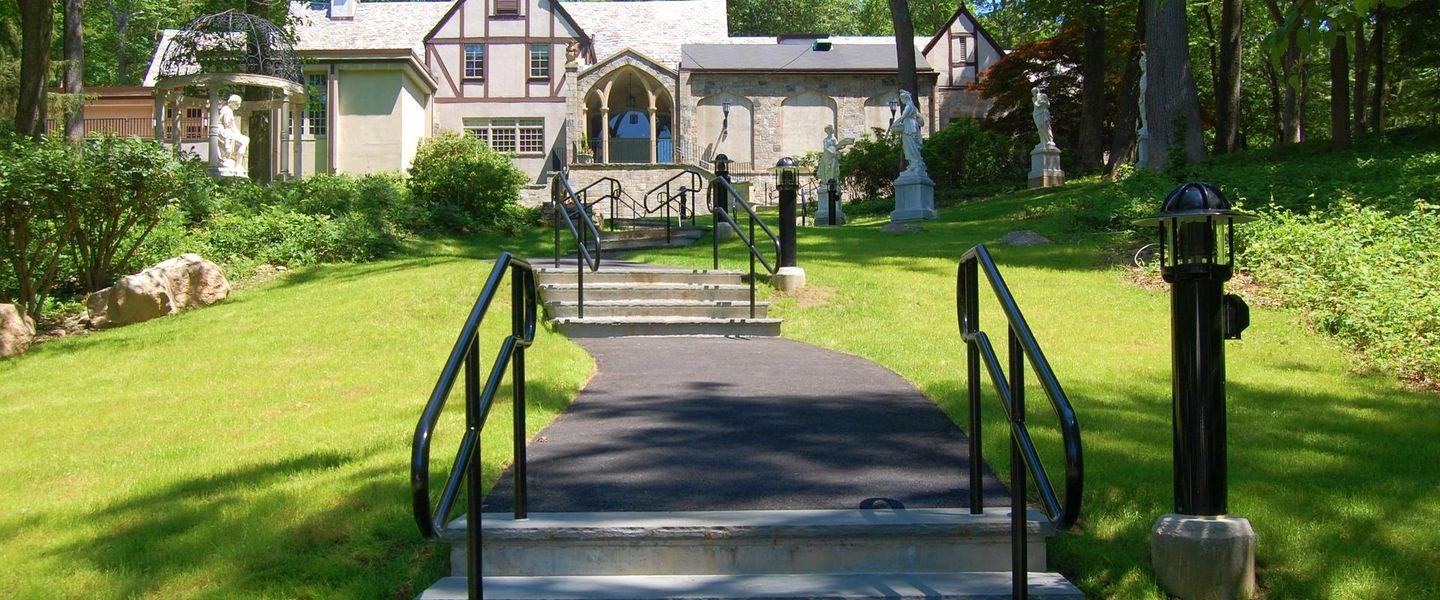


Stamford, Connecticut combines coastal parks, historic homes, arts venues, diverse dining and New England city life with accessible urban sightseeing.
A Coastal City in Fairfield County
Stamford occupies a distinctive position on Connecticut’s southwestern coast, where the built-up energy of Fairfield County meets Long Island Sound. Its centre is shaped by office towers, theatres, restaurants and Metro-North connections, yet the city also extends towards tidal inlets, wooded estates and residential neighbourhoods with a distinctly New England grain. Downtown, Harbor Point and the waterfront sit within easy reach of one another, while Cove Island Park, Cummings Park and Shippan Point provide open views across the Sound.Read more about Stamford
History in the Modern Streetscape
Arts, Parks and Everyday City Life
When is the best time to visit Stamford?
Best: June, August–September · 24–28°C| Month | High (°C) | Rainfall (mm) |
|---|---|---|
| January | 3 | 89 |
| February | 4 | 81 |
| March | 9 | 98 |
| April | 15 | 102 |
| May | 21 | 108 |
| June (best) | 26 | 106 |
| July | 28 | 101 |
| August (best) | 28 | 103 |
| September (best) | 24 | 103 |
| October | 18 | 104 |
| November | 12 | 103 |
| December | 5 | 98 |
Getting to and around Stamford
How to get there
Transportation
Best attractions in Stamford
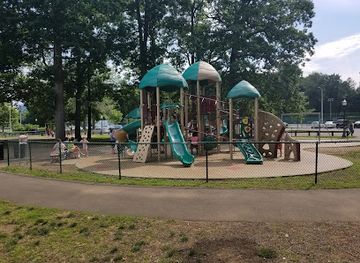
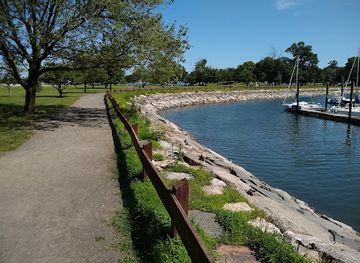
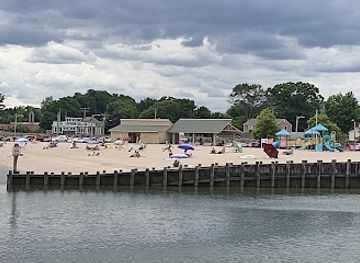
Stamford’s attractions range from woodland trails and natural-history exhibits to waterfront recreation and live performance. The Stamford Museum & Nature Center combines galleries, historic buildings, working-farm elements and wooded grounds, while the Bartlett Arboretum and Gardens offers a quieter landscape of trees, gardens and walking paths. Along Long Island Sound, Cove Island Park has beaches, salt-marsh habitat, open lawns and views towards the water; Cummings Park provides another accessible shoreline setting. In the centre, the Palace Theatre presents concerts, comedy and other performances in a restored historic venue, and the Ferguson Library adds exhibitions, talks and local resources. The Hoyt-Barnum House gives a more intimate introduction to Stamford’s colonial era. Downtown streets, Harbor Point’s public spaces and the city’s varied restaurants complete a sightseeing experience that shifts noticeably between urban architecture, cultural institutions and coastal landscape.
-
Tourist attraction
Scalzi Park
Stamford's Scalzi Park: A vibrant hub for recreation, sports, and community events, offering green spaces and activities for all ages.
5 min drive · 1.8 km from city centre
-
Tourist attraction
Cove Island
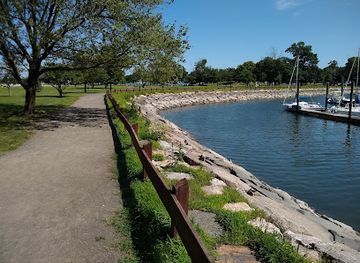
Experience the beauty of Cove Island, a stunning coastal park in Stamford, CT, perfect for relaxation, recreation, and breathtaking views.
16 min drive · 5.2 km from city centre
-
Tourist attraction
Mill River Park
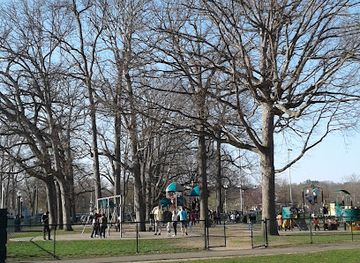
Experience the lush landscapes and recreational charm of Mill River Park, a serene urban oasis in Stamford, Connecticut, perfect for family outings and relaxation.
8 min drive · 2.8 km from city centre
-
Tourist attraction
West Beach
Escape to Stamford's scenic West Beach for sun, sand, and a variety of recreational activities along the Long Island Sound.
15 min drive · 5.0 km from city centre
Best landmarks in Stamford
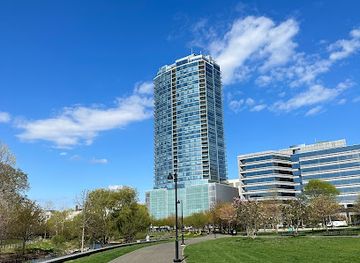
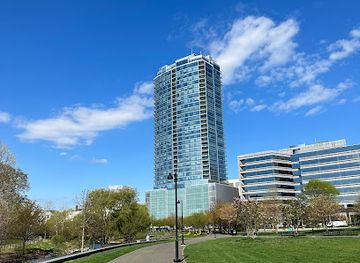
Stamford’s landmarks express several distinct chapters of its development. The Hoyt-Barnum House, traditionally dated to about 1699, is the city’s best-known surviving early domestic building and offers a tangible link with the colonial settlement. Old Town Hall, on Atlantic Street, represents the civic architecture of an earlier urban era, while the Ferguson Library stands as an important cultural and educational institution in the contemporary centre. The Palace Theatre is significant both as a performing-arts venue and as a historic architectural presence in Downtown. Stamford’s modern skyline and Transportation Center mark the city’s transformation into a major regional business and rail hub, whereas Cove Island and Shippan’s shoreline spaces express its older relationship with Long Island Sound. Together these places show a city shaped by settlement, civic growth, transport, industry and waterfront geography.
-
Park
Scalzi Park
Explore the lush landscapes and recreational activities of Scalzi Park, a serene urban gem in Stamford, Connecticut perfect for relaxation and fun.
5 min drive · 1.8 km from city centre
-
Park
Cove Island
Discover the beauty of Cove Island, a serene park and public beach in Stamford, Connecticut, perfect for outdoor activities and relaxation.
16 min drive · 5.2 km from city centre
-
Park
Mill River Park
Explore Mill River Park, an urban oasis in Stamford, CT, featuring lush landscapes, scenic river views, and fun activities for all ages.
8 min drive · 2.8 km from city centre
-
Restaurant
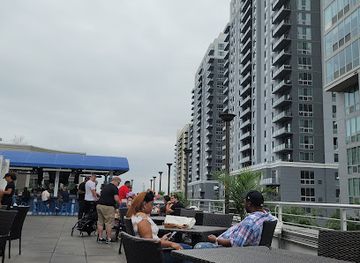
Sign of the Whale
Discover the vibrant flavors of American cuisine at Sign of the Whale, a premier dining destination in Stamford's South End, perfect for food lovers and social gatherings.
13 min drive · 4.4 km from city centre
Explore Stamford on the map
Plan your Stamford trip on one map. See where the top attractions, landmarks, restaurants, bars and hotels are, find what's near where you're staying, and book hotels and experiences in a few clicks.
Neighbourhoods in Stamford
-

-

-


Swipe for more neighbourhoods
Best hotels in Stamford
Best restaurants in Stamford
Stamford’s dining scene reflects both its coastal Connecticut setting and its international population. Italian restaurants and bakeries have a long presence in the city, while seafood, New England-style cooking and contemporary American menus draw on the nearby Sound and wider regional traditions. Downtown, Bedford Street and the restaurant areas around Harbor Point offer varied choices, from cafés and casual meals to more polished dining rooms. Asian cuisines, Latin American cooking, Middle Eastern specialities and other global traditions are well represented, making the city’s food culture broader than its traditional New England image. Markets and independent food shops provide opportunities to find prepared foods, pastries and ingredients, while bars and cafés support the city’s after-work and weekend social life. Menus and establishments change, but Stamford’s strongest culinary character lies in the meeting of established immigrant traditions, regional produce and modern urban dining.
-
Breakfast
The Stamford Diner
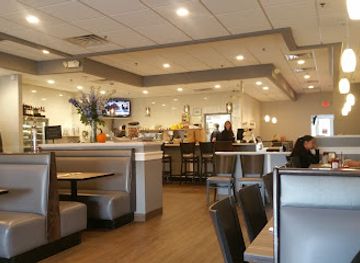
Discover The Stamford Diner: Your ultimate breakfast destination in Stamford, CT with delicious food and a welcoming atmosphere.
13 min drive · 4.2 km from city centre
-
Breakfast
Elm Street Diner
Discover Elm Street Diner in Stamford: your go-to destination for delicious breakfasts and comforting brunches featuring American classics with a twist.
11 min drive · 3.7 km from city centre
-
Restaurant
Sign of the Whale
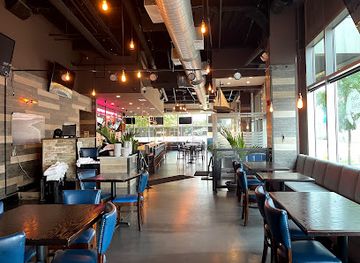
Discover Sign of the Whale: A vibrant American fusion restaurant and bar in Stamford’s South End offering delightful dishes in a welcoming atmosphere.
13 min drive · 4.4 km from city centre
-
Spanish
Barcelona Wine Bar
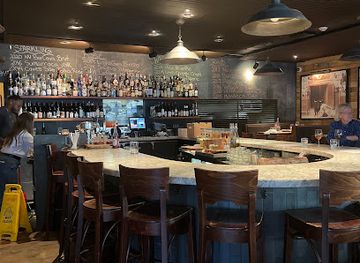
Savor authentic Spanish cuisine at Barcelona Wine Bar in Stamford with exquisite tapas and an extensive selection of fine wines.
8 min drive · 2.8 km from city centre

Best bars in Stamford
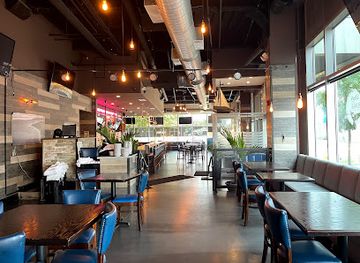
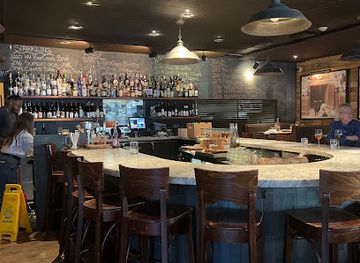
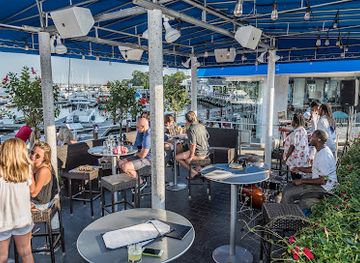
Stamford’s evening life is concentrated mainly Downtown, around Bedford Street, Columbus Park and the developing waterfront areas, rather than in one large club district. Bars range from relaxed pubs and sports-oriented venues to cocktail-focused rooms, breweries and restaurants that remain active after dinner. The Palace Theatre is the city’s principal large-scale performance venue, with a programme that can include touring music, comedy and other live entertainment, while smaller cultural events and community performances add variety. Harbor Point brings a more contemporary setting for drinks and evening meals, though the atmosphere varies from one venue to another. Nightlife is generally livelier at weekends and after major performances than on quieter weeknights. Visitors should plan their return journey, particularly when travelling beyond the walkable Downtown core, and check individual venues for current age, entry and schedule requirements.
-
Bar
Sign of the Whale
Experience the vibrant culinary scene at Sign of the Whale, where American flavors and a lively atmosphere meet in scenic Stamford, CT.
13 min drive · 4.4 km from city centre
-
Spanish
Barcelona Wine Bar
Experience the heart of Spain in Stamford at Barcelona Wine Bar, where tapas and fine wines create unforgettable dining moments.
8 min drive · 2.8 km from city centre
-
American
Prime: An American Kitchen & Bar
Experience exquisite American cuisine and fresh seafood at Prime, Stamford's premier fine dining destination with stunning waterfront views.
14 min drive · 4.7 km from city centre
-
Sports bar
Bobby V's Restaurant & Sports Bar - Stamford
Immerse yourself in the vibrant atmosphere of Bobby V's Restaurant & Sports Bar, where American cuisine meets thrilling sports entertainment.
9 min drive · 3.2 km from city centre

Best nightclubs in Stamford
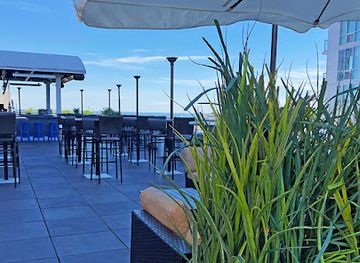
Stamford’s evening life is concentrated mainly Downtown, around Bedford Street, Columbus Park and the developing waterfront areas, rather than in one large club district. Bars range from relaxed pubs and sports-oriented venues to cocktail-focused rooms, breweries and restaurants that remain active after dinner. The Palace Theatre is the city’s principal large-scale performance venue, with a programme that can include touring music, comedy and other live entertainment, while smaller cultural events and community performances add variety. Harbor Point brings a more contemporary setting for drinks and evening meals, though the atmosphere varies from one venue to another. Nightlife is generally livelier at weekends and after major performances than on quieter weeknights. Visitors should plan their return journey, particularly when travelling beyond the walkable Downtown core, and check individual venues for current age, entry and schedule requirements.
-
Bar
Sign of the Whale
Discover the lively fusion of American cuisine and nightlife at Sign of the Whale, Stamford's premier rooftop bar and restaurant with stunning views.
13 min drive · 4.4 km from city centre
-
Grill
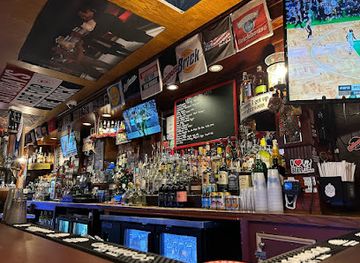
Brick House Bar & Grill
Discover the vibrant flavors and welcoming atmosphere of Brick House Bar & Grill in Stamford, Connecticut, ideal for a casual dining experience.
8 min drive · 2.6 km from city centre
-
Night club
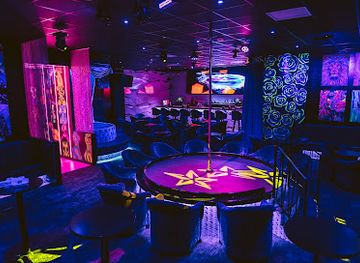
Mystique Stamford
Experience the vibrant nightlife at Mystique Stamford, where electrifying music and unforgettable moments await in the heart of Connecticut.
7 min drive · 2.3 km from city centre
-
Bar
Gallery at Beamers
Discover the ultimate nightlife experience at Gallery at Beamers, Stamford's top bar and dance club offering vibrant entertainment and a lively atmosphere.
11 min drive · 3.6 km from city centre

Best shops in Stamford
Shopping in Stamford combines practical urban retail with independent businesses and specialist food outlets. Downtown and Bedford Street contain shops, cafés and services within the city’s central commercial area, while Harbor Point has a newer, mixed-use character with retail and dining incorporated into its waterfront development. The Stamford Town Center shopping centre provides an enclosed modern retail setting, contrasting with smaller local businesses and neighbourhood stores elsewhere in the city. Visitors interested in regional food traditions can look for Italian bakeries, delicatessens, specialty grocers and international markets, which reflect Stamford’s long-established and newer communities. The city is not primarily a traditional craft-market destination, so distinctive purchases are more likely to be food products, books, clothing, design goods or locally made items found through individual shops and seasonal events rather than one historic bazaar.
-
Shopping mall
Stamford Town Center
Explore Stamford Town Center: your ultimate shopping destination in Connecticut, offering diverse stores, dining options, and entertainment for everyone.
9 min drive · 3.1 km from city centre
-
Department store
Macy's
Experience the ultimate shopping destination at Macy's Stamford, where fashion meets convenience in a vibrant downtown atmosphere.
9 min drive · 2.9 km from city centre
-
Book store
Barnes & Noble
Explore Stamford's Barnes & Noble: A Literary Oasis with Books, Coffee, and Family Fun Awaiting You.
10 min drive · 3.2 km from city centre
-
Department store
Target
Explore a diverse range of products at Target Stamford, your ultimate destination for shopping essentials and unique finds.
8 min drive · 2.8 km from city centre


Get your free copy of our complete guide to Stamford, delivered straight to you.
Everything on this page, from attractions and restaurants to essentials and local phrases, in one PDF you can read offline, print or share.
Already have an account? Sign in
Your Stamford guide is ready.
We'll send it to · Not you? Sign out

Getting your guide ready…
We are putting together a fresh copy of the Stamford guide. This can take up to a minute.
This can take a few moments. If your browser asks, choose Allow so the download can start. You'll find the guide in your Downloads folder.
Nothing happened? Download it again
Sorry, the guide is taking longer than usual. Please try again in a minute, or get it by email instead.
Stamford essentials
Currency and Payment
Safety
Emergency Situations
Do's and Don'ts
Local Tips
From Eve
Local phrases worth knowing
You don't need to get them perfect. A few words go a long way, and locals appreciate the effort.
Basics
| English | Local | Say it |
|---|---|---|
| Hello | Hey there | [hey thair] |
| Goodbye | See ya | [see yah] |
| Yes | Yeah | [yah] |
| No | Nah | [nah] |
| Please/You're welcome | Please/You're welcome | [pleez / yur welcome] |
| Thank you | Thanks | [thanks] |
| Excuse me/Sorry | Sorry | [sore-ee] |
| How are you? | How are you? | [how are you?] |
| Fine. And you? | Good. You? | [good. yoo?] |
| Do you speak English? | Do you speak English? | [do you speak ing-glish?] |
| I don't understand | I don't get it | [eye don't get it] |
Eating & Drinking
| English | Local | Say it |
|---|---|---|
| I'd like to see the menu, please | Can I see the menu? | [can eye see the menu?] |
| I don't eat meat | I don't eat meat | [eye don't eat meet] |
| Cheers! | Cheers! | [cheers] |
| I would like to pay, please | Check, please | [check, please] |
Emergencies
| English | Local | Say it |
|---|---|---|
| Help! | Help! | [help!] |
| Go away! | Leave me alone! | [leave me alone!] |
| Call the Police! | Call the cops! | [call the cops!] |
| Call a doctor! | Get a doctor! | [get uh doctor!] |
| I'm lost | I'm lost | [eye'm lost] |
| I'm ill | I'm sick | [eye'm sick] |
Shopping
| English | Local | Say it |
|---|---|---|
| I'd like to buy... | I wanna buy... | [eye wanna buy...] |
| I'm just looking | Just looking | [just looking] |
| How much is it? | How much does it cost? | [how much duz it cost?] |
| That's too expensive | That's too much | [that's too much] |
| Can you lower the price? | Can you make it cheaper? | [can you make it cheeper?] |
Time & Numbers
| English | Local | Say it |
|---|---|---|
| What time is it? | What's the time? | [whats the time?] |
| It's one o'clock | It's one | [its one] |
| Half past (10) | Half past ten | [half past ten] |
| Morning | Morning | [morning] |
| Afternoon | Afternoon | [afternoon] |
| Evening | Evening | [evening] |
| Yesterday | Yesterday | [yesterday] |
| Today | Today | [today] |
| Tomorrow | Tomorrow | [tomorrow] |
| 1 | One | [wun] |
| 2 | Two | [too] |
| 3 | Three | [three] |
| 4 | Four | [four] |
| 5 | Five | [five] |
| 6 | Six | [six] |
| 7 | Seven | [seven] |
| 8 | Eight | [eight] |
| 9 | Nine | [nine] |
| 10 | Ten | [ten] |
Transport & Directions
| English | Local | Say it |
|---|---|---|
| Where's a/the...? | Where's the...? | [wheres the...?] |
| What's the address? | What's the address? | [whats the address?] |
| Can you show me (on the map)? | Can you show me on the map? | [can you show me on the map?] |
| When's the next (bus)? | When's the next bus? | [whens the next bus?] |
| A ticket (to ....) | A ticket to ... | [uh ticket to ...] |
History of Stamford
Siwanoy Land and English Settlement
Before European settlement, the area was inhabited and used by the Siwanoy, a Munsee-speaking Indigenous people connected with the wider coastal communities of southern New England. English colonists from the New Haven and Wethersfield areas established Stamford in 1641 after acquiring land from local Indigenous representatives. Early settlement concentrated around the Mill River and the harbour, where farming, milling and maritime activity supported a small community. The colonial landscape was shaped by dispersed homesteads, meeting-house institutions and access to Long Island Sound. The Hoyt-Barnum House, traditionally dated to around 1699, is a surviving reminder of Stamford’s early domestic architecture and the material life of its first English settlers.
A Maritime and Agricultural Community
During the eighteenth and early nineteenth centuries, Stamford developed through a combination of agriculture, coastal trade and small-scale manufacturing. Farms occupied much of the surrounding countryside, while the harbour connected local commerce with other ports on Long Island Sound. Religious congregations, schools and civic institutions gave structure to the growing settlement, and roads gradually linked the centre with outlying districts. The town’s position between New Haven and New York encouraged movement of goods and people, although it remained substantially rural compared with the larger port cities of the region. Many later neighbourhood boundaries and road patterns reflect this period, when the town’s economy depended on land, water and local enterprise.
Railway Arrival and Industrial Growth
The arrival of the railway in the 1840s transformed Stamford’s relationship with the region. Rail connections made it easier to move manufactured goods, agricultural products and passengers, while also strengthening commercial links with New York and other Connecticut towns. Factories and workshops expanded, and workers settled close to new employment opportunities. Stamford’s population and built environment grew more densely around the transport corridor and central business area. The town was incorporated as a borough in 1830 and later received city status in 1893, reflecting its increasing urban importance. Industrialisation established the economic foundations for the larger city that developed during the twentieth century.
City Expansion and Civic Institutions
The late nineteenth and early twentieth centuries brought continued urban expansion, new public institutions and a more varied population. Manufacturing included products such as textiles, metal goods and other finished items, while the railway supported commuting and regional commerce. Neighbourhoods spread beyond the old centre, and civic improvements altered streets, parks and public services. Stamford’s cultural and educational institutions also grew, including the library tradition that culminated in the Ferguson Library. Immigration and internal migration broadened the city’s social character, leaving religious buildings, shops and residential districts that record successive communities. This period established much of the civic framework still visible beyond the modern office core.
From Industry to Corporate Stamford
After the Second World War, manufacturing declined across much of the Northeast while Stamford’s proximity to New York encouraged a major shift towards offices, finance, communications and professional services. Suburban development and automobile travel reshaped the city, and older industrial land was gradually repurposed. The downtown skyline grew as commercial towers replaced or stood alongside earlier low-rise buildings, while neighbourhoods such as Shippan and Glenbrook retained more residential and coastal qualities. Urban renewal changed parts of the historic centre, sometimes disrupting older streets and buildings. Stamford’s present identity therefore reflects both continuity and reinvention: a colonial coastal settlement transformed into one of Connecticut’s principal business centres.
Waterfront Renewal and Contemporary Culture
In the late twentieth and early twenty-first centuries, redevelopment concentrated on the downtown waterfront, Harbor Point and former industrial areas. New housing, offices, public spaces and restaurants extended activity towards the shoreline, while parks and environmental areas maintained access to Long Island Sound. The Palace Theatre, museums, libraries and community organisations continue to support a broad cultural life, and the city’s restaurants reflect its increasingly international population. Contemporary Stamford is not defined solely by its skyline: historic houses, shoreline parks, wooded institutions and long-established neighbourhoods remain important parts of its character. Its development illustrates the continuing adaptation of a coastal Connecticut city to regional economic and social change.
Stamford in Photos
Browse through our photo collection highlighting the charm and character of the destination.
Cities near Stamford
The closest cities to Stamford, if you have time for more than one stop.
-

-

-

-

-


Swipe for more cities
Explore more

Explore more of Connecticut
Discover Connecticut: A blend of charming coastal towns, rich history, and scenic landscapes, perfect for nature lovers, history buffs, and cultural enthusiasts.
Explore Connecticut