Iron Gate: A Journey Through Time in Split
Explore Split's Iron Gate: A historic entrance to Diocletian's Palace, blending Roman architecture with centuries of Croatian history.
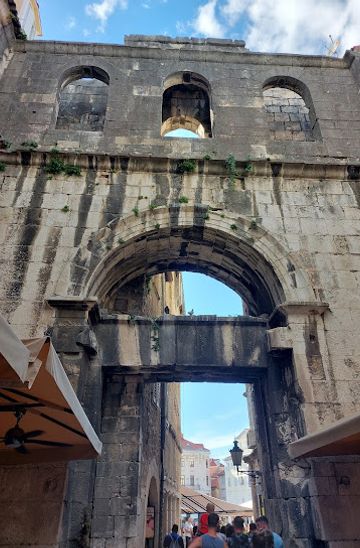
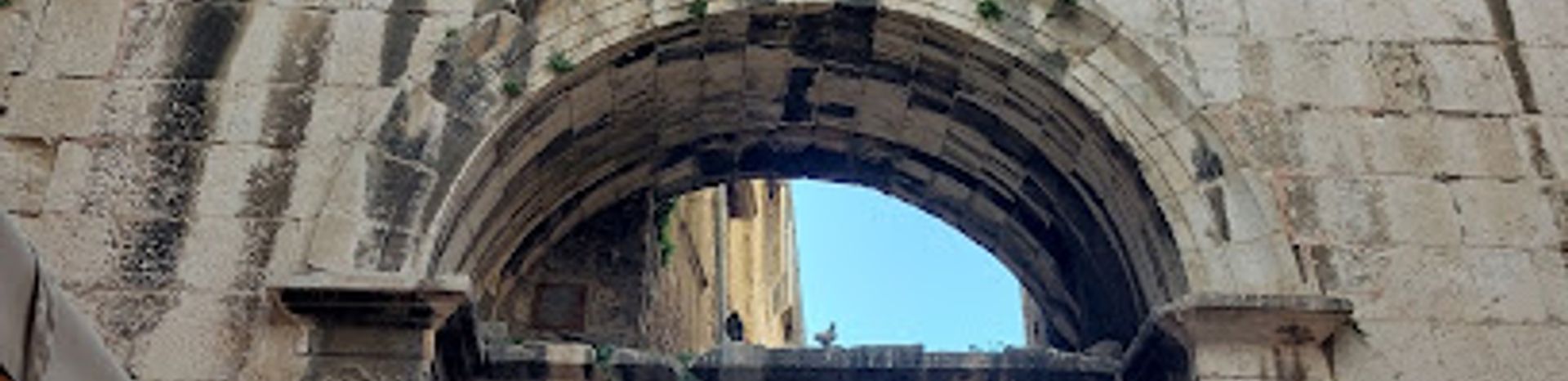
The Iron Gate, or 'Željezna vrata,' stands as one of the four original Roman gates of Diocletian's Palace in Split, Croatia, a UNESCO World Heritage site. Once a military entrance, it's the only gate that has been in continuous use since its construction, witnessing centuries of Split's vibrant history.
A brief summary to Iron Gate
- Ul. Ispod ure, Split, 21000, HR
- Click to display
- Monday 12 am-12 am
- Tuesday 12 am-12 am
- Wednesday 12 am-12 am
- Thursday 12 am-12 am
- Friday 12 am-12 am
- Saturday 12 am-12 am
- Sunday 12 am-12 am
Local tips
- Visit early in the morning or late in the afternoon to avoid crowds and capture the best lighting for photographs.
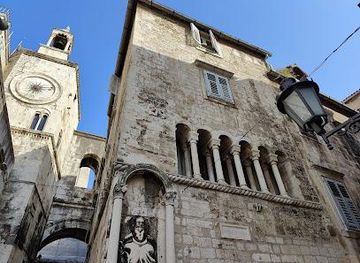
- Take a moment to observe the 24-hour clock on the gate's facade, a unique feature that reflects Split's history.
- Explore the narrow streets branching off from the Iron Gate, filled with charming shops, cafes, and local eateries.


Getting There
-
Walking
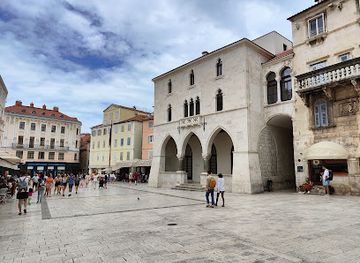
From the Riva (waterfront promenade), walk inland towards the heart of Diocletian's Palace. The Iron Gate is located on the western side of the Palace, a short walk from the main square (Narodni trg). Look for the archway leading into the historic structure; it's easily identifiable by its ancient Roman architecture and the clock tower.
-
Public Transport
If arriving by bus to the main bus station, which is next to the train station and ferry port, walk west along the Riva. Turn inland towards the old city and Diocletian's Palace. The Iron Gate will be on your left as you enter the palace complex. A single bus ticket within Split costs around 11 HRK.
-
Taxi/Ride-Share
Ask your driver to drop you off as close to Narodni trg (People's Square) as possible, as vehicle access is restricted in the immediate vicinity of Diocletian's Palace. From there, it's a short walk to the Iron Gate. A short taxi ride within the city center will likely cost between 50-80 HRK.
Discover more about Iron Gate
Explore the best of what Iron Gate has to offer















More about Split
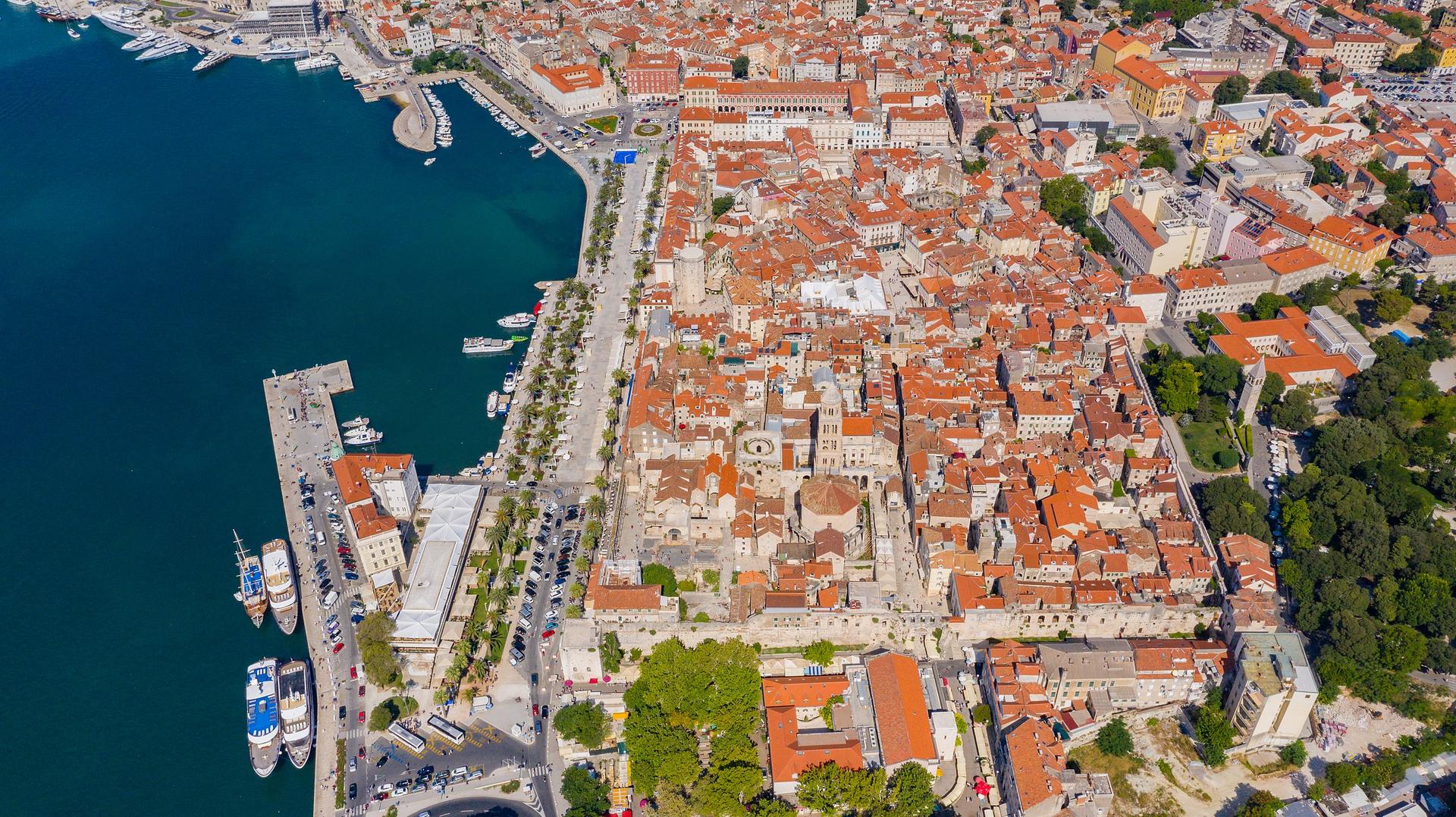
Explore Split, Croatia's vibrant coastal gem, where ancient history meets modern charm. Discover stunning beaches, rich culture, and a gateway to the beautiful Dalmatian islands.
Tell me more about Split

Want to improve this location?
Activate this location now and let Evendo enhance its appearance, information, and visibility for millions of travellers.