Queen Emma Bridge, Willemstad Travel Guide
Free Guide: Experience the charm of Curaçao on the Queen Emma Bridge, a floating pedestrian bridge connecting Willemstad's vibrant districts, offering stunning views and a unique cultural experience.


A brief summary of Queen Emma Bridge
Experience the charm of Curaçao on the Queen Emma Bridge, a floating pedestrian bridge connecting Willemstad's vibrant districts, offering stunning views and a unique cultural experience.
The Queen Emma Bridge, affectionately known as the "Swinging Old Lady," is a unique floating pontoon bridge in Willemstad, Curaçao, connecting the Punda and Otrobanda districts. Built in 1888, this pedestrian-only bridge spans St. Anna Bay and swings open laterally to allow ships to pass. Adorned with colorful lights, it's a picturesque landmark offering stunning views of the city's iconic Dutch architecture. Crossing the bridge is free, and it provides easy access to the vibrant shops, restaurants, and cultural attractions on both sides of the bay. Whether you're strolling during the day or enjoying the illuminated spectacle at night, the Queen Emma Bridge is an unmissable experience and a symbol of Curaçao's charm and history.
Opening hours
- Every dayOpen 24 hours
Opening hours as listed on the venue’s Google Business Profile. Hours can change for services and special events, so check with the venue before you go.
- Address
- Kon. Emmabrug, Willemstad, Curaçao
Getting there
Walking
Public Transport
Taxi/Ride-Share
Driving
Discover more about Queen Emma Bridge
Overview
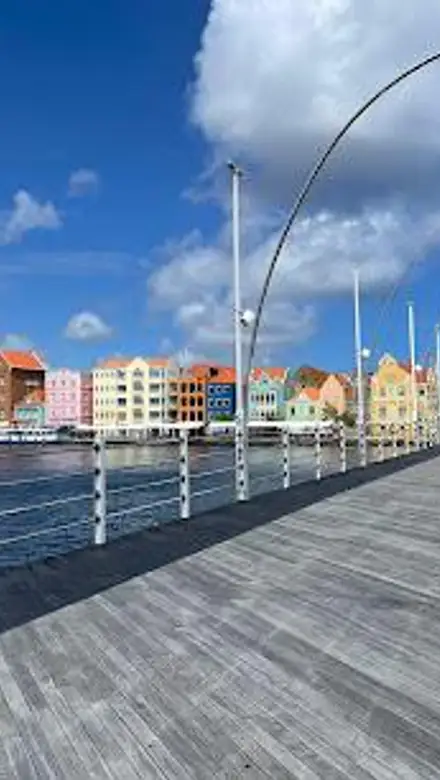
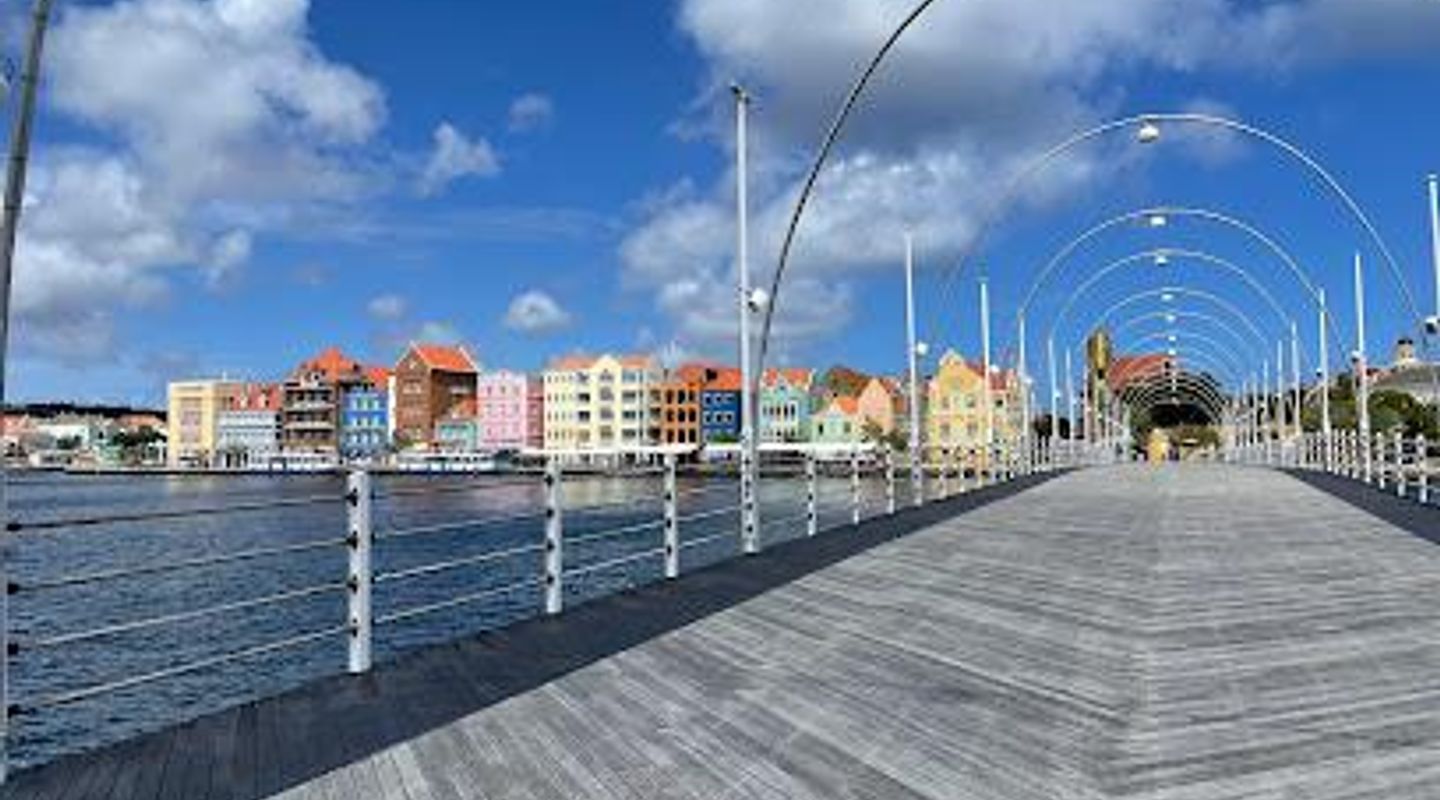
The Queen Emma Bridge, a captivating landmark in Willemstad, Curaçao, is more than just a means of crossing St. Anna Bay; it's a vibrant symbol of the island's history, culture, and ingenuity. Connecting the colorful districts of Punda and Otrobanda, this floating pontoon bridge, affectionately nicknamed the "Swinging Old Lady," offers pedestrians a unique and memorable experience. Built in 1888 by American entrepreneur Leonard Burlington Smith, the bridge was initially intended to be named Alliance, signifying the connection between the two halves of the capital. However, it was ultimately named in honor of Queen Emma of Waldeck and Pyrmont, the queen consort of the Netherlands at the time. Smith's vision was to stimulate economic growth in Willemstad by facilitating easier movement between the districts. Constructed with 16 pontoon boats, the Queen Emma Bridge is hinged on one side, allowing it to swing open and parallel to the shore to accommodate the passage of oceangoing vessels. This swinging motion, powered by diesel engines, is a spectacle in itself, drawing crowds of onlookers. When the bridge opens, which occurs several times a day, pedestrians are temporarily transported across the bay by free ferry services, adding another layer of charm to the experience. Throughout its history, the Queen Emma Bridge has undergone several renovations, including significant work in 1939, 1961, 1983-1986, and 2005-2006, ensuring its continued safety and functionality. Originally, from 1901 to 1934, a toll was charged for crossing the bridge, with a quirky exception: pedestrians without shoes were permitted to cross for free. This led to locals humorously removing their shoes to avoid the toll, while poorer residents often saved their shoes specifically for the occasion of crossing the bridge, proudly paying the small fee. In 1955, arches adorned with colorful lights were added to celebrate the royal visit of Queen Juliana and Prince Bernhard. These lights transform the bridge into a dazzling display at night, casting a shimmering rainbow of colors onto the waters of St. Anna Bay. The illuminated bridge is a favorite subject for photographers and a romantic backdrop for evening strolls. The Queen Emma Bridge ceased accommodating motor vehicle traffic in 1974, when the Queen Juliana Bridge was opened, diverting vehicular traffic. Since then, it has remained exclusively for pedestrian use, enhancing the safety and enjoyment of those crossing it. Today, the Queen Emma Bridge stands as one of Curaçao's most iconic landmarks, attracting approximately 15,000 pedestrians daily. Its central location provides easy access to the numerous shops, restaurants, and cultural attractions in both Punda and Otrobanda. Visitors can explore the historic architecture, indulge in local cuisine, and immerse themselves in the vibrant atmosphere of Willemstad. Crossing the Queen Emma Bridge is more than just a practical way to get from one side of the bay to the other; it's an opportunity to step back in time, appreciate the unique engineering, and soak in the beauty of Curaçao's capital city. Whether you're a history buff, a photography enthusiast, or simply seeking a memorable experience, the "Swinging Old Lady" is sure to leave a lasting impression. The bridge is not only a functional structure but also a gathering place. Locals and tourists alike congregate on the bridge to enjoy the views, take photos, and soak up the lively atmosphere. Street performers often entertain passersby, adding to the vibrant ambiance. The nearby Handelskade, with its row of brightly colored buildings, provides a stunning backdrop, making the Queen Emma Bridge a perfect spot for capturing the essence of Curaçao. Moreover, the Queen Emma Bridge plays a vital role in the cultural life of Willemstad. It is often the site of festivals, parades, and other public events. During special occasions, the bridge is decorated with flags, banners, and lights, creating a festive atmosphere that reflects the island's rich heritage. For those interested in the bridge's mechanics, the operator's cabin, located on the Otrobanda side, offers a glimpse into the workings of the bridge. Although access to the cabin is not always possible, observing the bridge's operation from a distance provides insight into the ingenuity of its design. The Queen Emma Bridge is more than just a bridge; it's a living, breathing part of Willemstad's identity. It connects not only two districts but also the past and the present, the practical and the whimsical. It’s a place where history, culture, and engineering come together to create an unforgettable experience for all who cross it.
Evendo Review Centre
 Google
Guest reviews
Explore Queen Emma Bridge on the map
A handpicked selection of must-see spots near Queen Emma Bridge, mapped for you.
Get your free copy of our complete guide to Queen Emma Bridge, delivered straight to you.
Everything on this page, from opening hours and how to get there to Eve’s tips and the best time to go, in one PDF you can read offline, print or share.
Already have an account? Sign in
Your Queen Emma Bridge guide is ready.
We'll send it to · Not you? Sign out

Getting your guide ready…
We are putting together a fresh copy of the Queen Emma Bridge guide. This can take up to a minute.
This can take a few moments. If your browser asks, choose Allow so the download can start. You'll find the guide in your Downloads folder.
Nothing happened? Download it again
Sorry, the guide is taking longer than usual. Please try again in a minute, or get it by email instead.
Unlock the best of Queen Emma Bridge
Skip-the-line tickets, guided tours with entry, and walking tours of the area, booked in a few clicks.


Other nearby places you may find interesting
The closest places of the same kind, if this one is not quite what you had in mind.
-
-
-
-
-


Swipe for more places
More to explore near Queen Emma Bridge

 Best experiences near Queen Emma Bridge
 Best hotels near Queen Emma Bridge
 Best landmarks near Queen Emma Bridge
 Best attractions near Queen Emma Bridge
 Best shops near Queen Emma Bridge
 Best restaurants near Queen Emma Bridge
 Best bars near Queen Emma Bridge
Do you manage this location?
Take control to get all the benefits, like improved information, better appearance, and stronger visibility across AI-powered discovery.
Explore more

Explore more of Willemstad
Explore Willemstad: A Caribbean paradise where vibrant culture, stunning architecture, and breathtaking beaches come together for an unforgettable experience.
Explore Willemstad
Explore more of Curacao
Discover Curacao, where vibrant culture, stunning beaches, and historic charm come together to create a Caribbean paradise like no other.
Explore Curacao