

Konnos Beach Travel Guide - Free Web & App
Your ultimate guide to Konnos Beach. Discover top landmarks, proposed trips, and local tips. Free on the web or via the Evendo companion app.


Konnos Beach in Cyprus pairs clear Mediterranean water with Cape Greco trails, sea caves, snorkelling, coastal views and easy access from Protaras and Ayia Napa.
A Sheltered Mediterranean Bay
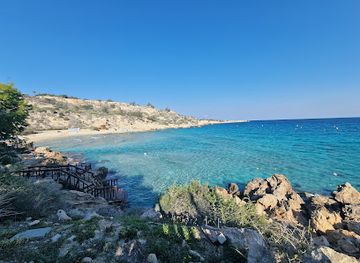
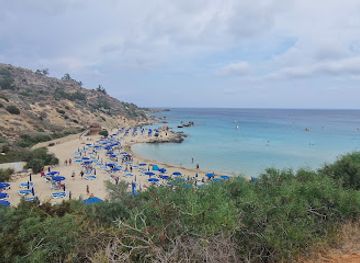
Konnos Beach lies on the south-eastern coast of Cyprus, between the resort of Protaras and Ayia Napa, within the wider Cape Greco landscape. Its crescent of pale sand curves around a sheltered bay framed by low limestone hills and fragrant coastal vegetation. The water is often calm in the protected inlet, while the gently shelving shore makes the beach appealing for swimming, sunbathing and relaxed water-based recreation when conditions permit. Views across the bay reveal a coast that becomes increasingly rugged beyond the beach, with rocky shelves, coves and clear offshore water.Read more about Konnos Beach
Within the Cape Greco Landscape
Resort Access and Outdoor Appeal
When is the best time to visit Konnos Beach?
Best: April–May, October · 23–27°C| Month | High (°C) | Rainfall (mm) |
|---|---|---|
| January | 17 | 95 |
| February | 17 | 89 |
| March | 19 | 67 |
| April (best) | 23 | 37 |
| May (best) | 27 | 14 |
| June | 31 | 4 |
| July | 33 | 0 |
| August | 33 | 0 |
| September | 31 | 4 |
| October (best) | 27 | 37 |
| November | 21 | 67 |
| December | 18 | 89 |
Getting to and around Konnos Beach
How to get there
Transportation
Best attractions in Konnos Beach
Konnos Beach is the principal attraction, a sheltered sandy cove whose clear water and enclosing limestone slopes create a calmer setting than many exposed sections of the south-eastern coast. From the beach, visitors can explore the wider Cape Greco National Forest Park, where marked paths lead towards rocky viewpoints and open coastal scenery. The nearby Cape Greco headland is known for its sea caves and sculpted shoreline, although these are separate attractions rather than features on the sand itself. The small chapel of Agioi Anargyroi, set above the coast, is another recognisable stop in the wider area, while Protaras and Ayia Napa provide contrasting resort environments within easy reach. Swimming, snorkelling and other water activities may be possible when conditions and local arrangements allow; walking and landscape sightseeing offer a more dependable way to experience the peninsula’s dry scrub, turquoise shallows and rugged limestone shore.
-
Tourist attraction
Konnos Beach - Road Access Point
Discover Konnos Beach, Cyprus: A serene escape with crystal-clear waters, golden sands, and breathtaking scenery nestled in Cape Greco National Forest Park, perfect for relaxation and adventure.
-
Hiking area
APHRODITES BEACH
Discover the mythical birthplace of Aphrodite, where stunning rock formations meet crystal-clear waters, offering a serene coastal escape and a touch of Cypriot legend.
Best landmarks in Konnos Beach
Konnos Beach itself is the defining natural landmark: a compact sandy bay enclosed by the limestone terrain of south-eastern Cyprus and set within the Cape Greco National Forest Park. The broader Cape Greco headland provides the area’s most significant geological and scenic setting, with weathered rock platforms, coastal cliffs, coves and sea caves shaped by marine erosion. Above another section of the coast stands the chapel of Agioi Anargyroi, a small religious landmark associated with the Cape Greco shoreline and a familiar stopping point for visitors exploring the peninsula. These features work together as a landscape of beach, scrub-covered slopes and exposed coast rather than a built heritage centre. Protaras and Ayia Napa are important nearby resort landmarks in tourism terms, but they lie outside Konnos Beach’s immediate natural setting.
-
Tourist attraction
Konnos Beach - Road Access Point
Discover the pristine beauty of Konnos Beach in Cyprus, a perfect blend of relaxation and adventure in a stunning coastal paradise.
Explore Konnos Beach on the map
Plan your trip on one map. See where the top attractions, landmarks, restaurants and hotels are, and book hotels and experiences in a few clicks.
Best hotels in Konnos Beach
Get your free copy of our complete guide to Konnos Beach, delivered straight to you.
Everything on this page, from attractions and restaurants to essentials and local phrases, in one PDF you can read offline, print or share.
Already have an account? Sign in
Your Konnos Beach guide is ready.
We'll send it to · Not you? Sign out

Getting your guide ready…
We are putting together a fresh copy of the Konnos Beach guide. This can take up to a minute.
This can take a few moments. If your browser asks, choose Allow so the download can start. You'll find the guide in your Downloads folder.
Nothing happened? Download it again
Sorry, the guide is taking longer than usual. Please try again in a minute, or get it by email instead.
Konnos Beach essentials
Currency and Payment
Safety
Emergency Situations
Do's and Don'ts
Local Tips
From Eve
Local phrases worth knowing
You don't need to get them perfect. A few words go a long way, and locals appreciate the effort.
Basics
| English | Local | Say it |
|---|---|---|
| Hello | Γεια σας | [Yia sas] |
| Goodbye | Αντίο | [Andio] |
| Yes | Ναι | [Ne] |
| No | Όχι | [Ochi] |
| Please/You're welcome | Παρακαλώ | [Parakalo] |
| Thank you | Ευχαριστώ | [Efharisto] |
| Excuse me/Sorry | Συγνώμη | [Signomi] |
| How are you? | Πώς είστε; | [Pos iste?] |
| Fine. And you? | Καλά. Εσείς; | [Kala. Esis?] |
| Do you speak English? | Μιλάτε αγγλικά; | [Milate anglika?] |
| I don't understand | Δεν καταλαβαίνω | [Den katalaveno] |
Eating & Drinking
| English | Local | Say it |
|---|---|---|
| I'd like to see the menu, please | Θα ήθελα να δω το μενού, παρακαλώ | [Tha ithela na do to menou, parakalo] |
| I don't eat meat | Δεν τρώω κρέας | [Den troo kreas] |
| Cheers! | ΥΓΕΙΑ! | [Yia!] |
| I would like to pay, please | Θα ήθελα να πληρώσω, παρακαλώ | [Tha ithela na plirosso, parakalo] |
Emergencies
| English | Local | Say it |
|---|---|---|
| Help! | Βοήθεια! | [Voithia!] |
| Go away! | Φύγε! | [Fiye!] |
| Call the Police! | Καλέστε την Αστυνομία! | [Kaleste tin Astinomia!] |
| Call a doctor! | Καλέστε για γιατρό! | [Kaleste ya giatro!] |
| I'm lost | Έχω χαθεί | [Eho hafi] |
| I'm ill | Είμαι άρρωστος | [Ime arrostos] |
Shopping
| English | Local | Say it |
|---|---|---|
| I'd like to buy... | Θα ήθελα να αγοράσω... | [Tha ithela na agoraso...] |
| I'm just looking | Απλά κοιτάω | [Apla kito] |
| How much is it? | Πόσο κοστίζει; | [Poso kostizi?] |
| That's too expensive | Αυτό είναι πολύ ακριβό | [Afto ine poli akribo] |
| Can you lower the price? | Μπορείτε να μειώσετε την τιμή; | [Borite na miosete tin timi?] |
Time & Numbers
| English | Local | Say it |
|---|---|---|
| What time is it? | Τι ώρα είναι; | [Ti ora ine?] |
| It's one o'clock | Είναι μία ώρα | [Ine mia ora] |
| Half past (10) | Μισή (10) | [Misi (10)] |
| Morning | Πρωί | [Proi] |
| Afternoon | Απόγευμα | [Apoyevma] |
| Evening | Βράδυ | [Vradi] |
| Yesterday | Χθες | [Hthes] |
| Today | Σήμερα | [Simera] |
| Tomorrow | Αύριο | [Avrio] |
| 1 | Ένα | [Ena] |
| 2 | Δύο | [Dio] |
| 3 | Τρία | [Tria] |
| 4 | Τέσσερα | [Tessera] |
| 5 | Πέντε | [Pente] |
| 6 | Έξι | [Exi] |
| 7 | Επτά | [Epta] |
| 8 | Οκτώ | [Okto] |
| 9 | Εννιά | [Ennia] |
| 10 | Δέκα | [Deka] |
Transport & Directions
| English | Local | Say it |
|---|---|---|
| Where's a/the...? | Πού είναι ένα/το...; | [Pu ine ena/to...?] |
| What's the address? | Ποια είναι η διεύθυνση; | [Pia ine i diefthinsi?] |
| Can you show me (on the map)? | Μπορείτε να μου δείξετε (στο χάρτη); | [Borite na mou dixete (sto harri)?] |
| When's the next (bus)? | Πότε είναι το επόμενο (λεωφορείο); | [Pote ine to epomeno (leoforeio)?] |
| A ticket (to ....) | Ένα εισιτήριο (για το...); | [Ena isitirio (ya to...)?] |
History of Konnos Beach
Limestone Coast and Coastal Formation
Konnos Beach belongs to the limestone coastline of south-eastern Cyprus, a region shaped by marine processes, weathering and the gradual erosion of exposed rock. The sheltered bay contrasts with the harder-edged cliffs and rocky platforms of the nearby Cape Greco headland. Its physical form is therefore part of a wider coastal system rather than an isolated sandy feature. The pale shore, shallow nearshore waters and enclosing slopes have created a natural landing place and bathing cove, while the surrounding terrain preserves the dry Mediterranean character of the peninsula.
Ancient and Maritime Connections
Cape Greco occupies a prominent position on the eastern Cypriot coast, a maritime zone long encountered by coastal travellers and seafarers moving through the eastern Mediterranean. The broader region around Protaras and Ayia Napa contains evidence of Cyprus’s longstanding Greek cultural and religious traditions, while the headland’s caves, coves and prominent viewpoints have helped shape local coastal memory. Konnos itself is not principally an archaeological site, and its significance lies more in its relationship with the historic peninsula landscape than in a single surviving monument on the beach.
From Rural Coast to Holiday Region
For much of its modern history, the south-eastern coast around Cape Greco was rural and comparatively lightly developed, with settlements and agricultural land separated from the more rugged headland. During the twentieth century, Protaras and Ayia Napa grew into major holiday centres, bringing roads, accommodation and recreational access closer to formerly quiet coves such as Konnos. The beach retained a more contained physical setting than the larger resort waterfronts, while its proximity to both towns made it increasingly popular as a scenic and swimming destination.
Protected Landscape and Visitor Management
The preservation of Cape Greco as a national forest park reflects the importance of the peninsula’s coastal scenery, plant communities and recreational landscapes. Protection has helped maintain open stretches of rocky coast between the expanding resort areas, although visitor pressure is most noticeable during Cyprus’s hot summer season. Modern enjoyment of Konnos is consequently connected with responsible access: keeping to appropriate paths, avoiding damage to vegetation, taking litter away and treating the cliffs, caves and sea as living parts of a protected coastal environment.
Konnos Beach in Photos
Browse through our photo collection highlighting the charm and character of the destination.
Neighbouring destination travel guides
The closest destinations to Konnos Beach, if you have time for more than one.
-

-

-

-
-


Swipe for more destinations
Explore more

Explore more of Makronissos Peninsula
Discover the serene beauty and historical allure of the Makronissos Peninsula in Cyprus, where golden beaches meet ancient tombs and stunning Mediterranean views.
Explore Makronissos Peninsula
Explore more of Cyprus
Discover Cyprus: A Mediterranean paradise with a rich tapestry of history, culture, and breathtaking landscapes, offering a perfect blend of relaxation and adventure.
Explore Cyprus