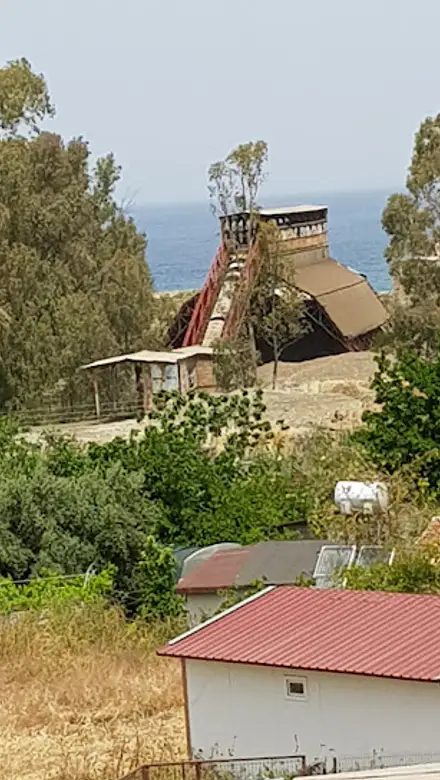
Soli Basilica Travel Guide
Free Guide: Discover ancient mosaics and early Christian history at the Soli Basilica, a captivating historical site near Lefke, North Cyprus.


A brief summary of Soli Basilica
Discover ancient mosaics and early Christian history at the Soli Basilica, a captivating historical site near Lefke, North Cyprus.
Explore the ancient Soli Basilica near Lefke, North Cyprus, a significant archaeological site showcasing early Christian history and stunning mosaics dating back to the 4th century AD. Discover remnants of a once-thriving metropolis, including the iconic swan mosaic and outlines of the original three-aisled structure.
- Address
- 4RR7+882 Asaf Elmas Sokak, Lefke 99810
- Website
Getting there
Public Transport
Driving
Discover more about Soli Basilica
Overview
Nestled near Lefke in North Cyprus, the Soli Basilica is a captivating historical site that whispers tales of early Christianity and ancient civilizations. Part of the larger Soli ancient city, this archaeological treasure allows visitors to step back in time and explore the remnants of a once-thriving metropolis. The basilica, dating back to the second half of the 4th century AD, is believed to be one of the earliest Christian churches on the island, holding immense significance for religious history.The city flourished due to its strategic location, fertile lands, a natural harbor, and nearby copper mines. According to tradition, the city's name is linked to the Athenian philosopher Solon, who advised a local king to move his capital to this coastal location in the 6th century BC. Soli played a notable role in Cypriot history, experiencing periods of prosperity under Roman rule and later facing destruction during Arab raids in the 7th century AD.The basilica features an atrium and a baptismal pool, reflecting the growing Christian community that once thrived here. The most prominent feature is its delicate mosaic floors, protected by a large roof. These mosaics are a testament to the artistic skill of the Byzantine era, featuring intricate geometric designs, depictions of animals, and an inscription that reads, "Jesus! Protect those who built these mosaics". Among the most famous mosaics is the iconic swan mosaic, a symbol of the basilica and a highlight for many visitors. Exploring the basilica, visitors can trace the outlines of the original three-aisled structure, which once stretched nearly 200 meters in length.Beyond the basilica, the Soli archaeological site also includes the remains of a Roman theatre, which once accommodated up to 4,000 spectators. The theatre, built on the site of an earlier Greek amphitheater, has been partially restored and is still used today for cultural events and performances. Artifacts discovered at the site, including gold jewelry, metal cups, and a marble statue of Aphrodite, are now displayed at the Guzelyurt Museum of Archaeology and Natural History, offering further glimpses into Soli's rich past.
Evendo Review Centre
 Google
Guest reviews
Explore Soli Basilica on the map
A handpicked selection of must-see spots near Soli Basilica, mapped for you.
Get your free copy of our complete guide to Soli Basilica, delivered straight to you.
Everything on this page, from opening hours and how to get there to Eve’s tips and the best time to go, in one PDF you can read offline, print or share.
Already have an account? Sign in
Your Soli Basilica guide is ready.
We'll send it to · Not you? Sign out

Getting your guide ready…
We are putting together a fresh copy of the Soli Basilica guide. This can take up to a minute.
This can take a few moments. If your browser asks, choose Allow so the download can start. You'll find the guide in your Downloads folder.
Nothing happened? Download it again
Sorry, the guide is taking longer than usual. Please try again in a minute, or get it by email instead.
Other nearby places you may find interesting
The closest places of the same kind, if this one is not quite what you had in mind.
-
-
-
-
-


Swipe for more places
More to explore near Soli Basilica

 Best experiences near Soli Basilica
 Best hotels near Soli Basilica
 Best landmarks near Soli Basilica
 Best attractions near Soli Basilica
 Best shops near Soli Basilica
 Best restaurants near Soli Basilica
 Best bars near Soli Basilica
Do you manage this location?
Take control to get all the benefits, like improved information, better appearance, and stronger visibility across AI-powered discovery.
Explore more

Explore more of Nicosia District
Discover the unique blend of history and modern living in Nicosia District, the heart of Cyprus, where ancient landmarks meet vibrant contemporary culture.
Explore Nicosia District
Explore more of Cyprus
Discover Cyprus: A Mediterranean paradise with a rich tapestry of history, culture, and breathtaking landscapes, offering a perfect blend of relaxation and adventure.
Explore Cyprus