

Aphrodites Rock Travel Guide
Free Guide: Discover the mythical birthplace of Aphrodite, where ancient legends meet breathtaking Mediterranean beauty along the Paphos coastline, offering an unforgettable Cypriot experience.


A brief summary of Aphrodites Rock
Discover the mythical birthplace of Aphrodite, where ancient legends meet breathtaking Mediterranean beauty along the Paphos coastline, offering an unforgettable Cypriot experience.
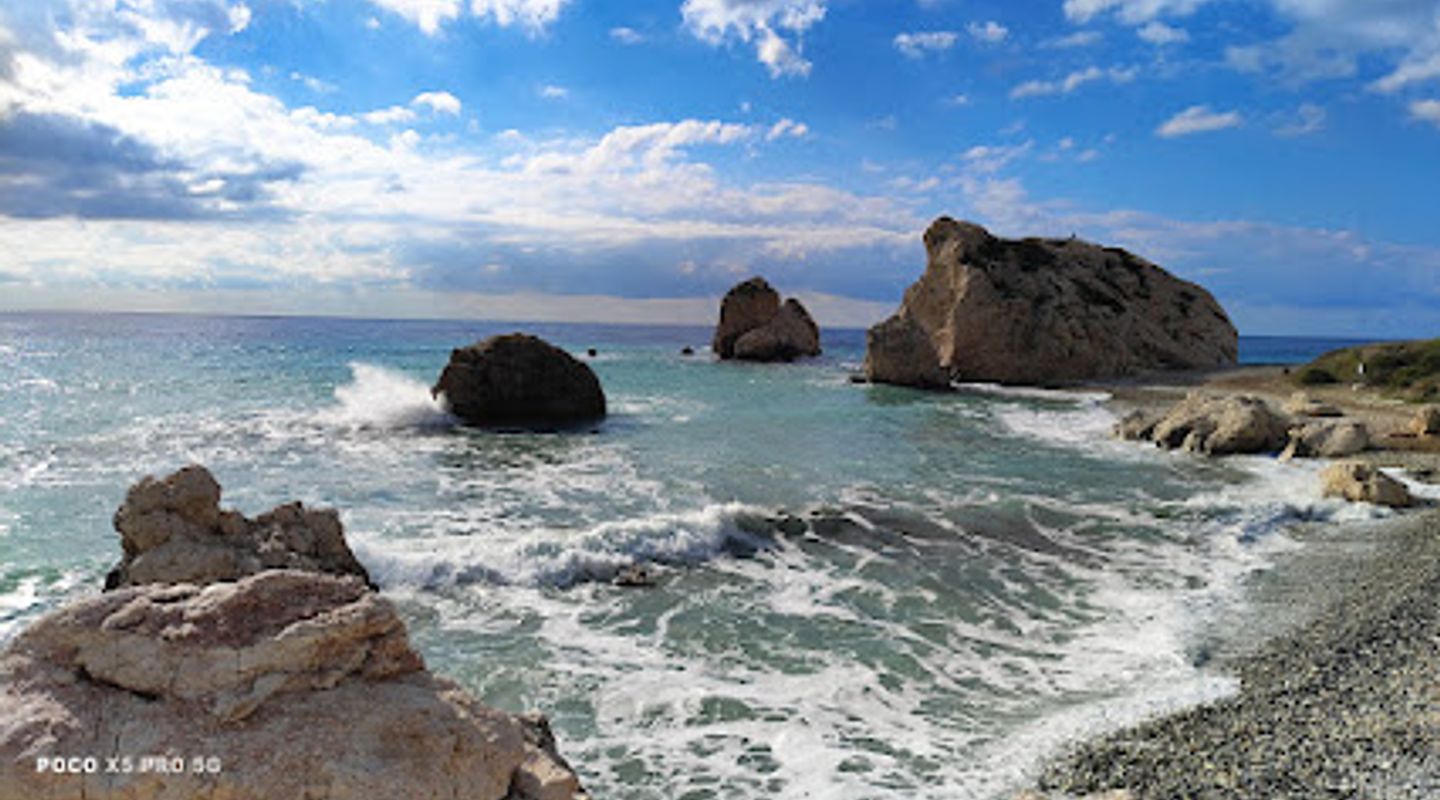
Aphrodite's Rock, or Petra tou Romiou, is a captivating sea stack off the coast of Paphos, Cyprus, steeped in mythology and natural beauty. Legend claims it as the birthplace of Aphrodite, the Greek goddess of love and beauty, born from sea foam. The dramatic rock formations, crashing waves, and stunning sunsets create a romantic and awe-inspiring atmosphere. Visitors can explore the pebbly beach, take photos, and soak in the mythical ambiance. Swimming around the rock is said to bring blessings of eternal beauty and love, though the sea can be rough. The site also connects to the legend of Digenis Akritas, a Byzantine hero, adding historical depth to its allure. A visit here offers a unique blend of natural wonder, mythology, and Cypriot history, making it a must-see destination.
- Address
- MJ8H+74P, Pedestrian Underpass, Kouklia, Cyprus
Getting there
Public Transport
Taxi/Ride-Share
Driving
Discover more about Aphrodites Rock
Overview
Aphrodite's Rock, known locally as Petra tou Romiou (Rock of the Greek), is a renowned sea stack located along the stunning coastline between Paphos and Limassol in Cyprus. This iconic landmark is more than just a geological formation; it's a place where mythology, history, and natural beauty converge, creating an unforgettable experience for visitors. According to Greek mythology, Aphrodite, the goddess of love and beauty, was born from the sea foam near this very spot. Hesiod's Theogony recounts how Cronus castrated his father, Uranus, and threw his genitals into the sea, resulting in a white foam from which Aphrodite arose. The waves carried her first to Kythera and then to Cyprus, where she went to the assembly of gods. This legendary birth has made Aphrodite's Rock a symbol of love, fertility, and eternal beauty, drawing romantics and history enthusiasts from around the globe. The site's connection to Aphrodite has fostered numerous myths and traditions. Local lore suggests that swimming around the rock three times counter-clockwise will bestow eternal beauty, good luck in love, fertility, and even eternal youth. While the sea in this region can be rough, the allure of these blessings continues to attract those seeking a touch of magic. In certain weather conditions, the waves breaking against the rock create a pillar of water that dissolves into foam, momentarily resembling a human shape, further fueling the mythical atmosphere. Beyond its association with Aphrodite, the rock also carries historical significance. The name Petra tou Romiou links it to the Byzantine hero Digenis Akritas, a frontiersman of mixed Arab and Byzantine heritage. Legend says that Digenis hurled the massive rock from the Troodos Mountains to keep invading Saracens at bay, showcasing his incredible strength and protecting the island. This tale adds a layer of Cypriot heroism to the site's already rich tapestry of stories. The geological formation of Aphrodite's Rock is also noteworthy. It is a sea stack composed of limestone breccia, shaped by centuries of wave erosion. The surrounding beach is pebbly, and the waters are known for their clarity, making it a popular spot for snorkeling. While climbing the rock is prohibited to protect it and ensure visitor safety, the views from the beach and the nearby viewpoints are breathtaking, especially during sunset. Located near the rock is the village of Kouklia, the site of Old Paphos and the Sanctuary of Aphrodite, one of the most important religious centers in ancient Cyprus. The sanctuary ruins offer a glimpse into the ancient cult of Aphrodite, which thrived in Paphos until it was suppressed by the Romans. Visiting both Aphrodite's Rock and the sanctuary provides a comprehensive understanding of the goddess's significance in Cypriot history and culture. Today, Aphrodite's Rock is a major tourist destination, attracting visitors with its stunning coastal scenery and mythical associations. The site features a tourist pavilion, a restaurant, and a parking area, making it easily accessible. The Cyprus Tourism Organisation has also included Aphrodite's Rock in its Aphrodite Cultural Route, highlighting its importance in the island's cultural heritage. However, the site faces challenges due to its popularity. Vandalism, such as carving names into the rock, and the removal of pebbles by tourists, threaten its natural beauty. Conservation efforts are essential to preserve this iconic landmark for future generations. Visitors are encouraged to respect the environment, avoid disturbing the natural surroundings, and leave the site as they found it. Whether you are drawn by the allure of mythology, the beauty of the Mediterranean landscape, or the rich history of Cyprus, Aphrodite's Rock offers a unique and captivating experience. It is a place where you can connect with ancient legends, marvel at natural wonders, and create lasting memories.
Evendo Review Centre
 Google
Guest reviews
Explore Aphrodites Rock on the map
A handpicked selection of must-see spots near Aphrodites Rock, mapped for you.
Get your free copy of our complete guide to Aphrodites Rock, delivered straight to you.
Everything on this page, from opening hours and how to get there to Eve’s tips and the best time to go, in one PDF you can read offline, print or share.
Already have an account? Sign in
Your Aphrodites Rock guide is ready.
We'll send it to · Not you? Sign out

Getting your guide ready…
We are putting together a fresh copy of the Aphrodites Rock guide. This can take up to a minute.
This can take a few moments. If your browser asks, choose Allow so the download can start. You'll find the guide in your Downloads folder.
Nothing happened? Download it again
Sorry, the guide is taking longer than usual. Please try again in a minute, or get it by email instead.
Other nearby places you may find interesting
The closest places of the same kind, if this one is not quite what you had in mind.
-
-
-
-
-


Swipe for more places
More to explore near Aphrodites Rock

 Best experiences near Aphrodites Rock
 Best hotels near Aphrodites Rock
 Best landmarks near Aphrodites Rock
 Best attractions near Aphrodites Rock
 Best shops near Aphrodites Rock
 Best restaurants near Aphrodites Rock
 Best bars near Aphrodites Rock
Do you manage this location?
Take control to get all the benefits, like improved information, better appearance, and stronger visibility across AI-powered discovery.
Explore more
Explore more of Paphos District
Discover Paphos District: Ancient ruins, stunning beaches, and charming villages await in this captivating region of Cyprus.
Explore Paphos District
Explore more of Cyprus
Discover Cyprus: A Mediterranean paradise with a rich tapestry of history, culture, and breathtaking landscapes, offering a perfect blend of relaxation and adventure.
Explore Cyprus
