Ole Rømer Observatory, Aarhus Travel Guide
Historic hilltop observatory in Aarhus where Art Nouveau architecture, Denmark’s largest telescope and a leafy science park bring the starry sky within easy reach.
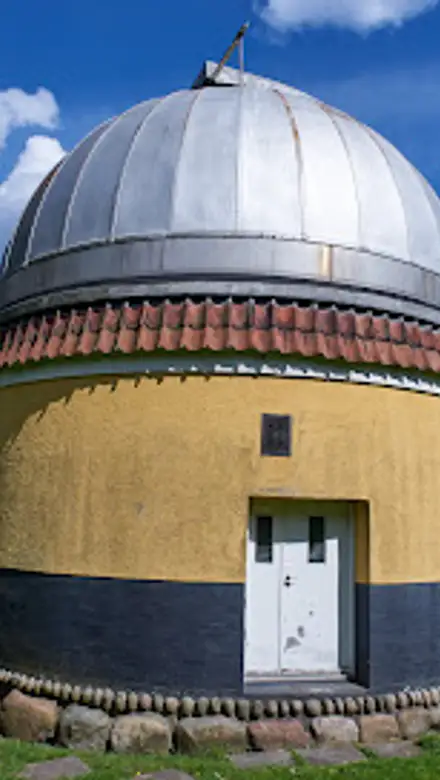
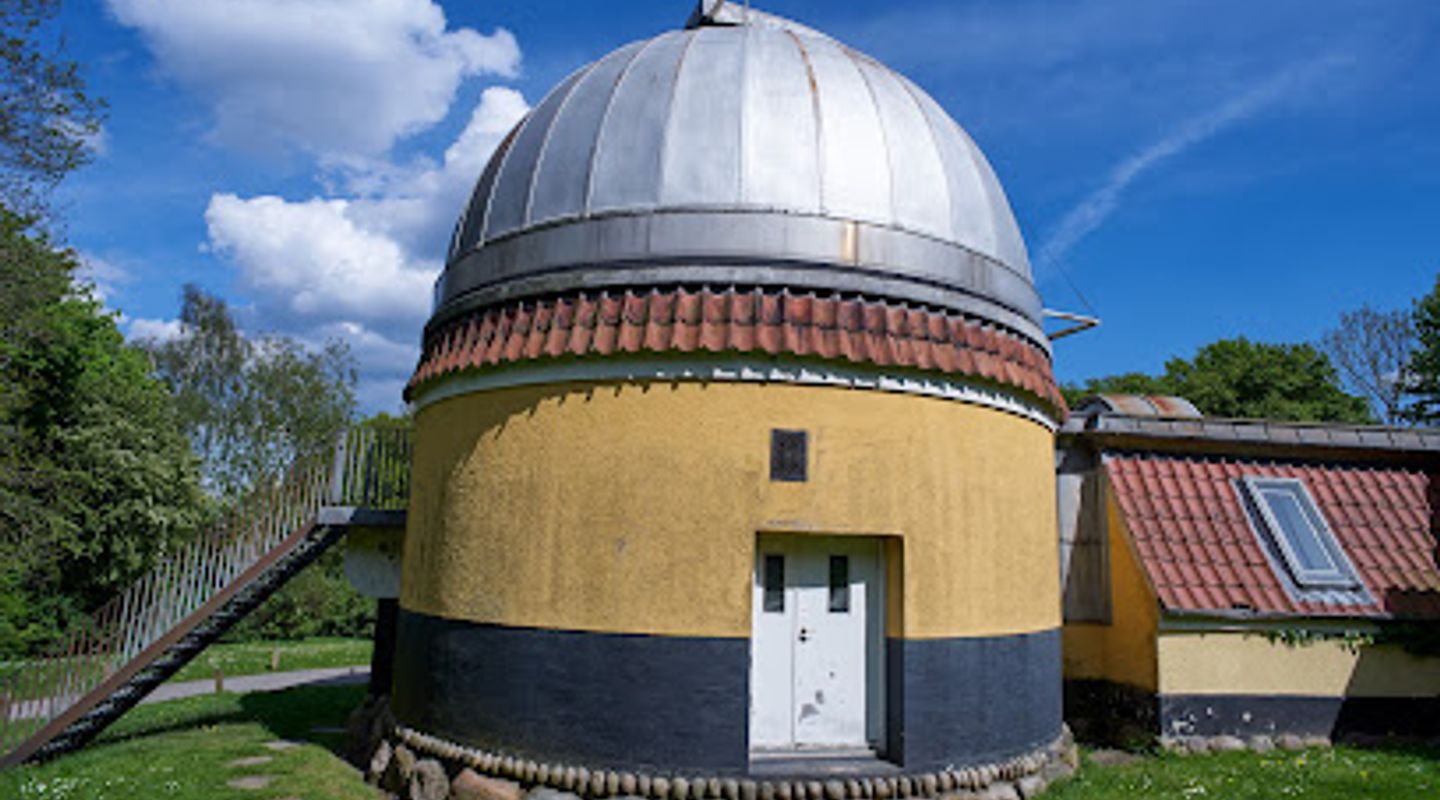
Perched on a forested hill in Aarhus’ Kongelunden area, Ole Rømer Observatory blends century-old Art Nouveau architecture with cutting-edge astronomy. Built in 1911 and now part of Aarhus University’s Science Museums, it houses Denmark’s largest working telescope, offers evening stargazing shows, and sits within a small science park where installations and botanical stones connect skyward wonder with the nature around you.
A brief summary to Ole Rømer Observatory
- Observatorievejen 1, Aarhus, Aarhus C, 8000, DK
- Click to display
- Click to display
- Duration: 1.5 to 2.5 hours
- Budget
-
 Mixed
Mixed
- Mobile reception: 4 out of 5
- Monday 6 pm-10 pm

Know before you go
Hi, I'm Eve. Here are a few practical things to know before exploring Ole Rømer Observatory.
- Book stargazing tours or group presentations well in advance; tickets are limited and released on specific dates for the following month.
- Dress warmly, even in summer. The domes and outdoor areas can feel chilly during evening observations when you are standing still.
- Arrive early enough to explore the exterior architecture and small science park in daylight before your scheduled session begins.
- Bring your own questions about space and astronomy; presenters are used to tailoring explanations for all ages and backgrounds.
- Check language options before booking. Public stargazing tours are usually in Danish, while private groups can often arrange English presentations.
Do you manage this location?
Take control to get all the benefits, like improved information, better appearance, and stronger visibility across AI-powered discovery. Learn more about listing your business on Evendo
Activate your presenceOther nearby places you may find interesting
The closest places of the same kind, if this one is not quite what you had in mind.
Explore Ole Rømer Observatory on the Map
A handpicked selection of must-see spots near Ole Rømer Observatory, mapped for you.
Getting There
-
City bus from central Aarhus
From Aarhus city centre, use a city bus service toward the Højbjerg or Kongelunden area and get off within walking distance of Observatorievejen. The total journey typically takes 20–35 minutes depending on traffic and exact route. A single adult ticket usually costs around DKK 20–30 and can often be bought via ticket machines or mobile apps. Buses run frequently during the day and early evening, but late-night services may be less regular, so check return times in advance.
-
Bicycle from Aarhus C
Cycling from central Aarhus to the observatory takes about 20–30 minutes for most riders. The route is moderately hilly near Kongelunden, with a final ascent up to the observatory’s hilltop location. Surfaces are a mix of city streets and quieter roads, generally suitable for standard city bikes. Lighting is present on main sections, but a good bike light and reflective clothing are important after dark, especially if you are returning from an evening stargazing session.
-
Taxi or rideshare within Aarhus
A taxi or licensed rideshare from central Aarhus to Observatorievejen typically takes 10–20 minutes outside rush hour. Fares commonly fall in the range of DKK 120–200 one way, depending on traffic, time of day and pick-up point. This option offers step-free access directly to the entrance area, which can be convenient for late evening visits or travellers with limited mobility, though you may wish to pre-book for popular time slots.
For the on-the-go comforts that matter to you
-
 Restrooms
-
 Drink Options
-
 Seating Areas
-
 Sheltered Areas
-
 Information Boards
Discover more about Ole Rømer Observatory
Historic hilltop home of Aarhus astronomy
Ole Rømer Observatory crowns a low, wooded rise on the southern edge of Aarhus, where city lights fall away and the sky begins to darken. Completed in 1911 for the German astronomer Friedrich Krüger, it was conceived from the start as a place where serious research and public education would meet under the stars. Today it is operated by Aarhus University’s Science Museums as both an observatory and a compact museum, still rooted in its original educational mission.Named after Danish astronomer Ole Rømer, who first measured the finite speed of light in the 17th century, the site quietly celebrates a national scientific hero. Rømer never worked here, yet his legacy – precise observation, patient measurement and a fascination with celestial mechanics – shapes the stories told inside the domes and lecture spaces.Art Nouveau architecture with a scientific soul
The observatory complex was designed by architect Anton Rosen and is now a listed building, preserved as a fine Danish example of early 20th‑century Art Nouveau. Its curved forms, decorative details and carefully proportioned domes give the place a distinctive character, more like a small villa devoted to the sky than an industrial research facility.Recent restoration works have renewed façades, domes and interiors, reinstating original colours and materials wherever possible. Terrazzo floors, veined pillars with touches of gold leaf, and a central skylight that gently illuminates a relief of Ole Rømer all contribute to an atmosphere that feels both historic and quietly theatrical. Access improvements, including a stair lift and upgraded facilities, make it easier for visitors with reduced mobility to explore the building.Denmark’s largest working telescope
At the heart of the observatory experience is a modern 700 mm telescope, currently the largest functioning instrument of its kind in Denmark. The broad primary mirror gathers light far more efficiently than the human eye, opening up close views of the Moon’s cratered surface, the rings of Saturn, bright star clusters and, under cooperative skies, distant galaxies.Guided evening sessions introduce small groups to the instrument and to whatever the night offers at that time of year. When clouds move in, the focus shifts indoors to astronomy talks, images from space telescopes and the observatory’s own stories. Either way, the emphasis is on hands‑on understanding of how astronomers read the sky, rather than on technology alone.From research outpost to science park hub
For much of the 20th century the observatory functioned as a working base for Aarhus University’s astronomers, before research activity largely moved onto campus. Today it serves primarily as an educational centre, hosting school classes, private groups and public stargazing evenings that bring contemporary astrophysics down to an approachable, human scale.Outside, the grounds have been reshaped into a small science park within the wider Kongelunden recreation area. Paths thread between installations, including stones engraved with botanical texts and light features inspired by constellations, gently extending the learning environment into the surrounding woodland.A tranquil pocket of night sky in the city
Despite its proximity to central Aarhus, the observatory retains a surprisingly secluded feel. Trees buffer the sounds of traffic, and as daylight fades you can sense the city glowing below while the dome opens to a darker band of sky overhead. On clear winter nights, the air can be sharply cold and the constellations crisp; in summer, long twilight gives more time for storytelling before true darkness arrives.Visits typically revolve around a fixed‑time presentation, so the experience feels focused and curated rather than open‑ended. You come here to spend an hour or two fully immersed in the universe, stepping briefly out of everyday routines into a space where time is measured not by clocks but by the slow turning of the heavens.












Your all‑in‑one travel companion app
Explore expert travel guides, compare and book tours, experiences, hotels, and more—all from the palm of your hand. Download now for seamless trip planning wherever your wanderlust takes you.


Explore More of Aarhus
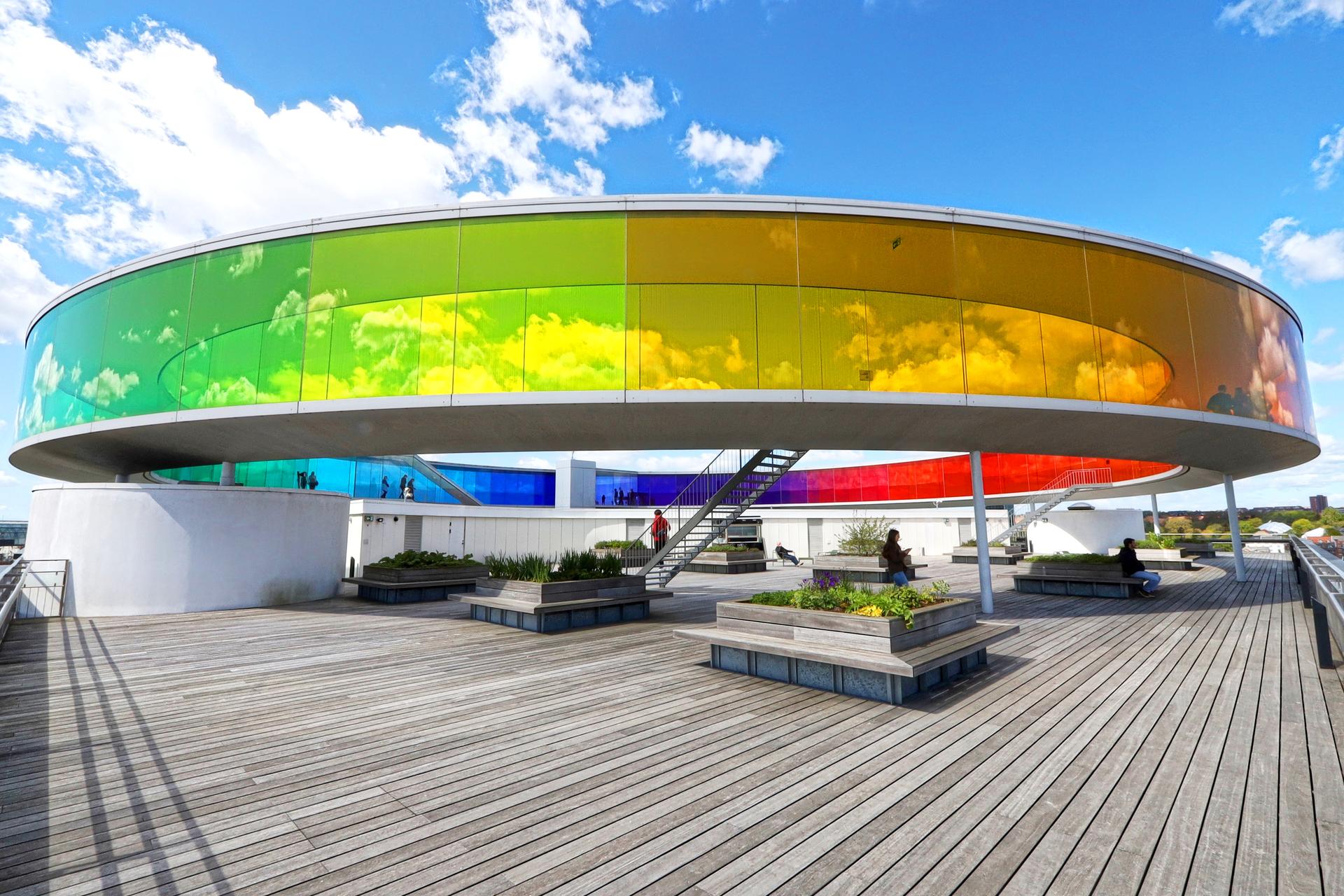
Looking beyond Ole Rømer Observatory? Discover Aarhus for broader travel guides, local hot-spots, and regional highlights.
Explore Aarhus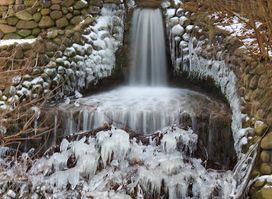
A modest woodland cascade where a forest stream meets Aarhus Bay, adding gentle sound and character to the shoreline between Varna Strand and Ballehage.

Historic Art Nouveau domes, a powerful modern telescope and a forest‑edge science park make Aarhus’ Ole Rømer Observatory an intimate, atmospheric window on the universe.