Hessel Travel Guide
Free Guide: Step into one of Denmark’s last thatched four-winged manors, where Limfjord breezes, creaking barns and lived-in interiors bring country life of a century ago to life.


A brief summary of Hessel
Step into one of Denmark’s last thatched four-winged manors, where Limfjord breezes, creaking barns and lived-in interiors bring country life of a century ago to life.
Herregården Hessel, set on a headland near the Limfjord by Farsø, is one of Denmark’s last fully thatched, four-winged manor farms. Dating back to at least 1391, it now serves as a living agricultural museum, with original late‑19th‑century interiors, barns, stables and traditional breeds. Seasonal events, working demonstrations and a cosy museum café immerse you in country life as it once was on a prosperous Danish estate.
On-site amenities
 Restrooms
 Drink options
 Drinking water
 Food options
 Seating areas
 Picnic areas
 Trash bins
 Information boards
 Visitor centre
Opening hours
- MonClosed
- Tue10 am–4 pm
- Wed10 am–4 pm
- Thu10 am–4 pm
- Fri10 am–4 pm
- Sat10 am–4 pm
- Sun10 am–4 pm
Opening hours as listed on the venue’s Google Business Profile. Hours can change for services and special events, so check with the venue before you go.
- Address
- Hesselvej 40, 9640 Farsø
- Phone
- Website
Getting there
Car from Aalborg
Car from Viborg
Public transport via Farsø or Aars
Cycling in the Hvalpsund area
Discover more about Hessel
Manor on the Limfjord Headland
Herregården Hessel sits on a gentle rise above the Limfjord, surrounded by fields, shelterbelts and distant water views that explain why this spot has been occupied since the Middle Ages. The manor is recorded as early as 1391, and its strategic position near the narrow Hvalpsund crossing once made it a natural lookout over passing ships. Walking through the gate into the cobbled courtyard, you step into a self-contained farm world that feels removed from modern Himmerland.Hessel is one of the last four-winged, thatched manor farms in Denmark, its buildings forming a closed rectangle around the central yard. The low whitewashed wings, heavy oak beams and golden thatch give the place a distinctly rural character, more working farm than aristocratic palace. Beyond the courtyard, open fields and grazing paddocks reinforce that this was always a place of livestock, crops and practical labour.
Surviving Fire, Rebuilding and Renewal
Although the estate’s history stretches back over six centuries, much of what you see today reflects both disaster and resilience. Large parts of Hessel burned in the early 1700s, and the current ensemble is the result of careful rebuilding blended with older surviving structures. The great barn, a high-timbered structure with oak dating from around 1650, is the most tangible link to the 17th century, its mighty roof timbers and plank floors still dominating one side of the courtyard.Over time the manor passed through a long succession of owners, from medieval nobles to later landowners who shaped the surrounding fields and shoreline. In the 20th century the estate gradually shifted from private residence to heritage site, eventually becoming an agricultural museum. Today, ongoing restoration work – including periodic renewal of the thatch and stabilisation of the old walls – ensures that the buildings remain both authentic and structurally sound.
Rooms Frozen in a Rural Past
Inside the farmhouse, time appears to pause around the turn of the 20th century. The rooms are furnished much as they were during the tenure of the last private owners, the Elle family, with heavy wooden tables, tiled stoves, painted chests and patterned textiles. Everyday objects – lamps, crockery, work clothes and toys – sit where they would have been used, suggesting that their owners have only just stepped outside.Explanatory texts in English help you interpret details you might otherwise miss, from the layout of the kitchen range to the subtle hierarchy of parlours and bedrooms. Rather than grand state rooms, the emphasis is on lived-in domestic spaces that illustrate how a prosperous rural household combined comfort with strict routines and hard work.
A Living Agricultural Museum
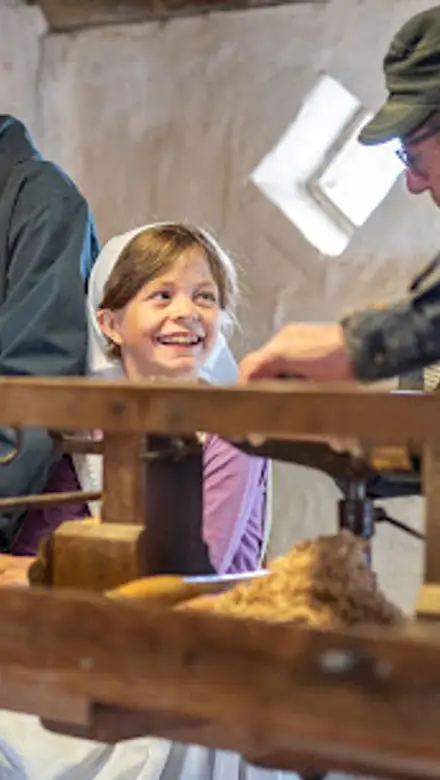
Out in the yard and surrounding buildings, Hessel presents itself as an open-air manual of traditional Danish farming. The estate was historically a steer farm, and you still find stalls for cattle alongside stables for horses, sheep pens and poultry runs. Seasonal activities bring the site to life: on selected days volunteers demonstrate ploughing with horses, haymaking with old machinery, and crafts such as blacksmithing, butter-churning or textile work.Animal pens, farm implements and wagons tell the story of how food was produced and transported before tractors became commonplace. You can trace the route of grain from field to barn, and see how the pond served livestock while drinking water for people came from a spring. The emphasis throughout is on conveying the rhythms of work over the year and the close relationship between manor, tenant farmers and the surrounding landscape.
Café, Trails and Fjordside Calm
The museum café offers coffee, tea, cakes, light lunches and cold drinks, providing a relaxed break in between exploring buildings and exhibits. Brought food can be enjoyed outdoors or in the café when you buy something to drink, making it easy to linger for a few hours. Outside the core manor area, waymarked paths and longer hiking trails thread through fields and woodland on the nearby peninsula, inviting you to extend your visit into a half-day in the countryside.Manor Hessel is open seasonally from early May to late September, generally from late morning to mid-afternoon, with children under 18 admitted free and adults paying a modest entrance fee with slightly higher prices in peak summer weeks. Special event days devoted to harvest, old crafts or themed activities add extra layers of storytelling, but even on a quiet day the blend of historic buildings, rural scenery and gentle Limfjord air makes Hessel a rewarding pause in any Himmerland itinerary.
Evendo Review Centre
 Google
Guest reviews
Best time to go
Quietest: Jan, Feb & Nov · before 8am or from 7pm
Busy times are Evendo estimates for a typical year, to help you plan. Actual crowds vary with events, school holidays and the weather.
Explore Hessel on the map
A handpicked selection of must-see spots near Hessel, mapped for you.
Get your free copy of our complete guide to Hessel, delivered straight to you.
Everything on this page, from opening hours and how to get there to Eve’s tips and the best time to go, in one PDF you can read offline, print or share.
Already have an account? Sign in
Your Hessel guide is ready.
We'll send it to · Not you? Sign out

Getting your guide ready…
We are putting together a fresh copy of the Hessel guide. This can take up to a minute.
This can take a few moments. If your browser asks, choose Allow so the download can start. You'll find the guide in your Downloads folder.
Nothing happened? Download it again
Sorry, the guide is taking longer than usual. Please try again in a minute, or get it by email instead.
Other nearby places you may find interesting
The closest places of the same kind, if this one is not quite what you had in mind.
-
Abbey Mill Historic Abbey Mill on Mossø’s shore, where Denmark’s longest wooden building meets bird-rich wetlands, gentle trails and a tranquil corner of the Gudenå River.
-
Clausholm Castle A moated Baroque manor near Hadsten, where painted ceilings, royal love stories and terraced gardens bring Denmark’s aristocratic past vividly to life.
-
Slotsholmen Tranquil green islet at Silkeborg’s origins, where a vanished riverside castle meets calm water views, quiet lawns and a gentle sense of early local history.
-
The Manor House of Hald An 18th-century manor fronting centuries-old ruins, deep forest and Hald Lake, where writers find seclusion and visitors wander through Danish history in nature.
-
Marselisborg Castle Royal retreat above Aarhus Bay, where sculpture-filled gardens, a rose-scented park and quiet ceremony surround Denmark’s Jutland summer palace.
Swipe for more places
More to explore near Hessel

 Best experiences near Hessel
 Best hotels near Hessel
 Best landmarks near Hessel
 Best attractions near Hessel
 Best shops near Hessel
 Best restaurants near Hessel
 Best bars near Hessel
Do you manage this location?
Take control to get all the benefits, like improved information, better appearance, and stronger visibility across AI-powered discovery.
Explore more

Explore more of Central Jutland
Explore Central Jutland in Denmark: A perfect blend of natural beauty, cultural heritage, and family-friendly attractions.
Explore Central Jutland
Explore more of Denmark
Discover Denmark: A perfect blend of history, modern design, and the cozy concept of hygge. Explore vibrant cities, serene landscapes, and world-class cuisine.
Explore Denmark