Cykelslangen, Copenhagen Travel Guide
An elegant orange bicycle bridge curling above Copenhagen’s harbor, Cykelslangen turns a once-awkward junction into a flowing, scenic showcase of bike-first urban design.
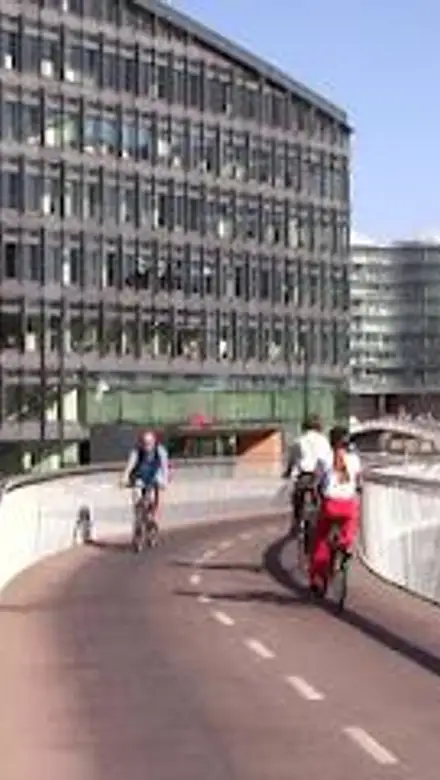
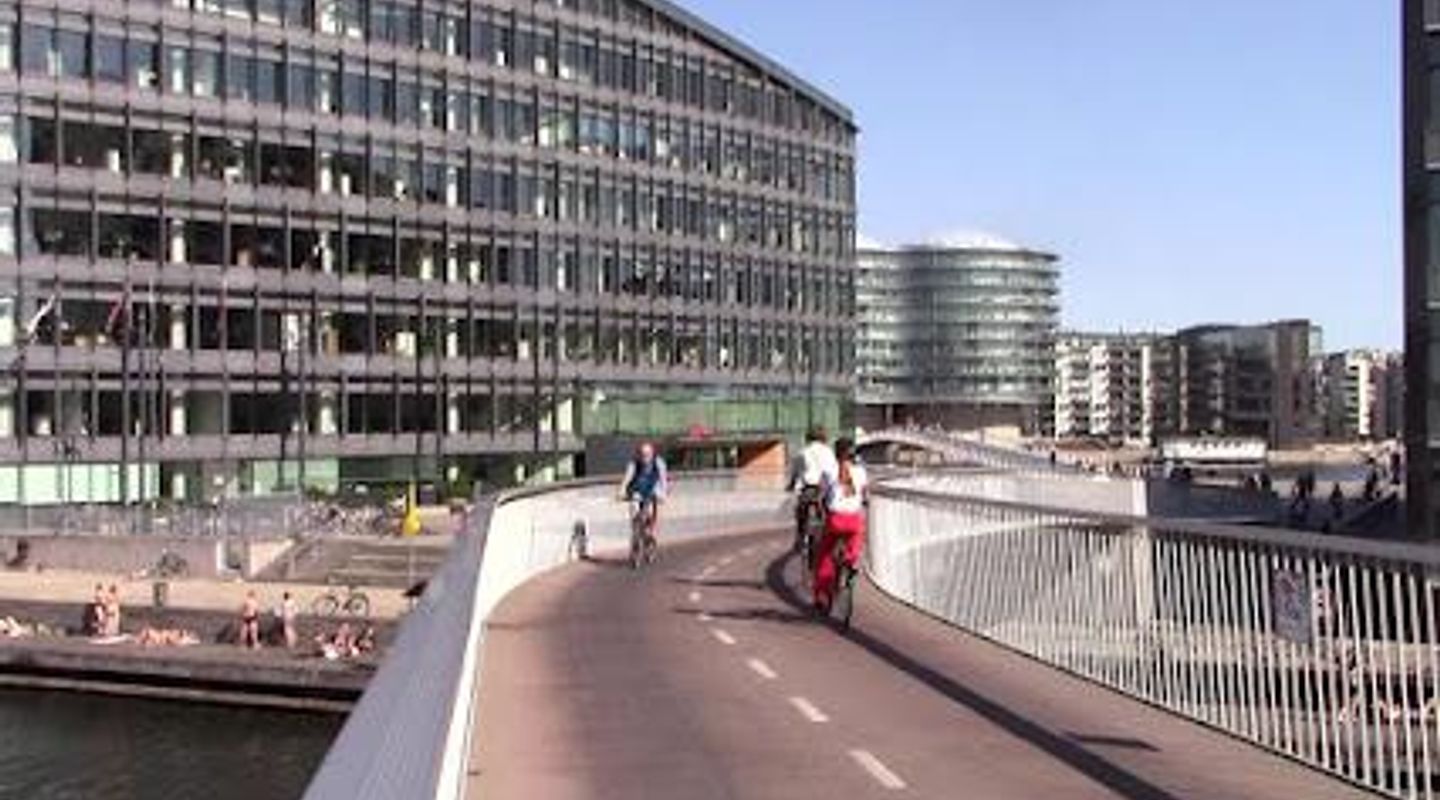
Cykelslangen, the bright orange "Bicycle Snake" in Copenhagen’s Vesterbro district, is an elegant elevated bridge created almost entirely for cyclists. Completed in 2014 by Dissing+Weitling, the 220m serpentine structure glides between glassy mall façades and the harborfront, lifting riders above traffic and pedestrians. As you curve over the water, the bridge doubles as an urban viewpoint, offering snapshots of Gasværkshavnen, Bryggebroen and the city’s evolving waterfront, while showcasing Copenhagen’s dedication to people-first, bike-centric design.
A brief summary to Cykelslangen
- Cykelslangen, Vesterbro/Kongens Enghave, Vesterbro/Kongens Enghave, 1560, DK
- Duration: 0.5 to 1.5 hours
- Free
-
 Outdoor
- Mobile reception: 5 out of 5

Know before you go
Hi, I'm Eve. Here are a few practical things to know before exploring Cykelslangen.
- Bring or rent a bicycle to experience the full flowing curve of Cykelslangen; riding it is more engaging than simply walking across.
- Use the bridge in off-peak hours, such as mid-morning or late evening, if you prefer to avoid the densest commuter bike traffic.
- Pause at the railings midway to enjoy harbor views and watch the constant stream of cyclists moving between Bryggebroen and Kalvebod Brygge.
- Be mindful of speed and keep to the right when cycling; this is an important commuter route with many locals using it daily.
- On windy or wet days, take extra care on the curves, as the elevated, exposed position can make conditions feel more intense.
Do you manage this location?
Take control to get all the benefits, like improved information, better appearance, and stronger visibility across AI-powered discovery. Learn more about listing your business on Evendo
Activate your presenceOther nearby places you may find interesting
The closest places of the same kind, if this one is not quite what you had in mind.


Explore Cykelslangen on the Map
A handpicked selection of must-see spots near Cykelslangen, mapped for you.
Unlock the Best of Cykelslangen
Buy tickets
-
No tickets available
Book tours with entry


Book tours without entry
-
No tours available
Getting There
-
S-train and short walk
From Copenhagen Central Station, take the S-train one stop to Dybbølsbro Station, a ride of about 3–4 minutes. Trains run very frequently throughout the day on standard city tickets, typically around 24–36 DKK depending on zones and ticket type. From Dybbølsbro it is an easy 10–15 minute walk on mostly flat pavements through the Vesterbro/harbor area to reach the approaches to Cykelslangen, suitable for most visitors but less ideal in heavy rain or strong winds.
-
City bus to Fisketorvet area
Several city bus lines serve the Fisketorvet shopping center next to Cykelslangen, with typical journey times of 10–25 minutes from central Copenhagen depending on traffic. A single bus fare within the city is usually around 24 DKK when bought as a regular ticket. Buses stop close to the mall entrances, from where you can walk a few minutes on level, urban terrain to the bridge. Services run regularly but can be less frequent late at night and on weekends.
-
Bicycle via city cycle network
Rent a bicycle from one of Copenhagen’s many bike rental shops or bike-share systems in the central districts and follow the signposted harborfront and cycle tracks toward Kalvebod Brygge and Fisketorvet. Depending on your starting point in the inner city, the ride typically takes 10–20 minutes along dedicated bike lanes. Rental prices vary, but expect roughly 100–150 DKK for a standard day rental. Surfaces are paved and mostly flat, but be prepared for strong winds along the water and dense commuter traffic during rush hours.
For the on-the-go comforts that matter to you
-
 Restrooms
-
 Drink Options
-
 Drinking Water
-
 Food Options
-
 Seating Areas
-
 Sheltered Areas
-
 Trash Bins
-
 Information Boards
Discover more about Cykelslangen
A bright orange ribbon above Copenhagen’s harbor
Cykelslangen, the "Bicycle Snake", coils gracefully above Copenhagen’s inner harbor between Vesterbro and Havneholmen, its vivid orange deck cutting a bold line between steel, glass and water. Designed by Danish studio Dissing+Weitling and opened in 2014, the bridge carries bicycle and pedestrian traffic across Gasværkshavnen, linking the busy Kalvebod Brygge corridor with the harborfront path and Bryggebroen beyond.At around 220 meters in length and roughly 4.6 meters wide, the bridge feels surprisingly intimate, more like an elevated street than a piece of heavy infrastructure. A gentle, continuous ramp eliminates the need for stairs, turning what was once an awkward choke point by the Fisketorvet shopping center into a smooth, flowing connection that fits neatly into Copenhagen’s wider cycling network.From problem junction to cycle superhighway
Before Cykelslangen, cyclists traveling between Vesterbro and Islands Brygge had to dismount, haul bikes down a staircase and weave slowly through a crowded harborside plaza. This pinch point clashed with a city that prides itself on fast, safe cycling. The solution was not just another ramp, but a dedicated bike bridge that would elevate riders above the clutter and give them their own clear route.The resulting structure functions almost like a cycle "superhighway". Its snaking path lengthens the route just enough to keep the gradient comfortable, while the consistent width and clear sightlines allow a steady, continuous pace. Thousands of commuters and leisure riders now glide across daily, reinforcing Copenhagen’s reputation as one of the world’s most bicycle-focused cities.Architecture that moves with the rider
Cykelslangen is as much an experience as it is a shortcut. Slender white columns lift the orange deck several meters above the quay, leaving space for life on the waterfront below. From a distance the bridge reads as a single sweeping stroke; on it, you feel the subtle banking of each curve, the way the path gently rises and dips between buildings and out over the water.The design choreographs motion and views. Heading toward the harbor, the city briefly falls away and the water opens under you. Glimpses of Bryggebroen, moored boats and the skyline appear between guardrails and façades. At night, the bridge’s lighting underscores its sinuous outline and turns it into a luminous thread across the dark basin.A symbol of Copenhagen’s cycling culture
More than a local shortcut, Cykelslangen has become a visual shorthand for modern Copenhagen: a place where infrastructure is designed for people first, cars second. It embodies the city’s push to reduce emissions, encourage everyday cycling and create inviting public spaces in former commercial docklands.The bridge also animates an area that might otherwise feel like a backdrop of offices, highways and a mall. Cyclists streaming overhead and pedestrians pausing on the quayside below together bring a rare human scale to this stretch of harbor, illustrating how well-considered infrastructure can reshape not only commutes but the character of an entire waterfront district.Experiencing the Bicycle Snake up close
Visiting Cykelslangen is simple yet rewarding, whether you arrive on two wheels or on foot. Pedestrians can access it via ramps and adjoining paths, watching the constant flow of riders and pausing to look down at the harbor. Cyclists experience it more kinetically: a gentle ascent from the street, a brief, elevated cruise, and then a swooping descent toward Bryggebroen and the car-free promenades beyond.There are no ticket booths or formal opening hours to consider; the bridge functions as part of the city’s public realm, open day and night. In calm weather, it is a tranquil place to appreciate how seamlessly cycling has been woven into Copenhagen’s urban fabric. On a breezy day, leaning on the railings with the wind off the harbor, you feel the exposed, maritime side of the city that this orange ribbon so elegantly connects.












Your all‑in‑one travel companion app
Explore expert travel guides, compare and book tours, experiences, hotels, and more—all from the palm of your hand. Download now for seamless trip planning wherever your wanderlust takes you.


Explore More of Copenhagen
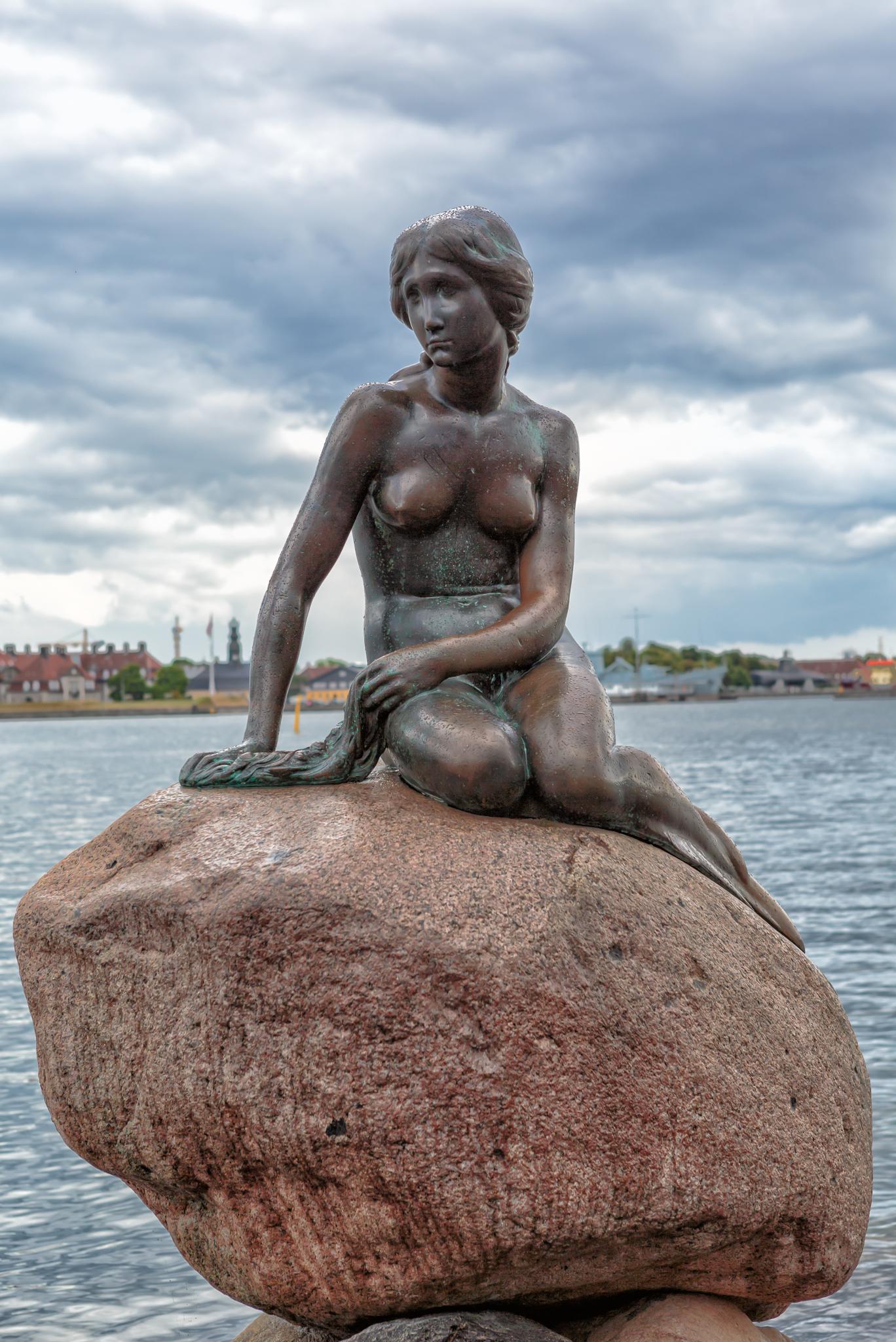
Looking beyond Cykelslangen? Discover Copenhagen for broader travel guides, local hot-spots, and regional highlights.
Explore Copenhagen