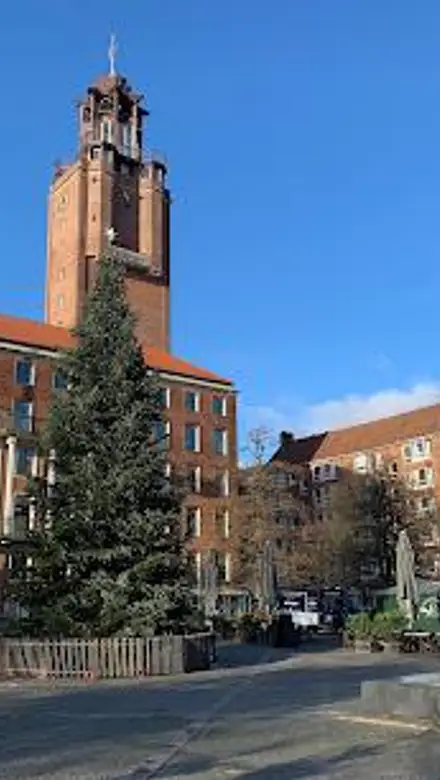
Frederiksberg Town Hall, Copenhagen Travel Guide
Free Guide: Functionalist brick landmark with a 60-metre clock tower, Frederiksberg Town Hall is the compact municipality’s working civic heart amid shops, parks and cafés.


A brief summary of Frederiksberg Town Hall
Functionalist brick landmark with a 60-metre clock tower, Frederiksberg Town Hall is the compact municipality’s working civic heart amid shops, parks and cafés.
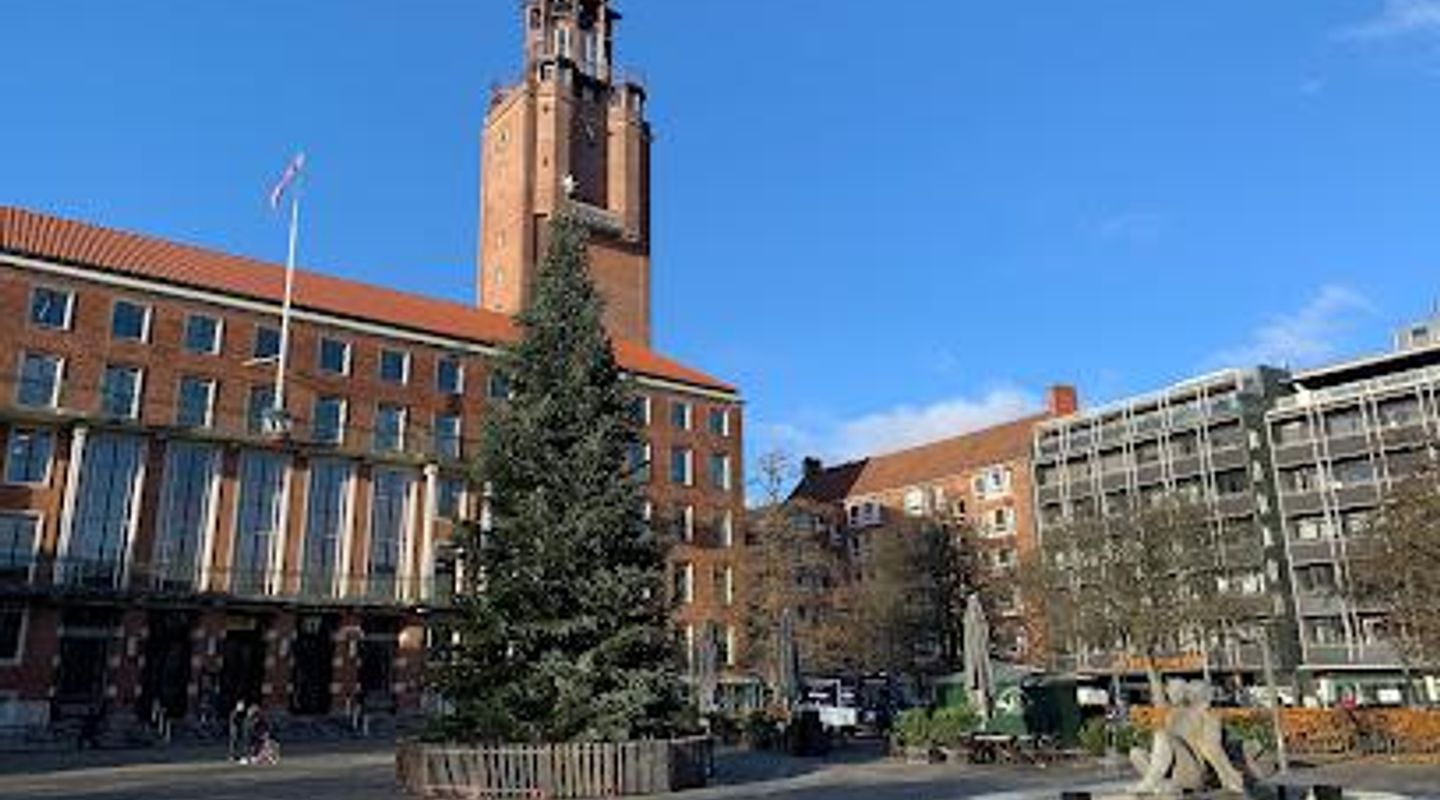
Rising over busy Smallegade with its 60-metre clock tower and warm brick façades, Frederiksberg Town Hall is the civic heart of this independent municipality within Copenhagen. Built between 1942 and 1953 to Henning Hansen’s functionalist design, it combines clean modern lines with subtle retro details, from wood-and-brass interiors to an old-school paternoster lift. The surrounding square, metro access and nearby shopping streets make it an easy and atmospheric stop between Frederiksberg’s parks, cafés and cultural venues.
On-site amenities
 Restrooms
 Seating areas
 Information boards
Opening hours
- Mon9 am–5 pm
- Tue9 am–1 pm
- Wed9 am–1 pm
- Thu9 am–5 pm
- Fri9 am–1 pm
- SatClosed
- SunClosed
Opening hours as listed on the venue’s Google Business Profile. Hours can change for services and special events, so check with the venue before you go.
- Address
- Smallegade 1, 2000 Frederiksberg
- Phone
- Website
Getting there
Metro from central Copenhagen
Bus within Frederiksberg and nearby districts
Cycling from inner Copenhagen
Taxi or ride-hailing within the Copenhagen area
Discover more about Frederiksberg Town Hall
A modern city hall with quiet gravitas
Frederiksberg Town Hall anchors the central crossroads of Smallegade and Falkoner Allé with calm authority. Completed in 1953 after a long wartime build, the complex stretches roughly the size of a football pitch, its tall, rhythmic brick façades and narrow window bands expressing a distinctly Danish take on functionalism. The materials are simple and robust, yet the composition feels carefully choreographed, from the recessed entrances to the way the long wings frame the streets and small forecourts.Step inside on a weekday and you encounter a working building rather than a museum piece. Corridors lead to council offices and meeting rooms, while the main council chamber and ceremonial halls host everything from local democracy in action to civil weddings. It is here that Frederiksberg’s municipal life is administered for more than 100,000 residents packed into one of Denmark’s most densely populated areas.
From rural parish to independent municipality
The story of this town hall mirrors Frederiksberg’s own transformation. Until the mid‑19th century, the area was largely rural, dotted with farms and small houses linked to the old village of Solbjerg. As building restrictions outside Copenhagen’s ramparts eased, Frederiksberg expanded rapidly and became an independent municipality, eventually outgrowing earlier, more modest administrative buildings nearby.By the 1930s, the existing city hall facilities were no longer adequate, and an architectural competition called for a new home for the council. War, material shortages and changing plans delayed construction, but the final project drew on architect Henning Hansen’s vision: a rational, generous complex suited to a modern welfare municipality. Later architects Carl H. Nimb and Helge Holm guided the work to completion after Hansen’s death.
Brick tower, clock, and the view over Copenhagen
The town hall’s most distinctive feature is its slender brick tower, rising around 60 metres above the street. The tower’s clock face is visible from much of central Frederiksberg and has become a local point of orientation. The vertical shaft balances the long horizontal wings, creating a profile that subtly recalls other Nordic city halls while remaining very much its own building.On selected guided visits, the tower opens for escorted climbs, revealing a panorama that stretches across Frederiksberg’s leafy villa streets, parks and canals, and over to the Copenhagen skyline. From up here, it is easy to grasp how this compact municipality fits like an island within the larger capital, its parks acting as green lungs among dense blocks of housing.
Interior details and civic life within
Behind the somewhat reserved exterior, the interiors preserve a mid‑20th‑century character with polished stone floors, timber panelling and discreet decorative works commissioned when the building opened. One highlight often noticed by observant visitors is the old‑fashioned open paternoster lift, still in operation and a rare sight today. It glides continuously between floors, a moving reminder of the era’s engineering optimism.Ceremonial rooms host weddings and official receptions, while more practical spaces house citizen‑service counters, planning departments and social services. The building accommodates hundreds of municipal employees, underpinning everything from local schools and libraries to green‑space maintenance and cultural programming.
In the middle of Frederiksberg’s everyday rhythm
Outside, the town hall sits at the seam between civic quarter, shopping streets and residential blocks. To one side, Smallegade runs past small ponds and historic houses towards Frederiksberg Park; to the other, Falkoner Allé leads to a major shopping centre, cinema and performance venues. Metro stations lie just a short walk away, so the building is woven into residents’ daily routines, whether they are heading to work, study, errands or a stroll in the park.The square and pavements around the town hall are often used as casual meeting spots or for small civic events. Even if you only pause for a moment, the combination of brick façades, ringing clock and steady footfall offers a concise introduction to how Frederiksberg sees itself: urban, efficient and quietly proud of its autonomy.
Frederiksberg identity in brick and stone
More than an address for official paperwork, Frederiksberg Town Hall embodies the municipality’s identity. Its scale signals seriousness, yet its detailing and human‑sized entrances keep it approachable. Put together with the surrounding parks, cultural institutions and educational campuses, it helps define an area known both for high‑density housing and generous public amenities.For architecture enthusiasts, the building is a rewarding example of Danish post‑war civic design. For others, it serves as a convenient landmark and a glimpse into how local governance is physically organised in Denmark. Whether you step inside briefly or simply orient yourself by its tower, the town hall quietly anchors this corner of Greater Copenhagen.
Evendo Review Centre
 Google
Guest reviews
Best time to go
Quietest: Jan, Feb & Mar · before 7am or from 7pm
Busy times are Evendo estimates for a typical year, to help you plan. Actual crowds vary with events, school holidays and the weather.
Explore Frederiksberg Town Hall on the map
A handpicked selection of must-see spots near Frederiksberg Town Hall, mapped for you.
Get your free copy of our complete guide to Frederiksberg Town Hall, delivered straight to you.
Everything on this page, from opening hours and how to get there to Eve’s tips and the best time to go, in one PDF you can read offline, print or share.
Already have an account? Sign in
Your Frederiksberg Town Hall guide is ready.
We'll send it to · Not you? Sign out

Getting your guide ready…
We are putting together a fresh copy of the Frederiksberg Town Hall guide. This can take up to a minute.
This can take a few moments. If your browser asks, choose Allow so the download can start. You'll find the guide in your Downloads folder.
Nothing happened? Download it again
Sorry, the guide is taking longer than usual. Please try again in a minute, or get it by email instead.
Unlock the best of Frederiksberg Town Hall
Skip-the-line tickets, guided tours with entry, and walking tours of the area, booked in a few clicks.


Other nearby places you may find interesting
The closest places of the same kind, if this one is not quite what you had in mind.
-
-
-

-
-


Swipe for more places
More to explore near Frederiksberg Town Hall
-
 Best experiences near Frederiksberg Town Hall
-
 Best hotels near Frederiksberg Town Hall
-
 Best landmarks near Frederiksberg Town Hall
-
 Best attractions near Frederiksberg Town Hall
-
 Best shops near Frederiksberg Town Hall
-
 Best restaurants near Frederiksberg Town Hall
-
 Best bars near Frederiksberg Town Hall


Do you manage this location?
Take control to get all the benefits, like improved information, better appearance, and stronger visibility across AI-powered discovery.
Explore more

Explore more of Copenhagen
Discover Copenhagen: A perfect blend of history, modernity, and vibrant culture, where picturesque canals, stunning architecture, and world-class dining await you.
Explore Copenhagen
Explore more of Denmark
Discover Denmark: A perfect blend of history, modern design, and the cozy concept of hygge. Explore vibrant cities, serene landscapes, and world-class cuisine.
Explore Denmark