Koldinghus Travel Guide
Free Guide: A 750-year-old royal fortress reborn: where medieval ruins meet contemporary design in Denmark's most iconic castle.


A brief summary of Koldinghus
A 750-year-old royal fortress reborn: where medieval ruins meet contemporary design in Denmark's most iconic castle.
Koldinghus is a 750-year-old Danish royal castle in Kolding that evolved from a medieval fortress into a Renaissance palace and royal residence. Destroyed by fire in 1808, it stood as a romantic ruin for nearly a century before undergoing award-winning restoration (1976–1991). Today it functions as a world-class museum housing the Kongernes Samling (Royal Danish Collection), featuring permanent exhibitions of royal artifacts, Flora Danica porcelain, historical costumes, and rotating international exhibitions. Visitors can climb the iconic Giant's Tower for panoramic views of Kolding and the fjord, explore the castle's dramatic architectural blend of original ruins and contemporary design, and dine in the atmospheric Madkælderen restaurant.
On-site amenities
 Restrooms
 Drink options
 Food options
 Seating areas
 Information boards
 Visitor centre
Opening hours
- Every day10 am–5 pm
Opening hours as listed on the venue’s Google Business Profile. Hours can change for services and special events, so check with the venue before you go.
- Address
- Koldinghus 1, 6000 Kolding
- Phone
- Website
Getting there
Train and Local Bus
Car and Parking
Bicycle
Guided Tour from Kolding City Center
Discover more about Koldinghus
Seven Centuries of Royal Power and Transformation
Koldinghus was founded in 1268 by King Erik V as a strategic fortress to defend Denmark's southern border against the Duchy of Schleswig. Positioned on a commanding hilltop overlooking the town of Kolding, the castle's original design featured wooden palisades and a protective moat. Over the following centuries, successive Danish monarchs transformed it from a military stronghold into one of the kingdom's most important royal residences. The north wing, constructed by King Christopher III in the 1440s, remains one of Denmark's most significant medieval castle buildings. By the mid-16th century, King Christian III had expanded the castle into a four-winged structure around a central courtyard, adding the east and south wings and converting it into a purely civilian royal palace—a revolutionary concept for its time. King Christian IV later added the magnificent Giant's Tower and a Renaissance chapel between 1598 and 1603, while King Frederik IV undertook extensive Baroque renovations in the early 18th century.
Catastrophe and the Romantic Ruin Era
On a fateful night in 1808, during the Napoleonic Wars, Spanish auxiliary troops billeted at Koldinghus lit fires in the castle's fireplaces to ward off the cold. The flames spiraled out of control, consuming the entire structure and reducing centuries of royal history to smoldering ruins. The castle remained largely abandoned and exposed to the elements for nearly a century, becoming a haunting symbol of Denmark's past. During this period, the ruins attracted notable visitors, including the famous Danish author Hans Christian Andersen, who was drawn to the romantic melancholy of the decaying fortress. The castle's isolation and picturesque decay made it a subject of artistic fascination throughout the 19th century.
Visionary Restoration and Contemporary Design
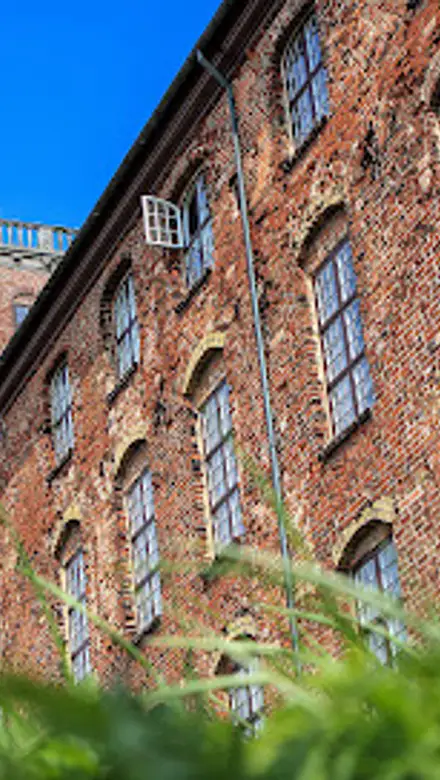
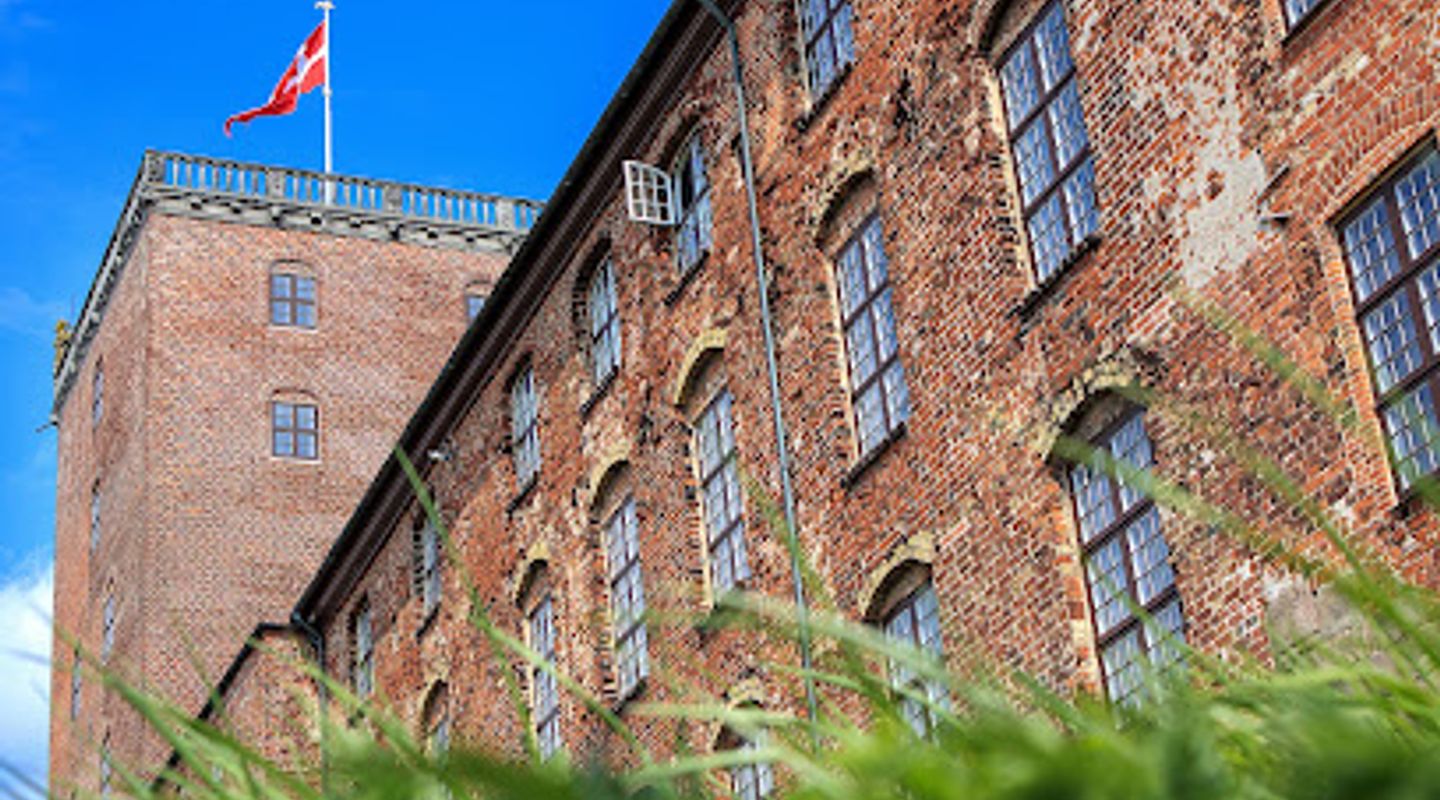
Restoration efforts began in earnest during the 1870s, but the most transformative work occurred between 1976 and 1991 under the direction of architects Inger and Johannes Exner. Rather than attempting to recreate the castle as it once was, they adopted an innovative philosophy: preserve the ruin as a living document of history while introducing modern materials and design to make the structure functional and safe. Laminated wooden columns and contemporary steel structures were inserted throughout to support new roofs and floors, creating a striking visual dialogue between ancient brick walls and 20th-century craftsmanship. This approach earned Koldinghus the prestigious Europa Nostra Award in 1993, recognizing it as an outstanding example of cultural heritage preservation. The restoration revealed the castle's architectural evolution, with visible layers of Gothic, Renaissance, and Baroque construction now exposed as part of its narrative.
A Museum of Royal Life and Danish Heritage
Today, Koldinghus serves as the primary venue for the Kongernes Samling (The Royal Danish Collection), a network of royal museums that also includes Rosenborg Castle and Amalienborg Palace in Copenhagen. The castle's exhibition spaces showcase an extraordinary array of royal artifacts, including paintings, weapons, tapestries, and the celebrated Flora Danica porcelain collection. The Royal Dressing Workshop allows visitors to try on historical costumes, creating an immersive connection to the lives of Danish royalty. Rotating special exhibitions explore specific periods and figures in Danish royal history, such as King Christian V and Queen Charlotte Amalie, often featuring theatrical presentations by costumed interpreters who bring historical narratives to life. The castle's atmospheric rooms—including Christian III's Chapel, the Knight's Hall, and Frederik IV's Hall—serve both as exhibition spaces and as functional venues for conferences and cultural events.
The Giant's Tower and Panoramic Vistas
The most iconic feature of Koldinghus is the Giant's Tower, a massive structure originally crowned with four statues representing giants from Greek and Roman mythology. Today, only the statue of Hercules remains atop the tower, a solitary sentinel overlooking the city. Climbing the tower's narrow spiral staircase rewards visitors with breathtaking 360-degree views of Kolding, the surrounding fjord, and the castle lake below. The tower offers a perspective that echoes the castle's original purpose: from this vantage point, medieval guards would have spotted approaching enemies from miles away. Modern visitors experience the same sense of dominion over the landscape, though now in the context of peaceful contemplation rather than military vigilance.
Engaging Experiences for All Ages
Koldinghus caters to diverse audiences through interactive programming and family-friendly activities. During school holidays, the castle hosts creative workshops and guided experiences designed for children, encouraging them to explore the castle's dungeons, imagine life as a royal guard, and engage with history through play. The castle's mobile app provides additional context and interactive features for self-guided exploration. The Madkælderen restaurant, located in the castle's basement, offers dining in an atmospheric setting, with meals presented with the elegance befitting a royal residence. The combination of serious historical scholarship, contemporary art and design, and accessible family programming makes Koldinghus a destination that appeals to history enthusiasts, architecture students, casual tourists, and multi-generational family groups alike.
Evendo Review Centre
 Google
Guest reviews
Best time to go
Quietest: Jan, Feb & Dec · before 9am or from 6pm
Busy times are Evendo estimates for a typical year, to help you plan. Actual crowds vary with events, school holidays and the weather.
Explore Koldinghus on the map
A handpicked selection of must-see spots near Koldinghus, mapped for you.
Get your free copy of our complete guide to Koldinghus, delivered straight to you.
Everything on this page, from opening hours and how to get there to Eve’s tips and the best time to go, in one PDF you can read offline, print or share.
Already have an account? Sign in
Your Koldinghus guide is ready.
We'll send it to · Not you? Sign out

Getting your guide ready…
We are putting together a fresh copy of the Koldinghus guide. This can take up to a minute.
This can take a few moments. If your browser asks, choose Allow so the download can start. You'll find the guide in your Downloads folder.
Nothing happened? Download it again
Sorry, the guide is taking longer than usual. Please try again in a minute, or get it by email instead.
Other nearby places you may find interesting
The closest places of the same kind, if this one is not quite what you had in mind.
-
-
-
-
-


Swipe for more places
More to explore near Koldinghus

 Best experiences near Koldinghus
 Best hotels near Koldinghus
 Best landmarks near Koldinghus
 Best attractions near Koldinghus
 Best shops near Koldinghus
 Best restaurants near Koldinghus
 Best bars near Koldinghus
Do you manage this location?
Take control to get all the benefits, like improved information, better appearance, and stronger visibility across AI-powered discovery.
Explore more

Explore more of East Jutland
Discover East Jutland, Denmark's enchanting region blending vibrant cities, rich history, and stunning natural landscapes, perfect for every type of traveler.
Explore East Jutland
Explore more of Denmark
Discover Denmark: A perfect blend of history, modern design, and the cozy concept of hygge. Explore vibrant cities, serene landscapes, and world-class cuisine.
Explore Denmark