St. Mary’s Church (Mariakyrkan), Helsingborg
Medieval brick Gothic parish church in Helsingborg’s old town, blending 14th‑century architecture, fine sacred art and a living Lutheran congregation.
St. Mary’s Church, or Mariakyrkan, is Helsingborg’s medieval heart: a red-brick Gothic basilica that has anchored the old town since the 14th century. Built on the foundations of a 12th‑century Romanesque church, it blends soaring vaults, warm brickwork and exquisite furnishings, including a richly carved 15th‑century altarpiece and historic pulpit. Just a few steps from the main square and the Kärnan tower, this working Lutheran parish remains both a quiet sanctuary and a vivid link to Helsingborg’s Danish and Swedish past.
A brief summary to St. Mary Church
- Mariagatan 8B, Helsingborg, 252 23, SE
- Click to display
- Click to display
- Duration: 0.5 to 1.5 hours
- Free
-
 Indoor
- Mobile reception: 5 out of 5
- Monday 10 am-4 pm
- Tuesday 10 am-7 pm
- Wednesday 8 am-4 pm
- Thursday 10 am-4 pm
- Friday 10 am-4 pm
- Saturday 10 am-5 pm
- Sunday 10 am-5 pm

Know before you go
Hi, I'm Eve. Here are a few practical things to know before exploring St. Mary Church.
- Check service times in advance if you want to explore the interior quietly; outside of worship hours the church is often open for individual visitors.
- Bring a pair of binoculars or use your camera zoom to appreciate the details of the 15th‑century altarpiece and vaulted ceiling bosses.
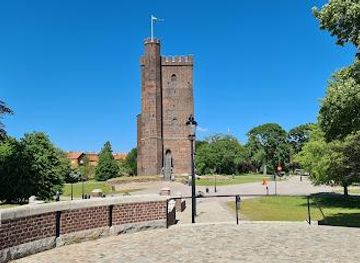
- Combine your visit with nearby Kärnan tower and the surrounding old streets to get a fuller sense of medieval Helsingborg.
- Dress in layers; the interior can feel cool even in summer due to the thick brick walls and stone floor.
Do you manage this location?
Take control to get all the benefits, like improved information, better appearance, and stronger visibility across AI-powered discovery. Learn more
Activate your presenceOther nearby places you may find interesting
Getting There
-
Local bus from Helsingborg central area
From Helsingborg C and the nearby city center, use one of the local Skånetrafiken city buses that stop around Stortorget; typical travel time within central Helsingborg is 5–15 minutes depending on your starting point. Single urban tickets usually cost around 25–35 SEK when bought via app or ticket machines, and services run frequently throughout the day. From the bus stops at or near Stortorget, it is a short, gently sloping walk on paved streets to reach the church; the route is suitable for most visitors but some cobblestones may be present close to the old town.
-
On foot from Helsingborg C and ferry terminal
From the central station and ferry terminal area, expect around 10–15 minutes of walking to reach the church, depending on your pace. The route leads through central streets and up a modest incline into the old town, mostly on sidewalks with some sections of cobblestones near the church itself. This approach is convenient for most visitors with standard mobility, though those using wheelchairs or pushing strollers may prefer to allow extra time and choose the smoothest sections of pavement.
-
Taxi within Helsingborg
Taxis in Helsingborg can bring you close to the church, usually within a few minutes from central hotels or the station area. Typical fares for short city rides range roughly between 80 and 160 SEK depending on distance, time of day and operator; it is advisable to confirm the price estimate before departure. Vehicles can generally drop passengers very near the church on Mariagatan or adjacent streets, but brief waits for a suitable stopping point may occur during busy periods.
For the on-the-go comforts that matter to you
-
 Restrooms
-
 Seating Areas
-
 Information Boards
Discover more about St. Mary Church
A medieval brick landmark at the heart of Helsingborg
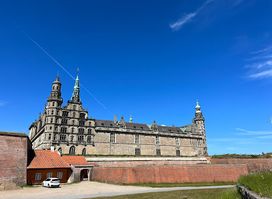
St. Mary’s Church, known locally as Mariakyrkan, rises in deep red brick from the narrow streets of Helsingborg’s old town. Its three‑aisled basilica plan and stepped gables are classic examples of Danish Brick Gothic, a style that once dominated this stretch of the Öresund coast. The church stands just behind the busy central square, yet its tall windows and sturdy buttresses give it the presence of a small cathedral anchoring the historic core.The building you see today largely dates from the 14th and early 15th centuries, when a growing medieval town needed a more imposing parish church. Earlier, a smaller Romanesque stone church from the 1100s stood on this spot, serving a compact settlement clustered on the slope above the harbor. When it was replaced, stone from the old church was reused in the foundations, quietly stitching together centuries of worship beneath your feet.From Romanesque roots to Gothic brickwork
Construction of the present church stretched over generations. Work began in the early 1300s and the main body was essentially complete by around 1410, though the tower was only finished in the 1500s. The long building phase left visible traces: examine the exterior walls and you may notice small square holes, the ghostly remains of the wooden scaffolding that once wrapped the rising structure.The choice of brick was both practical and symbolic. Bricks were fired at nearby kilns, including those that supplied material for Kärnan, the medieval fortress tower that still dominates Helsingborg’s skyline. Using the same brick tied the parish church to the town’s defenses, visually linking spiritual life with civic power. Inside, slender pillars, ribbed vaults and pointed arches draw the eye upward, giving lightness to what is, in essence, a relatively modest urban church.Inside the sanctuary: art, craft and quiet details
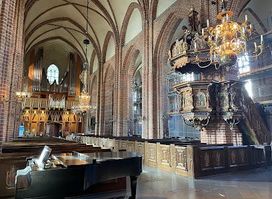
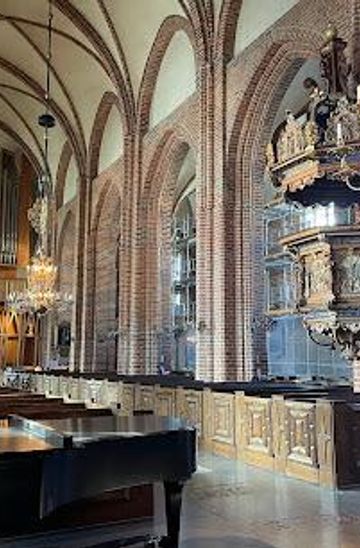
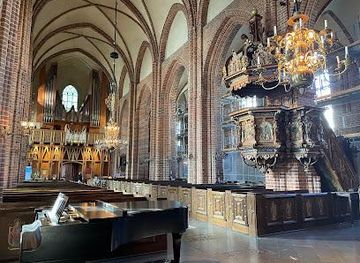
Step through the main portal and the cool interior feels immediately calm. Whitewashed vaults rest on brick piers, and filtered daylight softens the stone and wood. Among the most striking treasures is a 15th‑century carved altarpiece, a painted triptych alive with saints, gilded details and late medieval storytelling. Nearby, the pulpit reflects post‑Reformation priorities: carved panels and a prominent sounding board emphasize the central role of preaching in Lutheran worship.Look down the side aisles and you will notice wall niches that once offered resting places for the elderly and infirm in an era when most of the congregation stood. More recent additions sit alongside older elements: a series of organs has served the church since at least the late 1500s, and today’s instrument continues that musical tradition. Beneath the vestry, a silver collection is preserved, testifying to centuries of gifts and memorials from local families.Faith, politics and the Öresund frontier
St. Mary’s story is closely bound to the shifting frontier between Denmark and Sweden. When the church was built, Helsingborg lay firmly within the Danish realm, and Mariakyrkan was a Catholic parish church under the authority of Copenhagen. The 16th‑century Reformation brought a profound change: the congregation adopted Lutheran worship, pews were introduced, and the interior slowly adapted to new liturgical ideas while retaining much of its medieval fabric.In the 1600s, the Treaty of Roskilde transferred Helsingborg and much of Skåne to Sweden. The same red‑brick church that had served Danish merchants and fishermen now belonged to a Swedish town facing its former rulers across the narrow sound. That dual heritage remains part of the church’s character: its architecture is resolutely Danish Gothic, but its later history follows the Swedish crown. The building thus embodies centuries of political and cultural negotiation in this border region.Living parish in a compact old town setting
Despite its age, St. Mary’s is not a museum but an active Lutheran parish church. Weekday opening hours allow for quiet visits, while services, concerts and seasonal celebrations fill the space with music and local life. The church sits at the junction of several pedestrian lanes, and the surrounding area remains one of Helsingborg’s most atmospheric quarters, with historic houses, cafés and small squares a short stroll away.Because the church is nestled among closely packed streets, it can feel almost suddenly revealed as you approach along Mariagatan. Inside, the sense of enclosure falls away, replaced by height, light and the faint echo of footsteps on stone. For many visitors, the appeal lies in this contrast: a relatively small footprint enveloped by the city, yet sheltering a remarkably rich interior and an unbroken chain of worship stretching back more than 600 years.Explore the best of what St. Mary Church has to offer













More about Copenhagen Region
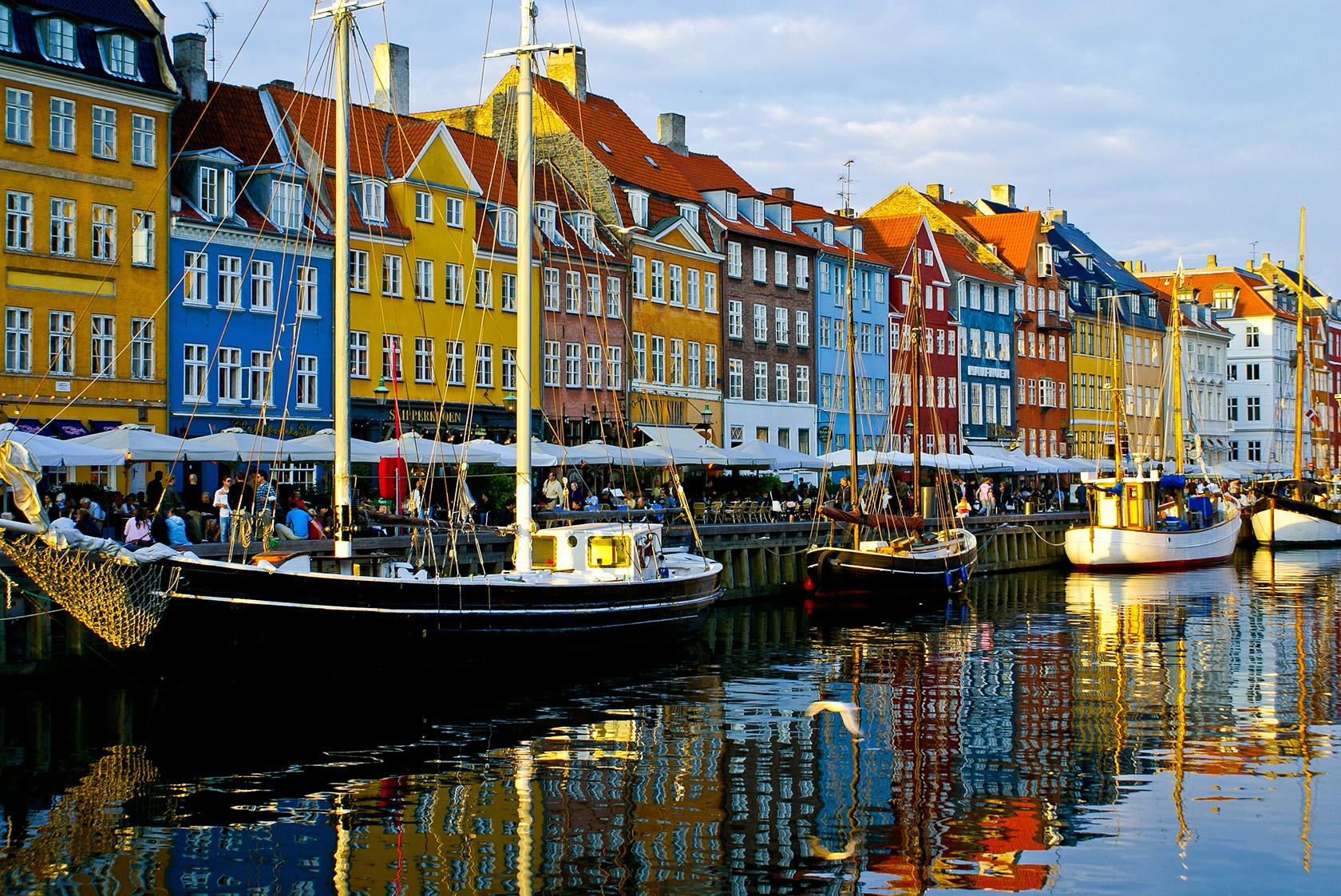
Discover the Copenhagen Region: A perfect mix of historic charm and modern vibrancy, offering scenic beauty, cultural landmarks, and a high quality of life.
Tell me more about Copenhagen Region