Background

The Lakes (Søerne), Copenhagen

Copenhagen’s chain of city lakes curves along the old ramparts, offering a car-free loop of water, paths and birdlife where everyday life and open sky meet.

4.5

Skirting the western edge of central Copenhagen, The Lakes (Søerne) form a graceful chain of three long, shallow basins: Sankt Jørgens Sø, Peblinge Sø and Sortedams Sø. Once part of the city’s medieval defenses and water supply, they are now an urban playground of waterfront paths, benches and grassy banks. Joggers, cyclists, dog walkers and café-goers share the scene, with bird islands, boat bikes in summer and, in very cold winters, ice-thick surfaces that sometimes open for walking.

A brief summary to The Lakes

  • Copenhagen, Indre By, DK
  • Duration: 0.5 to 3 hours
  • Free
  • Environment icon Outdoor
  • Mobile reception: 5 out of 5

Local tips

  • Walk the full 6–7 km loop around all three lakes to experience how the atmosphere shifts between quieter stretches and livelier café-lined sections.
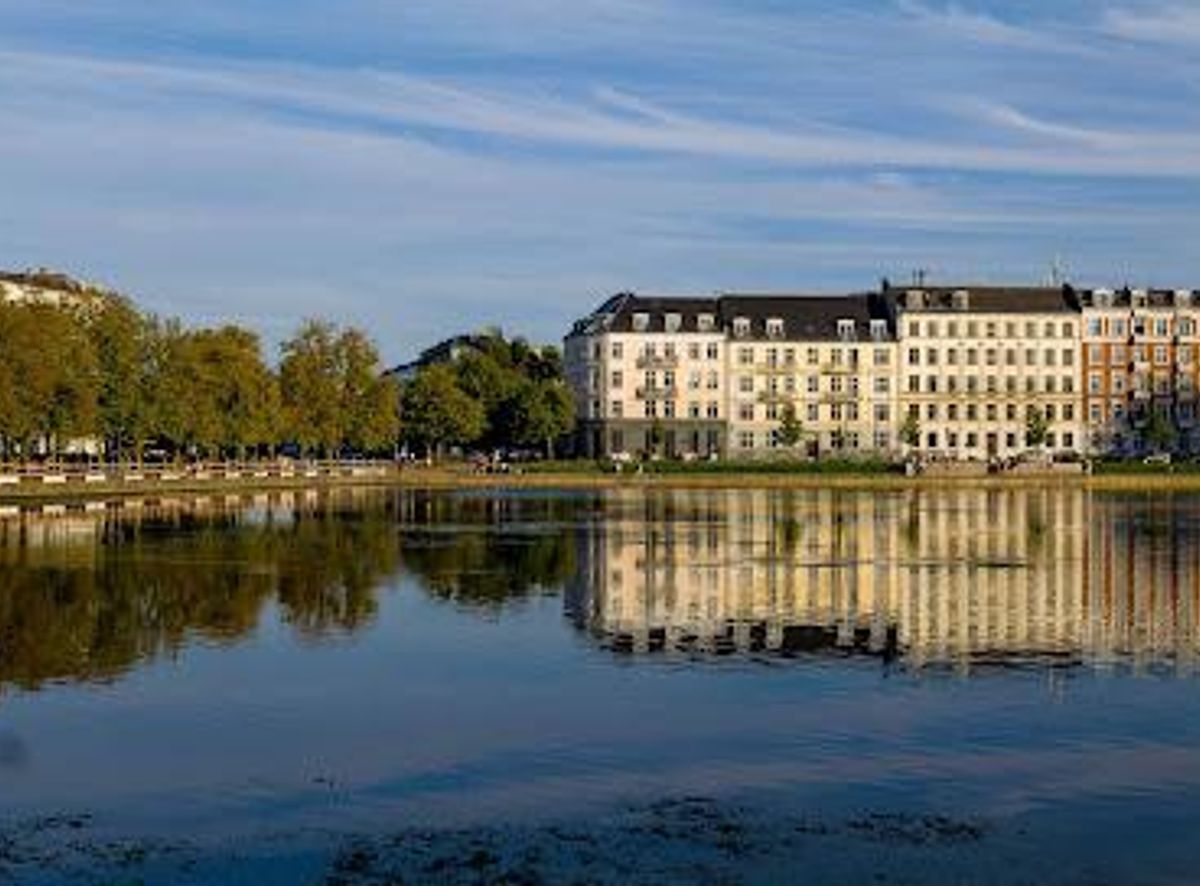
  • Aim for early morning or late evening for calmer paths, softer light and beautiful reflections of church spires and townhouses on the water.
  • Pack a simple picnic or grab coffee and pastries from a nearby bakery to enjoy on the grassy banks or one of the many benches along the shore.
  • In very cold winters, only step onto the frozen lake if authorities have clearly signposted that the ice is officially open and safe.
  • Consider bringing a light windproof layer, as breezes over the water can feel cooler than on nearby city streets, even in sunny weather.
widget icon

Getting There

  • Metro from central Copenhagen

    From a central metro hub such as Nørreport Station, The Lakes are about 5 minutes’ walk away, but you can also ride the M1, M2, M3 or M4 lines to Nørreport or Forum in roughly 3–6 minutes from most inner-city stops. Standard single metro tickets within central zones typically cost around 20–30 DKK and trains run every few minutes throughout the day.

  • City bus connections

    Several city bus routes run along the streets that border The Lakes, linking them with areas like Vesterbro, Nørrebro, Østerbro and Frederiksberg in about 10–20 minutes of travel time depending on traffic and distance. A single bus ticket within the city centre generally costs around 20–30 DKK, and buses usually operate at least every 10–15 minutes during daytime.

  • Bicycle from inner districts

    Cycling from the historic centre or nearby districts such as Vesterbro or Nørrebro to The Lakes typically takes 5–15 minutes, following dedicated bike lanes most of the way and finishing on flat, well-marked streets beside the water. You can use a city bike-share or regular rental, and while prices vary, expect roughly 20–40 DKK for a short ride period on shared bikes.

  • Walking from the old town

    If you are staying in Copenhagen’s old town or around City Hall Square, reaching The Lakes on foot takes about 10–20 minutes at an easy pace along broad pavements and mainly level terrain. The route is suitable for most visitors, including families with strollers, though allow extra time if you prefer a very relaxed stroll.

The Lakes location weather suitability

  • Weather icon Any Weather
  • Weather icon Clear Skies
  • Weather icon Windy Conditions
  • Weather icon Mild Temperatures
  • Weather icon Cold Weather
  • Snow
  • Weather icon Hot Weather

Unlock the Best of The Lakes

Buy tickets

    No tickets available

Book tours with entry

    No tours available

Book tours without entry

    No tours available

Discover more about The Lakes

City waters that shape Copenhagen’s heart

The Lakes, known in Danish as Søerne, curve like a glittering ribbon along the western flank of central Copenhagen, clearly marking the divide between the historic inner city and the lively neighbourhoods of Nørrebro, Frederiksberg and Østerbro. What looks today like a calm chain of three basins began life as a shallow stream outside the medieval ramparts. Over centuries, dams and embankments turned it into a linked reservoir system that powered watermills, supplied the growing town and strengthened its defenses. The three lakes you see now each have distinct personalities. Sankt Jørgens Sø, nearest to the city centre, is the deepest and edged with softer, sloping banks and pockets of greenery. Peblinge Sø and Sortedams Sø are framed by solid granite walls and elegant bridges, giving them a more formal, urban profile. Together they extend for more than six kilometres, a continuous blue corridor that reflects Copenhagen’s spires, townhouses and modern silhouettes.

From working reservoirs to urban living room

As Copenhagen outgrew its fortifications in the 19th century, The Lakes gradually lost their role as critical infrastructure and evolved into public space. Embankments were reshaped, paths laid out and trees planted, turning functional waterworks into a kind of shared living room for city residents. Where soldiers and millers once guarded an outer perimeter, joggers, parents with prams and students with takeaway coffee now circle the water. Along sections of the shore you will spot historic pavilions built in the late 1800s as social clubs and skating lodges, including the ornate Lake Pavilion near Sankt Jørgens Sø. Their decorative facades nod to a time when promenading by the water was part of fashionable city life. Over time, cafés and restaurants found their way onto the banks, adding outdoor seating and terrace views that make the lakeside feel animated from morning to late evening in good weather.

Paths, bridges and a classic Copenhagen loop

One of the defining features of The Lakes is the uninterrupted path system that traces both sides of the water. A full circuit around all three lakes covers roughly 6.5 kilometres, a favourite training route for runners and an easy loop for a leisurely stroll. The surface is mostly level and well maintained, with wide gravel or asphalt tracks suitable for walking, jogging and cycling. Several bridges carry streets and bike lanes across the water, breaking the lakes into smaller visual frames and creating natural pause points. From these crossings you get some of the best perspectives: lines of colourful apartments and leafy boulevards on one side, open water and sky on the other. Benches dot the route, and on warm days the low grassy stretches, especially near the northern lakes, turn into informal picnic spots.

Bird islands and the changing seasons

Sortedams Sø hides two small artificial islands, built as protected nesting grounds for waterbirds. From the shore you can watch gulls, ducks, coots and, in season, swans gathering around these low green mounds. The birdlife adds movement and sound to the otherwise still surface, particularly at dawn and dusk when calls echo across the water. Seasonality shapes the character of The Lakes. Spring brings fresh leaves and longer light, ideal for quiet morning walks. Summer often turns the embankments into a social scene, with friends sharing drinks on the grass and pedal-powered boat bikes gliding slowly across Sankt Jørgens Sø. In autumn, trees along the boulevards shift to gold and rust, and the reflections deepen. On rare winters when the ice grows thick enough and authorities declare it safe, parts of the lakes open for walking, informal skating and an almost surreal experience of crossing where boats usually drift.

A breathable edge between neighbourhoods

Beyond their beauty, The Lakes function as a kind of breathing space in the city’s fabric. They provide long sightlines and open horizon in an otherwise dense urban grid, and they subtly connect very different districts. On one shore you might find grand stucco facades and office blocks; on the opposite side, relaxed cafés, organic bakeries and side streets leading into creative quarters. For visitors, this makes The Lakes both an attraction in their own right and a convenient orientation line. Following the water gives you a feel for Copenhagen’s everyday rhythm: cyclists commuting, people walking dogs before work, families teaching children to ride tiny bikes, friends pausing with thermos coffee on a bench. Whether you choose a quick detour or the full loop, time by these waters offers an uncomplicated way to step into local city life while still enjoying ample sky, reflections and a constant play of wind and light on the surface.

Busiest months of the year

Busiest hours of the day

Popular Experiences near The Lakes

Popular Hotels near The Lakes

Select Currency