Dronning Louises Bro
A 19th‑century granite bridge turned open‑air living room, linking historic Copenhagen with vibrant Nørrebro across the city’s shimmering inner lakes.
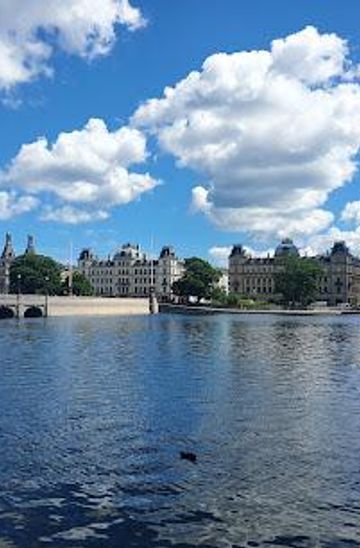
Dronning Louises Bro (Queen Louise’s Bridge) is an 1887 granite arch bridge spanning Copenhagen’s inner lakes, linking the historic city center with lively Nørrebro. Once a vital traffic artery, it is now famous as an urban hangout, with broad sidewalks and benches where locals linger over takeaway coffee, watch cyclists stream past and enjoy wide water views, sunsets and Nørrebro’s neon glow reflected in the lakes.
A brief summary to Dronning Louises Bro
- Søtorvet 2, Copenhagen Municipality, Indre By, 1371, DK
- Click to display
- Click to display
- Duration: 0.5 to 2 hours
- Free
-
 Outdoor
- Mobile reception: 5 out of 5

Know before you go
Hi, I'm Eve. Here are a few practical things to know before exploring Dronning Louises Bro.
- Time your visit for late afternoon on a clear day to watch the sunset over the lakes and see Nørrebro’s neon signs flicker to life in the twilight.
- Bring a takeaway coffee or snack and use the broad parapet as a perch; it is socially accepted to sit along the railings and people‑watch.
- If you are on a bike, slow down in the central section during busy times; this stretch is a key social space as well as a major cycling artery.
- Combine the bridge with a leisurely walk around the lakes for changing perspectives on the skyline, especially in the soft morning or evening light.
Do you manage this location?
Take control to get all the benefits, like improved information, better appearance, and stronger visibility across AI-powered discovery. Learn more
Activate your presenceOther nearby places you may find interesting
Getting There
-
Metro and short walk from central Copenhagen
From Nørreport Station, one of Copenhagen’s main metro and rail hubs, walk along Frederiksborggade for about 10–15 minutes to reach Dronning Louises Bro. The metro ride to Nørreport from most central stations takes 2–5 minutes and is covered by standard zone 1–2 tickets, typically costing around 20–30 DKK for a single ride. Trains and metro run frequently throughout the day, and the walk is on wide, mostly level pavements suitable for wheelchairs and prams.
-
City bus to the bridge area
Several city bus routes run along Nørrebrogade and Frederiksborggade, stopping within a 2–5 minute walk of the bridge. Travel times from the inner city are usually 10–20 minutes depending on traffic, and standard city bus tickets cost roughly 20–30 DKK for a single journey within the central zones. Buses operate year-round with good daytime and evening frequency, though they can be slower during rush hours when the streets feeding the bridge are busy.
-
Cycling from inner Copenhagen
Copenhagen’s dense bike-lane network makes cycling to Dronning Louises Bro straightforward. From many central neighborhoods the ride is 10–20 minutes along segregated cycle tracks, and the bridge itself has wide, clearly marked bike lanes in both directions. You can use public bike-share schemes or rent a bicycle for a day, with typical rental prices starting around 100–150 DKK per day. Be prepared for heavy bike traffic at peak commuting times and follow local cycling etiquette.
-
Taxi from central districts
Taxis from central Copenhagen locations such as City Hall Square or Nyhavn generally reach Dronning Louises Bro in 10–20 minutes, depending on traffic and time of day. Fares within the central area commonly range from about 120–220 DKK, with higher prices late at night and on weekends. Taxis can drop passengers close to the bridge, but short delays are possible during rush hour when approaches are congested with buses, bikes and pedestrians.
For the on-the-go comforts that matter to you
-
 Seating Areas
-
 Trash Bins
-
 Information Boards
-
 Drink Options
-
 Food Options
Discover more about Dronning Louises Bro
A historic gateway between city center and Nørrebro
Dronning Louises Bro stretches across Copenhagen’s inner lakes, joining Frederiksborggade in the old town with Nørrebrogade in bohemian Nørrebro. The current stone bridge opened in 1887, replacing earlier wooden and embankment crossings that had stood here since the 16th century. For centuries this has been the northern gateway into Copenhagen, a place where traders, commuters and, more recently, thousands of cyclists funnel in and out of the city each day.Named after Queen Louise, consort of King Christian IX, the bridge was built as the city’s fortifications were being dismantled and the surrounding land transformed into dense apartment districts. Its generous width reflected the ambitions of the era: this was not just a practical crossing but a ceremonial approach, flanked by grand French-inspired mansard-roofed buildings at Søtorvet on the city side.Granite arches, classical details and lakeside vistas
Architect Vilhelm Dahlerup chose granite for the three broad arches that stride across Peblinge Sø and Sortedam Sø, giving the bridge a solid, almost monumental presence. The cast-iron railings are embellished with bronze cartouches bearing Copenhagen’s coat of arms, framed by helmets, weapons and heraldic lions that nod to the city’s martial past. Slender lampposts and flagpoles accent the balustrade, particularly striking at dusk when lights shimmer on the water.Standing at the center, you can look one way towards the spires and rooftops of the old town and the other towards Nørrebro’s neon signs and long lines of lakeside buildings. The edges of the lakes, now stone-faced with broad gravel paths, create a continuous promenade around the water, so the bridge feels like the natural focal point of a much larger urban landscape.From traffic corridor to Copenhagen living room
In the late 20th century the bridge was dominated by vehicles, with multiple car and tram lanes squeezing pedestrians to narrow sidewalks. Over time, as Copenhagen embraced cycling and people-focused streets, the balance shifted. Car space was reduced, cycle lanes widened, and the pavements opened up for people to pause, talk and sit. Today the bridge is often described as an open-air living room, where lingering is as important as crossing.On mild days, the parapets become informal seating, with groups chatting over beers or coffee as they watch joggers circle the lakes and kayakers glide below. The constant stream of bicycles is a spectacle in itself, illustrating how central cycling is to everyday life in the city. As evening falls, Nørrebro’s famous neon lights, including the iconic Irma hen, flicker to life, reflected in the still water.Layers of urban history in a single viewpoint
From the bridge you can read the city’s changing story in every direction. The fortress earthworks that once stood here have vanished, replaced by apartment blocks and the busy urban fabric of Nørreport and Israels Plads. Nearby food halls occupy what was once a produce market supplied via this very approach, turning historic trade routes into contemporary culinary hotspots.Yet despite all these changes, Dronning Louises Bro retains its 19th-century grandeur. Its listing as a protected structure in the late 20th century helped safeguard its architectural details while allowing the surrounding public space to evolve. The result is a bridge that serves simultaneously as historic monument, everyday thoroughfare and much-loved meeting point.Experiencing the bridge throughout the day and year
At dawn the bridge can feel almost meditative, with soft light on the water and only a few early commuters passing by. By late morning there is a steady rhythm of cyclists and walkers, while afternoons bring more strollers, prams and people pausing on the railings. On clear evenings, especially in spring and summer, the space takes on a festive air as locals gather for sunset, often staying to watch the city lights appear one by one.Even in colder months the bridge has its own atmosphere, with mist over the lakes and the glow of streetlamps making the granite arches look particularly dramatic. Whether you spend a few minutes crossing or linger longer on the parapet, Dronning Louises Bro offers one of the most characteristic urban scenes in Copenhagen: water, light, bicycles and people woven together atop a quietly impressive 19th-century structure.Explore the best of what Dronning Louises Bro has to offer













More about North Zealand
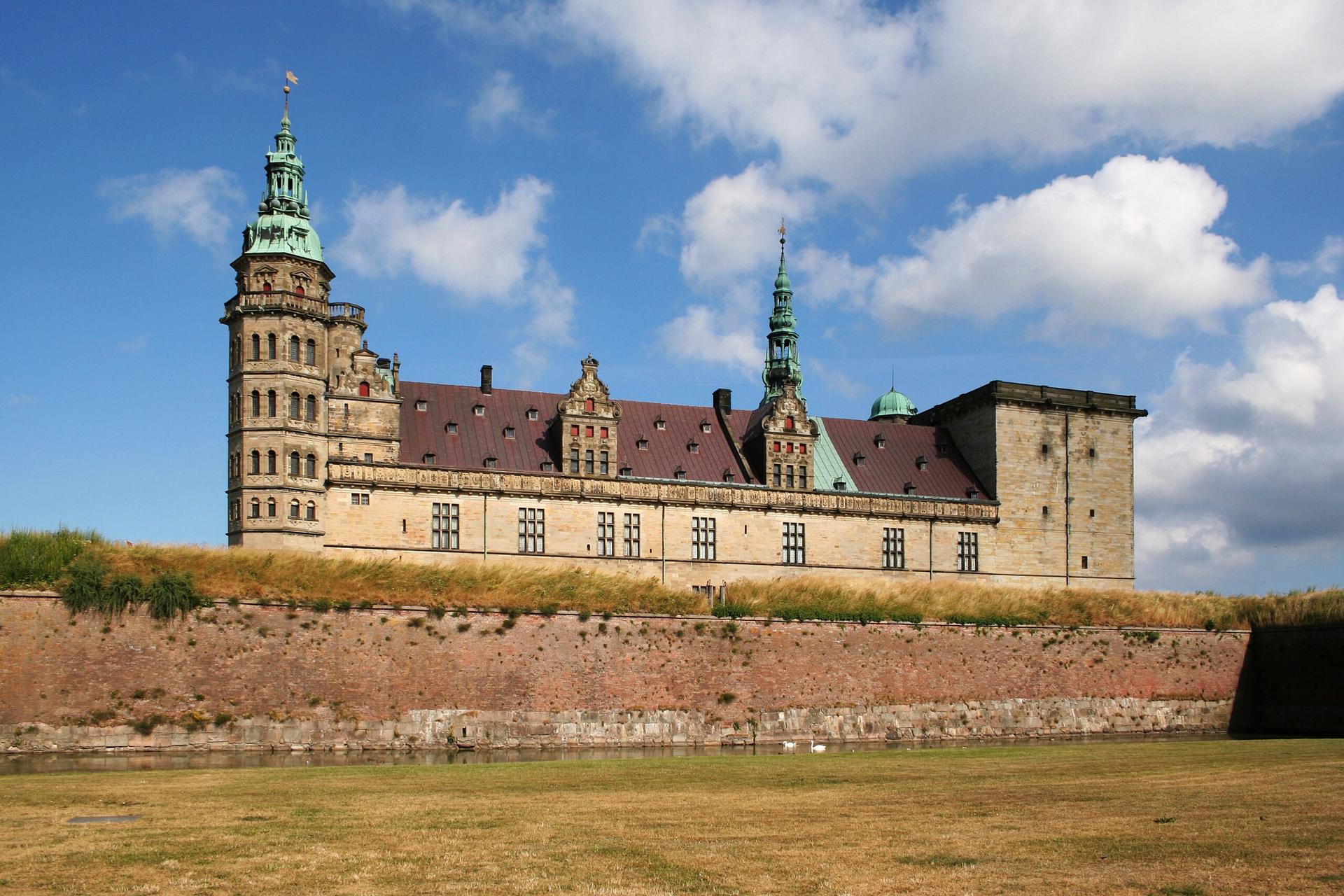
Explore North Zealand, Denmark's enchanting region of castles, beaches, and royal estates, perfect for history buffs, nature enthusiasts, and seaside lovers.
Tell me more about North Zealand
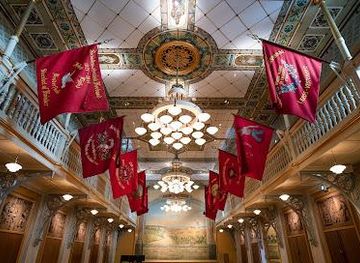
Step inside Copenhagen’s historic Workers’ Assembly Hall and explore 150 years of Danish working‑class life, union struggles, everyday homes and hearty beer hall traditions.

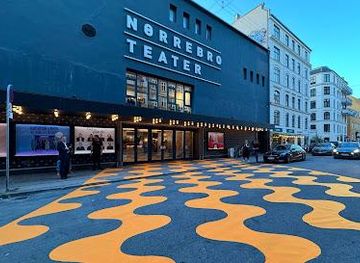
Historic Nørrebro playhouse blending popular entertainment, contemporary theatre and facade art in a 620-seat venue at the lively heart of Copenhagen.