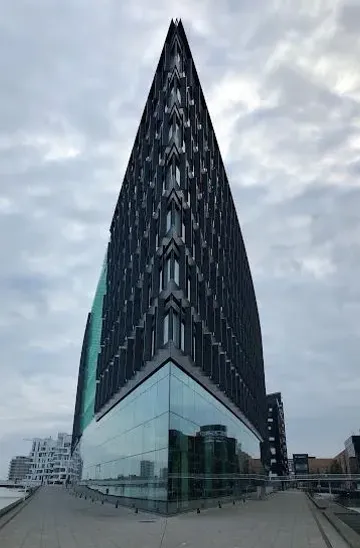
Havneholmen 33 – Allerhuset Headquarters on Copenhagen’s Waterfront
Striking waterfront media headquarters in Copenhagen’s Havneholmen district, where modern Danish office architecture meets busy cycle bridges and harbour life.
Havneholmen 33 is a striking modern office building on Copenhagen’s inner harbour, best known as the headquarters of media group Aller. Completed in 2009 and designed by PLH Arkitekter, the low-rise complex spans around 28,000 m², its sweeping glass façades and angled lines reflecting the water and busy harbourfront. Set beside the cycle bridges and canals near Fisketorvet, it anchors the redeveloped Havneholmen district with a bold piece of contemporary Danish architecture.
A brief summary to Havneholmen 33
- Havneholmen 33, Copenhagen, Vesterbro/Kongens Enghave, 1561, DK
- Duration: 0.5 to 1 hours
- Free
-
 Outdoor
- Mobile reception: 5 out of 5

Know before you go
Hi, I'm Eve. Here are a few practical things to know before exploring Havneholmen 33.
- Combine a stop by Havneholmen 33 with a walk or cycle over Bryggebroen and Cykelslangen to appreciate how the building interacts with the wider harbourfront.
- Come in early morning or late afternoon for softer light and better reflections in the glass façades and water, ideal for architecture and cityscape photos.
- Use nearby benches and quayside steps as a short rest point, watching harbour buses, cyclists and trains while taking in the modern urban scenery.
- Remember that the building functions as a private office; enjoy and photograph it from public paths and waterfront areas without entering restricted zones.
- Pair your visit with time at Fisketorvet shopping centre next door, where you can find cafés, restrooms and shelter if the weather turns.
Do you manage this location?
Take control to get all the benefits, like improved information, better appearance, and stronger visibility across AI-powered discovery. Learn more
Activate your presence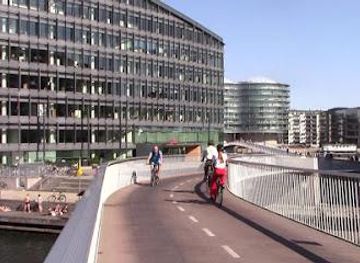
Getting There
-
Metro
From central Copenhagen, take metro line M4 toward the Sydhavn branch and get off at Havneholmen Station. The ride from Kongens Nytorv typically takes about 5–8 minutes, with frequent departures throughout the day. A standard single-zone ticket costs around 20–25 DKK, and the station is within walking distance of the harbourfront offices, using level pavements and lifts suitable for wheelchairs and strollers.
-
Train and Walk
S-trains on lines A, B, C and E stop at Dybbølsbro Station, one of the closest rail stops to Havneholmen. From Copenhagen Central Station the journey takes roughly 2–3 minutes, with regular trains and the same ticket zone as the metro, so prices are around 20–25 DKK for a single fare. From Dybbølsbro, allow 10–15 minutes on foot along urban sidewalks; the route is generally flat and manageable in most weather conditions.
-
City Bus
Several city bus routes serve the Havneholmen area from inner Copenhagen and Vesterbro, including lines that stop near Otto Busses Vej and Fisketorvet. Travel times from the city centre are usually 10–20 minutes depending on traffic, and standard bus fares are in the 20–25 DKK range for a single zone. Buses offer a straightforward option in bad weather, though they can be slower at peak rush hours.
-
Bicycle
Copenhagen’s cycle network makes it easy to reach Havneholmen 33 by bike from most central districts in about 10–20 minutes. Dedicated cycle lanes, including the elevated Cykelslangen, connect Vesterbro, the city centre and Islands Brygge with minimal interaction with heavy traffic. This option is free if you have your own bike, and many visitors use dockless or rental bikes; be prepared for windy conditions along the open harbourfront.
For the on-the-go comforts that matter to you
-
 Restrooms
-
 Drink Options
-
 Drinking Water
-
 Food Options
-
 Seating Areas
-
 Sheltered Areas
-
 Picnic Areas
-
 Trash Bins
-
 Information Boards
-
 Visitor Center
Discover more about Havneholmen 33
Media House on the Water’s Edge
Havneholmen 33 occupies a prominent position on Copenhagen’s inner harbour, in the redeveloped district between Vesterbro and Islands Brygge. Here, former industrial and docklands have been reimagined as a mixed waterfront quarter of offices, homes, cafés and bike lanes. The building is widely known as Allerhuset, the headquarters of Nordic publishing group Aller, whose portfolio of magazines and media brands has shaped Danish popular culture for more than a century.From the outside, the complex reads as a sculpted volume poised above the quay. Large expanses of glass and pale cladding mirror the constantly shifting light over the harbour, while the building’s angled geometry subtly follows the lines of the waterfront. It is very much a product of Copenhagen’s 21st‑century transformation, combining corporate workspace with an open, maritime setting.Architecture by PLH in Contemporary Danish Style
Completed in 2009 and designed by Danish firm PLH Arkitekter, the building covers roughly 28,000 square metres over nine floors. Its architectural language is distinctly modern: horizontal bands of glazing, sharp corners and recessed sections create a dynamic silhouette that changes as you move around it. From some angles it appears compact and discreet; from others it stretches long and low along the water like the bow of a ship.The façades emphasise transparency, a common theme in Scandinavian office architecture. By day, the glass surfaces reveal layered interiors and circulation spaces; by night, the illuminated floors turn the building into a lantern on the harbour. Though primarily an office block, its carefully orchestrated volumes and waterside terraces give it a civic presence that goes beyond its commercial role.A Harbourfront Setting of Bridges and Boardwalks
What makes Havneholmen 33 particularly engaging is its immediate context. The building stands just east of the large Fisketorvet shopping centre, separated by a narrow canal and connected by promenades that trace the water’s edge. A short distance away, the elegant Bryggebroen bridge and the elevated Cykelslangen cycle bridge carry cyclists and pedestrians between Havneholmen and the opposite bank at Islands Brygge, adding movement and energy to the scene.The quayside in front of the building often feels more like a public waterfront than a corporate forecourt. Commuters roll past on bikes, harbour buses glide along the water, and office workers cluster on benches and steps during breaks. Even though the building itself is not a public attraction, its presence contributes to a broader urban experience of walking, sitting and watching life unfold along the canal.Inside a Nordic Media Headquarters
Behind the glass, Havneholmen 33 houses the operations of Aller and other companies, including open-plan office floors, meeting rooms and internal facilities such as canteen and lounge areas. The interior layout focuses on flexible workspaces and internal transparency, with visual connections between departments and across levels. While access is restricted to employees and invited guests, glimpses through the façade offer a sense of the building’s bustling daily rhythm.The choice of a harbourfront location was symbolic for Aller, marking a new chapter after its previous headquarters and underlining its role as a modern, outward-looking media house. The building’s image frequently appears in corporate material, reinforcing its status as both workplace and brand statement. For architecture enthusiasts, it represents an example of how contemporary Danish offices engage with their urban and maritime surroundings.Experiencing Havneholmen as an Urban Walk
For visitors exploring Copenhagen on foot or by bike, Havneholmen 33 is a natural waypoint rather than a destination in itself. You might pass it on the way between Vesterbro and Islands Brygge, or while circling the inner harbour. From the quayside, you can observe the interplay of reflections, boats and cyclists, and appreciate how the building’s modern lines frame views toward the city skyline and the rail tracks near Dybbølsbro.The most rewarding moments tend to come in the softer light of early morning or late afternoon, when glass and water pick up pastel tones and the busy offices contrast with the calm harbour. Paired with nearby bridges, promenades and public seating, the building helps define a contemporary Copenhagen waterfront where everyday life, commuting and architecture intersect.Explore the best of what Havneholmen 33 has to offer















More about North Zealand
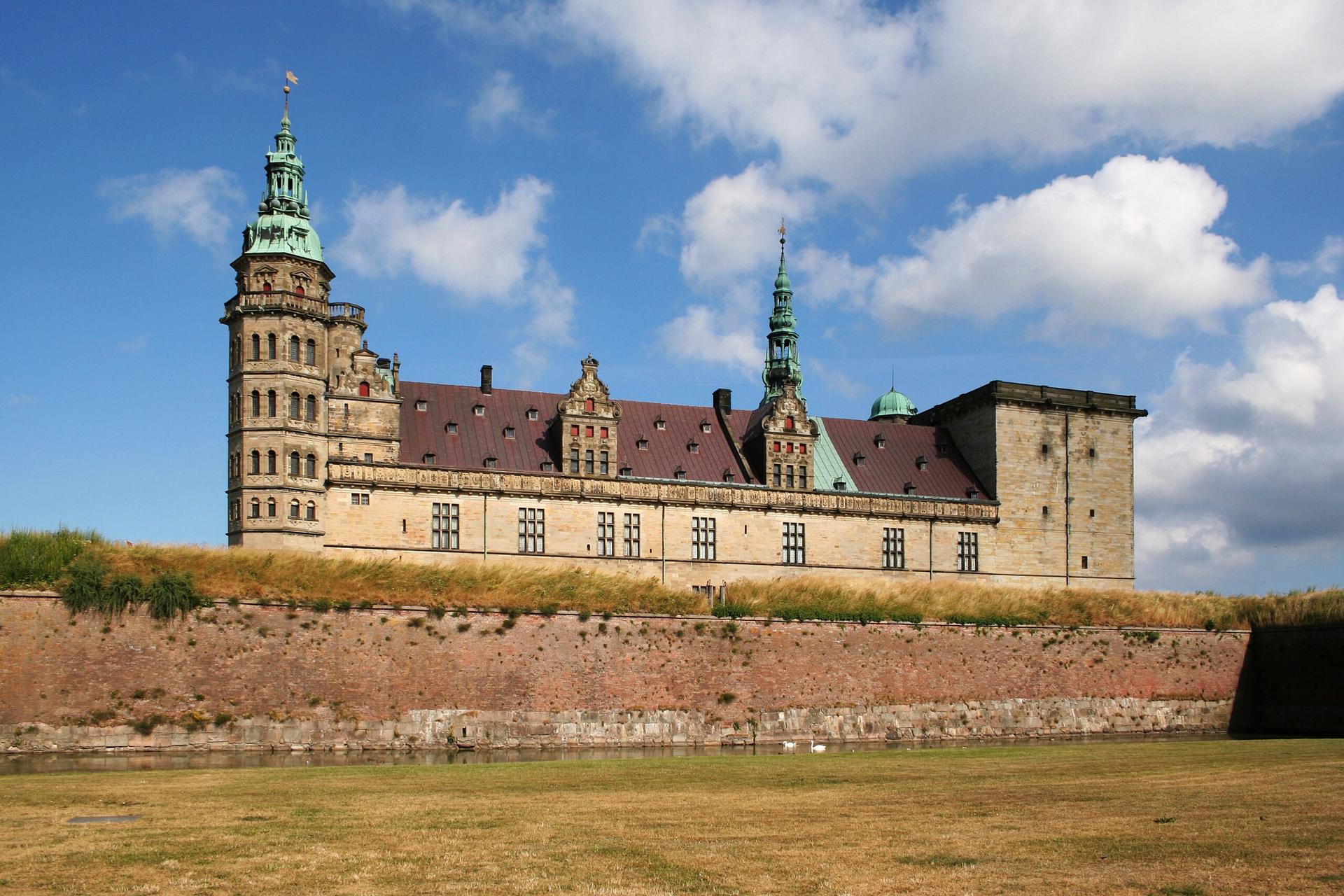
Explore North Zealand, Denmark's enchanting region of castles, beaches, and royal estates, perfect for history buffs, nature enthusiasts, and seaside lovers.
Tell me more about North Zealand
Three interconnected urban lakes offering year-round recreation, birdlife, and the essence of Copenhagen's outdoor culture.
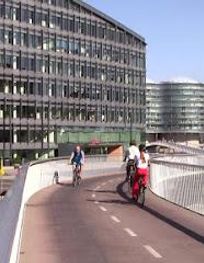
A bright orange bicycle skybridge that snakes above Copenhagen’s harbor, Cykelslangen turns an everyday commute into a smooth, scenic glide between water and city.